Hattusili III: The Hittite King Who Seized the Throne
Hattusili III ruled the Hittite Empire in the thirteenth century BCE after overthrowing his nephew, Urhi-Teshub (Mursili III), around 1267 BCE. The younger brother of King Muwatalli II, he had built a powerful military and political base in northern Anatolia before challenging his nephew’s rule. His seizure of the throne left him facing questions about his legitimacy.
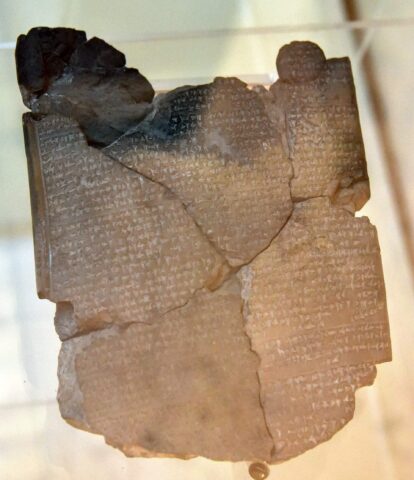
Hattusili defended his actions in the Apology of Hattusili III, attributing his rise to divine protection and portraying his nephew as the aggressor. His reign also brought significant diplomatic achievements. With Queen Puduhepa playing an important role in foreign affairs, he concluded a peace treaty with Ramesses II of Egypt around 1259 BCE.
Hattusili III’s Early Life and Royal Family
Hattusili III was a son of King Mursili II and a grandson of Suppiluliuma I, who had established Hatti as a major power in the ancient Near East. In his own account, Hattusili names two brothers, Halpasulupi and Muwatalli, and a sister, Massanauzzi, describing himself as the youngest of the four children. After Mursili’s death, Muwatalli II inherited the throne.
Most of what we know about Hattusili’s childhood comes from the Apology of Hattusili III (CTH 81). He describes himself as a sickly child whose life was in danger. According to the text, the goddess Šaušga (Ištar) sent Muwatalli to their father in a dream with a message: Hattusili would survive if he were dedicated to her priesthood. Mursili complied, and Hattusili later credited the goddess with protecting him throughout his life. His health problems appear to have persisted into adulthood, but the dream and divine intervention remain elements of his own religious account rather than independently verified events.
Hattusili’s Rise to Power in Northern Anatolia
Under Muwatalli II, Hattusili became chief of the royal bodyguard, governor of the Upper Land, and a leading military commander. Northern Anatolia faced repeated attacks from Kaška groups, which occupied territories beyond effective Hittite control. Hattusili led campaigns to recover lost settlements and defend the northern frontier.
His authority expanded when Muwatalli moved the royal capital south to Tarhuntassa. Hattusili received a northern kingdom centered on Hakpis (also written Hakmis), ruling as a subordinate king under his brother’s sovereignty. His territories extended across much of northern Anatolia, including Pala and Tummanna. Alongside military campaigns, he worked to restore abandoned settlements. At Tiliura, for example, he resettled former inhabitants and established restrictions on Kaška access to the town.
Hattusili’s appointment had displaced Arma-Tarhunda, a royal relative who previously governed the Upper Land. Their rivalry led to accusations and legal proceedings, including claims of sorcery against Hattusili. According to his own account, he eventually prevailed and spared the elderly Arma-Tarhunda because of their family ties, returning part of his confiscated estate. Arma-Tarhunda’s wife and another son were sent into exile. The surviving account reflects Hattusili’s perspective, and the accusations themselves cannot be independently verified.
Hattusili also joined Muwatalli’s campaign against Egypt, which culminated in the Battle of Kadesh. On his return, he married Puduhepa, daughter of the priest Pentipsharri of Lawazantiya in Kizzuwatna. She was herself a priestess of Šaušga.
His influence continued after Muwatalli’s death. During the reign of Urhi-Teshub, Hattusili recovered Nerik, a sacred city of the Storm God that had been outside secure Hittite control for generations. He restored its religious institutions and served as priest of its Storm God. Nerik added religious prestige to the military and territorial authority he had already acquired.
Why Did Hattusili III Turn Against Urhi-Teshub?
After Muwatalli II’s death, his son Urhi-Teshub succeeded him as Mursili III. Although born to a secondary wife, he had already been designated heir during his father’s lifetime, as seal impressions from Nişantepe confirm. Hattusili later claimed responsibility for placing his nephew on the throne, presenting himself as a loyal supporter of the succession.
Mursili III returned the royal capital from Tarhuntassa to Hattusa, reversing his father’s decision. The move brought the royal court closer to Hattusili’s northern territories and increased the king’s ability to supervise his uncle’s activities. Tensions grew as Mursili began reclaiming lands previously granted to Hattusili.
According to Hattusili’s Apology, his nephew progressively reduced his authority until only Hakpis and Nerik remained under his control. Mursili eventually took these as well. The loss of Nerik was particularly serious because Hattusili served as priest of its Storm God, making the dispute both political and religious.
Mursili’s actions may have been intended to curb the power of an uncle who commanded experienced troops and maintained influential regional alliances. Hattusili, however, portrayed them as unjust persecution. He claimed to have tolerated his nephew’s conduct out of respect for Muwatalli before deciding to resist. Since Mursili’s own account has not survived, his precise motives remain uncertain.
How Hattusili III Seized the Hittite Throne
Hattusili declared war on Urhi-Teshub, who advanced from Marassantiya into the Upper Land to confront his uncle. The reigning king relied partly on Sippaziti, son of Hattusili’s former rival Arma-Tarhunda, to recruit troops in the region. Hattusili drew on his experienced northern forces, including Kaška auxiliaries, and gained support from men who had previously served his nephew.
Urhi-Teshub eventually retreated to Samuha. According to Hattusili’s royal edict KBo 6.29+, former supporters of his nephew offered to kill the king, but Hattusili refused. The same text claims that a section of Samuha’s wooden defenses collapsed as he approached, allowing him to enter the city and capture Urhi-Teshub. Hattusili attributed the event to the goddess Šaušga, although the circumstances of the collapse cannot be independently established.
Around 1267 BCE, Hattusili took the throne as Great King and exiled his nephew to Nuhasse in northern Syria, granting him several fortified towns. When Urhi-Teshub became involved in suspected plotting with Babylonia, Hattusili transferred him to another location described as being near the sea. Its precise location remains uncertain.
The deposed king continued to trouble Hattusili. Later diplomatic correspondence shows that Hattusili and Puduhepa suspected Ramesses II of sheltering Urhi-Teshub in Egypt. The Egyptian court did not acknowledge his presence, leaving his whereabouts unresolved.
The Apology of Hattusili III: How a Usurper Defended His Rule
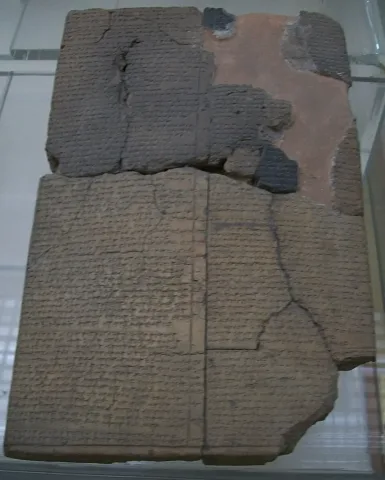
The Apology of Hattusili III (CTH 81), preserved on several cuneiform tablets, presents the king’s justification for taking the throne. Despite its modern title, the text is not an admission of wrongdoing. Hattusili portrayed himself as a loyal uncle who had endured repeated injustices before turning against Urhi-Teshub.
Central to his defense was the goddess Šaušga of Šamuḫa. Hattusili attributed his survival, military victories, and kingship to her protection, presenting his success as evidence of divine approval. The narrative also served a practical purpose: it appointed his son Tudhaliya as priest of Šaušga and administrator of her estate, linking the family’s religious authority to the succession.
A comparison with another royal decree, KBo 6.29+, shows how Hattusili shaped his account. The decree identifies Urhi-Teshub’s return of the capital to Hattusa as an early cause of conflict, while the Apology emphasizes the territories taken from Hattusili. The two texts also differ in their descriptions of Šaušga’s intervention during the struggle.
Both documents were issued under Hattusili and reflected his political interests. Their differences do not invalidate every event they describe, but they show how the king selected and presented evidence to defend his claim to the throne.
Consolidating Royal Power in Hatti
After taking the throne, Hattusili III had to secure the loyalty of Kurunta, another son of Muwatalli II with a potential claim to kingship. Kurunta had been raised in Hattusili’s household. Hattusili appointed him king of Tarhuntassa, the former imperial capital, under Hittite sovereignty. The treaty with Ulmi-Teshub, commonly identified with Kurunta, established his territorial boundaries and obligations to the Great King.
Hattusili also eased the kingdom’s military burdens, limiting its contribution to Hittite campaigns to 200 soldiers.
Hattusili strengthened his position at court through appointments and royal grants. A decree protected the privileges of Mittannamuwa’s family, whose members had held senior administrative positions. Hattusili appointed Mittannamuwa’s son Walwaziti as chief scribe, restoring the family’s influence in the royal administration. A separate land grant favored Ura-Tarhunta, reflecting the king’s efforts to reward political supporters.
The succession within Hattusili’s own family presented another challenge. His son Nerikkaili held the title tuhkanti, or crown prince, but Tudhaliya eventually became the designated successor. A later treaty confirms that Hattusili had replaced an older son, although it does not identify him by name. Nerikkaili is considered the most likely candidate. The reasons for the decision remain uncertain, but Tudhaliya’s close relationship with Kurunta may have influenced his father’s choice.
Puduhepa: Great Queen and Political Partner
Puduhepa held considerable authority during Hattusili III’s reign. As Great Queen, or Tawananna, she exercised religious and administrative responsibilities alongside her husband. Her priestly background in Kizzuwatna was particularly important in religious affairs, while surviving correspondence and royal seals document her political influence.
Puduhepa exchanged letters with Ramesses II and his chief wife, Nefertari. During negotiations over the marriage of a Hittite princess to the Egyptian king, she defended the proposed dowry and addressed Ramesses as her brother, using the language of equality customary among royal courts. Her responsibilities extended to Hittite-controlled Syria, where she corresponded with rulers of Ugarit about tribute and trade disputes. A legal decree bearing her seal records a ruling on compensation for damage to a ship and its cargo at Ugarit, although whether it dates to Hattusili’s reign or that of Tudhaliya IV remains uncertain.
In religious affairs, Puduhepa instructed the chief scribe Walwaziti to locate Kizzuwatnan ritual tablets in the archives at Hattusa. These materials were used to compile a new edition of the ḫišuwa festival, a major ritual tradition with Hurrian elements. Her surviving prayers to the Sun Goddess of Arinna include appeals for Hattusili’s recovery from illness.
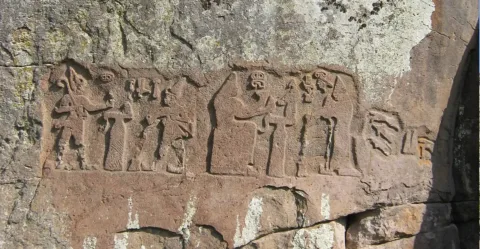
Puduhepa also appears in royal monuments and diplomatic records. At Firaktin, a rock relief depicts her presenting an offering to the goddess Hepat, opposite Hattusili’s offering to a god. The Egyptian inscription of the peace treaty describes her seal alongside that of Hattusili. She remained Great Queen after her husband’s death, during the reign of their son Tudhaliya IV.
Read Also
Muwatalli II: The Hittite King Who Fought Ramesses II at Kadesh
Explore the reign of Hattusili’s older brother, his confrontation with Ramesses II, and his decision to move the Hittite capital to Tarhuntassa.
Hattusili III and Ramesses II: The Egyptian-Hittite Peace Treaty
In the twenty-first year of Ramesses II’s reign, around 1259 BCE, Hattusili III concluded a peace treaty with Egypt, approximately fifteen years after the Battle of Kadesh. Egypt had failed to dislodge Hittite power from northern Syria, while Assyria’s expansion threatened Hittite interests farther east. Both kingdoms had reasons to avoid renewed conflict, although the relative importance of these pressures remains debated.
The treaty established peace and mutual recognition between the two rulers. Neither kingdom was to attack the other, and both promised military assistance against foreign enemies and internal rebellions. They also agreed to return fugitives, with provisions protecting those extradited from execution, mutilation, and reprisals against their families.
A provision concerning the Hittite succession was particularly important to Hattusili. It required Ramesses to support his son if opposition threatened his accession. Unlike the mutual military obligations, this guarantee addressed a specific concern of the Hittite king, whose own rise to power had challenged the succession established by his predecessor.
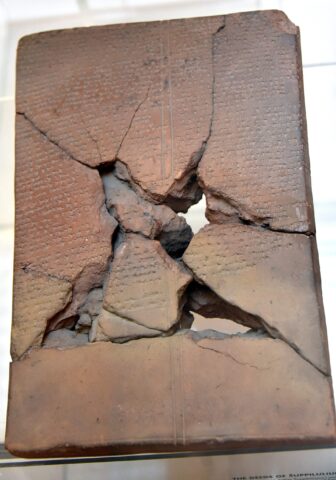
The agreement was exchanged on silver tablets, neither of which survives. Its terms are preserved in Egyptian hieroglyphic inscriptions at Karnak and the Ramesseum, and in Akkadian cuneiform copies discovered at Hattusa. The surviving versions reflect the perspectives of the two royal courts. Although frequently called the world’s first peace treaty, earlier agreements existed; its historical importance lies in the unusually extensive preservation of its terms.
The alliance continued through diplomatic correspondence and a royal marriage. In Ramesses II’s thirty-fourth regnal year, around 1246 BCE, he married Hattusili’s daughter, who received the Egyptian name Maathorneferure. The marriage strengthened the relationship established by the treaty and brought the two royal families into a formal dynastic alliance.
Hattusili III’s Foreign Policy Beyond Egypt
Assyria’s expansion into Hanigalbat, the former Mitanni kingdom, threatened Hittite interests in northern Syria. Under Adad-nirari I and Shalmaneser I, Assyrian power extended toward territories controlled by Hatti and its vassals. A diplomatic letter concerning Turira (KBo 1.14), commonly attributed to Hattusili but possibly written under Tudhaliya IV, describes raids affecting the territory of Carchemish. The Hittite king demanded that Assyria stop the attacks or allow Hittite intervention.
Hattusili maintained diplomatic relations with Kassite Babylonia. In a letter to Kadašman-Enlil II (KBo 1.10+), he recalled his friendship with the king’s father, Kadašman-Turgu, and challenged claims that Assyrian interference had prevented Babylonian messengers from reaching Hattusa. He also responded to complaints about Babylonian merchants reportedly killed in Amurru and Ugarit. The correspondence reveals the difficulties of maintaining diplomatic and commercial relations across territories affected by regional rivalries.
In Syria, Hattusili strengthened ties with Benteshina of Amurru, whom Muwatalli II had removed from power for supporting Egypt. Hattusili confirmed Benteshina’s position through a treaty (CTH 92) and reciprocal marriages between their families. Hattusili’s daughter Gassuliyawiya married Benteshina, while his son Nerikkaili married Benteshina’s daughter. These arrangements tied the succession in Amurru to the Hittite royal family.
Hattusili also regulated the activities of merchants from Ura, an Anatolian port, following complaints from King Niqmepa of Ugarit. His decree (RS 17.130) permitted them to trade in Ugarit during the summer but required them to leave during the winter. They could not acquire houses or fields, even through unpaid debts. The regulations nevertheless allowed creditors to take debtors and their families into service when obligations could not be repaid.
Hattusili III’s Death, Succession, and Historical Legacy
Hattusili III’s reign ended around 1237 BCE, although the circumstances of his death are unknown. His son Tudhaliya IV succeeded him, while Puduhepa retained her position as Great Queen during their son’s reign. No surviving evidence indicates a struggle over Tudhaliya’s immediate accession.
Kurunta’s position remained sensitive. Tudhaliya confirmed his cousin’s rule over Tarhuntassa in a new treaty, granting him additional territory and privileges. The agreement, preserved on a bronze tablet discovered at Hattusa in 1986, also records the close personal relationship between the two men and their promises of mutual protection.
The settlement may not have endured. Seal impressions and a rock inscription at Hatip identify Kurunta as a Great King, raising questions about his relationship with Tudhaliya. Some scholars believe he briefly seized the Hittite throne, while others interpret the title as evidence of a competing royal authority rather than a military coup. The surviving evidence does not resolve the dispute.
Hattusili had secured his son’s succession, but the status of Muwatalli II’s descendants remained a source of uncertainty. His diplomatic achievements helped maintain Hatti’s position as a major power, while the dynastic tensions surrounding his own accession continued beyond his reign.
Sources & Primary Texts
Primary Hittite Texts
- The Apology of Hattusili III (CTH 81).
Hittite royal account of Hattusili’s career, divine protection, and accession to the throne. Annotated text and linguistic commentary by Sara E. Kimball and Jonathan Slocum.
University of Texas at Austin. - Treaty of Tudhaliya IV with Kurunta.
Selections from the bronze treaty tablet, documenting the political arrangements for Tarhuntassa and the royal succession.
University of Texas at Austin.
Academic Studies
- Bryce, Trevor. The Kingdom of the Hittites. New edition. Oxford University Press, 2005, chapters 10–11, pp. 246–294.
Oxford Academic. - Weeden, Mark. “The Hittite Empire.” In The Oxford History of the Ancient Near East, vol. 3, pp. 529–622. Oxford University Press, 2022.
UCL Discovery. - de Martino, Stefano. “The Edict Issued by the Hittite King Hattusili III Concerning the Priesthood of the Goddess Ištar/Šaušga.” In Administrative Practices and Political Control in Anatolian and Syro-Anatolian Polities, pp. 9–23. Firenze University Press, 2023.
Full Academic Study. - de Martino, Stefano. “Some Observations on the Hittite Decree KBo 6.29+.” In Between Philology and Archaeology: Studies on Ancient Anatolia and the Near East Offered to Massimiliano Marazzi, pp. 75–82. Lockwood Press, 2024.
Academic Study. - Beckman, Gary M. Hittite Diplomatic Texts. Second edition. Writings from the Ancient World 7. Society of Biblical Literature, 1999.
JSTOR. - Hoffner, Harry A., Jr. Letters from the Hittite Kingdom. Edited by Gary M. Beckman. Writings from the Ancient World 15. Society of Biblical Literature, 2009.
SBL Press. - Singer, Itamar. Hittite Prayers. Edited by Harry A. Hoffner Jr. Writings from the Ancient World 11. Society of Biblical Literature, 2002.
SBL Press. - Taggar-Cohen, Ada. “Queen Puduhepa of the Hittites.” The New Historia. A scholarly account of Puduhepa’s religious authority, royal correspondence, and political activities.
Read Study.
Copyright & Attribution
© 2026 History & Myths. All rights reserved. Original historical analysis and editorial content by History & Myths. Ancient texts and historical evidence are discussed with reference to the academic sources cited above. Images, where used, remain subject to their respective copyright and licensing terms.