Mursili II: The Hittite King Who Faced War and Plague
Mursili II was a Hittite king who ruled during the late fourteenth and early thirteenth centuries BCE, when the empire faced widespread rebellion and a prolonged epidemic. The son of Suppiluliuma I, he inherited the throne after the brief reign of his elder brother Arnuwanda II. Although he lacked the military record of his older brothers, Mursili defeated Arzawa in western Anatolia, fought the Kaška peoples along Hatti’s northern frontier, and worked to preserve Hittite authority in Syria.
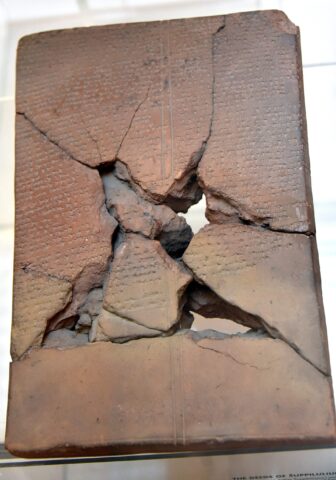
His Ten-Year Annals and Extensive Annals preserve accounts of his military campaigns and political decisions. His surviving prayers offer another perspective on his reign. Faced with an epidemic that had afflicted the kingdom since his father’s time, Mursili consulted oracles, examined older records, and appealed to the gods for an explanation. Together, these texts reveal his efforts to defend the empire and confront a prolonged crisis, although their royal perspective requires critical examination.
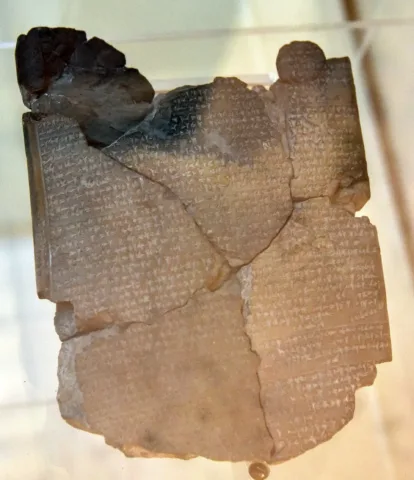
Mursili II’s Accession to the Hittite Throne
The succession after Suppiluliuma I initially appeared secure. His designated heir, Arnuwanda II, inherited the throne, while two other sons held important positions in Syria: Piyassili ruled Carchemish, and Telipinu ruled Aleppo. Arnuwanda was an experienced military commander, but he fell ill and died after a reign that may have lasted no more than eighteen months. The kingship then passed to his younger brother Mursili.
Unlike his older brothers, Mursili had not established a comparable military or political reputation. His exact age is unknown, but his Annals (CTH 61) portray foreign rulers dismissing him as a boy who lacked his father’s military strength. These accounts reveal how Mursili presented the challenges facing him, although the speeches attributed to his enemies cannot be independently verified.
The new king nevertheless had the support of his brothers, who continued to hold Carchemish and Aleppo. Their presence helped preserve Hittite authority in Syria while Mursili confronted threats closer to the homeland. He still had to demonstrate that the empire’s military power had survived the deaths of Suppiluliuma and Arnuwanda.
The Rebellions That Threatened Hatti
Mursili II faced resistance on several frontiers, but his first military campaigns concentrated on the northern territories threatened by the Kaška peoples. These communities were not united under a single king, making lasting control difficult. Some supplied troops to Hatti, while others resisted Hittite authority or attacked settlements near the royal heartland.
In his first regnal year, Mursili reported that the Kaška of Ishupitta had stopped providing soldiers. He responded by attacking one of their towns, carrying away inhabitants and livestock, and burning the settlement. According to his annals, the community resumed its military obligations. Further campaigns followed in his second year, but the northern frontier remained unstable.
In western Anatolia, Uhhaziti, king of Arzawa, refused Mursili’s demand to surrender rebels who had fled from Attarimma, Huwarsanassa, and Suruta. His refusal challenged Hittite authority and became a major cause of the war that Mursili would fight during his third and fourth years.
The surviving evidence does not show these disturbances forming a coordinated rebellion. The Kaška communities and Arzawan rulers faced different political circumstances, while Mursili’s annals present their resistance primarily as defiance of Hittite royal authority.
Mursili II’s Campaign Against Arzawa
In his third regnal year, Mursili II launched a major campaign against Arzawa in western Anatolia. Its king, Uhhaziti, had established ties with Ahhiyawa, a power generally associated with the Mycenaean world. Before advancing into Arzawa itself, Mursili sent commanders against Millawanda, a coastal city that had shifted its allegiance away from Hatti.
As the Hittite army approached, Mursili’s annals describe a thunderbolt striking Apaša, Uhhaziti’s capital. The king interpreted the event as a sign of the Storm God’s support. Uhhaziti, reportedly too ill to command his forces, sent his son Piyama-Kurunta to confront the Hittites. Mursili defeated him at Walma, near the Astarpa River, and advanced toward Apaša.
Uhhaziti fled across the sea to the islands, while groups of Arzawans sought refuge at Mount Arinnanda and the fortified city of Puranda. Mursili forced those sheltering on Arinnanda to surrender through hunger and thirst. Puranda, however, remained beyond his control when the campaigning season ended.
Uhhaziti died in exile before the following campaign. In Mursili’s fourth year, his son Tapalazunawali returned to Arzawa and attempted to defend Puranda. Mursili defeated his forces outside the city, then besieged it and cut off its water supply. Tapalazunawali escaped during the siege, but his family and many of his followers were captured. Puranda subsequently fell, ending organized resistance in Uhhaziti’s kingdom.
The campaign eliminated Arzawa as an independent rival to Hatti, but military victory did not settle how western Anatolia would be governed.
Securing Western Anatolia
After defeating Arzawa, Mursili II reorganized its territories into dependent kingdoms rather than placing the entire region under direct Hittite administration. He confirmed Mashhuiluwa’s authority over Mira and Kuwaliya, retained Manapa-Tarhunta in the Seha River Land, and recognized Targasnalli in Hapalla. Manapa-Tarhunta had supported Hatti’s enemies but was spared after his mother appealed to Mursili for mercy. All three rulers were required to recognize Hittite supremacy and provide troops when called upon.
Military measures reinforced these arrangements. Mursili’s annals record the return of Hittite subjects from the Seha River Land and the deportation of large numbers of Arzawan captives to Hattusa. In Mira, he built and fortified Arsanini, Sarawa, and Impa, stationing troops there and at Hapanuwa. These garrisons strengthened Hittite authority in territory governed by local rulers.
The settlement did not eliminate political resistance. Later in Mursili’s reign, Mashhuiluwa, a longstanding Hittite ally married to the king’s sister Muwatti, became involved in a rebellion and fled to Masa. Mursili demanded his surrender and threatened military action against those sheltering him. The people of Masa handed Mashhuiluwa over, and Mursili replaced him with Kupanta-Kurunta, his nephew and adopted son. Their treaty (CTH 68) preserved the boundaries of Mira-Kuwaliya while restricting the new ruler’s territorial expansion.
The treaties with Kupanta-Kurunta, Manapa-Tarhunta, and Targasnalli show how Mursili maintained control through local dynasties bound by military and political obligations. Their authority remained dependent on Hittite recognition, while the rebellions demonstrated that these arrangements still required enforcement.
Wars Against the Kaška and Azzi-Hayasa
Mursili II’s campaigns in western Anatolia did not end the threats along Hatti’s northern and northeastern frontiers. In his seventh regnal year, he confronted Pihhuniya, a Kaška leader from Tipiya who had seized territory in the Upper Land during Suppiluliuma I’s campaigns against Mitanni. Mursili’s annals describe Pihhuniya as unusual because he exercised authority like a king, unlike the less centralized leadership associated with other Kaška communities.
Pihhuniya refused Mursili’s demand to return captured Hittite subjects. The king attacked Tipiya, defeated him, and brought him to Hattusa as a prisoner. Although this removed a powerful opponent, it did not bring the northern frontier permanently under Hittite control.
In his seventh year, Mursili also confronted Anniya, ruler of Azzi-Hayasa, over an attack on Dankuwa and the captivity of its inhabitants. Mursili demanded their return, but Anniya refused. The Hittite king subsequently attacked the frontier fortress of Ura, yet the conflict remained unresolved.
During Mursili’s ninth year, forces from Hayasa raided Istitina and besieged Ganuvara in the Upper Land. While Mursili was occupied in Syria, his commander Nuwanza marched against the attackers and defeated them near Ganuvara, according to the royal annals.
Mursili renewed his offensive against Azzi in his tenth year, attacking fortified settlements. As his forces advanced, local elders approached him and requested terms of submission. They agreed to return Hittite captives, supply infantry and chariot troops, and accept obligations of loyalty. Rather than occupy the mountainous region directly, Mursili placed its inhabitants under oath.
The campaigns checked threats to the Upper Land and restored Hittite influence in Azzi, although continued control depended on the loyalty of local communities.
Rebellions in Syria and Hittite Diplomacy
While Mursili II campaigned in Anatolia, Hittite authority in Syria depended heavily on his brother Piyassili, also known as Šarri-Kušuh, king of Carchemish. In Mursili’s seventh year, rulers in Nuhašše rebelled against Hatti, apparently with Egyptian support. Mursili sent his general Kantuzili to confront the threat, while Piyassili also participated in the response. According to the royal annals, Egyptian forces withdrew, and Mursili did not personally campaign in Syria that year.
The situation deteriorated again in his ninth year, when Piyassili died during a meeting with Mursili in Kizzuwatna. Around the same period, Mursili’s brother Telipinu, the Hittite ruler of Aleppo, also died. Renewed resistance in Nuhašše and Qadesh prompted the king to dispatch his general Kurunta. At Qadesh, Niqmaddu killed his father, Aitakkama, and offered to restore his kingdom’s allegiance to Hatti. Kurunta nevertheless captured the city. Mursili later accepted Niqmaddu as a vassal and traveled to Carchemish, where he installed a son of Piyassili as king. He also appointed Telipinu’s son Talmi-Sharruma to rule Aleppo.
Diplomacy also helped maintain Hittite authority. In Amurru, Mursili confirmed Duppi-Teshub, grandson of Aziru, as ruler after the death of his father, DU-Teshub. Their treaty (CTH 62) required an annual tribute of 300 shekels of gold, military assistance, and loyalty to Hatti. Duppi-Teshub was forbidden from transferring his allegiance or paying tribute to Egypt. In return, Mursili recognized his kingship and promised protection for his dynasty.
Egyptian interference remained a concern. A separate Hittite account suggests that Mursili also intervened against Egyptian forces threatening Amurru, although the extent of any direct military confrontation remains uncertain. His actions restored Hittite authority in Syria, but gaps in the surviving records make it difficult to assess how long the settlement remained secure.
The Hittite Plague and Mursili II’s Prayers
Mursili II’s response to the epidemic is preserved in a series of prayers known as the Plague Prayers (CTH 378). Convinced that the disaster reflected divine anger, he sought to identify the religious or political obligations that had been violated. He consulted oracles, examined older records, and asked the gods to reveal any further causes through dreams or diviners.
In his Second Plague Prayer, addressed to the Storm God of Hatti, Mursili described finding two ancient tablets. One concerned neglected rituals for the Mala River, identified with the Euphrates. The other recorded an earlier agreement involving Egypt, which he believed his father had violated. His First Plague Prayer identified another offense: the killing of Tudhaliya the Younger and the breach of oaths sworn to him.
Mursili offered sacrifices and gifts of appeasement, acknowledged his father’s wrongdoing, and promised to restore neglected religious observances, including the ritual of the Mala River. He maintained that he had not personally committed these offenses but recognized that their consequences had fallen upon him.
The king also raised a practical concern. As those responsible for preparing offering bread and pouring libations continued to die, the temples risked losing the people needed to maintain their rituals. Mursili argued that ending the epidemic would therefore serve the gods themselves.
These prayers reveal how Mursili understood the kingdom’s suffering as a matter of royal responsibility. They document his attempts to restore divine favor, although they do not establish whether his actions brought the epidemic to an end.
Read Also
Mursili II and the Conflict with Tawannanna
Mursili II faced a struggle for authority within his court involving Tawannanna, his stepmother and the Babylonian widow of Suppiluliuma I. Tawannanna was traditionally a title held by Hittite queens, but she also used it as her name. She retained her position as Great Queen after her husband’s death, exercising considerable authority over palace affairs and religious ceremonies.
Mursili initially left her powers intact. In his prayer concerning Tawannanna (CTH 70), he accused her of misusing his father’s estate and acting against his household. The conflict intensified after his wife, Gaššulawiya, fell ill and died. Mursili claimed that Tawannanna had cursed her and caused her death through sorcery, an accusation that cannot be independently verified.
After consulting oracles, Mursili removed Tawannanna from her priestly office and banished her from Hattusa. She was provided with a residence and sufficient provisions. Mursili stated that the gods had permitted her execution but that he had chosen a lesser punishment. Even so, he feared that removing a chief priestess might provoke divine anger.
The dispute reveals the considerable power a Hittite queen could retain after her husband’s death. It also exposes the limits of the surviving evidence: Tawannanna’s own account has not survived, while Mursili’s prayer was intended to justify his decision to remove her from power.
Mursili II’s Annals and Historical Legacy
Mursili II left one of the most detailed surviving accounts of a Hittite king’s reign. His Ten-Year Annals (CTH 61.I) recount the first decade of his rule, while the more fragmentary Extensive Annals (CTH 61.II) revisit those years in greater detail and continue into his later reign. Together, they document military campaigns, royal decisions, and relations with neighboring kingdoms.
These records were composed retrospectively and served a political purpose. Mursili repeatedly credited the Sun Goddess of Arinna with protecting him in battle and portrayed his campaigns as justified responses to hostile rulers. In the conclusion to his Ten-Year Annals, he explicitly excluded the conquests of his princes and commanders, concentrating on his own achievements. The Extensive Annals include some of those omitted operations, allowing historians to compare the two versions. Treaties and other contemporary documents provide further evidence, although they also reflect Hittite political interests.
Mursili’s principal achievement was preserving the empire after the rapid deaths of his father and brother, despite prolonged warfare and internal unrest. He strengthened Hittite control in western Anatolia and maintained its authority over dependent kingdoms in Syria. When his son Muwatalli II succeeded him, Hatti remained a major regional power, although its frontiers continued to demand military and diplomatic attention.
Conclusion
Mursili II left his son Muwatalli II an empire that had survived warfare, rebellion, and a prolonged epidemic. Hatti remained a major power, although its frontiers were far from secure. Mursili’s military annals portray a king determined to establish his authority through victory, while his prayers reveal the suffering and uncertainty he faced during the plague. Together, they provide a fuller picture of a reign marked by military achievements and crises that remained beyond the king’s control.
Academic Sources & Primary Texts
This article draws on Hittite royal annals, diplomatic treaties, prayers, and modern scholarship to examine the military campaigns, political decisions, and religious concerns of Mursili II.
Primary Texts and Ancient Records
- Kimball, Sara E., Winfred P. Lehmann, and Jonathan Slocum.
“The Annals of Mursilis.”
University of Texas at Austin, Hittite Online, Lesson 5.
Annotated selections from Mursili II’s annals concerning Arzawa, western Anatolia, and Azzi. - LAMAN Digital Hittite Text Corpus.
“CTH 61: Annals of Mursili II.”
Digital catalog of the Ten-Year Annals, Extensive Annals, and surviving textual fragments. - Singer, Itamar. 2002.
Hittite Prayers.
Edited by Harry A. Hoffner Jr. Writings from the Ancient World 11. Atlanta: Society of Biblical Literature.
Includes translations of Mursili’s plague prayers and his appeals concerning Tawannanna. - Beckman, Gary M. 1999.
Hittite Diplomatic Texts.
2nd ed. Writings from the Ancient World 7. Atlanta: Scholars Press.
Scholarly translations of treaties involving Mursili II and the rulers of Amurru and western Anatolia.
Historical and Academic Studies
- Bryce, Trevor. 2005.
The Kingdom of the Hittites.
2nd ed. Oxford: Oxford University Press.
Chapter 8, “A Young King Proves His Worth: The Reign of Mursili II,” 190-220.
A comprehensive reconstruction of the king’s campaigns, political challenges, and imperial policies. - Bryce, Trevor R. 1974.
“Some Geographical and Political Aspects of Mursilis’ Arzawan Campaign.”
Anatolian Studies 24.
A specialized examination of the Arzawa campaign and its geographical and political context. - Miller, Jared L. 2007.
“The Rebellion of Hatti’s Syrian Vassals and Egypt’s Meddling in Amurru.”
Studi Micenei ed Egeo-Anatolici 49: 533-554.
A study of Syrian revolts, Egyptian interference, and Hittite diplomatic evidence. - Miller, Jared L. 2014.
“Mursili II’s Prayer Concerning the Misdeeds and the Ousting of Tawannanna.”
A critical study and translation of the royal prayer concerning Tawannanna’s removal from power.
Research Note:
Mursili II’s annals and prayers provide unusually detailed evidence for his reign, but they reflect the perspective of the Hittite court. Military victories, accusations against political opponents, and religious explanations are evaluated alongside treaties and modern historical research.
Written by
H. Moses
| All rights reserved © 2026
History & Myths