Muwatalli II: The Hittite King Who Fought Ramesses II at Kadesh
0Muwatalli II ruled the Hittite Empire from approximately 1295 to 1272 BCE, succeeding his father, Mursili II. He is best known for confronting Pharaoh Ramesses II at the Battle of Kadesh, around 1274 BCE. Although Ramesses proclaimed victory in Egyptian temple inscriptions, his army failed to capture Kadesh, which remained under Hittite control. The battle left Hittite power in northern Syria intact without producing a decisive military victory for either side.
Beyond Kadesh, Muwatalli made one of the most unusual decisions in Hittite imperial history: he transferred the royal seat from Hattusa to Tarhuntassa in southern Anatolia. Whether the move was driven primarily by military strategy, political concerns, or religious priorities remains disputed. He also entrusted his brother Hattusili with considerable authority in the troubled northern territories while maintaining Hittite control over subordinate kingdoms. The growing power of Hattusili would become a critical factor in the dynastic struggle that followed Muwatalli’s death.
Muwatalli II’s Accession to the Hittite Throne
Muwatalli II inherited an empire shaped by the conquests of his grandfather, Suppiluliuma I, and the campaigns of his father, Mursili II. Suppiluliuma had established Hittite supremacy across much of northern Syria, while Mursili defended those gains and strengthened royal authority in western Anatolia. Following his defeat of Arzawa, Mursili reorganized the region into dependent kingdoms, including Mira, Hapalla, and the Seha River Land.
Unlike his father, who had faced rebellions following the deaths of Suppiluliuma I and Arnuwanda II, Muwatalli is not known to have encountered a comparable crisis upon taking the throne. He inherited established political and military relationships, although the stability of the empire still depended on the loyalty of its subordinate rulers.
Political tensions nevertheless emerged within the royal household during his reign. Queen Tanuhepa was brought to trial in an affair that also affected her sons and supporters. Her position in the dynasty remains disputed. Traditionally regarded as Mursili II’s widow and Muwatalli’s stepmother, she has also been identified as Muwatalli’s wife. The surviving evidence does not establish the precise circumstances of her prosecution or connect it securely to his accession.
The Challenges Facing the New Hittite King
Northern Anatolia remained difficult to control because of recurring raids by the Kaška, who threatened Hittite settlements and communication routes. Muwatalli entrusted his younger brother Hattusili with military commands and the governorship of the Upper Land, later granting him authority over Hakpis. Hattusili claimed to have recovered devastated settlements and defeated Kaška forces, although much of what survives about these campaigns comes from his own Apology, written after he seized the Hittite throne.
In western Anatolia, Hittite authority was challenged by Piyamaradu, whose activities affected the Seha River Land and the region around Wilusa. A letter from Manapa-Tarhunta, a Hittite vassal ruler, describes his defeat by Piyamaradu and the involvement of Atpa, Piyamaradu’s son-in-law. The connection with Ahhiyawa, a power associated with the Mycenaean Greek world, complicated Hittite interests along the western coast. Whether Piyamaradu acted under Ahhiyawan direction or pursued his own ambitions remains uncertain.
Egypt posed a more direct challenge to Hittite possessions in northern Syria. Pharaoh Seti I had campaigned around Kadesh and Amurru, territories claimed by both empires. The allegiance of these kingdoms was particularly important because they controlled strategic routes between the Mediterranean coast and inland Syria. Their contested position would become central to the confrontation between Muwatalli and Ramesses II.
Why Did Muwatalli II Move the Capital to Tarhuntassa?
Muwatalli II transferred the Hittite royal seat from Hattusa to Tarhuntassa in the Lower Land of southern Anatolia, sometime before the Battle of Kadesh. The city’s exact location remains uncertain. Türkmen-Karahöyük, on the Konya Plain, is a leading candidate, but archaeological excavations have not yet confirmed its identification with Tarhuntassa.
The move involved more than establishing a new royal residence. According to Hattusili III’s later Apology (CTH 81), Muwatalli transferred the gods of Hatti and the deceased royal ancestors to Tarhuntassa. Relocating these sacred elements of kingship suggests that the city was intended to assume religious and dynastic functions traditionally centered on Hattusa, rather than serve merely as a military headquarters.
Hattusili’s account attributes the decision to a command from Muwatalli’s personal deity, the Storm God of Lightning, piḫaššašši. Strategic considerations offer another explanation. The Lower Land provided access to routes connecting central Anatolia with Syria, while a southern royal seat was less exposed to the Kaška raids that threatened Hattusa. Political interests within the royal court may also have influenced the decision, but no surviving statement by Muwatalli establishes his motives directly.
The transfer was short-lived. After Muwatalli’s death, his son Mursili III restored the royal seat to Hattusa. Tarhuntassa nevertheless retained political importance and later became the center of a kingdom ruled by another branch of the Hittite royal family.
Muwatalli II’s Treaties and Imperial Diplomacy
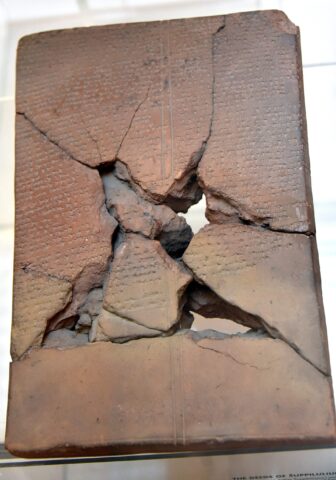
Muwatalli II’s treaty with Alaksandu, king of Wilusa in northwestern Anatolia (CTH 76), established obligations intended to secure Hittite authority in the region. Alaksandu was required to report threats against Hittite interests and provide troops when summoned. In return, Muwatalli promised to defend him against his enemies and protect the succession rights of his chosen heir.
The treaty recalls Wilusa’s earlier relationship with Hatti, particularly the loyalty of a former ruler named Kukkunni. Muwatalli also describes how he had intervened militarily to protect Alaksandu, using that assistance to reinforce the king’s obligations. Although parts of the historical account are damaged, the surviving provisions show how Wilusa could retain its local dynasty while remaining subordinate to Hittite authority.
In northern Syria, Muwatalli confirmed an agreement concerning Talmi-Šarruma, king of Aleppo and a member of the Hittite royal family. The Aleppo Treaty (CTH 75) was an authorized replacement for a document originally issued by Mursili II, whose copy had been stolen. Its provisions required mutual protection between the royal branches, guaranteed the kingship of Aleppo to Talmi-Šarruma’s descendants, and affirmed that Aleppo’s kingship could not take precedence over that of Hatti.
Elena Devecchi argues that the Aleppo document resembles a royal grant more closely than a conventional treaty of subjugation. Its emphasis on family relationships, hereditary rights, and territorial possession reflects the distinctive position of Aleppo as a kingdom governed by a branch of the Hittite dynasty.
The Road to the Battle of Kadesh
The struggle for northern Syria intensified after Pharaoh Seti I campaigned against Kadesh and Amurru. Kadesh, a fortified city on the Orontes River, had briefly come under Egyptian control but returned to Hittite allegiance before Ramesses II’s major campaign. Amurru, a kingdom extending toward the Mediterranean coast, remained a more complicated issue because of its shifting political loyalties.
Benteshina, king of Amurru, had broken with Hittite authority and aligned himself with Egypt. A later treaty issued under Tudhaliya IV describes the defection as a rebellion against Muwatalli. Historians disagree, however, on whether Amurru changed allegiance during Seti I’s reign or shortly before the Battle of Kadesh. In either case, its loss threatened Hittite control of the routes linking inland Syria with the Mediterranean coast.
Egyptian monuments from Ramesses II’s fourth regnal year, including inscriptions at Nahr el-Kelb and Byblos, indicate renewed Egyptian activity along the Levantine coast, although the extent of his military operations remains uncertain. In his fifth year, around 1274 BCE, Ramesses marched north with four army divisions named after Amun, Re, Ptah, and Seth. Muwatalli assembled Hittite forces alongside contingents from subordinate and allied kingdoms near Kadesh, where the two armies would confront one another.
Read Also
Mursili II: The Hittite King Who Faced War and Plague
Discover how Muwatalli’s father defended the empire against rebellions, secured western Anatolia, and confronted a devastating epidemic.
Muwatalli II at the Battle of Kadesh
Muwatalli II kept his army concealed near Kadesh as the Egyptians approached. According to the Egyptian Bulletin, two men identified as Shasu told Ramesses II that the Hittite king had withdrawn north toward Aleppo. Accepting their report, Ramesses advanced with his Amun division and established a camp northwest of Kadesh, while the Re, Ptah, and Seth divisions remained farther south.
The deception emerged when Egyptian scouts brought two captured Hittite agents before Ramesses. Under questioning, they revealed that Muwatalli’s army was positioned behind Kadesh, east of the Orontes River. Before the Egyptian divisions could regroup, Hittite chariots crossed the river south of the city and struck the Re division while it was still marching. The attack shattered its formation and sent retreating soldiers toward the Egyptian camp.
The Hittite chariots pursued the fleeing Egyptians and broke into Ramesses’ camp. Egyptian accounts describe some Hittite charioteers turning to plunder inside the camp, which may have disrupted the assault.
Egyptian inscriptions portray Ramesses personally rallying his troops and driving back the Hittites, but reinforcements known as the Ne’arin also helped repel the attack. Their precise origins and composition remain disputed.
Muwatalli remained with the main Hittite force east of the Orontes rather than personally leading the chariot attack. Egyptian accounts indicate that he committed additional chariots as the fighting continued, while most of his infantry remained outside the principal engagement. Whether this reflected a deliberate decision to preserve his reserves or difficulties responding to developments across the river cannot be established from the surviving evidence.
Who Won the Battle of Kadesh?
The Battle of Kadesh produced no clearly established tactical victor, but its strategic outcome favored Muwatalli II. Ramesses II survived the Hittite attack and withdrew without capturing Kadesh, which remained under Hittite control. Although the Egyptians avoided a decisive defeat, they failed to achieve their principal objective in northern Syria.
Ramesses presented the battle as a personal triumph won through his courage and the intervention of Amun. He commemorated it through extensive inscriptions and reliefs at temples including Karnak, Luxor, and Abu Simbel. These accounts preserve much of the surviving evidence for the fighting, but their portrayal of victory was shaped by the political and religious purposes of Egyptian kingship.
A different account appears in the treaty between Tudhaliya IV and Šaušgamuwa of Amurru (CTH 105), written decades after the battle. It credits Muwatalli with defeating the Egyptian king, reconquering Amurru, and installing Šapili as its ruler in place of Benteshina. An earlier treaty issued by Hattusili III confirms Benteshina’s removal but does not describe the confrontation with Egypt. The Hittite documents therefore support the kingdom’s recovery of Amurru without providing an independent narrative of the battle itself.
Muwatalli had preserved Hittite control over Kadesh and recovered an important Syrian vassal kingdom, but the conflict between the two empires continued. A formal peace treaty was concluded around 1259 BCE, approximately fifteen years later, between Ramesses II and Muwatalli’s brother Hattusili III.
Muwatalli II’s Religious Policies and the Storm God
Muwatalli II gave particular prominence to the Storm God of Lightning, known by the Luwian epithet piḫaššašši, whom he regarded as his personal divine protector. His surviving prayers reveal a strong interest in the religious traditions of southern Anatolia, especially those associated with Kizzuwatna, alongside the established cults of Hatti.
The most extensive evidence is his prayer to the assembly of gods (CTH 381), a composition of approximately 290 lines. It distinguishes between the gods of Hatti and those worshipped throughout the kingdom, naming 140 local deities associated with 83 places. The sacred bull Šeri, the Sun God of Heaven, and the Storm God of Lightning serve as intermediaries who help present the king’s petitions to the divine assembly. The text also prescribes offerings of bread, honey, oil, and wine. Rather than addressing a particular emergency, it provides a ritual framework into which a specific royal petition could be inserted.
A second prayer (CTH 382) concerns the neglected cults of Kummanni in Kizzuwatna. Muwatalli considers several possible causes of the Storm God’s anger, including offenses against local deities, violations of sacred places, and the misuse of divine property. He promises to restore neglected cultic obligations and asks that punishment fall upon those responsible rather than the entire land. The prayer reflects a king who regarded the proper maintenance of local cults as essential to divine protection.
Itamar Singer interprets Muwatalli’s elevation of piḫaššašši as part of a broader reorganization of Hittite state religion. The extent of that reform remains debated. The king’s prayers continued to recognize traditional deities, including the Sun Goddess of Arinna, who received offerings alongside the Storm God of Lightning. The evidence supports a change in religious priorities and royal patronage, but not the abandonment of the established Hittite pantheon.
Muwatalli II’s Death and the Hittite Succession
Muwatalli II died around 1272 BCE, under circumstances that remain unknown. His son Urhi-Teshub succeeded him under the throne name Mursili III. Although born to a secondary wife, Urhi-Teshub had apparently been recognized as his father’s intended successor. Seal impressions identify him as tuhkanti, or crown prince, indicating that his accession was not simply the result of support from his powerful uncle Hattusili.
Mursili III restored the royal court and the cult images of the gods to Hattusa, reversing his father’s transfer to Tarhuntassa. His relationship with Hattusili, who controlled extensive territories in northern Anatolia, soon deteriorated. In his Apology (CTH 81), Hattusili claimed that he initially supported his nephew but that Mursili subsequently stripped him of important territories, including Nerik and Hakpis. His account must be treated cautiously, since it was written to justify his rebellion and eventual seizure of the throne.
Around 1267 BCE, the dispute culminated in civil war. Hattusili defeated Mursili III and became king as Hattusili III. The deposed ruler was initially exiled to northern Syria, although he later sought refuge beyond his uncle’s control.
Muwatalli’s other son, Kurunta, had been entrusted to Hattusili’s care during his father’s lifetime. After taking the throne, Hattusili appointed him ruler of Tarhuntassa, creating a subordinate kingdom governed by Muwatalli’s descendants. The arrangement helped secure Kurunta’s position within the dynasty, but it did not eliminate future tensions. Kurunta later adopted the title Great King in his seals and a rock inscription at Hatip, raising questions about whether he eventually challenged the authority of Hattusa.
How Reliable Are the Sources for Muwatalli II’s Reign?
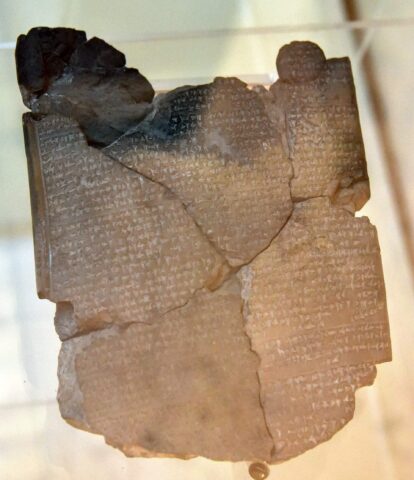
Unlike his father, Mursili II, who left extensive historical annals, Muwatalli II has no comparable surviving account of his reign. His history must instead be reconstructed from Egyptian records, Hittite treaties and prayers, diplomatic correspondence, later royal narratives, and archaeological evidence. Each source provides different information, but also reflects the interests of those who produced it.
The fullest account of the Battle of Kadesh survives in the Egyptian Poem, Bulletin, and temple reliefs. Although these sources differ in form and detail, they belong to the royal presentation of Ramesses II’s campaign rather than providing independent accounts from opposing sides. They help reconstruct the fighting, but claims about Hittite casualties and Muwatalli’s decisions must be evaluated in light of their purpose and the limited surviving Hittite evidence.
Read Also
Suppiluliuma I: The Hittite King Who Forged an Empire
Contemporary Hittite documents illuminate other aspects of his rule. Treaties reveal the legal obligations imposed on subordinate kingdoms, while royal prayers show how Muwatalli presented his relationship with the gods. A draft letter addressed to the Assyrian king Adad-nirari I (CTH 171) has traditionally been attributed to Muwatalli, although some scholars assign it to his son Mursili III. The dispute illustrates the difficulty of reconstructing Hittite foreign relations from documents whose authors are not explicitly identified.
Hattusili III’s later Apology is particularly important for the royal succession and the transfer to Tarhuntassa, but its account was shaped by his need to defend his seizure of power.
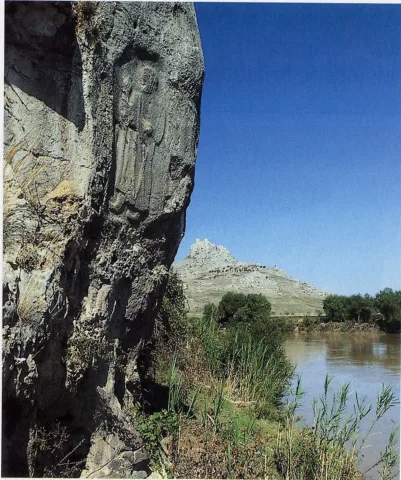
Archaeological evidence provides a different perspective. A rock relief at Sirkeli, near the Ceyhan River in southern Anatolia, identifies Muwatalli as Great King and son of Mursili II. Royal seal impressions also depict him under the protection of the Storm God, illustrating how divine favor was incorporated into his representation of kingship. These monuments confirm aspects of his royal identity and ideology, but cannot independently explain his political decisions or establish what happened during the Battle of Kadesh.
Conclusion
Muwatalli II preserved Hittite power in northern Syria despite renewed Egyptian expansion. His reign also brought significant changes to the empire’s administration and religious life, particularly through the transfer of the royal seat to Tarhuntassa and the growing authority entrusted to his brother Hattusili.
Yet the empire’s strength abroad did not guarantee stability within the royal family. Within a few years of Muwatalli’s death, Hattusili overthrew his nephew Mursili III and seized the throne. Muwatalli left behind an empire capable of defending its territories against powerful rivals, but one whose political future remained vulnerable to conflict within its own dynasty.
Academic Sources & Primary Texts
The following scholarly studies, translated ancient texts, and historical documents provide the principal evidence for Muwatalli II’s reign, diplomatic relations, religious policies, and the Battle of Kadesh.
Academic Studies
- Bryce, Trevor. The Kingdom of the Hittites. 2nd ed. Oxford: Oxford University Press, 2005. Oxford Academic.
- Beckman, Gary M. Hittite Diplomatic Texts. 2nd ed. Edited by Harry A. Hoffner Jr. Writings from the Ancient World 7. Atlanta: Scholars Press, 1999. SBL / JSTOR.
- Beckman, Gary M., Trevor R. Bryce, and Eric H. Cline. The Ahhiyawa Texts. Writings from the Ancient World 28. Atlanta: Society of Biblical Literature, 2011. Book Details.
- Singer, Itamar. Hittite Prayers. Edited by Harry A. Hoffner Jr. Writings from the Ancient World 11. Atlanta: Society of Biblical Literature, 2002. Full Text (PDF).
- Murnane, William J. The Road to Kadesh: A Historical Interpretation of the Battle Reliefs of King Sety I at Karnak. 2nd rev. ed. Studies in Ancient Oriental Civilization 42. Chicago: Oriental Institute, 1990. Full Text (PDF).
- Devecchi, Elena. “We Are All Descendants of Šuppiluliuma, Great King: The Aleppo Treaty Reconsidered.” Die Welt des Orients 40, no. 1 (2010): 1–27. Full Text (PDF).
- Cammarosano, Michele. “Tanuḫepa: A Hittite Queen in Troubled Times.” Mesopotamia 45 (2010): 47–64. University Repository.
- Matessi, Alvise. “The Making of Hittite Imperial Landscapes: Territoriality and Balance of Power in South-Central Anatolia during the Late Bronze Age.” Journal of Ancient Near Eastern History 3, no. 2 (2016): 117–162. DOI.
- Kitchen, K. A. Ramesside Inscriptions, Translated and Annotated: Notes and Comments. Vol. 2, Ramesses II: Royal Inscriptions. Oxford: Blackwell, 1998. Publisher.
Primary Hittite and Egyptian Texts
- CTH 75 and CTH 76: Muwatalli II’s agreements concerning Talmi-Šarruma of Aleppo and Alaksandu of Wilusa, preserved in the Hittite diplomatic corpus.
- CTH 81: The Apology of Hattusili III, a retrospective royal account concerning Muwatalli’s reign, the transfer to Tarhuntassa, and the struggle for succession.
- CTH 105: The treaty between Tudhaliya IV and Šaušgamuwa of Amurru, preserving a later Hittite account of Muwatalli’s confrontation with Egypt and the recovery of Amurru.
- CTH 381 and CTH 382: Muwatalli II’s prayers to the assembly of gods and to the Storm God of Kummanni, principal evidence for his religious policies.
- Egyptian Battle of Kadesh Inscriptions: The Poem, Bulletin, and associated temple reliefs commissioned under Ramesses II, preserving the principal Egyptian account of the campaign.
Hittite text numbers follow the Catalogue of Hittite Texts (CTH). Egyptian and Hittite royal accounts are interpreted critically because they reflect the political interests of their respective courts.
Copyright & Content Rights
© 2026 History & Myths. All rights reserved. Original article written by H. Moses for
History & Myths.
Unauthorized reproduction or redistribution of this article is prohibited.
Historical facts, ancient texts, and scholarly interpretations are discussed for educational and research purposes. Images and third-party materials retain their respective copyrights and licenses, with attribution provided where applicable.