The Egyptian-Hittite Peace Treaty: What It Actually Said
In the twenty-first year of Ramesses II’s reign, Hittite envoys arrived in Egypt carrying a silver tablet inscribed with a peace agreement from Hattusili III. Concluded around 1259 BCE, roughly fifteen years after the Battle of Kadesh, the treaty committed Egypt and Hatti to avoid further attacks, provide military assistance, and return fugitives under specified conditions.
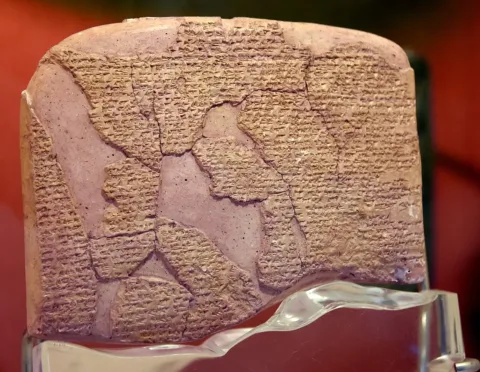
Its terms survive in Egyptian hieroglyphic inscriptions and Akkadian cuneiform tablets discovered at Hattusa. These records allow historians to examine what the two kingdoms agreed to and how each royal court presented the settlement.
What Was the Egyptian-Hittite Peace Treaty?
Often called the Treaty of Kadesh, the agreement was concluded years after the battle, not as part of its immediate settlement. The Hittite commander at Kadesh had been Muwatalli II, but the peace treaty was negotiated by his brother Hattusili III, who took the throne after Muwatalli’s son.
The agreement was a parity treaty between two independent Great Kings. Its language emphasized “peace and brotherhood,” a relationship intended to continue between their descendants. In Late Bronze Age diplomacy, addressing another ruler as a brother signified equal standing rather than a family connection.
The agreement is also known as the Eternal Treaty, reflecting its promise of lasting peace, and the Silver Treaty, referring to the silver tablets exchanged between the royal courts.
Why Did Egypt and the Hittites Make Peace?
By the time Ramesses II and Hattusili III negotiated peace, another war over Syria offered uncertain gains for either kingdom. Egypt had failed to capture Kadesh, while Hatti retained its principal Syrian territories. For Ramesses, an agreement would secure Egypt’s existing sphere of influence without the risks of renewed campaigning.
Hattusili faced more pressing political concerns. He had seized the Hittite throne from his nephew Urhi-Teshub (Mursili III), whose claim remained a threat to his legitimacy. Recognition by Ramesses could strengthen Hattusili’s position and help secure his family’s succession. Meanwhile, Assyria’s growing power east of the Euphrates raised concerns about Hittite interests in northern Syria. Peace with Egypt would allow Hattusili to address these pressures without facing another major rival to the south.
How the Peace Treaty Was Negotiated and Exchanged
The treaty emerged from diplomatic correspondence rather than a meeting between the two kings. Letters preserved at Hattusa document the exchanges that led to the agreement. Akkadian served as the diplomatic language shared by both courts, with scribes preparing the official texts.
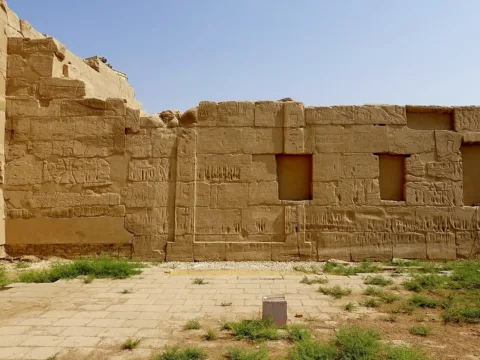
The Egyptian inscription dates the arrival of Hattusili’s delegation to the twenty-first day of the first month of Peret, in Ramesses II’s twenty-first regnal year. The delegation included Hittite messengers Tili-Teshub and Ramose, who delivered a silver tablet bearing the treaty to Ramesses at Pi-Ramesses. Its text was translated into Egyptian and inscribed at Karnak and the Ramesseum.
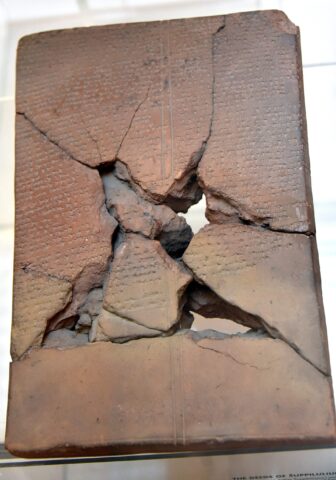
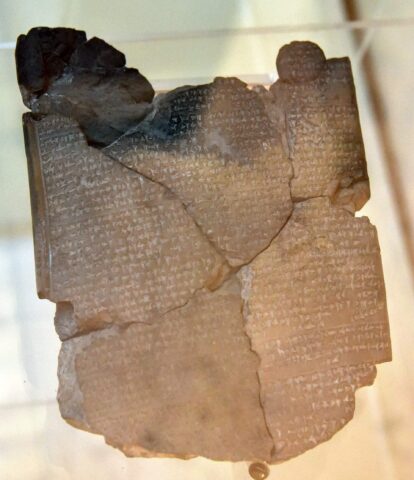
Ramesses also sent his own version of the treaty to Hattusa on a silver tablet written in Akkadian. Neither original silver tablet survives. The agreement is preserved through Egyptian temple inscriptions and Akkadian clay copies recovered from the Hittite capital.
What Did the Egyptian-Hittite Peace Treaty Actually Say?
The treaty set out obligations covering territorial security, military assistance, royal succession, and the return of fugitives. Most provisions were reciprocal, but some addressed the particular concerns of Hattusili III.
Peace and Non-Aggression
Ramesses II and Hattusili III agreed that neither ruler would invade the other’s territory or seize land by force. The commitment extended to their descendants, establishing peace as an obligation for future rulers.
Mutual Military Assistance
If either kingdom faced an external attack, the other was expected to provide military support. The treaty specifically mentioned infantry and chariots, which could be dispatched even when a king did not personally lead the forces.
Cooperation also extended to internal rebellion. Each ruler could request assistance against subjects who challenged his authority, making the agreement a means of protecting both kingdoms and their ruling dynasties.
Protection of Hattusili’s Succession
A provision in the Hittite-drafted version required Ramesses to support Hattusili’s son when he succeeded his father. If opposition arose within Hatti, Egypt was expected to send troops and chariots to defend the new king.
For Hattusili, who had seized power from his nephew Urhi-Teshub, this offered a valuable guarantee against future challenges to his dynasty.
The Return and Treatment of Fugitives
Both kingdoms agreed to return people who fled into the other’s territory. The provisions covered prominent political fugitives and ordinary individuals seeking to settle abroad. Neither king was permitted to shelter those whom the agreement required him to return.
The treaty also restricted how returned fugitives could be treated. They were not to be killed or mutilated, while their homes, wives, and children were to remain unharmed. These protections were unusually explicit, but they did not establish a modern right of asylum. The fugitives were still required to return to their country of origin.
Divine Witnesses, Blessings, and Curses
The treaty named gods from both kingdoms as witnesses, including solar and storm deities. Those who honored the agreement were promised divine protection for themselves, their families, and their lands.
Those who broke it faced curses threatening their households, territories, and subjects. The treaty’s authority therefore rested not only on the commitments of the two kings but also on the religious obligations attached to their oaths.
The Egyptian and Hittite Versions: What Was Different?
The treaty survives in two separately drafted versions exchanged between the royal courts. The hieroglyphic inscriptions at Karnak and the Ramesseum preserve an Egyptian translation of the Hittite-drafted text, while Akkadian clay tablets from Hattusa preserve Egypt’s version.
The Egyptian temple inscriptions include an additional introduction portraying Hattusili as requesting peace from Ramesses II. Egyptian scribes also rendered the Hittite ruler’s title as “Great Prince of Hatti,” whereas the Akkadian diplomatic texts recognized both monarchs as Great Kings. This distinction reflects Egyptian royal ideology rather than an unequal treaty.
The versions also differ in their treatment of earlier relations. The Hittite-drafted text acknowledges previous agreements and their breakdown during Muwatalli II’s reign, while the Egyptian-drafted version avoids explicitly acknowledging that rupture and emphasizes the renewal of lasting peace. Most obligations remain closely parallel, although the Hittite text gives fuller attention to Hattusili’s succession. Damage to the surviving Akkadian tablets prevents a complete comparison of every clause.
Did the Treaty Settle the Dispute Over Kadesh and Syria?
The Egyptian-Hittite Peace Treaty stabilized relations between the two empires without formally redrawing their spheres of influence in Syria. Its surviving provisions prohibited further aggression but did not specify territorial boundaries or assign disputed cities to either kingdom.
Kadesh, on the Orontes River, remained within the Hittite sphere of control, along with Amurru, a vassal kingdom on the northern Levantine coast. Egypt retained its possessions farther south, including territories in Canaan. Ramesses II thus accepted peace without recovering Kadesh, despite his earlier claims of victory in the battle.
The agreement effectively preserved the existing division of influence. Whether more precise territorial arrangements were settled separately remains uncertain, since no detailed boundary agreement survives.
Queen Puduhepa and the Royal Alliance
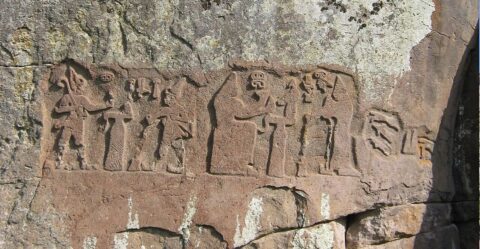
Queen Puduhepa, the wife of Hattusili III, played an important role in Hittite diplomacy. The Egyptian inscription of the peace treaty describes her royal seal alongside her husband’s. The described seal showed the Sun Goddess of Arinna embracing Puduhepa, identified as the Great Queen of Hatti. The original silver tablet and its seal impressions have not survived.
Letters preserved at Hattusa show Puduhepa corresponding directly with Ramesses II, while Queen Nefertari also exchanged messages with her. Puduhepa later helped negotiate the marriage of her daughter to Ramesses, responding to Egyptian complaints about the dowry and delays in sending the princess.
In Ramesses II’s thirty-fourth regnal year, roughly thirteen years after the treaty, he married the Hittite princess, who received the Egyptian name Maathorneferure. The marriage strengthened the alliance by linking the two royal families.
Did the Egyptian-Hittite Peace Treaty Work?
The royal correspondence shows that the treaty established a functioning diplomatic relationship. Messengers traveled regularly between Egypt and Hatti, carrying letters, gifts, and requests. Hattusili III sought Egyptian medicines and even requested a physician to help his sister Massanauzzi conceive a child.
Relations nevertheless remained tense over Urhi-Teshub, Hattusili’s deposed nephew. The Hittite king repeatedly pressed Ramesses II about his whereabouts, fearing that the former ruler might threaten his throne. Ramesses claimed that Urhi-Teshub had escaped from Egypt and that he did not know where to find him.
The alliance outlived Hattusili. His widow Puduhepa retained her position as Great Queen under their son, Tudhaliya IV, and diplomatic contacts with Egypt continued. However, the surviving correspondence provides no clear evidence that either kingdom dispatched the military forces promised in the treaty. Its success is best documented in the sustained diplomatic relationship between the two courts.
The Surviving Tablets and the 2026 Hattusa Discovery
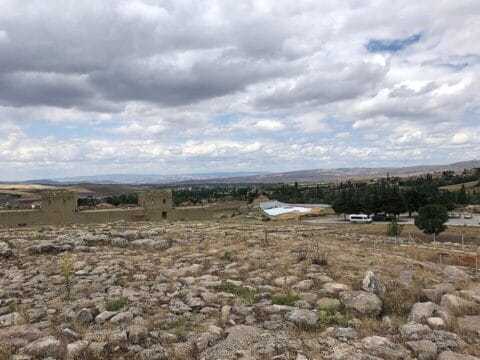
Excavations at Hattusa between 1906 and 1912 uncovered fragments of Akkadian cuneiform copies of the Egyptian-Hittite Peace Treaty. These clay tablets are now held in several collections, including the Istanbul Archaeological Museums, the Museum of Anatolian Civilizations in Ankara, Berlin’s Vorderasiatisches Museum, and the State Hermitage Museum in St. Petersburg.
On September 21, 2026, Türkiye’s Ministry of Culture and Tourism announced the identification of another treaty fragment discovered near Building E on Büyükkale, the royal citadel of Hattusa. Researchers had studied the damaged tablet for approximately a year before identifying its surviving face as part of an Akkadian copy of the agreement.
The fragment preserves passages corresponding to Articles 12–20, concerning fugitives who crossed between Egypt and Hatti. Legible lines mention people fleeing both kingdoms and provisions against destroying their homes. The discovery adds another surviving piece to the known treaty text, although its damaged condition limits what can currently be recovered from it.
Was It Really the First Peace Treaty in History?
The Egyptian-Hittite agreement is frequently called the world’s first peace treaty, but diplomatic treaties existed long before Ramesses II and Hattusili III. Around 2350 BCE, the kingdoms of Ebla and Abarsal in ancient Syria concluded an agreement following Abarsal’s defeat. Unlike the Egyptian-Hittite treaty between rulers of equal standing, it established an unequal relationship in which Abarsal became subordinate to Ebla.
The Egyptian-Hittite treaty itself refers to earlier agreements between the two kingdoms, although their original texts have not survived. What distinguishes the later agreement is the unusually extensive documentation preserved from both royal courts, allowing historians to compare their diplomatic commitments.
In 1970, Türkiye presented a copper replica of the treaty to the United Nations. Displayed near the Security Council chamber in New York, it became a modern symbol of international peace and diplomacy.
Conclusion
The Egyptian-Hittite Peace Treaty did not erase rivalry or mistrust between the two empires. It established terms under which both kingdoms could preserve their positions in Syria and manage disputes without returning to war. The royal correspondence that followed shows that this arrangement remained effective beyond Hattusili III’s reign, making the treaty a lasting example of diplomacy between the great powers of the Late Bronze Age.
Sources & Primary Texts
Primary Text and Translation
- Breasted, James Henry. Ancient Records of Egypt, Vol. III (1906), §§367–391. Translation and commentary on the Egyptian treaty inscription.
Read the text.
Academic Studies
- Bryce, Trevor. “The ‘Eternal Treaty’ from the Hittite Perspective.” British Museum Studies in Ancient Egypt and Sudan 6 (2006), 1–11. Political background, Hittite interests, and treaty obligations.
British Museum publication. - Jackson, Sam. “Contrasting Representations and the Egypto-Hittite Treaty.” In Registers and Modes of Communication in the Ancient Near East (2018). Comparative analysis of the Egyptian and Hittite treaty versions.
Read the study. - Mynářová, Jana. “Lost in Translation: An Egyptological Perspective on the Egyptian-Hittite Treaties.” Annals of the Náprstek Museum 35, no. 2 (2014), 3–8. Earlier agreements and Egyptian diplomatic representations.
Read the study. - Guo, Zhiyun. “How Well Did the ‘Eternal Treaty’ Function? An Appraisal by the Correspondence Between Hattusili III and Ramesses II.” DABIR 9, no. 1 (2022), 35–46. Evidence for the implementation of the treaty through royal correspondence.
Read the study. - Michel, Cécile. “The Oldest Peace Treaties.” Centre for the Study of Manuscript Cultures, University of Hamburg (2024). Evidence for earlier diplomatic agreements, including Ebla and Abarsal.
Read the article.
Official Archaeological Announcement
- Republic of Türkiye, Ministry of Culture and Tourism. “Barışın Binlerce Yıllık İzi Hattuşa’da Gün Yüzüne Çıktı” (September 21, 2026). Official announcement identifying a newly discovered treaty fragment at Hattusa.
Official announcement (Turkish).
Copyright & Editorial Notice
© 2026 History & Myths. All rights reserved. Original writing, historical analysis, and editorial content are protected by copyright. Ancient Egyptian and Hittite texts, modern translations, and cited scholarly works remain subject to their respective copyright or public-domain status. Images are credited separately where applicable.