Orpheus and Eurydice: Love, Death, and Underworld in Greek Mythology
Orpheus is often remembered as the musician who descended into the Underworld to recover his lost wife, Eurydice. Yet the enduring power of his myth does not come from the journey itself. It comes from a question that lies at the heart of the story: can love overcome death?
Unlike many Greek heroes, Orpheus does not rely on strength, weapons, or divine favor. His only power is music, and through it he accomplishes what no ordinary mortal should be able to achieve. He softens the rulers of the dead, moves the creatures of the Underworld, and wins a chance that seems impossible. For a brief moment, he comes closer than anyone else to reversing death itself.
The tragedy of the myth lies in what happens next. Orpheus proves that love can reach beyond the boundary separating the living from the dead, but he also discovers that some limits cannot be crossed. His story is therefore not simply a tale of romance. It is one of Greek mythology’s most profound reflections on trust, loss, human limitation, and the enduring power of death.
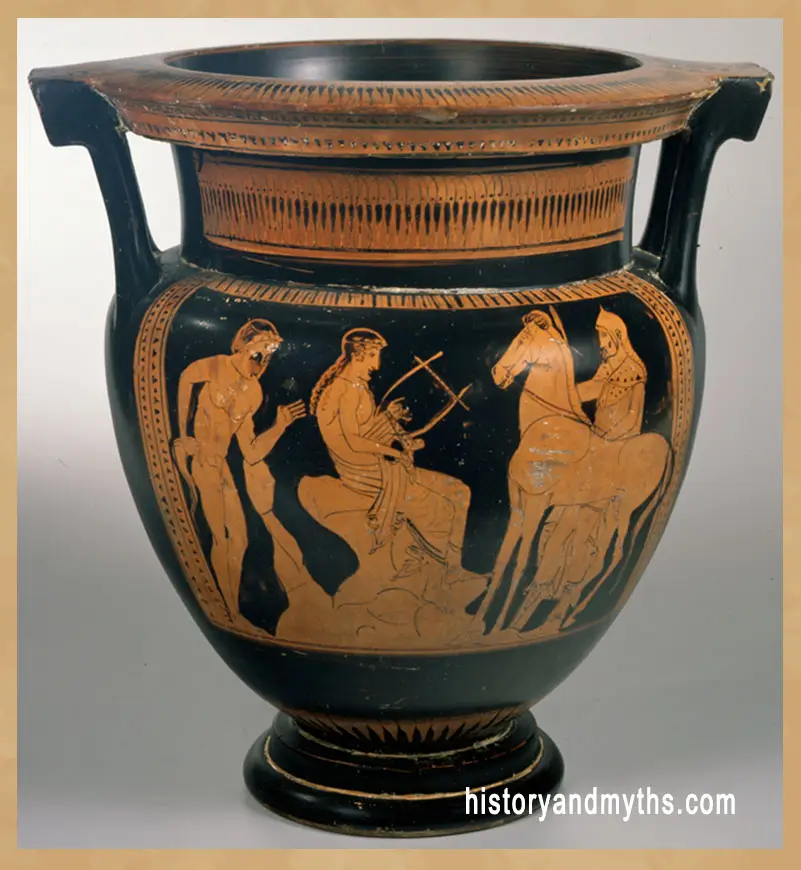
Why Orpheus Was Different From Other Greek Heroes
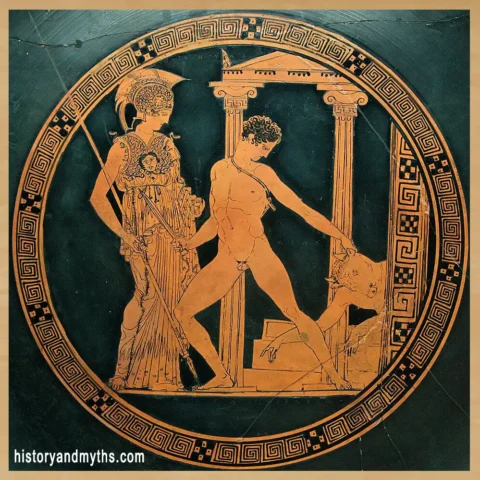
Most Greek heroes earn their reputations through physical achievements. Heracles defeats monsters, Theseus confronts the Minotaur, and Perseus slays Medusa. Their stories are built around strength, courage, and victory over external threats. Orpheus stands apart because his greatest challenge is neither a monster nor an enemy. It is loss.
What makes Orpheus unique is the nature of his power. He possesses no legendary weapon and commands no army. Instead, he is defined by music so extraordinary that it affects both the natural world and the divine. Trees move, animals become calm, and even supernatural beings are said to listen. His influence comes not from force but from persuasion.
This distinction shapes the entire myth. When Eurydice dies, Orpheus does not seek revenge, conquest, or glory. His goal is deeply personal: to bring back someone he loves. As a result, the story shifts away from the heroic pattern found in many Greek myths. The central conflict is not whether he can defeat an opponent, but whether human devotion can challenge the boundary between life and death.
The myth also presents a different model of heroism. Greek heroes often demonstrate greatness by overcoming dangers through action. Orpheus demonstrates greatness through endurance, grief, and determination. His willingness to descend into the Underworld is no less extraordinary than slaying a monster, yet it is motivated by love rather than fame.
This is why the story occupies a special place within Greek mythology. Orpheus is not remembered as the strongest hero or the greatest warrior. He is remembered as the hero who attempted something that even the most powerful warriors rarely dared to confront. He challenged death itself, not with violence, but with the hope that love could succeed where strength could not.
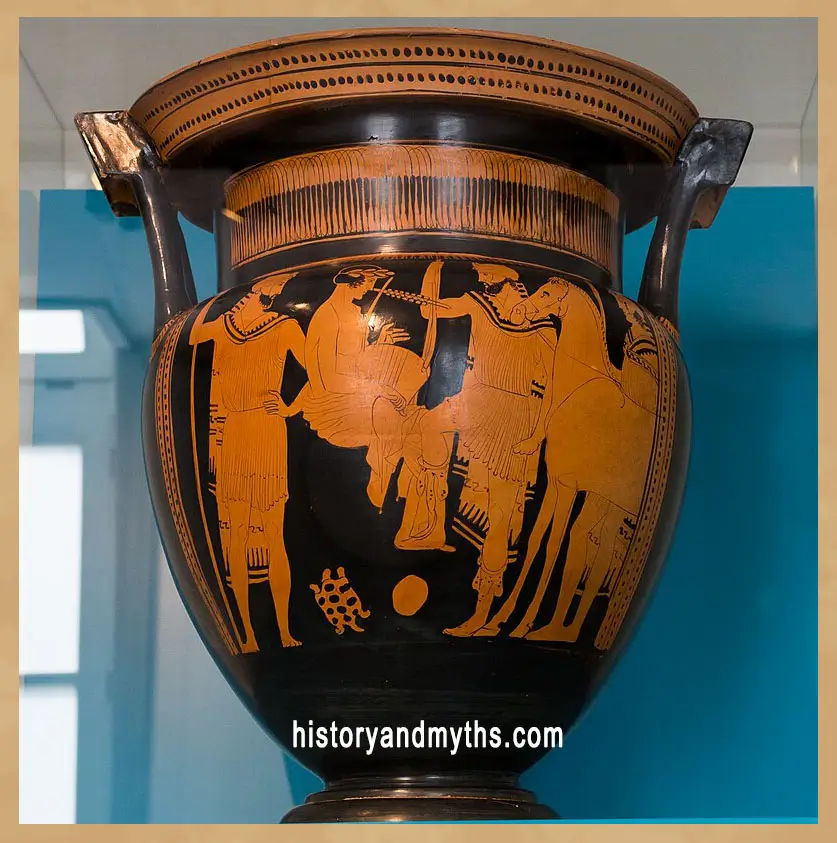
| Element | Meaning | Role in the Myth |
|---|---|---|
| Orpheus | Human devotion and artistic power | Challenges death through love and music |
| Eurydice | The object of loss and longing | Motivates the descent into the Underworld |
| The Underworld | The realm of irreversible separation | Tests the limits of human power |
| The Forbidden Look | Doubt and uncertainty | Causes the final tragedy |
| Hades’ Condition | Trust in the unseen | Determines whether love can succeed |
The First Hero to Challenge the Underworld Without Violence
Journeys to the Underworld appear in several Greek myths, but they are usually connected to power, punishment, or heroic trials. Orpheus’s descent is different. He enters the realm of the dead not to defeat an enemy, capture a prize, or prove his strength. He goes there to recover Eurydice.
This difference matters because it changes the nature of the challenge. A warrior can confront a monster with weapons. A hero can overcome obstacles through courage or physical endurance. None of those methods are useful in the kingdom of Hades. The Underworld operates according to rules that cannot be broken through force alone.
Orpheus therefore relies on the only power available to him: music. In the myth, his songs affect beings that normally remain untouched by human emotion. Guardians of the Underworld listen. The dead are moved. Even Hades and Persephone, rulers of a realm defined by permanence and separation, are persuaded to grant a request that would ordinarily be impossible.
This achievement is often overshadowed by the tragedy that follows. Yet from the perspective of Greek mythology, reaching this point is already extraordinary. Orpheus succeeds where almost every mortal would fail. He does not conquer the Underworld, but he gains something even more remarkable: the willingness of its rulers to bend their own rules.
The story therefore challenges a common assumption about heroism. Strength is not always the most powerful force in mythology. Sometimes persuasion, art, and emotional truth can accomplish things that violence cannot. Orpheus reaches the heart of the Underworld without drawing a weapon, making him one of the most unusual heroes in the Greek tradition.
Why Hades Allowed Eurydice to Leave
One of the most remarkable moments in the myth is not Orpheus’s descent into the Underworld but Hades’s response to it. In Greek mythology, death is usually final. The boundary separating the living from the dead exists precisely because it is not meant to be crossed. Yet Hades agrees to release Eurydice, creating an exception to one of the most fundamental rules of the cosmos.
This decision is significant because Hades is rarely portrayed as impulsive or easily persuaded. Unlike many Olympian gods, he governs through order and permanence. The dead belong to his realm, and his authority depends on maintaining that division. Allowing a soul to leave therefore carries consequences far beyond a single act of compassion.
The myth suggests that Orpheus succeeds because his grief is genuine and his music expresses a truth that even the rulers of the Underworld cannot ignore. Hades is not defeated or tricked. Instead, he acknowledges the extraordinary nature of Orpheus’s devotion and offers a chance that no ordinary mortal would receive.
Yet the opportunity comes with a condition. This detail reveals that Hades is not overturning the laws of death. He is testing whether Orpheus can respect them. Eurydice may return, but only if the journey follows rules established by powers greater than human desire.
Understanding this distinction is crucial. The myth is not claiming that love has conquered death. If that were true, Eurydice would leave freely and permanently. Instead, the story creates a narrow opening within an otherwise unbreakable system. Hades grants hope, but he does not surrender control. That balance between possibility and limitation lies at the center of the tragedy that follows.
The Meaning of the Forbidden Look
The most famous moment in the myth occurs when Orpheus turns to look at Eurydice before they have fully left the Underworld. At first glance, this action appears simple. He breaks a rule and suffers the consequences. Yet the power of the story lies in why he turns.
The condition imposed by Hades requires trust. Orpheus must continue walking without visible proof that Eurydice is following him. He knows she has been released, but he cannot see her. The journey therefore becomes more than a physical escape from the Underworld. It becomes a test of faith in what cannot yet be confirmed.
This transforms the forbidden look into a symbolic act. Orpheus does not turn because he stops loving Eurydice. He turns because uncertainty overwhelms him. The closer he comes to success, the more he fears failure. In that moment, doubt becomes stronger than trust.
Greek mythology often portrays tragic mistakes as deeply human rather than malicious. Orpheus is not arrogant, cruel, or reckless. His error emerges from anxiety and longing. After risking everything to recover Eurydice, he desperately wants reassurance that she is truly there. The desire is understandable, which makes the outcome even more painful.
The myth suggests that some goals require patience as much as determination. Orpheus accomplishes the impossible by reaching the Underworld and persuading its rulers, yet he fails during the final step because he cannot endure uncertainty. His glance backward lasts only a moment, but it reveals the central lesson of the story: even extraordinary love cannot succeed if trust collapses before the journey is complete.
The Central Idea Behind the Myth
The story of Orpheus is not simply about romantic love. It explores a deeper question that fascinated the ancient Greeks: can human devotion overcome the laws that govern life and death? The myth answers with both hope and tragedy. Love can challenge death, move the gods, and reach the Underworld itself—but it cannot completely erase the limits of mortality.
© historyandmyths.com — Educational Use
Love Could Reach the Underworld—But Not Defeat Death
The myth of Orpheus is often remembered as one of the greatest love stories in Greek mythology, yet its ending reveals a more complicated message. Love carries Orpheus farther than any ordinary mortal could travel. It motivates him to enter the realm of the dead, confront unimaginable loss, and persuade its rulers to show mercy. In that sense, love achieves something extraordinary.
At the same time, the myth refuses to present love as all-powerful. Even after winning the sympathy of Hades and Persephone, Orpheus does not gain complete control over fate. The possibility of Eurydice’s return exists only within strict limits established by powers greater than human desire.
This distinction is central to the story’s meaning. Greek mythology frequently celebrates love, loyalty, and devotion, but it rarely portrays them as forces capable of rewriting the fundamental order of the universe. Death remains one of the few boundaries that even heroes struggle to overcome. Orpheus comes closer than most, yet the boundary ultimately remains intact.
The tragedy therefore does not suggest that love is weak. On the contrary, love proves powerful enough to move gods, soften judgment, and create hope where none existed before. What the myth questions is whether any human emotion, no matter how sincere, can permanently overturn the laws governing life and death.
By the end of the story, Orpheus has demonstrated the reach of love but also its limits. His journey shows that devotion can challenge death, speak to it, and even negotiate with it. What it cannot do is erase it. That tension between possibility and limitation is what gives the myth its enduring emotional force.
Continue Reading
Why Faith Matters More Than Love in the Myth
Many interpretations of the story focus entirely on love, yet the decisive moment in the myth is ultimately a question of trust. Orpheus’s love for Eurydice never disappears. What fails is his ability to believe that the promise he has been given will be fulfilled.
This is why the condition imposed by Hades is so important. The challenge is not to prove devotion. Orpheus has already done that by descending into the Underworld. The challenge is to continue forward without certainty. He must trust that Eurydice is behind him even when he cannot see her.
The myth therefore shifts from love to faith. Throughout the journey, Orpheus is asked to accept something that remains invisible. His success depends on resisting doubt until the very end. When he turns, the act reveals a loss of confidence rather than a loss of affection.
This theme appears repeatedly in Greek mythology. Characters are often tested not only by external dangers but by their ability to endure uncertainty. The greatest obstacles are sometimes psychological rather than physical. Orpheus reaches the point where no monster can stop him, yet he cannot overcome the fear that he may have already lost Eurydice again.
By emphasizing trust, the myth gains a deeper meaning. Love gives Orpheus the strength to begin the journey, but faith is what would have allowed him to complete it. The tragedy occurs because one survives while the other falters. In that sense, the story is not merely about loving someone enough to challenge death. It is about believing enough to keep moving forward when proof is impossible.
The Limits of Human Power Over Death
At the heart of the myth lies a question that Greek mythology returns to again and again: how much power do mortals truly possess? Orpheus reaches further than almost any human figure in the mythological tradition. He enters the Underworld, speaks to its rulers, and nearly succeeds in bringing a dead soul back to the world of the living. Yet even this extraordinary achievement has limits.
The story makes clear that talent, courage, and devotion do not grant complete control over existence. Orpheus possesses gifts that seem almost supernatural, but he remains human. The laws governing life and death existed before him and continue after him. His journey demonstrates that those laws can sometimes be challenged, but not permanently overturned.
This idea reflects a broader pattern in Greek mythology. Heroes often achieve remarkable victories, yet they eventually encounter boundaries that cannot be crossed. Some confront fate, others confront the gods, and others confront mortality itself. Their greatness is measured not by limitless power but by how they respond to those boundaries.
Orpheus’s tragedy is therefore larger than the loss of Eurydice. It reveals the limits of human agency in a universe governed by forces beyond human control. He proves that love can inspire impossible acts and that art can influence even the rulers of the dead. What he cannot prove is that mortality itself can be conquered.
By ending in failure rather than triumph, the myth preserves one of the central ideas of Greek thought: there are boundaries that define the human condition. Orpheus reaches those boundaries more closely than most heroes, allowing the myth to explore both the extraordinary possibilities and the unavoidable limits of human power.
Orpheus as a Symbol of Human Limits
Orpheus remains one of the most enduring figures in Greek mythology because his story speaks to a universal human experience. Unlike heroes who represent strength, conquest, or divine favor, Orpheus represents the desire to overcome loss. His journey begins with a hope shared by countless myths and stories: the belief that love might be powerful enough to undo death.
What makes the myth memorable is that it refuses to offer a complete victory. Orpheus achieves more than any ordinary person could imagine, yet he still fails to reclaim Eurydice permanently. The story therefore avoids the fantasy of unlimited human power and instead focuses on the reality of human limitation.
In this sense, Orpheus becomes a symbol of the boundary that every person eventually encounters. Knowledge has limits. Strength has limits. Love has limits. Even the most gifted individual cannot fully control fate or mortality. The myth acknowledges these restrictions without diminishing the value of the struggle itself.
This is why Orpheus remains tragic rather than defeated. His significance lies not in success but in the attempt. He is remembered because he dared to confront an impossible loss and refused to accept it without resistance. The failure does not erase the courage of the effort.
By the end of the myth, Orpheus embodies one of the central themes of Greek mythology: greatness is not measured by absolute victory. Sometimes it is measured by how far a person is willing to go in the face of limits that cannot ultimately be overcome. His story endures because it captures both the power of human hope and the realities that hope cannot always change.
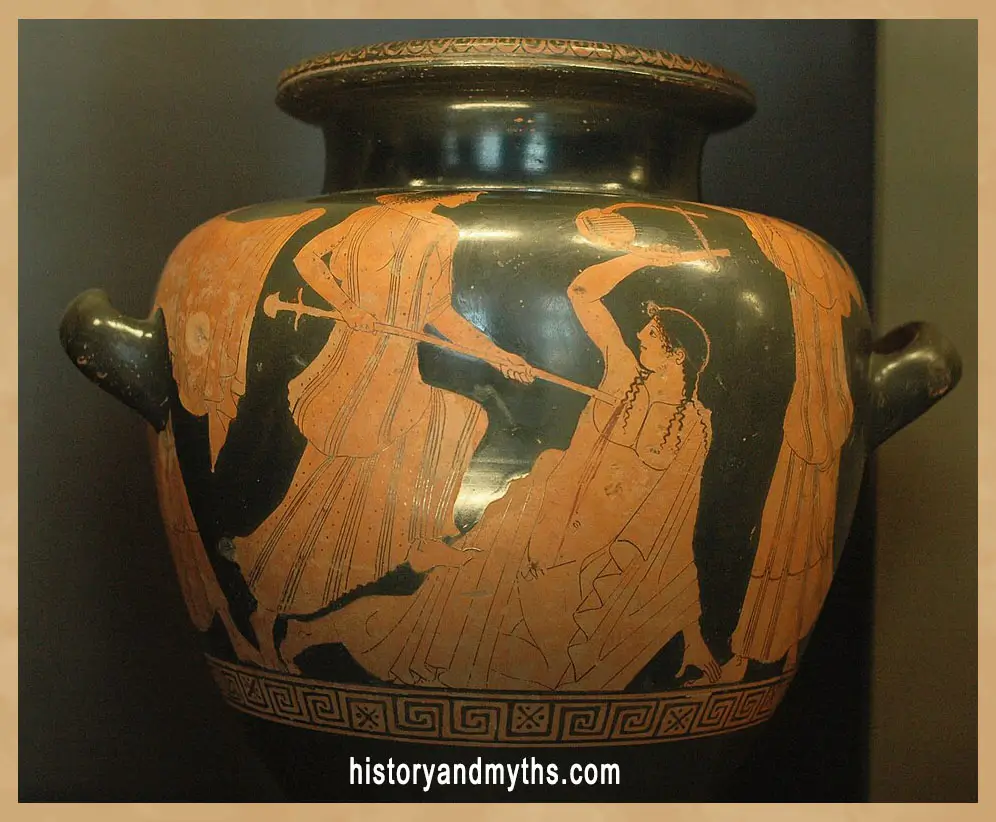
The myth of Orpheus and Eurydice is often described as a tragic love story, but its deeper significance lies in its exploration of the relationship between love and mortality. Orpheus proves that devotion can inspire extraordinary actions, allowing a mortal to enter the Underworld and move even its rulers through the power of music. Yet the myth also demonstrates that some boundaries remain difficult, if not impossible, to cross.
Through the descent into the realm of the dead, the condition imposed by Hades, and the fatal glance backward, the story examines trust, uncertainty, and the limits of human control. Love carries Orpheus further than any weapon or act of strength could have done, but it does not grant mastery over death itself.
This balance between possibility and limitation is what gives the myth its lasting power. Orpheus becomes a symbol not only of love but of humanity’s enduring struggle against loss. His story reminds us that even when victory is unattainable, the attempt to challenge fate can become a form of greatness in its own right.
Key Takeaways
- Orpheus differs from most Greek heroes because he relies on music rather than force.
- His journey to the Underworld is motivated by love rather than glory or conquest.
- Hades grants a rare exception but does not overturn the laws of death.
- The forbidden look symbolizes doubt and the collapse of trust.
- The myth suggests that faith is as important as love.
- Orpheus demonstrates how far human devotion can go when confronting loss.
- The story ultimately explores the limits of human power over mortality.
- Orpheus remains a symbol of hope, grief, and the boundaries of the human condition.
Frequently Asked Questions
Who was Orpheus in Greek mythology?
Orpheus was a legendary musician whose songs could influence humans, animals, nature, and even the gods.
Why did Orpheus go to the Underworld?
He descended into the Underworld to bring back his wife Eurydice after her death.
Why did Hades allow Eurydice to leave?
According to the myth, Hades was moved by Orpheus’s music and granted him a chance to recover Eurydice under strict conditions.
Why did Orpheus look back?
The myth suggests that uncertainty and doubt overcame him before he completed the journey out of the Underworld.
What does the forbidden look symbolize?
It symbolizes the collapse of trust and the difficulty of believing in something that cannot yet be seen.
Did Orpheus defeat death?
No. He came closer than most mortals, but the myth ultimately emphasizes the limits of human power over death.
What is the main lesson of the myth?
The story explores love, faith, grief, and the boundaries that separate human beings from immortality.
How is Orpheus different from other Greek heroes?
Unlike most heroes, he relies on music, persuasion, and emotional power rather than physical strength or combat.
Sources & Rights
- Apollonius of Rhodes. Argonautica.
- Virgil. Georgics, Book IV.
- Ovid. Metamorphoses, Books X–XI.
- Apollodorus. Library.
- Pausanias. Description of Greece.
- Walter Burkert. Greek Religion.
- Karl Kerényi. The Heroes of the Greeks.
- Timothy Gantz. Early Greek Myth.
- Robert Graves. The Greek Myths.
- Richard Buxton. The Complete World of Greek Mythology.
- Sarah Iles Johnston. Ancient Greek Religion.
- Fritz Graf. Greek Mythology.
- Jennifer Larson. Understanding Greek Mythology.
- Robin Hard. The Routledge Handbook of Greek Mythology.
- Gregory Nagy. The Ancient Greek Hero in 24 Hours.
- William Hansen. Classical Mythology.
- Edith Hall. Introducing the Ancient Greeks.
- H.J. Rose. A Handbook of Greek Mythology.
- Emma Griffiths. Greek Myth: A Very Short Introduction.
- Mark P.O. Morford & Robert Lenardon. Classical Mythology.
Written by H. Moses — All rights reserved © Mythology and History