Sumerian Religious Practices: Rituals, Prayers, and Daily Worship
Sumerian religious practices were structured daily rituals carried out in temples and homes, governed by purification, prayer, offerings, and priestly supervision. These practices were not abstract beliefs but regulated actions—ablutions, hymns, sacrifices, and feeding the gods—designed to maintain cosmic order and divine favor in early Mesopotamia.
| Sumerian Religious Practices in Mesopotamia |
Ablution and Ritual Washing
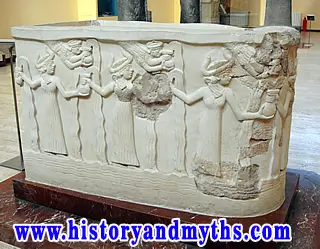
Ablution seemed to be limited to washing the hands, using a ceremonial basin called (Abzu) found in most Sumerian temples, such as in Eridu and Lagash.
The basin was connected to running water channels outside the temple.
It is believed that ablution was a religious practice to draw near to the god Enki, the god of water, wisdom, and creator of humans.
Touching his water to the human body was considered a purification and re-creation of the body.
| Practice | Purpose | Main Deity | Location | Period |
|---|---|---|---|---|
| Ablution | Purification before ritual | Enki | Temple basins (Abzu) | Early Dynastic–Ur III |
| Prayer | Supplication and thanksgiving | Various gods | Temples, homes | All periods |
| Hymns (Shir) | Praise and ritual performance | Major gods, kings | Temples | Ur III–Old Babylonian |
| Purification rites | Expelling evil spirits | Enki, Nusku | Temples, households | All periods |
| Offerings & feeding gods | Maintaining divine favor | City gods | Temple sanctuaries | All periods |
Prayer in Sumerian Daily Life
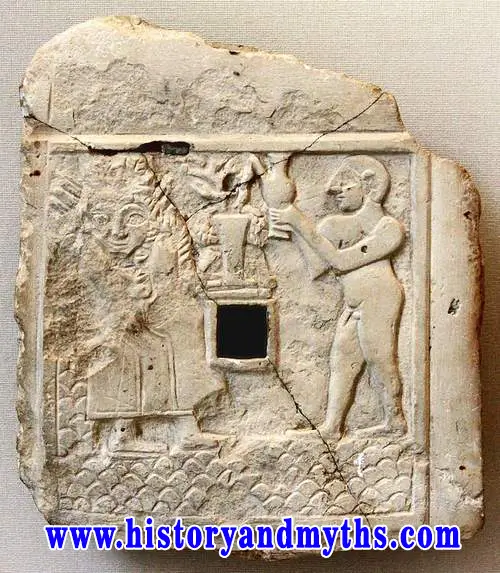
Sumerian prayers seemed to be extemporaneous supplications directed to a specific god, recited in temples, homes, palaces, or elsewhere.
Prayers (Prayers) differ from hymns (Hymns) as they are pleas to the god and are not accompanied by music, while hymns are praises to the god often performed with musical instruments.
Prayers could be conducted with a priest or alone by the worshiper in front of a god’s statue.
Prayers were often accompanied by specific rituals and gestures indicating the worshiper’s reverence and the offerings they presented, varying according to time and place.
The content of the prayers included priestly words and offered a mythological experience to the worshiper, focusing on requests and thanksgiving.
Fasting and Religious Abstention
Priests, possibly for economic reasons, would recommend abstaining from certain meats, fruits, or vegetables for a specified time, framed with religious or mythological justifications.
Hymns and Sacred Music
Hymns differed from prayers and spells as they were spiritual songs reflecting on the god’s qualities and invoking blessings, whereas prayers were specific requests for health, success, or justice. Spells were ritual texts to expel demons by invoking the god and good spirits.
Sumerian hymns were divided into priestly and royal hymns. Priestly hymns glorified the great Sumerian gods, while royal hymns praised kings and their deeds, often including praise for a specific god.
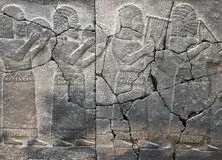
Hymns were performed with known melodies and musical rhythms, with instruments like drums, tambourines, and lyres, often accompanied by temple dancers.
Purification Against Evil Spirits
Purification was based on the belief that humans and places were surrounded by evil spirits.
To connect with the sacred, materials symbolizing the gods were used for purification. Water and oil represented the god Enki, fire represented the god Nusku, and libations and sacrifices represented the god Shul-shaka, son of the god Ninkursu.
Burial referred to the god Dumuzi, and burning symbolized the god Utu’s connection to fire and the underworld.
Incense Burning and Ritual Smoke
Temples had high altars for incense, with a place resembling a stove where incense was burned daily or during other rituals. Special incense containers were held by priests during exorcism rituals.
Sumerian Religious Practice — Overview
- Religion was practiced through daily, regulated rituals.
- Priests supervised purification, offerings, and temple rites.
- Water, oil, fire, and food symbolized divine presence.
- Rituals aimed to preserve cosmic balance and ward off evil.
- Temple economy sustained both gods and priesthood.
Pouring Liquids and Sacred Anointing
Oil was specifically poured on the bride’s head during weddings, possibly accompanied by washing, mentioned in the reforms of Urukagina.
Pouring oil and anointing were also done during the king’s coronation, using a special vessel for sacred water.
Opening and Washing the God’s Mouth
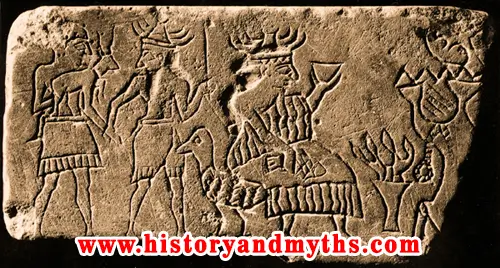
This ritual bestowed life upon new statues of gods. It involved placing jars of sacred water, red and white cloths beside the statue, offering sacrifices, washing the statue’s mouth with specific herbs, cedar sticks, cloth, salt, cedar resin, fats, precious stones, butter, and syrup, and reciting ritual phrases. The priest would lead a ram with the statue to the riverbank, placing the statue on a reed mat facing east under a canopy, offering sacrifices again, pouring beer, slaughtering the ram, placing a fish and a turtle of gold and silver, a bronze axe, and a copper tong inside the ram’s skin, and casting these into the river, accompanied by ritual phrases.
The statue was then placed in the designated temple, completing the ritual of giving life and spirit to the statue made by craftsmen.
Feeding the Gods and Daily Offerings
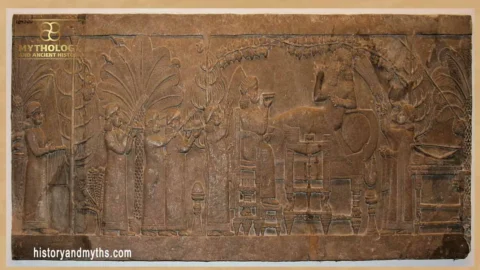
Priests responsible for god statues performed this ritual daily, offering various foods to the gods. There were two main meals: one around noon and a secondary one before closing the temple.
Priests provided food from temple offerings, sourced from the best agricultural fields, orchards, and livestock.
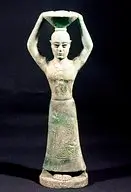
These offerings also fed the temple’s priests and workers. A table in front of the god’s statue would hold vessels with water, drinks, food slices, and fruits.
Often, the food would be given to the king afterward to bless him or signify the connection between the god and the king.
Fuhuo (Substitute Ritual)
Indirect rituals (symbolic) were more common, using a doll made of dough, clay, wax, or wood representing the enemy to transfer the misfortune (e.g., illness). The doll was kept near the patient, then cast into water with a magical incantation (Namburbu).
Sometimes, animals were used as substitutes. The patient would keep a goat kid beside them overnight before the ritual.
The next day, a grave-like pit was dug where the patient and the goat kid were laid, with a symbolic and actual slaughter performed. The goat’s body was treated with respect, washed, perfumed, and wrapped in the patient’s clothes.
The priest would recite a mourning prayer, declaring the goat’s death, symbolizing the patient’s recovery. Funeral meals were offered to the goddess Ereshkigal to honor and pacify her, followed by the goat’s burial, symbolizing the burial of the now-healed patient.
These rituals combined contact (animal contact) and similarity (simultaneous slaughter, exchanged clothes, respectful treatment of the goat’s body, and death declaration).
Sacrifices in Sumerian Religion
Woolley believed these courtiers were buried with kings to ensure a peaceful afterlife.
However, the rarity of such tombs in Sumer and Mesopotamia raised doubts. Kramer explained it through the Sumerian text (The Death of Gilgamesh), suggesting the tomb was seen as a “purified palace,” where the dead king was accompanied by many courtiers and offerings, similar to the royal tombs of Ur following Gilgamesh’s death.
This indicates that human sacrificial rituals were royal practices that ceased after the third millennium BCE.
Plant sacrifices were frequently offered to temples, including fruits, while animal sacrifices included bulls, cattle, goats, deer, fish, pigs, and birds. Animal offerings were linked to the god’s animal symbol: Enlil’s bull, Nanshe’s fish, and Ninurta’s horses.
And in conclusion, we see how the Sumerians lived lives filled with piety and deep respect for their gods.
Through their daily rituals such as ablutions, prayers, fasting, and purification, they sought to balance the demands of the self with the dictates of nature, avoiding sin and drawing closer to the gods.
These rituals are reflected in the details of their religious life, representing a blend of deep faith and spiritual philosophy, where every element of nature and ritual played a role in cleansing the individual and elevating their spirit.
Key Takeaways
- Sumerian religion focused on ritual action rather than belief statements.
- Daily purification was essential before any sacred act.
- Prayers, hymns, and offerings followed distinct ritual rules.
- Priests acted as mediators between humans and gods.
- Feeding the gods reinforced the bond between temple and kingship.
Frequently Asked Questions
Were Sumerian religious rituals performed daily?
Many rituals were daily practices, especially purification and offerings.
Did ordinary people participate in rituals?
Yes. While priests led temple rites, individuals prayed and purified themselves at home.
What was the role of priests in Sumerian religion?
Priests supervised rituals, offerings, and purification ceremonies.
Were hymns different from prayers?
Yes. Hymns praised gods, while prayers requested help or forgiveness.
Why were offerings given to the gods?
Offerings maintained divine favor and cosmic balance.
Did Sumerians believe rituals expelled evil spirits?
Yes. Many purification rites aimed to drive away harmful forces.
Sources & Rights
- Kramer, Samuel Noah. The Sumerians. University of Chicago Press.
- Bottéro, Jean. Religion in Ancient Mesopotamia. University of Chicago Press.
- Hallo, William W. The Context of Scripture. Leiden: Brill.
- Black, Jeremy, and Anthony Green. Gods, Demons and Symbols of Ancient Mesopotamia. British Museum Press.
- van de Mieroop, Marc. A History of the Ancient Near East. Wiley-Blackwell.
Written by H. Moses — All rights reserved © Mythology and History