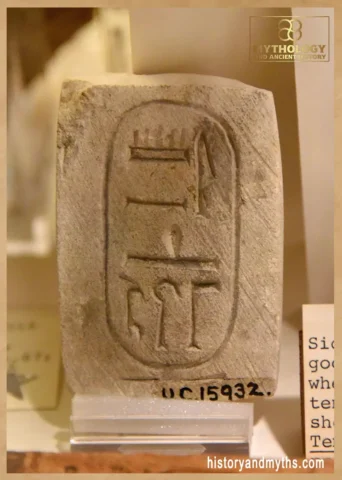
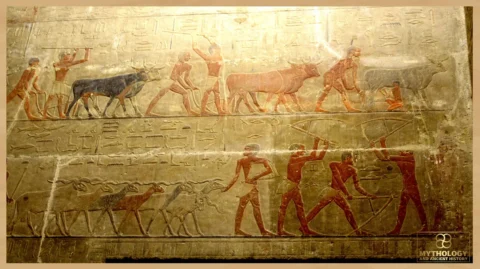
Political Propaganda in Ancient Egypt: How Pharaohs Controlled Truth
Political propaganda in Ancient Egypt wasn’t a modern “campaign” with speeches and newspapers—it was a controlled system of power messaging. Pharaohs used temples, inscriptions, monuments, public rituals, and even rewritten history to prove one idea: they alone could protect Ma’at (order), defeat chaos, and keep the gods on Egypt’s side. The goal wasn’t truth—it was legitimacy.
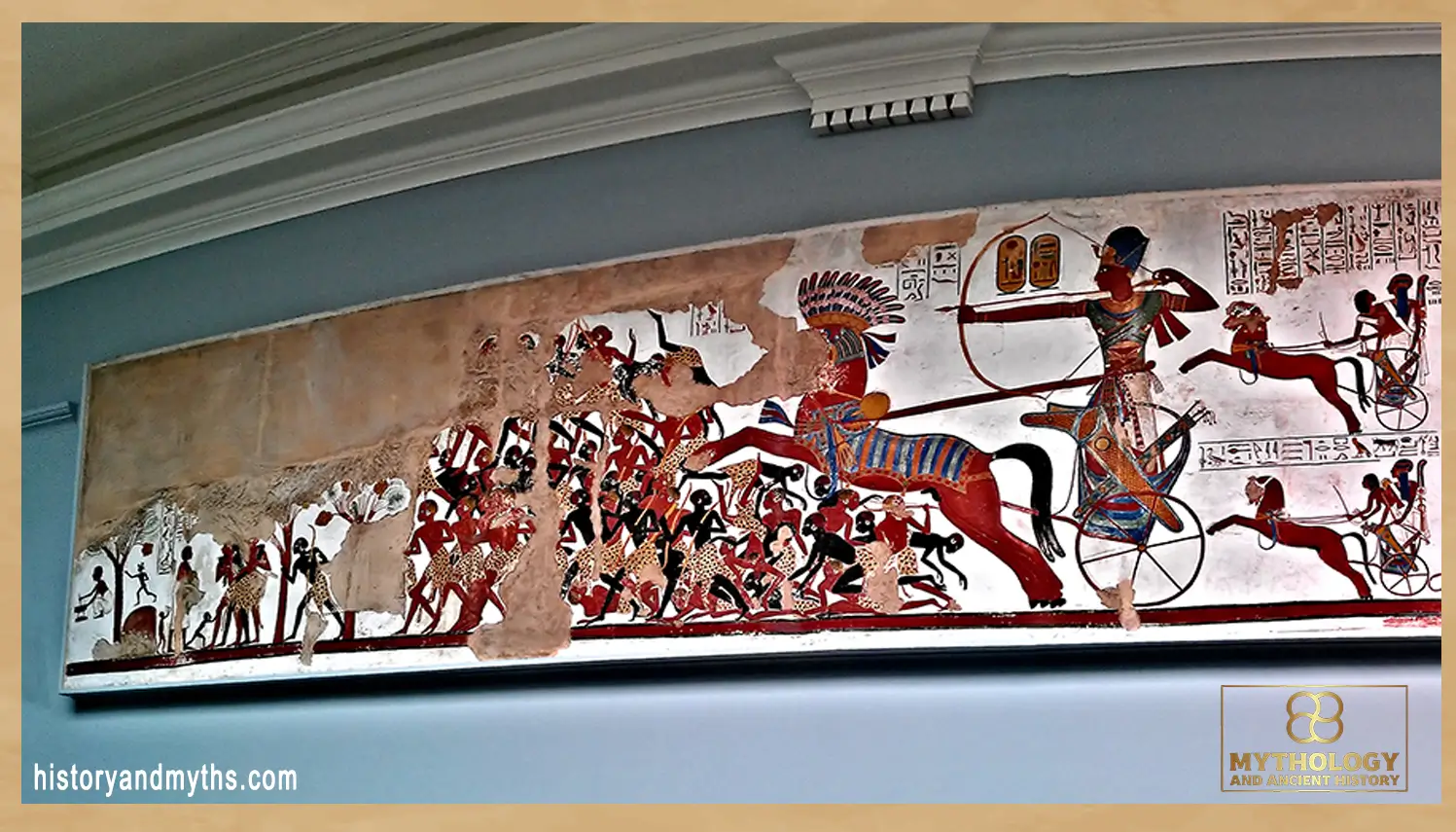
What “Propaganda” Meant in Ancient Egypt (And What It Didn’t)
In Ancient Egypt, propaganda wasn’t about winning votes or debating opponents. There was no public political competition that needed persuasion in the modern sense. Instead, propaganda was the state’s method for making royal power feel natural, permanent, and beyond question.
The simplest way to define it is this: Egyptian propaganda was controlled messaging that turns authority into inevitability. It didn’t aim to report events neutrally. It aimed to frame events so the conclusion was always stable: the king is rightful, strong, and necessary for order to survive.
This is where it helps to separate two things. Royal ideology is the baseline belief-system: the king exists to defend order and keep the world stable. Propaganda is the tactical use of that belief-system when legitimacy needs reinforcement—during succession problems, political tension, foreign threats, or moments where doubt could spread.
That explains why Egyptian propaganda is rarely subtle. It repeats fixed images and fixed claims because repetition creates recognition, and recognition creates acceptance. A carved scene on a temple wall, a formal royal inscription, or a staged public ritual does not invite discussion. It produces a single version of reality and places it in spaces that feel authoritative by design.
So the key idea is not “Egypt lied.” The key idea is that Egypt used narrative control as governance. The propaganda system was built to reduce uncertainty, eliminate alternative interpretations, and keep the state’s story stronger than any private doubt.
| Tool / Medium | What It Showed | Real Political Function | Best Audience |
|---|---|---|---|
| Temples & monuments | Royal authority as permanent and sacred | Turn power into an unquestionable environment | General public + elites |
| Royal inscriptions | The king narrates events as certainty | Control the “official” version of reality | Literate elite + institutions |
| Iconography | The king as divine-adjacent and dominant | Instant legitimacy through repeatable visual formulas | Everyone |
| Public rituals & festivals | Kingship performed as order in motion | Make legitimacy feel lived and witnessed | General public |
| War narratives | Victory as total, enemies as powerless | Protect authority by eliminating ambiguity | Internal stability + foreign projection |
| Memory control (names, ownership) | Selective visibility of rulers and achievements | Edit legitimacy by shaping what the past “says” | Future audiences + institutions |
The Real Goal: Legitimacy, Not Information
Ancient Egyptian propaganda wasn’t meant to keep people updated with facts. Its real job was to make the pharaoh’s rule look like the only condition under which Egypt could remain stable. The state didn’t need citizens to understand politics in detail. It needed them to accept one core claim: the king’s authority was not optional.
That is why the message focused on legitimacy rather than explanation. The pharaoh is repeatedly presented as the defender of order, the controller of chaos, and the figure through whom the gods allow the world to function correctly. This turns political power into something bigger than administration. It becomes a form of protection, almost like a natural law.
In practice, propaganda was built to eliminate uncertainty. Uncertainty creates questions, and questions create room for competing narratives—rivals, dissent, or alternative claims to power. So propaganda compresses complexity into certainty. Events that were complicated become stories that are clean. Outcomes that were mixed become victories. The details are less important than the public conclusion.
This also explains when propaganda becomes loudest. The more fragile a reign feels, the more urgently the state has to stabilize its image. When succession is sensitive, when foreign threats rise, or when internal confidence might weaken, propaganda tightens control over how reality is presented. The aim is not to impress people with a performance. The aim is to close the door on doubt before it spreads.
Who Was the Audience? Egyptians Didn’t All Receive the Same Message
Egyptian propaganda wasn’t aimed at one unified audience. It worked because the state could deliver different versions of the same legitimacy message to different groups, using the channels each group was most likely to encounter.
For ordinary Egyptians, propaganda was mainly visual and public. Most people were not reading long texts, and the state didn’t need them to. What mattered was what could be seen and remembered: the king shown as larger than everyone else, the king standing close to the gods, enemies crushed under his control, and festivals where power was staged as a public fact. The message entered daily life through spaces and rituals, not through debate.
For educated elites—scribes, officials, and administrators—the propaganda layer was more textual and institutional. These people moved inside the machinery of the state. They copied, preserved, and circulated official language, which meant they didn’t just receive propaganda—they helped reproduce it. When the bureaucracy speaks in one voice, the official story becomes the default story.
The priesthood mattered as both an audience and a partner. Temples were Egypt’s most authoritative public stage, and religion was not separate from power. When the king’s legitimacy is framed as divine alignment, the state gains a credibility that ordinary politics cannot compete with.
Foreign audiences were different again. Beyond Egypt, propaganda functioned as projection. It aimed to look overwhelming, divinely protected, and unstoppable. Even when diplomacy required compromise, the image still had to communicate dominance. The goal wasn’t emotional loyalty. The goal was intimidation and control.
The Main Propaganda Tools Pharaohs Used (The Full Toolkit)
Egyptian propaganda worked because it wasn’t limited to one format. It was a toolkit designed to make royal power visible, repeatable, and difficult to challenge.
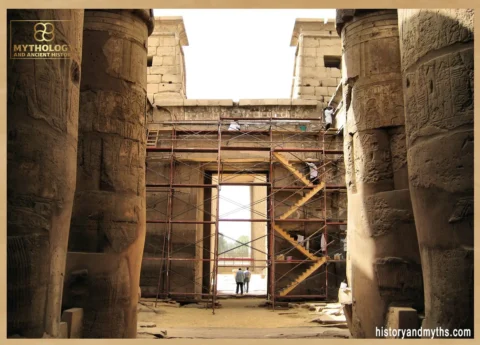
Monuments and temples were the backbone. They weren’t neutral buildings. They were permanent stages where the king’s legitimacy could be displayed as something ancient and unquestionable. A massive structure makes power feel bigger than the present moment. It turns authority into part of the landscape.
Royal inscriptions added the official voice. These texts were not written to explore uncertainty or record events neutrally. They were written to deliver a controlled conclusion: the king acted, the enemy failed, order survived. Even when the story is detailed, it still moves toward one fixed outcome.
Iconography did the same work without needing words. The king is shown larger than others, centered in the scene, and closely linked to divine approval. Certain images repeat because repetition creates instant recognition. Once people learn the visual language, the message becomes automatic.
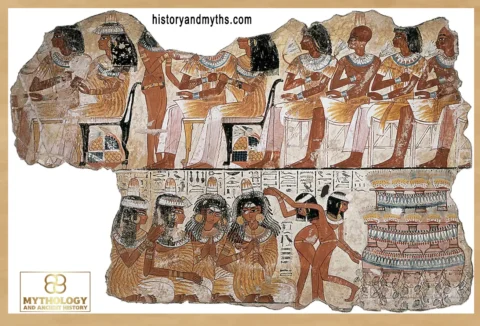
Ritual and public ceremony made propaganda physical. Festivals, processions, and state-sponsored celebrations allowed people to witness legitimacy being performed. The king’s role was not only described—it was enacted, and that performance reinforced the idea that kingship was the engine of stability.
Finally, propaganda included control over memory. Names on monuments, ownership of achievements, and selective visibility of past rulers shaped what Egypt “remembered” as its official history. If the past could be edited, legitimacy could be strengthened without changing the present.
War as Propaganda: How Egypt Sold Victory (Even When Reality Was Messy)
War was one of the easiest spaces for propaganda, because most people could not verify what happened far from home. Battles took place on distant frontiers, and the official version of events often became the only version that mattered publicly.
The purpose of war propaganda wasn’t to document combat accurately. It was to protect a political image: the king as the defender of Egypt, backed by divine support, and capable of crushing threats. This image mattered even more when results were unclear, because ambiguity creates doubt, and doubt weakens authority.
That is why victory narratives follow a fixed structure. The king is decisive and fearless, enemies appear disorganized or terrified, and the final outcome is presented as absolute. Even if the real situation was more complicated, the message could not be complicated. The story had to end the same way every time: order wins because the king acts.
This type of propaganda also served internal stability. It reassured officials, soldiers, and the wider population that the state was protected. The real product wasn’t information about war. The product was confidence in rule.
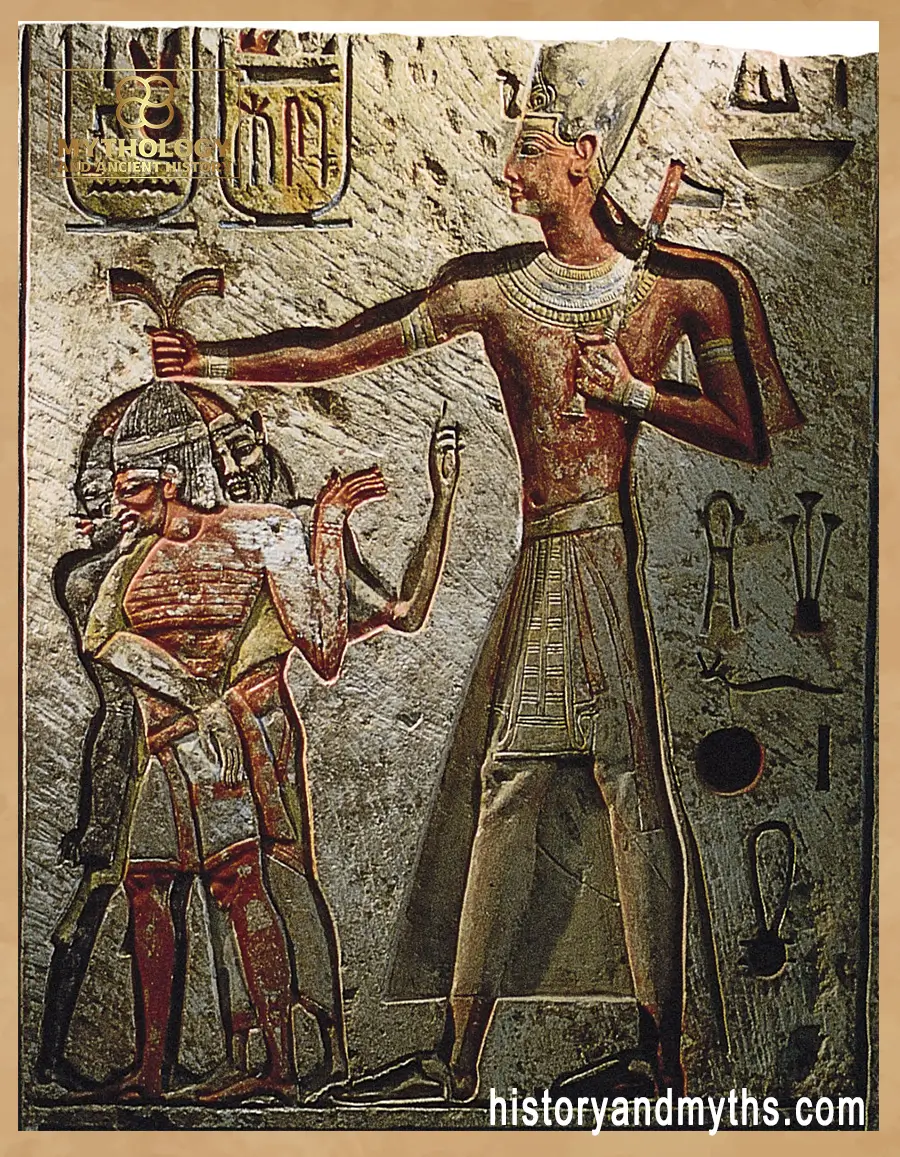
“Rewriting the Past”: Memory Control and Political Erasure
Egyptian propaganda wasn’t only about showing power in the present. It also worked by controlling how the past was remembered. If the official record presents legitimacy as continuous and unbroken, then the present feels stable by default.
This is why ownership mattered. Replacing names on monuments, reassigning achievements, or absorbing earlier prestige into a new reign wasn’t just personal vanity. It was a political technique. A ruler could inherit authority by inheriting visible history.
Erasure worked in a similar way. When a past king or rival became dangerous to the state’s story, the solution didn’t have to be a public argument. It could be silence. Fewer inscriptions, fewer visible names, fewer reminders. Over time, political memory shrinks, and legitimacy becomes easier to control.
The key point is that this was not propaganda as persuasion. It was propaganda as editing. By shaping what survives, what is seen, and what is repeated, the state reduced the space for alternative narratives. The past became a tool of government, not a neutral archive.
Propaganda for Unstable Thrones: The Hatshepsut Model
Some reigns did not need heavy propaganda because legitimacy was automatic. Others needed extra reinforcement because the political situation created doubt. Hatshepsut is one of the clearest cases of propaganda used as structural support for rule.
Her challenge was not simply being powerful, but holding full kingship in a system where the public image of kingship was traditionally male. That made legitimacy something the state had to actively stabilize, not assume.
The strategy was not to present her rule as a personal ambition. It was to frame it as inevitability. Her public messaging emphasizes divine intention, proper continuity, and institutional acceptance. Instead of appearing as an exception to the rules, she is presented as the correct outcome of the rules.
This is why her representation often uses the established visual language of kingship rather than inventing a new political identity. The goal was familiarity, not experimentation. The message was clear: the throne remains stable, the cosmic order remains intact, and the state remains uninterrupted.
How to Read Egyptian Propaganda Like a Historian (Without Falling for It)
Egyptian propaganda is useful evidence, but only if you treat it as propaganda first. Royal texts and monumental scenes were designed to protect legitimacy, not to record uncertainty. They present the version of reality the state wanted to be accepted.
A practical way to read these sources is to look for formulas. When the king is always flawless, enemies are always helpless, and victory is always complete, you are not reading a neutral report. You are reading a political script. The stronger the perfection, the more likely the account is shaping perception rather than describing events.
Another key clue is what is missing. Propaganda often avoids costs, hesitation, negotiation, or compromise. Silence is part of the message. What the state refuses to normalize can be as revealing as what it celebrates.
Yet propaganda is not meaningless. It can reveal what rulers needed people to believe, which often points to the pressures they faced. A reign that stresses divine selection may be defending a sensitive claim. A reign that stresses victory may be protecting authority during instability. Propaganda may distort events, but it can still expose political insecurity with surprising clarity.
Why It Worked for Thousands of Years (And Where It Failed)
Egyptian propaganda worked because it wasn’t a temporary effort. It was built into the structure of the state. Authority was reinforced through architecture, ritual, official writing, and repeated imagery, so the message didn’t depend on one moment or one crisis. It surrounded society as a normal reality.
It also worked because alternative narratives rarely had equal visibility. The state controlled the most prestigious spaces where meaning was produced—especially temples and official inscriptions. Even if private doubts existed, the public world continued to display one stable version of legitimacy.
But propaganda had limits. It becomes less effective when lived reality creates too much contradiction to ignore. Military failure, economic crisis, internal division, or rival power centers can weaken the official story. The message may still exist, but it loses its ability to settle doubt.
In the end, Egyptian propaganda was powerful because it didn’t ask people to admire a king’s personality. It asked them to accept kingship as the condition for order itself. That argument can endure for centuries—but it cannot fully survive when the state can no longer deliver the stability it promises.
- Ancient Egyptian propaganda was built to secure legitimacy, not to present balanced facts.
- It targeted different audiences through different channels: monuments, ritual, texts, and memory control.
- War narratives were shaped to eliminate ambiguity and protect royal authority.
- Memory politics (erasure, replacement, ownership) turned the past into a political resource.
- Propaganda sources are historically valuable—but only when read as strategic messaging first.
Did ordinary Egyptians understand royal propaganda if many people could not read?
Yes. Most propaganda worked visually and ritually—through temple spaces, repeated imagery, and public ceremonies rather than written argument.
Was Egyptian propaganda always “false,” or just exaggerated?
It was selective and strategic. It often exaggerates, but the deeper purpose is to enforce certainty, not to deliver neutral reporting.
Why did kings repeat the same victory scenes and phrases across many temples?
Repetition turns a claim into a permanent public conclusion, making the official version feel stable and unquestionable.
Did propaganda help control foreign enemies as well as Egyptians?
Yes. Toward outsiders, the goal was projection—appearing invincible, divinely protected, and politically dominant.
What is the most reliable thing propaganda reveals about a reign?
What the state needed people to believe. The louder the legitimacy message, the more likely the reign faced pressure or vulnerability.
Can propaganda still be useful evidence for historians?
Absolutely, if treated as messaging first. It can reveal political priorities, anxieties, and the state’s preferred version of reality.
Did Ancient Egypt erase rulers on purpose?
In some periods, yes. Removing names or absorbing monuments could reduce rival legitimacy and reshape the official memory of power.
Sources & Rights
- Assmann, Jan. The Mind of Egypt: History and Meaning in the Time of the Pharaohs. Cambridge, MA: Harvard University Press, 2003.
- Baines, John, and Jaromír Málek. Atlas of Ancient Egypt. Oxford: Phaidon, 2000.
- Breasted, James Henry. Ancient Records of Egypt: Historical Documents from the Earliest Times to the Persian Conquest. 5 vols. Chicago: University of Chicago Press, 1906–1907.
- Cruz-Uribe, Eugene. “The Fall of the Middle Kingdom.” In The Oxford History of Ancient Egypt, edited by Ian Shaw, 160–185. Oxford: Oxford University Press, 2000.
- Grajetzki, Wolfram. The Middle Kingdom of Ancient Egypt: History, Archaeology and Society. London: Duckworth, 2006.
- Hornung, Erik. Conceptions of God in Ancient Egypt: The One and the Many. Translated by John Baines. Ithaca, NY: Cornell University Press, 1982.
- Kemp, Barry J. Ancient Egypt: Anatomy of a Civilization. 2nd ed. London: Routledge, 2006.
- Leprohon, Ronald J. “Ideology and Propaganda.” In The Oxford Encyclopedia of Ancient Egypt, edited by Donald B. Redford. Oxford: Oxford University Press, 2001.
- Morkot, Robert. The Egyptians: An Introduction. London: Routledge, 2005.
- O’Connor, David, and Eric H. Cline, eds. Thutmose III: A New Biography. Ann Arbor: University of Michigan Press, 2006.
- Shaw, Ian, ed. The Oxford History of Ancient Egypt. Oxford: Oxford University Press, 2000.
- Smith, Stuart Tyson. Wretched Kush: Ethnic Identities and Boundaries in Egypt’s Nubian Empire. London: Routledge, 2003.
- Spalinger, Anthony J. War in Ancient Egypt: The New Kingdom. Oxford: Blackwell, 2005.
- Van De Mieroop, Marc. A History of Ancient Egypt. Malden, MA: Wiley-Blackwell, 2011.
Written by H. Moses — All rights reserved © Mythology and History