The Sumerian Flood Myth Before Noah: Ziusudra and Utnapishtim
The story of Noah was not the first Great Flood story in the ancient Near East. Long before the Biblical account took its final form, Mesopotamian traditions told of Ziusudra, Atrahasis, and Utnapishtim—flood survivors chosen to preserve life after the gods decided to destroy humanity.
These flood myths share a striking structure: divine anger, a warning given to one man, a great vessel, the survival of humans and animals, sacrifice after the waters recede, and a new relationship between humanity and the divine. Yet the meaning of the flood changes sharply from one tradition to another. In Sumerian and Babylonian texts, the flood is tied to divine conflict, human noise, population control, and the survival of civilization. In Genesis, it becomes a moral judgment followed by covenant.
This article compares the Sumerian, Babylonian, and Biblical flood accounts through their most important questions: who sent the flood, why it happened, who survived, how the ark was built, where it landed, and what sacrifice meant after destruction. The result is not one repeated story, but a chain of related traditions showing how ancient cultures reworked the flood myth to explain justice, mercy, survival, and renewal.
The Gods Behind the Flood: Sumerian, Babylonian, and Biblical Roles
| Aspect | Sumerian | Babylonian | Biblical |
|---|---|---|---|
| Divine Authority | Assembly of gods | Assembly of gods | Single deity (Yahweh) |
| Main Instigator | Enlil | Enlil | Yahweh |
| Divine Opposition | Enki | Ea (Enki) | None |
| Hero | Ziusudra | Utnapishtim / Atra-Hasis | Noah |
| Reason for Flood | Divine decision | Noise, disorder, sin | Moral corruption |
| Duration | 6–7 days | 7 days | About one year |
| Outcome | Immortality | Immortality | Covenant, no immortality |
Why the Flood Happened: Divine Wrath, Noise, or Moral Corruption?
In contrast to these two texts, the Epic of Atra-Hasis proposes a strange reason for the Flood, reminiscent of the main reason for the conflict between the gods in the Genesis myth; Enlil is disturbed by the hustle and bustle of humans and decides to annihilate them after he is unable to minimize their number. But in doing so, he contradicts the main reason for the creation of humans: to carry the burden of toil for the gods. Was he planning a new creation after the flood, as Zeus did in Greek mythology? This is a question that the myth, as it has come down to us, cannot answer.
The Flood Survivor: Ziusudra, Utnapishtim, and Noah Compared
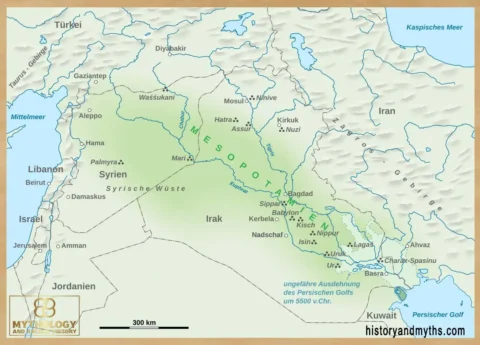
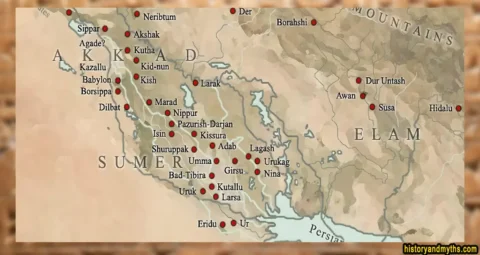
Utnapishtim lived in Shurupak, one of the oldest cities in southern Mesopotamia, and is mentioned among the five cities that came into existence after the creation of the Sumerian universe. As for Ziusudra, the lack of text prevents us from knowing which city he lived in. The Torah does not single out a specific city where Noah lived.
Ziusudra’s survival was due to the fact that he was a pious and righteous man. The same is true of Exoterus and Noah. From the context of the Babylonian text, we also understand that Utnapishtim was.
Who Warned the Flood Hero? Dreams, Revelation, and Divine Secrecy
In the Torah, God communicates directly with Noah, without any veil or veil, and without the need for the mediation of a dream. In the person of Yahweh, the figures of El and Enlil are united, and it is Yahweh who orders the flood and informs Noah and chooses him to survive, while in other myths this task is performed by two separate gods, one who sends the flood and the other who informs those he chooses to survive without the knowledge of the first.
The Ark Across Traditions: Design, Structure, and Symbolism
Utnapishtim’s ship has seven decks and is divided vertically into nine sections. During its construction, we do not know if it had windows, openings and doors, but we read after the flood that Utnapishtim opened a window and the light from it fell on his face. Noah’s Ark, on the other hand, has three stories and an indeterminate number of sections, with a door on its side and a light opening just below the roof that goes around the ship on all sides. While Utnapishtim is unique in using oil when he soaked the fenders with one weight and stored the other two weights, he agrees with Noah on the use of pitch with which he painted the ark. However, they go back to disagreeing on the exterior shape and dimensions.
In any case, the heroes of the Flood are each in turn commanded to build a great ship to carry the seeds of life, and the divine figure intervenes more or less to determine the conditions of its construction, of which Utnapishtim seems to have been the freest.
What the Flood Myth Really Reveals
- The same mythic structure is preserved across cultures.
- Mesopotamian traditions show conflict among gods.
- The Biblical version centralizes authority in one deity.
- Destruction precedes renewal in all accounts.
© historyandmyths.com — Educational use
Who Was Saved? Humans, Animals, and Civilization After the Flood
From the remaining passages of the Sumerian text, we can infer that Ziusudra carried some animals with him, as evidenced by the fact that he made thanksgiving offerings to the gods with bulls and sheep. Similarly, Atra-hasis carried the wild game and beasts and as many herbivores as he could, as well as his family, relatives and craftsmen, and Axotros followed the same pattern, carrying his wife, children and close friends, storing food and drink in the ship, and carrying winged and four-legged creatures.
The Torah agrees with the Mesopotamian stories in terms of transportation of people, food, and animals, but the sheer number of people is reduced to eight: Noah, his wife, his three sons, and his sons’ wives. As for the animals carried and the food, according to the Lord’s commands: “Of every living thing, of every bodily form two, of every one that enters the box to live with you, male and female it shall be. Of the birds of all kinds, and of the beasts of all kinds, and of all the cattle of all kinds, and of all the beasts of the earth of all kinds, two of each shall go into the box to live with you. And you shall take of every food that is eaten, and it shall be food for you and for them.” This is followed by a breakdown of clean and unclean animals.
As for how the hero of the Flood will gather all these animals, it seems that the divine figure was responsible for pushing them to him to carry them to the ark, as it seems from the epic of Atra-hasis and from Genesis. In the Epic of Atrahasis, we see Ea saying to his servant: “The game and beasts of the wilderness, and as many herbivores as I can, I will give them to you.” Similarly, in Genesis, the animals come to Noah without any effort on his part to collect them: “And you shall enter the box to live with you,” “Two of each shall come to you to live.”
When Did the Flood Begin? Dates and Chronology Compared
The story of Berosus makes the flood begin on the fifth day of May, while the rest of the texts are silent about any specific date for the beginning of the flood.
Continue Reading
How the Flood Was Unleashed: Storms, Rain, and Underworld Waters
At the end of the nineteenth century, Austrian geologist E. SUESS attempted to find a scientific explanation for the account of the Flood. He said that the Flood may have been caused mainly by two factors: first, giant waves from the sea caused by a seismic disturbance in the Arabian Gulf region or south of it, and second, a violent cyclone originating in the Bay of Bengal, then crossing India heading north towards the Arabian Gulf. All this coincided with the annual flood season in the Tigris and Euphrates basin, and the earth cracked under the impact of the earthquake and the water rushed out. Thus, the Flood was mainly triggered by the overwhelming sea water, while the lower waters and flood waters were only auxiliary elements.
The causes of the Flood were similar in the Babylonian and biblical texts, regardless of whether each text emphasized certain elements over others.
The Duration of the Flood: How Long Did It Last?
The Torah gives specific time intervals between the events comprising the story; the flood lasted for forty days, the water began to decrease after one hundred and fifty days, and so on. By adding the times to each other, we conclude that the period between the beginning of the flood and Noah’s exit from the ark lasted about a year.
Where Did the Ark Rest? Mount Nisir and Mount Ararat
Noah’s Ark settled on Mount Ararat. Ararat is not actually the name of a mountain, but a name given to the country of Armenia. It seems that the ship landed on the highest peak in the country of Ararat, hence the name. The word Ararat is used elsewhere in the Torah to refer to a country, not a mountain. For example, in the book of Isaiah, 37: 38: Jeremiah chapter fifty-one, 37
The Release of the Birds: Testing for Dry Land
Thus, the two accounts agree in sending birds, but differ in their type and number; while Utnapishtim sends a dove, a swallow, and a raven, Noah sends a raven and three doves.
Sacrifice After the Flood: Divine Acceptance and Covenant
The Lord accepts Noah’s offering and repents, and makes an eternal vow not to destroy the earth again with a similar flood: “And the Lord said, ‘I will no longer curse the earth … I will no longer destroy every living thing as I have done … I will establish my covenant with you … This is my bow that I have made in the cloud, and it shall be a sign of the covenant between me and the earth. In the Utnapishtim text, the gods forget their anger at humans when they smell the odor of the sacrifice and gather around its owner, delighted that life on earth has survived. There is no direct reference to a covenant with man.
As for remorse, Ishtar expresses it when she says “All of you come forward and approach the sacrifice, but only Enlil will not approach; for he has caused the flood without thought, and has delivered my people to the flood.” As Ea expresses it when he addresses Enlil: “How… Oh, how thoughtlessly have I brought this flood?” Finally, Enlil himself expresses remorse when his anger subsides, and he ascends Utnapishtim and his wife and grants them divine blessings and immortality for themselves, dwelling far away at the mouth of the rivers.
“And the Lord blessed Noah and his sons, and said to them, ‘Be fruitful and multiply and fill the earth.
- The Flood is a shared Near Eastern myth, not a single narrative.
- Enlil initiates destruction; Enki/Ea preserves life.
- The Biblical flood reframes the myth as moral judgment.
- Sacrifice restores divine–human balance.
- Only the Bible introduces a lasting covenant.
Frequently Asked Questions
Did the Flood myth originate in Mesopotamia?
Yes. The earliest flood narratives are preserved in Sumerian texts.
Why do Mesopotamian gods regret the Flood?
Because destruction exceeded intention and endangered all life.
Is Noah based on Utnapishtim?
They share narrative structure, but each belongs to a distinct theology.
Why does the Biblical Flood last longer?
It emphasizes moral testing and covenantal renewal.
Why is sacrifice central after the Flood?
It restores cosmic balance and divine favor.
Sources & Rights
- Dalley, Stephanie. Myths from Mesopotamia: Creation, the Flood, Gilgamesh, and Others. Revised Edition. Oxford: Oxford University Press, 2008.
- George, Andrew R. The Epic of Gilgamesh: A New Translation. London: Penguin Classics, 1999.
- Lambert, W. G., and A. R. Millard. Atra-Ḫasīs: The Babylonian Story of the Flood. Oxford: Clarendon Press, 1969.
- Bottéro, Jean. Religion in Ancient Mesopotamia. Translated by Teresa Lavender Fagan. Chicago: University of Chicago Press, 2001.
- Black, Jeremy, and Anthony Green. Gods, Demons and Symbols of Ancient Mesopotamia. London: British Museum Press, 1992.
- Hallo, William W., and J. J. A. van Dijk. The Exaltation of Inanna. New Haven: Yale University Press, 1968.
- Pritchard, James B., ed. Ancient Near Eastern Texts Relating to the Old Testament. 3rd ed. Princeton: Princeton University Press, 1969.
- Foster, Benjamin R. Before the Muses: An Anthology of Akkadian Literature. 3rd ed. Bethesda, MD: CDL Press, 2005.
- Jacobsen, Thorkild. The Treasures of Darkness: A History of Mesopotamian Religion. New Haven: Yale University Press, 1976.
- Roux, Georges. Ancient Iraq. 3rd ed. London: Penguin Books, 1992.
- Kramer, Samuel Noah. Sumerian Mythology. Revised Edition. Philadelphia: University of Pennsylvania Press, 1961.
- Tigay, Jeffrey H. The Evolution of the Gilgamesh Epic. Philadelphia: University of Pennsylvania Press, 1982.
- Smith, Mark S. The Origins of Biblical Monotheism. Oxford: Oxford University Press, 2001.
- Westermann, Claus. Genesis 1–11: A Commentary. Minneapolis: Augsburg Publishing House, 1984.
Written by H. Moses — All rights reserved © Mythology and History