Burial of the Elite in Ancient Egypt: Power and Protection
Elite burials in Ancient Egypt were not lavish by accident. They were engineered systems of protection—multiple coffins, layered tombs, repeated texts, and controlled access—designed to reduce risk in the afterlife. Wealth allowed elites to buy redundancy, not just display, turning burial into long-term security planning.
Elite burial makes sense only when we stop reading it as decoration and start reading it as risk management. Death was understood as a dangerous transition, and elites responded by stacking safeguards. Where non-elite burials relied on one solution, elite burials multiplied solutions—so failure in one layer would not collapse the entire afterlife outcome.
This logic explains the complexity that confuses modern readers. Tombs were built deep and sealed not for mystery, but for control. Coffins nested inside coffins were not excess; they repeated identity, protection, and legitimacy. Texts were copied across walls, coffins, and papyri because repetition reduced uncertainty. Grave goods were selected not only for status, but for function—tools, substitutes, and guarantees meant to operate when human intervention ended.
This article treats elite burial as a coherent system rather than a collection of impressive objects. It explains who counted as “elite,” why their burials became increasingly complex, how redundancy worked across architecture, objects, and texts, and why—despite all this investment—elite burials still sometimes failed.
Who Counted as “Elite” in Ancient Egyptian Burial?
In burial terms, “elite” did not simply mean wealthy. It referred to people whose social position, institutional role, or proximity to power justified—and required—a higher level of funerary investment. This distinction matters because not all elites were buried the same way, and the differences reveal how status worked in practice.
High officials, senior priests, military commanders, and regional administrators formed the core burial elite. Their roles tied them directly to the state, temples, or royal authority, and that connection shaped expectations around death. A poorly protected burial for such individuals would not only risk their personal afterlife—it could signal instability or neglect within the institutions they represented.
Below them sat a broader layer of non-royal elites: prosperous landowners, local officials, and professionals who had enough resources to imitate elite burial patterns on a smaller scale. They adopted elite features selectively—perhaps a decorated coffin, a modest tomb, or limited texts—without matching the full royal or high-administrative package.
This layered elite explains why Egyptian cemeteries show gradation rather than a clean split between “rich” and “poor.” Burial was a visible negotiation between identity, authority, and resources. Elite status demanded security, but the level of security depended on how close the dead person stood to power—and how much redundancy they could afford to buy.
| Layer | Elite Practice | Function |
|---|---|---|
| Architecture | Deep shafts, sealed chambers | Delay intrusion and control access |
| Coffins | Multiple nested coffins | Redundant identity and protection |
| Texts | Repeated spells across media | Operational guidance in the afterlife |
| Grave Goods | Functional substitutes and tools | Cover contingencies after death |
| Location | Controlled necropolises | Social memory and oversight |
Tomb Architecture as a Security System, Not a Monument
Elite tombs were not designed primarily to impress visitors. They were built to control access, delay intrusion, and stabilize the dead person’s afterlife long after human caretakers were gone. When viewed this way, architectural complexity stops looking decorative and starts looking functional.
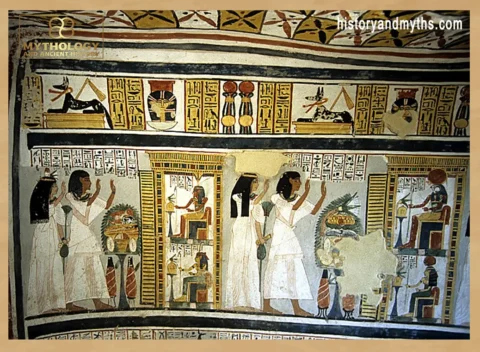
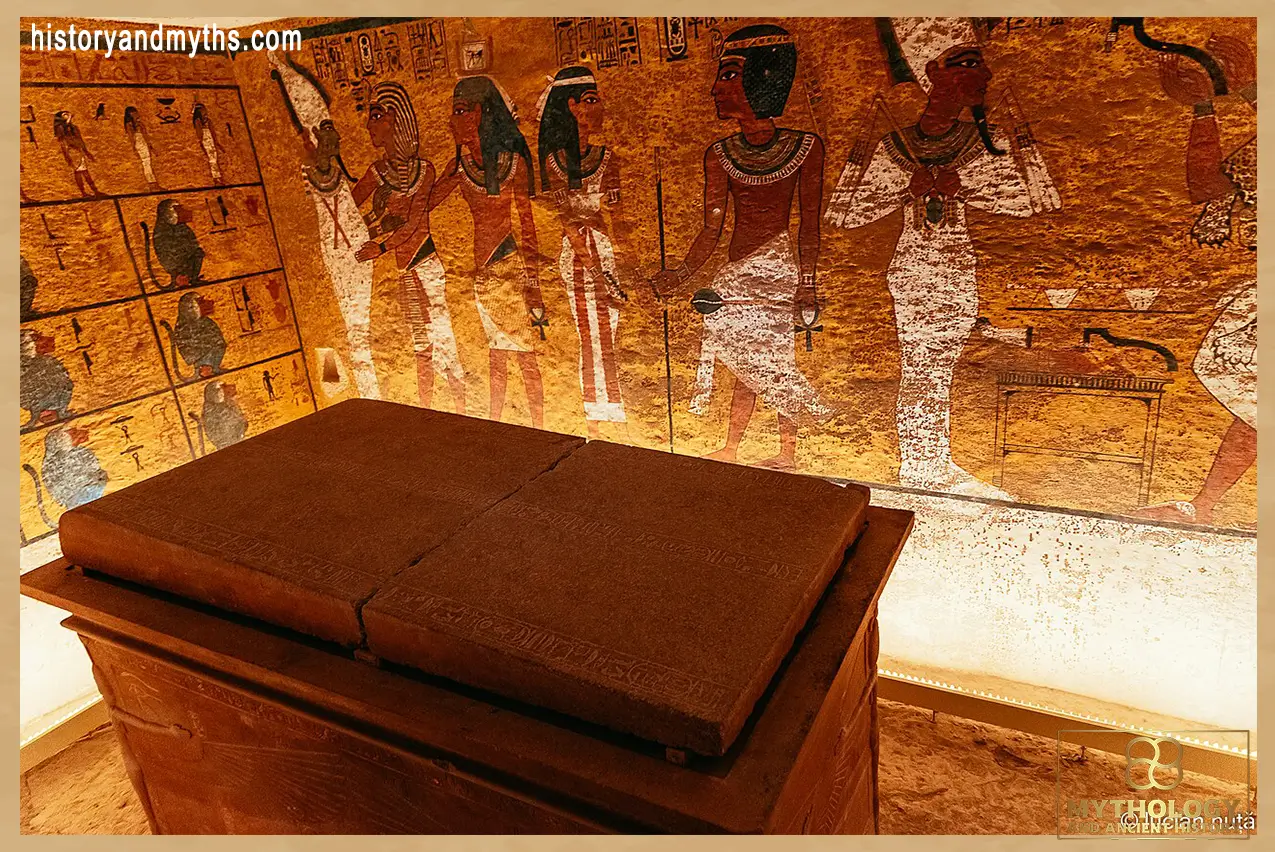
Depth was the first line of defense. Shafts, corridors, and hidden chambers increased the effort required to reach the burial, buying time against disturbance and theft. Sealing techniques—blocking stones, plastered doors, and false passages—were meant to confuse and slow anyone who tried to breach the tomb. Even decoration had a role: inscribed walls reinforced identity and repeated protective formulas within the structure itself.
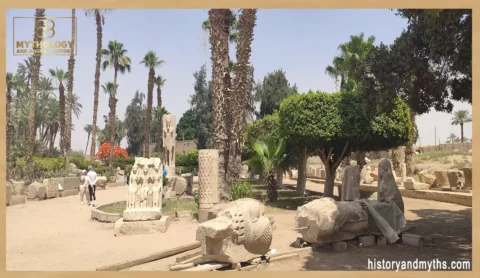
Location mattered just as much. Elite tombs were often placed within controlled landscapes—royal necropolises, temple-adjacent cemeteries, or zones overseen by administrative authority. This didn’t guarantee safety, but it reduced risk by embedding the tomb within systems of surveillance, memory, and ritual maintenance.
Seen as a whole, elite tomb architecture functioned like a layered security design. It accepted that no single barrier was perfect, so it combined depth, concealment, and repetition. The goal was not eternal invulnerability, but increased odds—making interference harder, slower, and more uncertain at every step.
Coffins Within Coffins: Why Redundancy Mattered
One of the most distinctive features of elite burial is repetition: coffins nested inside coffins, each layer repeating names, titles, and protective imagery. This was not excess craftsmanship. It was deliberate redundancy.
Each coffin layer served as both container and declaration. Names and identities were rewritten again and again so that damage, decay, or removal of one surface would not erase the person entirely. Protective texts and symbols were duplicated to ensure that no single failure—physical or symbolic—could undo the whole system. Identity, once fixed in one place, was fragile; identity repeated across layers became resilient.
This logic mirrors the broader elite approach to death. Where non-elite burials depended on one primary solution, elite burials distributed risk. If the outer coffin failed, an inner one remained. If paint faded, carving persisted. If one inscription was damaged, another still spoke. Coffins were not about display alone; they were insurance layers designed to survive interference, time, and uncertainty.
So the visual abundance of elite coffins is best read as strategy, not vanity. It reflects an anxiety about loss of control after death—and a willingness to spend resources to reduce that risk as much as possible.
Funerary Texts as Afterlife Instructions, Not Decoration
Elite burials are saturated with writing—on tomb walls, coffins, shrouds, and papyri—and this density is often misunderstood as religious ornament. In reality, funerary texts functioned as operational guidance. They were meant to be used, not admired.
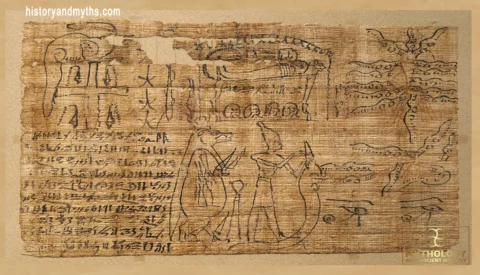
These texts provided names, passwords, routes, and responses for the afterlife. They identified threats, explained transformations, and specified correct speech at critical moments. For elites, writing was a way to remain active after death, compensating for the loss of living advocates. The more text present, the less the dead had to rely on chance or memory.
Repetition again matters. The same spells appear in multiple locations because elites did not trust a single medium to survive. Walls could collapse, coffins could be damaged, papyri could be lost—but redundancy increased the probability that at least one version would endure. Text was treated like a backup system.
This is why elite burials often look crowded with writing. The goal was not to overwhelm the gods, but to reduce uncertainty. Funerary texts transformed belief into procedure, turning the afterlife into a navigable space where preparation could replace improvisation.
Grave Goods: Function First, Display Second
Elite graves are often described in terms of wealth—gold, furniture, vessels—but that framing hides a more important distinction. For elites, grave goods were selected primarily for function, with display acting as a secondary effect rather than the core purpose.
Many objects served as substitutes. Tools replaced labor, food vessels replaced offerings, figurines replaced workers. These items were meant to do things when living support ended. The elite advantage was not owning more objects, but owning objects that covered more contingencies—hunger, work, movement, protection—inside the afterlife framework.
Status objects existed, but even they carried operational meaning. High-quality materials resisted decay, detailed craftsmanship preserved identity, and standardized forms ensured recognizability within ritual logic. A well-made object was more likely to remain effective over time, just as a well-built tomb was more likely to resist interference.
So elite grave goods should not be read as indulgence alone. They were part of a coordinated system that treated the afterlife as a space requiring preparation, tools, and backups. Display signaled success in life, but function aimed at survival after death.
Wealth allowed elites to buy redundancy—multiple coffins, repeated texts, layered architecture—
so that failure in one element would not collapse the entire afterlife plan.
© historyandmyths.com — Educational use
When Elite Burials Failed: Robbery, Reuse, and Broken Security
Elite burial systems were designed to reduce risk, not eliminate it—and the archaeological record makes that clear. Despite deep shafts, sealed chambers, nested coffins, and repeated texts, many elite tombs were breached, reused, or stripped within relatively short periods.
Robbery is the most obvious failure. Valuable materials attracted attention, and no architectural solution proved permanently secure. Once seals were broken, redundancy slowed damage but did not prevent it. Coffins were opened, goods removed, and bodies disturbed—sometimes repeatedly. Ironically, the very wealth meant to ensure survival increased the tomb’s visibility as a target.
Reuse is a quieter form of failure. In periods of economic pressure or political change, elite tombs were reopened and adapted for new burials. Names were erased, coffins repurposed, and texts overwritten. This was not vandalism; it was pragmatic recycling within a system that accepted material scarcity. From the original elite perspective, however, reuse compromised identity and continuity.
These failures matter analytically because they show that elite burial was never believed to be foolproof. Redundancy acknowledged uncertainty. The system assumed that some layers would fail—and invested in having others remain. In that sense, elite burial was realistic rather than naïve: it planned for loss, even if it could not fully prevent it.
Elite vs Poor: One Burial System, Different Risk Levels
Elite and poor burials in Ancient Egypt were not built on different beliefs. They were built on the same cultural logic, applied under radically different economic conditions. The difference was not faith—it was margin for error.
Poor burials worked with a single solution. One grave, one method of preservation, minimal equipment. If that solution failed—through disturbance, decay, or neglect—there was nothing to compensate for it. The burial succeeded or failed as a whole.
Elite burials spread that risk. Architecture, coffins, texts, and goods all overlapped in function. If one layer was damaged, another might still operate. If identity was erased in one place, it survived elsewhere. Wealth did not change the rules of the afterlife; it allowed elites to hedge against uncertainty.
This comparison clarifies why elite burials look excessive and poor burials look fragile. Both aimed at the same outcome: a stable transition beyond death. The elite paid to increase probability. The poor accepted exposure. Seen this way, Egyptian burial practice is less about inequality of belief and more about inequality of options.
- Elite burials prioritized redundancy over display.
- Architecture functioned as a security system.
- Nested coffins protected identity through repetition.
- Texts acted as instructions, not decoration.
- Grave goods focused on function and substitution.
- Failure was anticipated, not denied.
Why were elite burials so complex?
They were designed to reduce risk through layered protection.
Did all elites receive the same burial?
No. Burial scale depended on proximity to power and resources.
Why use multiple coffins?
To repeat identity and protection in case one layer failed.
Were funerary texts decorative?
No. They functioned as operational instructions for the afterlife.
What role did grave goods play?
They acted as functional substitutes, not just status symbols.
Did elite burials always succeed?
No. Robbery and reuse show that failure was common.
How did elite burials differ from poor burials?
Elites could afford redundancy; the poor could not.
Sources & Rights
- Taylor, John H. Death and the Afterlife in Ancient Egypt. Chicago: University of Chicago Press, 2001.
- Ikram, Salima. Death and Burial in Ancient Egypt. Harlow: Pearson Longman, 2003.
- Grajetzki, Wolfram. Burial Customs in Ancient Egypt: Life in Death for Rich and Poor. London: Duckworth, 2003.
- Assmann, Jan. Death and Salvation in Ancient Egypt. Ithaca: Cornell University Press, 2005.
- Dodson, Aidan, and Salima Ikram. The Tomb in Ancient Egypt. London: Thames & Hudson, 2008.
- Kemp, Barry J. Ancient Egypt: Anatomy of a Civilization. London: Routledge, 2006.
- Quirke, Stephen. Exploring Religion in Ancient Egypt. Chichester: Wiley-Blackwell, 2015.
Written by H. Moses — All rights reserved © Mythology and History