Satis — Egyptian Goddess of the Flood and Protector of Upper Egypt
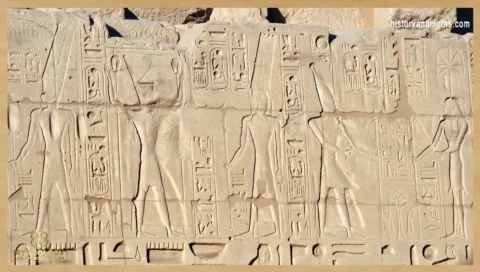
Satis was the goddess who stood at the place where Egypt began. Long before the Nile fanned into farms and cities, its first wild current surged through the granite gates of the First Cataract—a landscape of rushing water, sharp rocks, and shifting borders. This threshold marked not only the physical beginning of Egypt but its political and spiritual edge, and it was here that Satis watched over the land. She was the guardian of Upper Egypt’s southern frontier, the protector of the doorway through which the Nile—and everything that depended on it—entered the country.
Unlike goddesses linked to agriculture or motherhood within the settled heart of Egypt, Satis belonged to the margins: the frontier, the floodgate, the point of origin. Her power reflected the anxieties and hopes of people who lived closest to the source of the river, who understood how fragile life became when the water faltered or when threats approached from beyond Egypt’s border. To them, Satis was both a defender and a giver—she controlled the life-bringing waters, offered protection against chaos, and ensured that the river’s arrival each year would sustain the land.
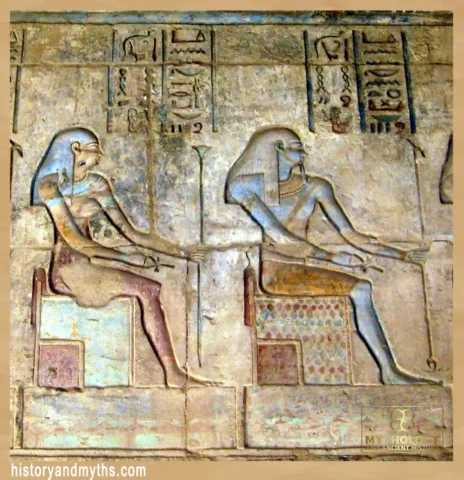
Her symbols capture this dual nature. the flowing jars and water imagery express renewal. Through her association with Khnum and Anuket at Elephantine, Satis formed part of a sacred triad that governed creation, flow, and nourishment. But her role remained distinct: she was the point of entry, the first guardian Egypt encountered, and the one who bridged the world beyond with the world the Nile sustained.
In Satis, the Egyptians recognized a truth about their landscape—life begins at the edge, and what happens at the frontier shapes the fate of everything downstream.
Where Egypt Begins: The Geography That Created Satis
The First Cataract at Aswan was not simply a landmark; it was a force of nature that shaped the Egyptian worldview. The jagged rocks, narrow channels, and unpredictable currents created a natural boundary between Egypt and the lands to the south. This region was the river’s hinge point — the place where its character shifted from a wild torrent into the calm, fertile waterway that sustained the entire civilization downstream.
It was here, at this threshold of transformation, that the Egyptians placed Satis.
Her identity grew directly from the landscape. The cataract embodied both danger and promise: its violent waters could prevent travel or threaten boats, but without its annual surge there would be no flood, no renewal, no harvest. To live near the cataract was to exist in a world that demanded constant attention and respect. Satis emerged as the divine intelligence that governed this unpredictable frontier — the presence that could direct the river’s force, temper its risks, and allow its life-giving flow to reach Egypt.
This geographic reality explains why she was viewed not merely as a goddess of water but as a guardian of borders. The cataract marked the southern edge of Egyptian identity, a place where foreign powers could approach and where the Nile’s behavior could determine the year’s fate. Her vigilance was not symbolic; it mirrored the perpetual watchfulness required to survive in this terrain.
By anchoring Satis in this environment, the Egyptians acknowledged that the source of life also needed a protector. The first waters of the Nile were too essential, too volatile, to be left without divine guardianship. Satis was the answer to that need — a frontier presence whose authority began where the river itself was born.
| Aspect | Details |
|---|---|
| Name | Satis (also Sati / Satet) |
| Domains | Goddess of the Nile’s first floodwaters, guardian of Upper Egypt’s southern frontier, and deity of renewal and transition |
| Symbols | Antelope-horn crown, White Crown of Upper Egypt, flowing water, ritual pouring vessel |
| Cult Centers | Elephantine (First Cataract), southern frontier sanctuaries, cataract-region shrines |
| Role in Daily Life | Protector of water sources, guardian of border movement, bringer of the first floodwaters that marked the year’s beginning |
| Associations | Part of the Elephantine Triad with Khnum and Anuket; linked to renewal, fertility, and controlled release of the inundation |
Satis as Protector of Upper Egypt: The Political Meaning of a Frontier Goddess
To the Egyptians, the southern frontier was more than a geographic boundary; it was a political and cultural threshold. From this region, traders, migrants, and warriors could enter the Nile Valley, and it was against this backdrop that Satis emerged as a guardian of the land. Her role reveals how closely religion and state security were intertwined in ancient Egypt.
Satis was not a passive water deity. She was a watchful sentry at the nation’s edge, a protector of the places where Egypt felt most exposed.
Temple inscriptions and regional traditions portray her as the one who “shoots the enemies of the king,” a phrase that reflects an organized vision of divine protection. This was especially true in periods when Egypt’s southern border was contested or when the cataract region served as a buffer between cultures. By embodying both water and warfare, Satis bridged the two forces that shaped life at the frontier: the flow that nourished Egypt and the threats that approached along that same path.
Her worship at Elephantine underscores this political dimension. Elephantine was not simply a religious center; it was a military and administrative hub responsible for overseeing trade, monitoring foreign movement, and regulating river travel. Housing Satis there gave divine legitimacy to the human activities that maintained Egypt’s stability.
Through Satis, Egyptians expressed a profound truth about their geography: control of the frontier meant control of the future. The goddess who governed the threshold where the Nile entered Egypt guarded not only water, but identity, security, and the integrity of the land itself.
The Crown of the Antelope: Understanding the True Symbols of Satis
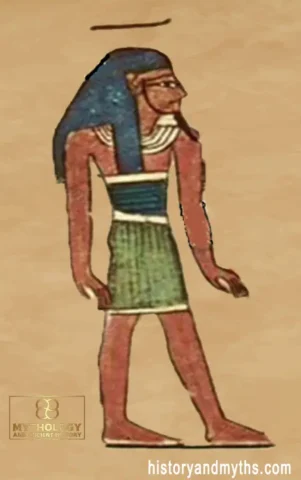
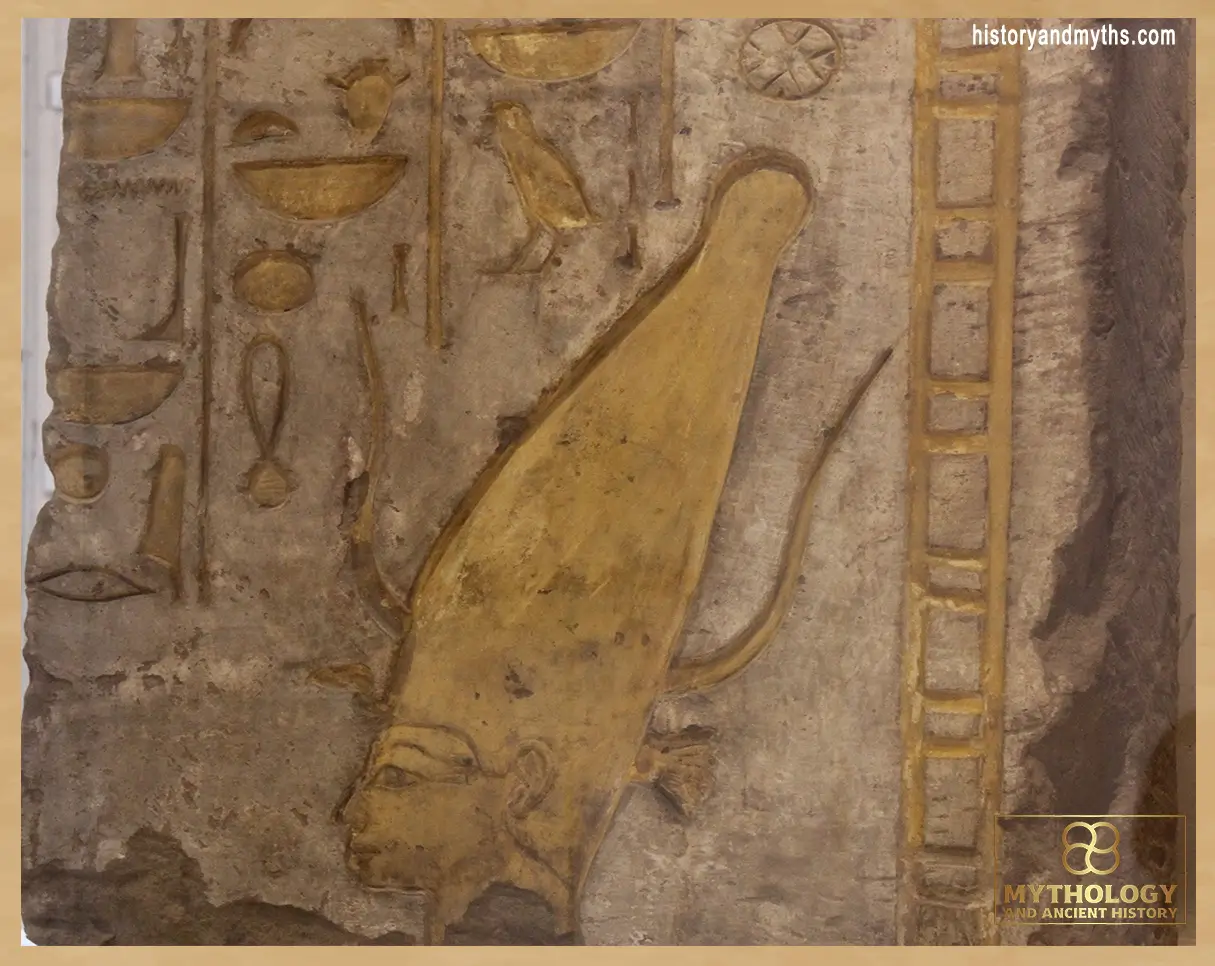
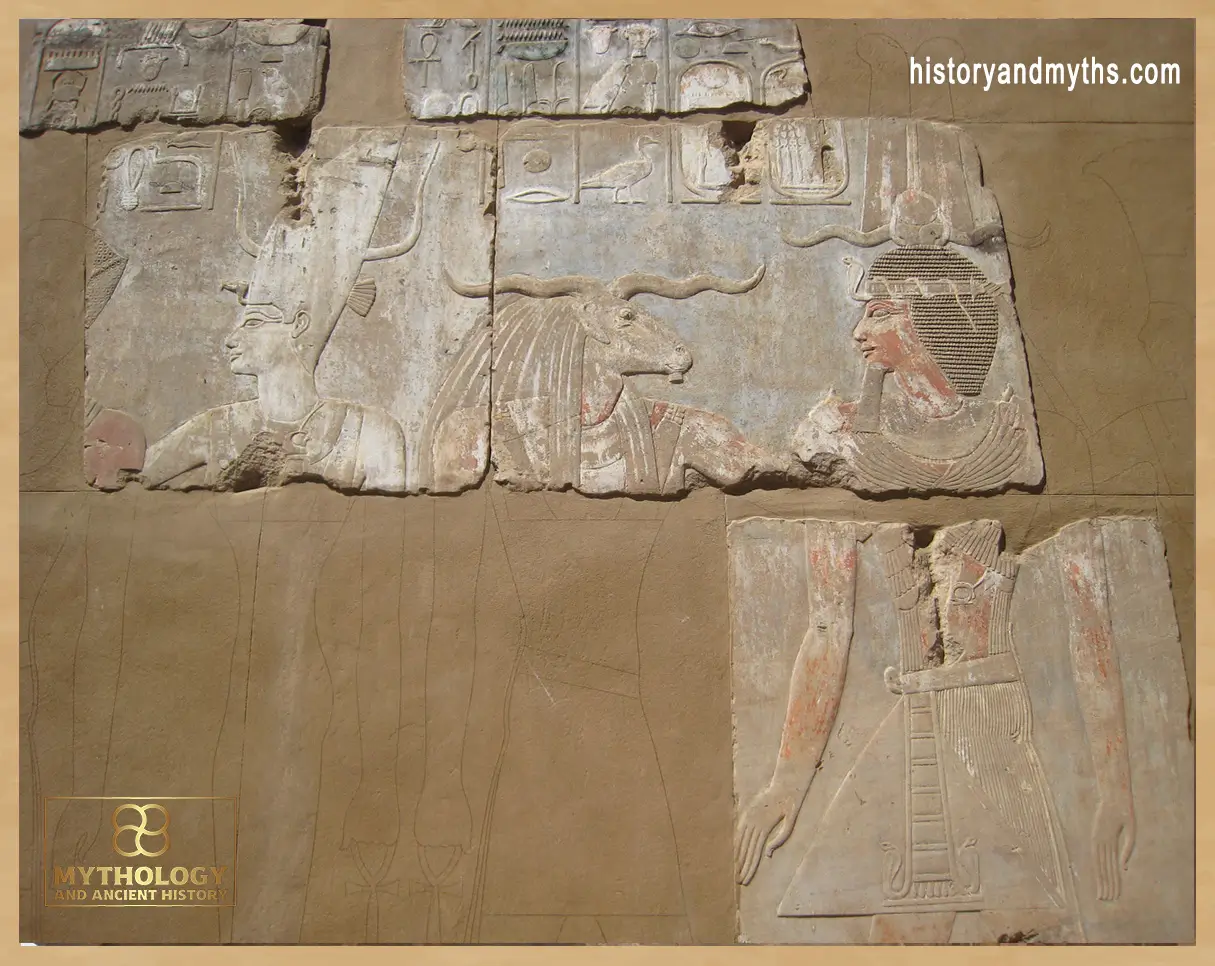
The most distinctive symbol of Satis is the tall crown flanked by a pair of elegant antelope horns. This headdress appears consistently in temple reliefs and statuary from Elephantine, and it captures the essence of her identity far more accurately than later misattributions of weaponry or martial imagery. The horns are not ornamental—they express a connection to the desert wildlife that surrounded the First Cataract, particularly the graceful antelope that moved along the rocky borderlands where the Nile entered Egypt.
In this environment, the antelope represented alertness, agility, and the ability to navigate difficult terrain. These traits mirrored the nature of the southern frontier, where shifting waters and rugged landscapes demanded sensitivity to movement and change. By wearing the horns of this creature, Satis embodied a form of awareness suited to the place where Egypt met the world beyond it: not the aggression of a warrior, but the refined, steady attentiveness necessary to understand and guide the river’s unpredictable arrival.
Her second major symbol—the act of pouring water—completes this portrait. In many depictions, Satis carries a vessel or appears in contexts associated with the inundation. She is not the flood itself, but the divine presence that channels it, ensuring it arrives with timing and purpose. The pouring gesture expresses control, not force; it suggests that the flood is a gift delivered with intention, shaped by a goddess who understands both its power and its limits.
The White Crown she often wears reinforces her status as a guardian of Upper Egypt. It situates her not only in the borderlands but within the political identity of the southern kingdom, tying her role at the cataract to the broader structure of Egyptian sovereignty.
Together, these symbols—antelope horns, flowing water, and the crown of Upper Egypt—form a coherent system of meaning. They present Satis as a goddess of thresholds: one who recognizes subtle shifts, guides essential forces, and ensures that life enters Egypt with grace rather than chaos. Her imagery is quiet but authoritative, rooted not in conflict but in the delicate balance that sustains a land dependent on one river.
Satis in Daily Life: How Southern Communities Experienced the Goddess
For the people living near the First Cataract, Satis was not an abstract theological figure. She was a presence woven into the rhythm of daily survival. Life in Egypt’s southern edge required a constant awareness of the river’s behavior — its rise, its sharp turns between granite outcrops, its potential to either sustain or endanger. Unlike the fertile landscapes of Middle and Lower Egypt, the frontier communities existed in a place where the Nile did not yet flow smoothly. Its waters were wild, narrow, and unpredictable.
In this setting, Satis became the goddess who understood their world precisely because she belonged to it.
Households near Elephantine invoked her not for symbolic blessings, but for stability: that the river would arrive at the right time; that its flow would neither shrink nor overwhelm; that movement between Nubia and Egypt would remain peaceful; that the year’s scarcity would not begin at the source. The people saw in her the one who could read the shifts of the river the way others might read the sky — a divine guardian who interpreted a landscape that demanded sensitivity rather than force.
Her role also differed from other Nile goddesses. Anuket represented the energy of the flowing current; Khnum shaped the life that the river supported. But Satis stood at the moment before flow and formation — the point where the flood first revealed itself, where the year’s promise began as a single surge of water entering the land. This responsibility connected her directly to the lived anxieties of communities who relied on early signs of the river’s behavior to plan their year.
Offerings to Satis often reflected practical hopes: jars of clean water, small tokens tied to fertility and household continuity, and appeals for safe passage across the cataract. These gestures highlight a key dimension of her worship: she was not only a guardian of territory, but of transition—of the delicate moments where safety, water, and movement intersected.
Through these rituals, Satis became a stabilizing force in southern life. She represented the understanding that survival depended not merely on abundance, but on the careful management of beginnings — the first waters, the first movements, the first signs of the coming year.
Key Insights on Satis
- Satis embodied the origin of life in Egypt by presiding over the Nile’s first floodwaters at the First Cataract.
- Her antelope-horn crown reflects the alertness and subtle awareness needed to understand the river’s unpredictable threshold.
- As guardian of Upper Egypt’s southern frontier, she protected the point where foreign lands and Egyptian identity met.
- Her role complements Khnum and Anuket, forming a triad that governs the initiation, shaping, and distribution of the Nile’s blessings.
- The act of pouring water symbolizes her control over the timing and quality of the flood—renewal delivered with intention.
- Satis evolved from a geographic frontier goddess into a ritual symbol of transition, beginnings, and the promise of the coming year.
From Cataract Guardian to Ritual Symbol: The Evolution of Satis Across Egyptian History
The identity of Satis did not remain fixed. As Egypt changed—politically, geographically, and spiritually—so did the meaning of the goddess who stood at its southern threshold. Her earliest forms emphasize her connection to the frontier: a deity who regulated the first appearance of the flood and safeguarded the boundary between Egypt and Nubia. This early role reflected a world where the cataract was not merely a place but an active force shaping the life of those who lived near it.
Over time, as Egyptian control over the south expanded and the border shifted, Satis’s protective dimension became more symbolic than territorial. The goddess of the threshold evolved into a goddess of transition more broadly. She no longer represented just the point where foreign lands met Egypt but the moment where the potential of the flood transformed into usable water for the kingdom. This shift reveals the adaptability of Egyptian religious thought: a deity born from geography could transcend geography once her meaning became understood on a deeper level.
Her integration into the Elephantine Triad—alongside Khnum, the divine potter, and Anuket, the personification of the Nile’s flow—further elevated her status. Within this sacred group, Satis came to represent the initiating moment of creation through water. She marked the beginning of the cycle, the threshold through which life entered before being shaped by Khnum and distributed by Anuket. This triad emphasized not just the mechanics of water but its metaphysical significance as a substance that moves from potential to form.
During later periods, Satis also gained associations with fertility and rebirth. Her act of pouring water was interpreted not only as an image of the inundation but as a gesture of renewal — a reminder that every year, Egypt depended on the successful arrival of water from lands beyond its view. Even when political boundaries shifted or Egyptian influence extended far south, Satis remained tied to the idea of beginnings: the first water, the first blessing, the first assurance that the coming year could sustain life.
Her evolution demonstrates why she endured. Satis was not confined to one function or one era; she expressed a universal experience for the Egyptians—the need to trust a force that arrives from the unknown and sustains everything downstream. Whether as a guardian of the frontier or the herald of the flood, she remained the goddess who announced that life was possible.
Key Takeaways
- Satis represents the moment where life enters Egypt — the first arrival of the Nile’s floodwaters from beyond its borders.
- Her antelope-horn crown symbolizes sensitivity to the frontier landscape, where alertness and balance determined survival.
- She served as the guardian of Upper Egypt’s southern boundary, protecting a region shaped by movement, risk, and renewal.
- Within the Elephantine Triad, she embodies initiation: the beginning of the cycle that Khnum shapes and Anuket distributes.
- Her imagery emphasizes controlled generosity — water released with intention, framing the flood as a gift rather than a force.
- Satis evolved into a broader symbol of thresholds and transitions, reflecting the Egyptians’ understanding that every year begins at the edge of the unknown.
FAQ — Satis
1. Who is Satis in ancient Egyptian religion?
Satis is the goddess of the Nile’s first floodwaters, the protector of Egypt’s southern frontier, and a deity of renewal and transition.
2. Why is Satis associated with the First Cataract?
The First Cataract was the point where the Nile entered Egypt, making it a place of risk, beginnings, and border defense—all domains linked to Satis.
3. What does the antelope-horn crown of Satis symbolize?
It reflects alertness, grace, and sensitivity to the frontier landscape, where the river’s behavior had to be read with precision.
4. Was Satis a war goddess?
No. She was a guardian, not a warrior. Her role focused on protection, water regulation, and border vigilance rather than combat.
5. What was Satis’s role in the Elephantine Triad?
She represented the initiation of the Nile’s flood, complementing Khnum’s shaping of life and Anuket’s distribution of the river’s blessings.
6. How did people worship Satis in daily life?
Communities near the cataract offered water, fertility tokens, and prayers for safe passage, stable floods, and peaceful border conditions.
7. Did Satis have connections to fertility?
Yes. Her role in delivering the first floodwaters linked her to renewal, abundance, and the yearly rebirth of the land.
8. How did the role of Satis evolve over time?
She shifted from a regional frontier guardian to a symbolic figure of beginnings, thresholds, and controlled divine generosity.
Sources & Rights
- Wilkinson, Richard H. The Complete Gods and Goddesses of Ancient Egypt. Thames & Hudson, 2003.
- Hart, George. A Dictionary of Egyptian Gods and Goddesses. Routledge, 2005.
- Pinch, Geraldine. Egyptian Mythology: A Guide to the Gods, Goddesses, and Traditions of Ancient Egypt. Oxford University Press, 2004.
- Bleeker, C. J. Hathor and Thoth: Two Key Figures of the Ancient Egyptian Religion. Brill, 1973.
- Assmann, Jan. The Search for God in Ancient Egypt. Cornell University Press, 2001.
- Lesko, Barbara S. The Great Goddesses of Egypt. University of Oklahoma Press, 1999.
- Teeter, Emily. Religion and Ritual in Ancient Egypt. Cambridge University Press, 2011.
Written by H. Moses — All rights reserved © Mythology and History