Kek in Ancient Egypt — God of Primordial Darkness and Creation
Before the sun, before the sky, before the idea of a world, there was Kek.
To the ancient Egyptians, creation did not begin with light.
It began with darkness.
Kek was not the villain of the cosmos, nor a god who demanded temples and prayers. He was something more unsettling and more honest: the state of reality before anything existed. The silence before sound. The void before form. The darkness that came before day.
Most mythologies rush toward creation. Egypt paused at what came before it.
Kek personified that moment — the endless night where nothing yet had shape, and the universe had not learned how to exist. He was not feared as evil. He was respected as necessary.
Because without darkness, light cannot be seen.
Because without emptiness, nothing can be filled.
Because without Kek, creation made no sense at all.
Egypt did not imagine the universe as suddenly appearing out of nothing. They believed it emerged from something older than order — a condition of obscurity, uncertainty, and stillness.
That condition had a name.
And that name was Kek.
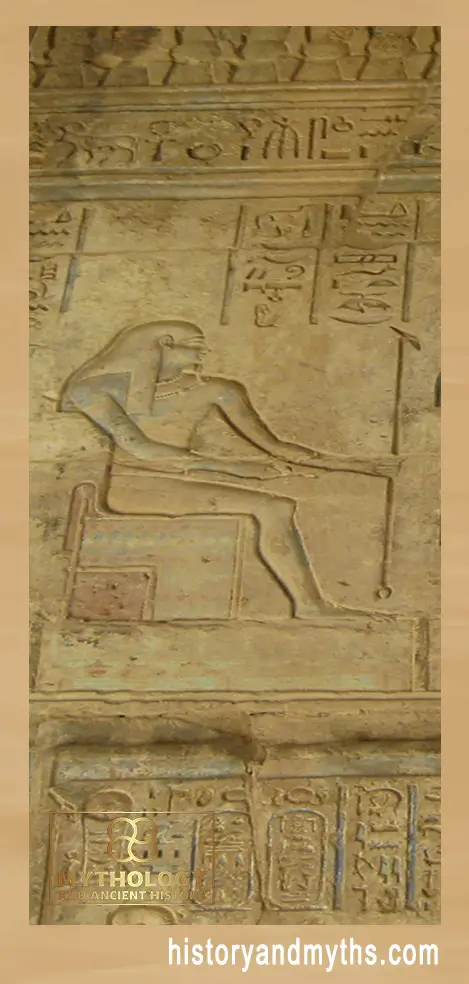
Who Was Kek — Darkness as a Cosmic Condition
Kek was not a personality in the modern sense.
He did not judge, punish, or bless the way later gods did.
He existed as a state, not a story.
To the ancient Egyptians, Kek represented the raw condition of the universe before creation had a shape. Not a place. Not an enemy. Not an underworld.
A condition.
If creation was a sunrise, Kek was the night that still lingered when the first light appeared.
Kek Was Not “Evil Darkness”
This is where many modern explanations go wrong.
Kek was not a demon.
He was not an adversary.
Darkness in Egyptian thought was neutral, not moral.
It was:
- unformed,
- undefined,
- waiting.
Darkness was not destruction.
It was potential.
Just as seeds need darkness underground before they rise, the Egyptians believed existence itself had to pass through shadow before becoming visible.
Kek did not oppose creation.
He preceded it.
A Name for What Comes Before “Something”
Every culture has a word for what existed before the world.
Chaos.
Void.
Abyss.
Nothingness.
Egypt gave it a name.
They called it Kek.
Not because they personified everything —
but because they understood that what cannot be named cannot be understood.
Kek gave language to the unimaginable.
He transformed “nothing” into “something that existed long enough to matter.”
Why Egypt Named the Night
Most civilizations feared darkness.
Egypt studied it.
They did not ask:
“Why is the world dark sometimes?”
They asked:
“What did the world look like before it was the world at all?”
Kek was their answer.
Darkness with no stars.
Night without time.
Obscurity without fear.
Not an absence…
but a presence without form.
| Aspect | Kek in Egyptian Belief | Meaning & Impact |
|---|---|---|
| Core role | Primordial darkness | The state of obscurity before creation and light. |
| Nature | Cosmic condition | Not a “personal god,” but a principle of reality. |
| Place in creation | Pre-existence | Explains what existed before form, sky, and sun. |
| Cult & worship | No popular cult | Rarely worshiped; mostly theological. |
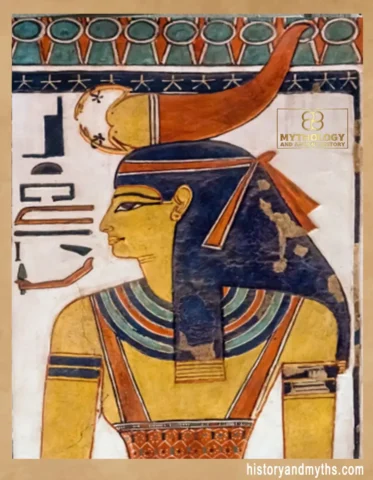
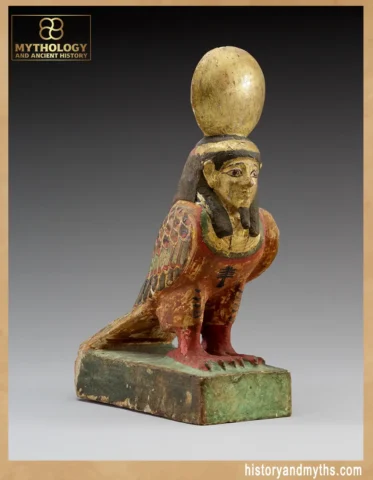
| Iconography | Minimal / symbolic | Few images due to abstract nature. |
| Relationship | Part of a cosmic group | Works within a larger pre-creation system. |
| Moral value | Neutral power | Darkness as potential, not evil. |
| Conceptual legacy | Continuity | Darkness integrated into cosmic order, not opposed. |
Kek and the Ogdoad — Where Darkness Fit in Creation
In Egyptian thought, Kek did not stand alone.
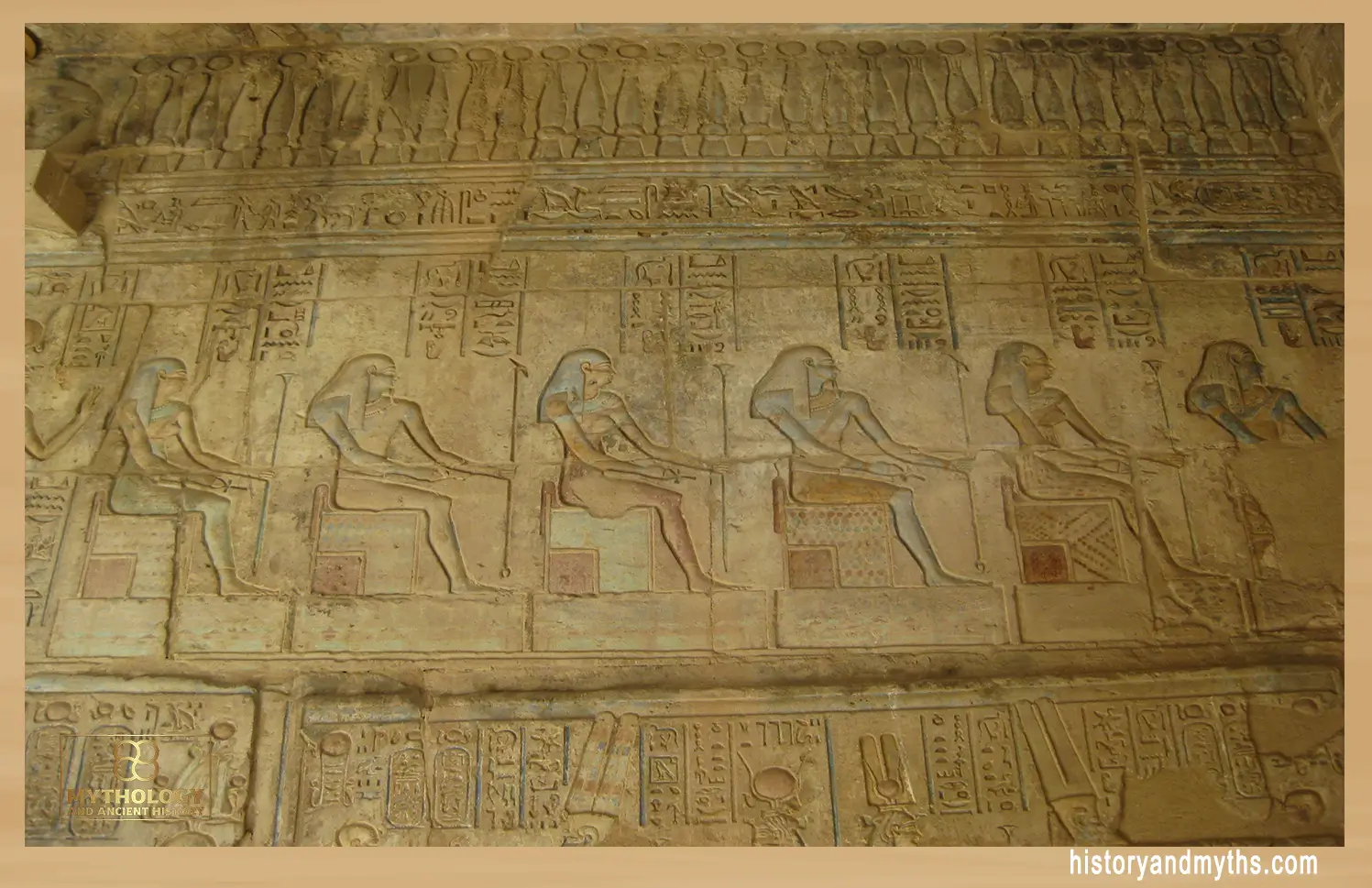
He belonged to a small circle of cosmic forces known as the Ogdoad — a group of eight deities who together represented the conditions that existed before creation.
Kek was only one tone in a larger silence.
The Ogdoad Explained Simply
The Egyptians imagined the universe before creation as ruled by four pairs of forces:
- Endless waters
- Boundless space
- Hiddenness
- Darkness
Kek was darkness.
Not night…
The absence of visibility itself.
His role was specific:
He represented the moment when nothing could yet be seen because nothing had yet taken form.
While others explained where creation floated, or how it was hidden, Kek explained why it could not yet be perceived.
Why He Had to Exist
Creation could not begin in total emptiness.
There had to be:
- a backdrop,
- a condition,
- a “before.”
Kek provided that framework.
In Egyptian cosmology, light did not conquer darkness.
Light emerged from it.
Darkness was the womb of the sun.
Before the first dawn, there had to be night.
Before the first horizon, there had to be obscurity.
Kek was that obscurity.
Not a God — a State With a Name
This is why Kek feels different from most Egyptian gods.
He:
- had no temples,
- demanded no prayers,
- offered no miracles.
Because Kek was never meant to interact with human life.
He defined what came before life.
Kek’s Twin (Briefly)
The Egyptians often paired cosmic forces.
Kek had a female counterpart — Kauket.
Together they represented darkness as both principle and balance.
But their stories do not tangle.
Each stood for the same truth seen from two sides.
Kauket deserves her own voice.
And she will have her own article.
Where Kek Sat in the Egyptian Mind
At the very bottom of reality.
Before creation was born…
Darkness already was.
And Egypt did something radical:
Instead of fearing that darkness,
they gave it a name.
And in naming it…
They understood it.
Was Kek Worshiped? — Or Only Understood?
Short answer: Kek was not a “temple god.”
He was a cosmic condition.
Unlike Ra, Osiris, or Isis, Kek had no cult festivals, no priesthood, and no major sanctuaries built in his name. His role did not touch daily life. It explained what life emerged from.
Why There Were No Temples
Egyptians built temples for gods who:
- protected homes,
- granted harvests,
- healed the sick,
- judged the dead.
Kek did none of these.
He existed before all of them.
You do not pray to darkness.
You measure existence against it.
Kek was remembered, not worshiped.
Named, not invoked.
He belonged to theology, not ritual.
How Kek Appeared in Texts
Rather than prayers, Kek appears in:
- creation hymns,
- priestly writing,
- theological sections of religious texts.
Most notably, he is preserved within the Hermopolitan creation tradition, where the Ogdoad describes how the universe came into being from a formless state.
Kek’s presence in texts is descriptive, not devotional.
He is there to explain existence, not intervene in it.
Why That Made Him Powerful, Not Forgotten
Some assume that gods without temples were less important.
In Egypt, it was often the opposite.
A god like Ra governed the sky.
Kek defined what existed before the sky.
He was not involved in weather, war, or health.
He explained being itself.
And that made him untouchable by ordinary religion.
Was Kek Invisible?
Almost always.
Because he represented what could not be seen:
darkness so pure that light had not yet been born.
It is no coincidence that Kek lacks dramatic myths, heroic images, or colorful temples.
You cannot decorate emptiness.
You cannot sculpt darkness.
Kek was not meant to be stared at.
He was meant to be understood.
Kek Through Time — Did His Role Change?
Kek never became a “popular” god — but he was never downgraded either.
From the earliest periods through the Late and Ptolemaic eras, Kek remained what he had always been: a condition of reality, not a character within it. Unlike gods whose powers expanded (or shrank) with politics and cult centers, Kek stayed outside history.
Because he existed before history began.
From Myth to Metaphysics
In the earliest creation traditions, Kek appears as part of Egypt’s attempt to name the moment before existence. As theology matured, that role did not disappear — it deepened.
Later priests and scribes did not replace Kek with newer gods.
They kept him exactly where he belonged:
At the edge of thought.
While cosmology grew more complex (with solar theology, judgment myths, and divine hierarchies), Kek remained the silent constant underneath it all — the conceptual ground that allowed everything else to stand.
He was not edited.
He was preserved.
When Other Gods Evolved, Kek Stayed Absolute
Many Egyptian gods gained:
- new titles,
- new stories,
- new cities of worship,
- new political meanings.
Kek gained nothing.
Because nothing could be added to nothingness itself.
He did not need mythology to survive.
He was the condition myth depended on.
The Late Period: Kek as Philosophy, Not Personality
By the Late Period, Egyptian religion had absorbed:
- layers of theology,
- astronomical symbolism,
- philosophical reflection.
And in that world of growing complexity, Kek quietly shifted from “cosmic actor” to cosmic idea.
Not an enemy.
Not a judge.
Not a savior.
A reminder that order does not float in a vacuum.
It rises from shadow.
Older cultures feared darkness.
Egypt acknowledged it.
Later civilizations tried to defeat it.
Egypt integrated it.
Why Kek Was Never Replaced
You can replace:
- a god of war,
- a god of fertility,
- a god of storms.
But you cannot replace:
The state that existed
before gods mattered.
Kek belonged to no shrine.
He belonged to reality.
So while Egypt’s beliefs expanded outward —
Kek remained inwards.
Unchanged.
Unchallenged.
Unnecessary to revise.
Because you cannot revise what came before everything.
Kek in a Nutshell — Darkness Before Creation
- Essence: Kek is primordial darkness — the condition before light and form.
- Not a “temple god”: A cosmic state more than a personal deity.
- In creation: Light did not defeat darkness; it emerged from it.
- Worship: No popular cult; preserved mainly in creation theology.
- Iconography: Rare and symbolic due to an abstract nature.
- Meaning: Darkness as potential, not evil.
For the Egyptians, creation did not start with light — it began in shadow, and that shadow had a name: Kek.
Why Kek Still Matters Today
Kek feels ancient — but he is not obsolete.
He speaks to something modern humans still struggle with:
The idea that nothingness is not empty.
Today we call it:
- the unconscious,
- the void,
- the unknown,
- dark matter,
- pre-big-bang space.
Egypt called it Kek.
Darkness Is Not the Enemy
Modern culture treats darkness as something to fix.
Egypt treated it as something to understand.
Kek reminds us that:
- confusion is not failure,
- silence is not absence,
- not-knowing is not weakness.
Every creation still begins in darkness:
Ideas are born in uncertainty.
Changes begin in confusion.
Growth starts where nothing makes sense yet.
That is not chaos.
That is potential.
Kek and the Psychology of Beginnings
Before anything meaningful happens in human life, there is a moment of:
- loss,
- silence,
- isolation,
- collapse
Every transformation begins where identity breaks down.
Kek describes that moment.
Not as an enemy…
But as a doorway.
The Egyptians understood something timeless:
You do not destroy darkness to grow.
You pass through it.
The Oldest Truth Egypt Left Us
Other gods guarded kingdoms.
Kek guarded reality itself.
He did not promise comfort.
He did not promise salvation.
He explained beginnings.
And that is rarer.
The genius of Egyptian thought was not that it worshiped light…
It respected what came before it.
And in a world obsessed with brightness, noise, and certainty, Kek still whispers something uncomfortable…
And honest:
Before you become anything…
You will walk through darkness.
And that darkness has a name.
Key Takeaways — Kek Explained
- Kek represents primordial darkness before creation.
- He is a cosmic condition, not a personal “temple god.”
- Darkness was seen as potential, not as evil.
- Kek explains what existed before light, time, and form.
- His role stayed stable across Egyptian history.
FAQ — Kek in Ancient Egyptian Belief
Who was Kek in ancient Egypt?
Kek was the embodiment of primordial darkness—the condition of existence before creation.
Was Kek an evil god?
No. Kek represented neutral cosmic darkness, not moral evil.
Did people worship Kek?
There is no evidence of popular worship or temples dedicated to Kek.
Where does Kek fit in Egyptian creation myths?
Kek was part of the Ogdoad, the forces that existed before the sun and the ordered world.
Why is Kek rarely shown in art?
Because Kek symbolized abstract darkness rather than a human-like deity.
Who was Kauket?
Kauket was the feminine counterpart of Kek, representing the balance of darkness.
Why does Kek still matter?
Kek reminds us that creation begins in uncertainty and that darkness is part of transformation.
Sources & Rights
- Assmann, Jan. Death and Salvation in Ancient Egypt. Translated by David Lorton. Ithaca: Cornell University Press, 2005.
- Hornung, Erik. Conceptions of God in Ancient Egypt: The One and the Many. Translated by John Baines. Ithaca: Cornell University Press, 1982.
- Wilkinson, Richard H. The Complete Gods and Goddesses of Ancient Egypt. London: Thames & Hudson, 2003.
- Pinch, Geraldine. Egyptian Mythology: A Guide to the Gods, Goddesses, and Traditions of Ancient Egypt. Oxford: Oxford University Press, 2002.
- Quirke, Stephen. Ancient Egyptian Religion. London: British Museum Press, 1992.
- Allen, James P. Genesis in Egypt: The Philosophy of Ancient Egyptian Creation Accounts. New Haven: Yale Egyptological Seminar, 1988.
- Lichtheim, Miriam. Ancient Egyptian Literature. Vol. I: The Old and Middle Kingdoms. Berkeley: University of California Press, 1973.
Written by H. Moses — All rights reserved © Mythology and History