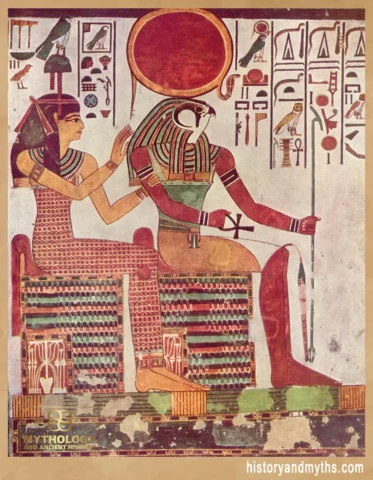
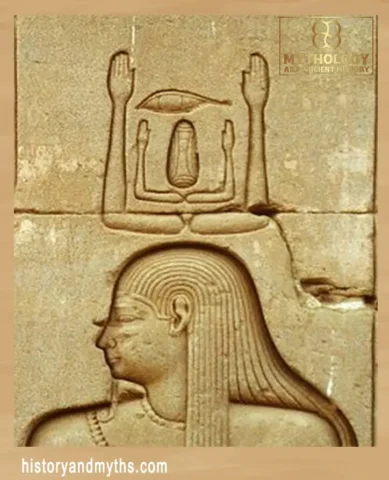
Neith, The Ancient Egyptian Goddess of Order, War, and Creation
In the deep layers of Egyptian religion, some deities became powerful not because of a single myth or dramatic story, but because they answered a universal human need. Neith is one of them. She stood at the intersection of creation, warfare, protection, and skilled craftsmanship an unusual combination that reveals more about Egyptian society than about divine hierarchy. The people who worshipped her were not simply admiring an ancient goddess; they were expressing how they understood strength, order, and the fragile balance of life.
Unlike the deities whose stories dominate popular retellings, Neith did not rely on mythic spectacle to define her identity. Her significance came from a deeper, almost philosophical presence. She embodied the idea that creation and destruction are not opposites but complementary forces that keep the world in motion. To the Egyptians, a world woven together must also be defended. A life that begins must also be protected. Neith became the figure through which these truths were expressed.
Her worshippers saw in her a model of discipline, clarity, and resilience. She was the goddess who set things in motion whether the act of weaving fabric, planning a hunt, or entering battle and who remained steady as events unfolded. In a culture that valued balance and foresight, Neith represented a kind of strength that was deliberate rather than impulsive, thoughtful rather than violent.
This is why she persisted across thousands of years, taking on new roles without losing the old ones. She was not simply a goddess of war, nor merely a mother of creation. She was a reminder that the world is held together by those who can weave threads into patterns, who can protect what they build, and who can face conflict without losing their sense of purpose.
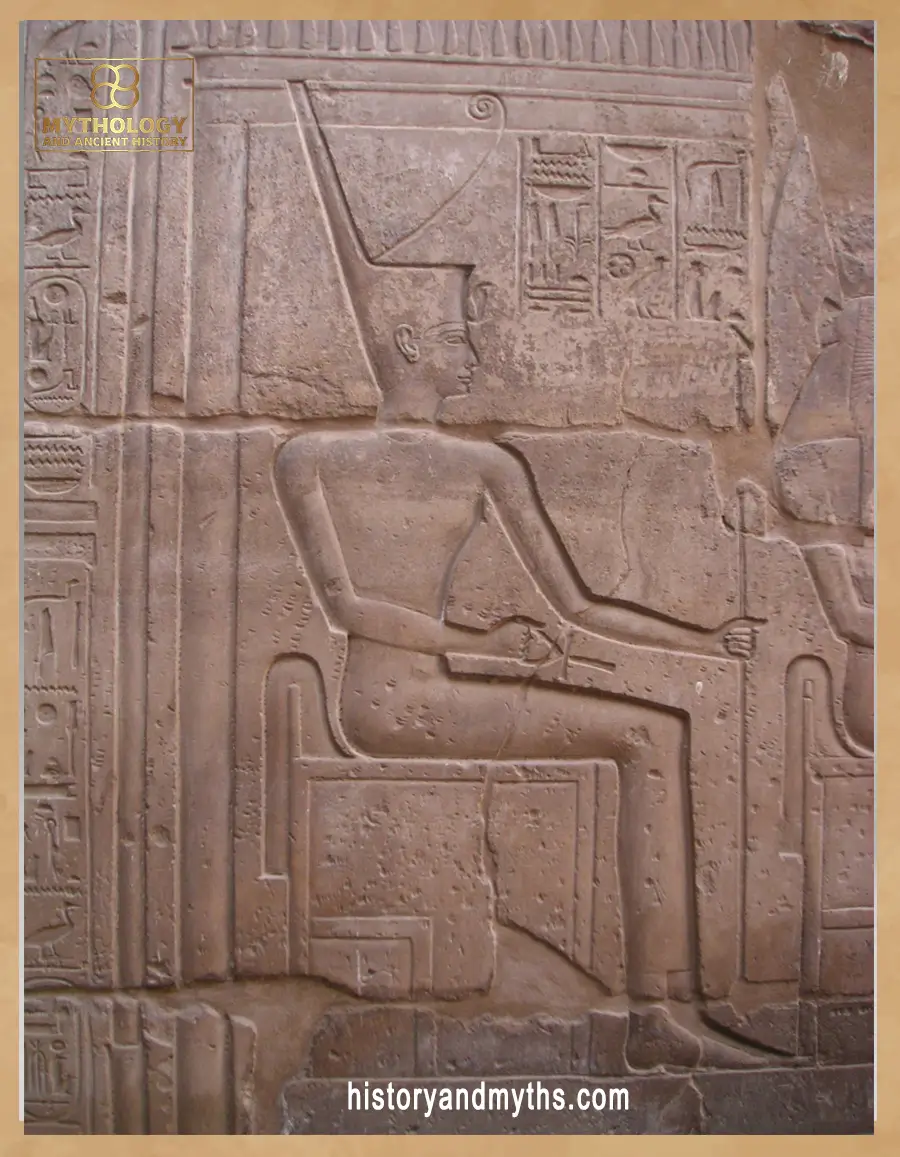
Neith as a Weaver of Order: Why the Egyptians Linked Creation to Skill
Neith’s identity as a creator did not originate from a dramatic myth but from a skill the Egyptians deeply respected: the ability to weave. In their worldview, weaving was more than craft it was a disciplined process that turned loose threads into a structured whole. To them, creation worked the same way. The universe was not born from chaos in a single explosive moment; it was assembled, thread by thread, into a stable pattern.
This understanding explains why Neith became associated with both creation and craftsmanship. Her creative act was not about forming the world suddenly, but about organizing it. Egyptians saw order as something that must be maintained intentionally, not assumed. A weaver’s work mirrored that principle exactly: precision, tension, balance, repetition, and control. Creation required the same qualities.
By associating Neith with weaving, Egyptians linked existence itself to human experience. Anyone who had ever woven cloth understood the patience and clarity required. This made Neith’s creative role relatable, grounded, and practical not distant or abstract. She represented a universe held together by structure, not impulse.
This perspective also illuminates why Neith remained relevant through many periods. The world she embodied was one built through disciplined effort. Her authority came from the belief that stability is made, not given and that every structured system, from a household to a kingdom, depends on someone capable of weaving order from loose strands.
The symbolism of weaving also explains why Neith remained relevant long after Egypt’s earliest periods. Weaving transformed separate threads into a unified whole, making it a powerful metaphor for how Egyptians understood society itself: families, temples, cities, and kingdoms all depended on carefully maintained connections rather than isolated strength.
| Aspect | Description |
|---|---|
| Primary Identity | Goddess of discipline, creation, warfare, and skilled craftsmanship |
| Name Meaning | Often interpreted as “She Who Is” or “The First One,” emphasizing antiquity |
| Cult Center | Sais in the Western Delta — major revival during the 26th Dynasty |
| Domains | Creation through order, warfare with discipline, protective oversight, weaving |
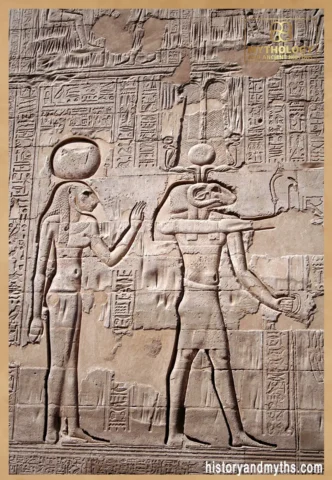
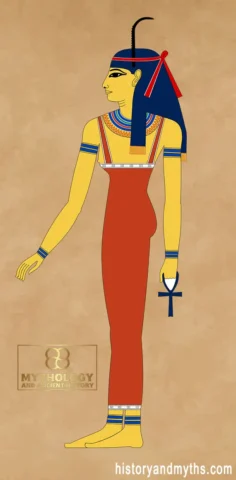
| Iconography | Shield with crossed arrows, Red Crown of Lower Egypt, symbols of crafting and order |
| Cultural Role | Model of structured strength; symbol of political renewal during Late Period |
A Creator and a Warrior: The Egyptian Logic Behind Neith’s Dual Power
Neith’s dual identity as both a creator and a warrior may seem contradictory, but to the Egyptians it expressed a single idea: anything worth building must also be protected. Creation without defense is fragile, and defense without purpose is empty. Neith embodied the point where these two forces met.
Her creative side symbolized the formation of structure whether the world itself or the ordered fabric of society. Her martial side represented the resolve needed to preserve that structure against disruption. Egyptians did not see war as chaos for its own sake; they saw it as an effort to restore or guard balance. For a goddess associated with weaving order, this connection was natural.
This is why Neith was invoked in contexts that required clarity and decisiveness. Warriors sought her favor not simply for victory, but for discipline and steadiness. Communities appealed to her when stability was threatened. Her strength was not impulsive aggression; it was the focused protection of something deliberately built.
The union of creation and warfare in Neith reveals an Egyptian worldview that recognized strength in both construction and defense. By carrying these roles together, Neith represented completeness: the force that begins structure, and the force that ensures it lasts.
Neith as a Political Symbol: Why Her Cult Rose Again in the Late Period
Neith’s influence was not limited to religious thought; it also carried political weight. During the 26th Dynasty, when the rulers of Sais established their city as the new seat of power, they chose to revive Neith’s cult deliberately. This choice reflected more than local pride it expressed a political philosophy. Neith embodied disciplined creation, protection, and continuity, qualities a fragmented Egypt urgently needed.
The state was facing internal instability and external threats. Presenting Neith as the kingdom’s guiding deity allowed the rulers to frame their authority as constructive rather than destructive. Her dual identity as a maker and a defender symbolized a government aiming to rebuild order with purpose, not force. Restoring her temple in Sais became a public declaration that the new dynasty grounded its legitimacy in ancient, enduring principles.
Neith’s antiquity also served a strategic function. She was one of Egypt’s oldest divine figures, reaching back to the earliest phases of the civilization. Elevating her suggested that the rulers were reconnecting Egypt with its foundational identity a powerful message in a time of political change.
In this way, Neith became more than a goddess. She became a political emblem: a model of governance rooted in foresight, structure, and the steady protection of what has been carefully built.
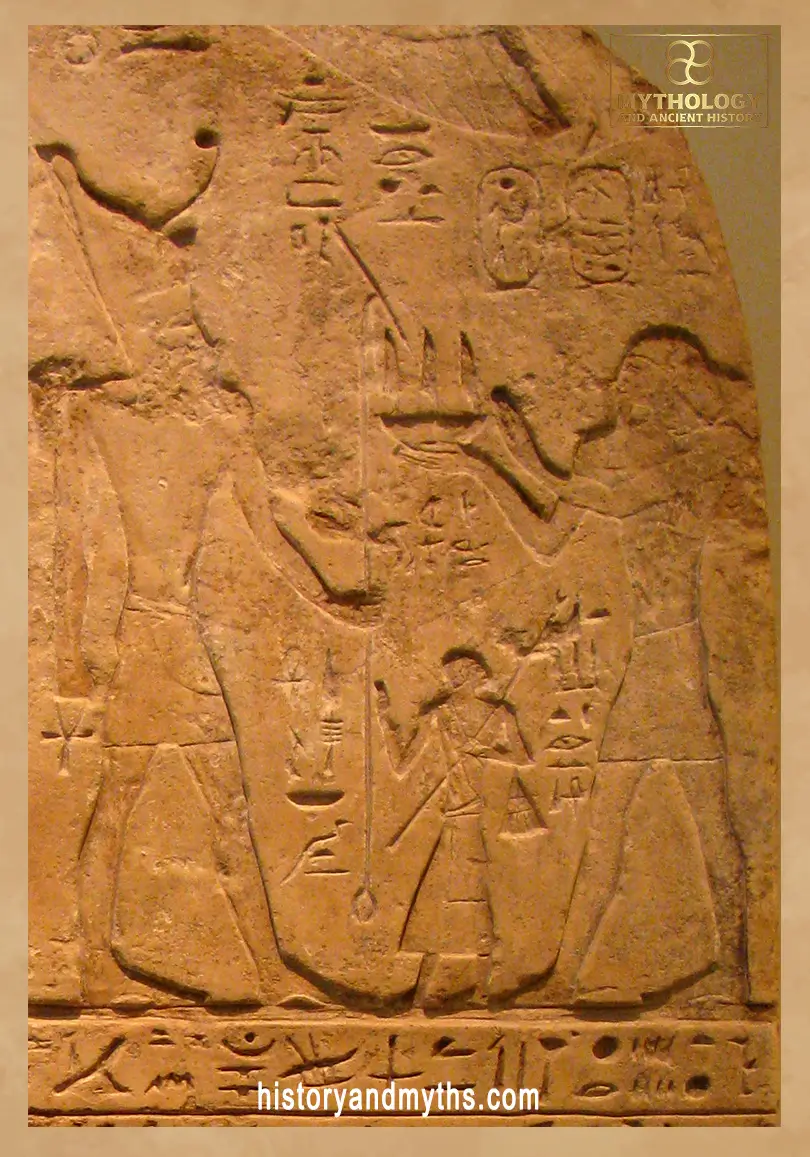
What Does Neith Reveal About Egyptian Ideas of Leadership?
Neith reveals that ancient Egyptians did not separate leadership from responsibility. A ruler was expected not only to defend the kingdom but also to preserve order, encourage productive work, and maintain the stability upon which society depended. These expectations closely mirror the different aspects embodied by Neith herself.
Neith and Social Identity: Weaving as a Sacred Act
Neith’s association with weaving was more than a symbolic detail; it shaped how Egyptians understood the value of skilled work. Weaving required concentration, rhythm, and the ability to hold many threads in tension without losing control traits the Egyptians admired in individuals who kept families, communities, and institutions steady. By linking these qualities to Neith, they elevated everyday labor into a reflection of divine order.
Women who wove textiles, men who crafted nets for hunting, and artisans who created patterned fabrics all found in Neith a figure who validated their work. She represented precision and foresight, making her relevant not only to elite ritual but also to the practical world of production. In this sense, Neith bridged the gap between cosmic creation and human skill: both were acts of shaping raw material into something purposeful.
This connection also gave her a quiet but enduring presence in domestic life. She symbolized the discipline required to maintain a household, the stability that came from routine, and the patience needed to build anything lasting. Her influence extended beyond temples it lived in the rhythm of work, the shaping of tools, and the patterned logic of Egyptian craftsmanship.
By embodying the dignity of labor, Neith gave ordinary people a deity whose strength mirrored their own efforts. Creation, in their eyes, was not a distant miracle but a daily act of careful construction an idea Neith represented perfectly.
Key Insights on Neith
- One of Egypt’s oldest goddesses, embodying structure, clarity, and disciplined strength.
- Linked to creation through the concept of weaving order from raw material.
- Held a dual identity as both creator and warrior — a union of construction and protection.
- Served as a political emblem during the 26th Dynasty, symbolizing renewal and legitimacy.
- Influenced social identity by elevating craftsmanship, especially weaving, to a sacred act.
- Her symbols — crossed arrows and shield — represent controlled force rather than aggression.
Legacy and Meaning: Why Neith Endured Across Egypt’s Shifting Beliefs
Neith endured because she represented a kind of strength that remained relevant no matter how Egypt changed. Her identity blended discipline, clarity, and resilience qualities valuable in both personal life and national identity. As a creator, she shaped structure; as a warrior, she defended it; as a craftswoman, she taught that order is built through skill and intention.
Her endurance across millennia shows that Egyptians valued stability not as a fixed state but as a process. The world had to be woven, maintained, and protected just as a piece of cloth needs constant tension to hold its form. Neith captured this idea better than any other deity. She symbolized the human effort behind balance, the work required to build something meaningful, and the resolve needed to keep it intact.
For this reason, Neith remains one of the most intellectually rich figures in the Egyptian pantheon. She embodies a worldview where strength is deliberate, creation is structured, and resilience is a form of wisdom. Her legacy is not tied to a single myth, but to an enduring idea: that order survives when someone is willing to weave it into being and stand firm when it is challenged.
Key Takeaways
- Neith unites creation, warfare, and craftsmanship in a single disciplined identity.
- Her creative power reflects the idea of weaving order into existence, thread by thread.
- She represents strength that is controlled, purposeful, and rooted in clarity rather than aggression.
- Her revival in the 26th Dynasty shows how deities could become political symbols of renewal and legitimacy.
- Neith elevated everyday craftsmanship, especially weaving, to a sacred expression of structure and resilience.
- Her legacy endures as a model of balanced power — creation protected by deliberate, steady force.
FAQ — Neith
1. Who is Neith in ancient Egyptian religion?
Neith is one of Egypt’s oldest goddesses, associated with creation, warfare, and skilled craftsmanship.
2. Why is Neith linked to weaving and craftsmanship?
Weaving symbolized the deliberate formation of order, reflecting Neith’s role in shaping and maintaining structure.
3. How can Neith be both a creator and a warrior?
She embodies the idea that what is built must also be protected — creation and defense as complementary forces.
4. What was Neith’s primary cult center?
Sais in the Western Delta, where her worship flourished especially during the 26th Dynasty.
5. Why was Neith revived politically in the Late Period?
She symbolized stability, legitimacy, and renewal — qualities the rulers of Sais used to reinforce their authority.
6. What symbols are most strongly associated with Neith?
The shield with crossed arrows and the Red Crown of Lower Egypt, representing disciplined strength.
7. Did Neith appear in major Egyptian myths?
Her role is less mythological and more philosophical, centered on order, skill, and structured power.
8. How did Neith influence daily life?
She elevated craftsmanship, routine, and disciplined work as expressions of divine order.
Sources & Rights
- Allen, James P. Middle Egyptian: An Introduction to the Language and Culture of Hieroglyphs. 3rd ed. Cambridge University Press, 2014.
- Assmann, Jan. The Search for God in Ancient Egypt. Cornell University Press, 2001.
- Assmann, Jan. Death and Salvation in Ancient Egypt. Cornell University Press, 2005.
- Hart, George. A Dictionary of Egyptian Gods and Goddesses. Routledge, 2005.
- Hornung, Erik. Conceptions of God in Ancient Egypt: The One and the Many. Cornell University Press, 1996.
- Lesko, Barbara S. The Great Goddesses of Egypt. University of Oklahoma Press, 1999.
- Pinch, Geraldine. Egyptian Mythology: A Guide to the Gods, Goddesses, and Traditions of Ancient Egypt. Oxford University Press, 2004.
- Quirke, Stephen. Religion and Ritual in Ancient Egypt. Cambridge University Press, 2015.
- Teeter, Emily. Religion and Ritual in Ancient Egypt. Cambridge University Press, 2011.
- Wilkinson, Richard H. The Complete Gods and Goddesses of Ancient Egypt. Thames & Hudson, 2003.
- British Museum. Collection Online: Neith and Sais.
- The Metropolitan Museum of Art. Heilbrunn Timeline of Art History: Ancient Egyptian Religion.
- UCLA Encyclopedia of Egyptology. Sais and the Cult of Neith.
- Digital Egypt for Universities (University College London). Neith and Early Egyptian Religion.
- World History Encyclopedia. Neith.
Written by H. Moses — All rights reserved © Mythology and History