Nehmetawy, The Saving Goddess Linked to Thoth in Ancient Egypt
In the vast world of Egyptian religion where every city shaped its own theology and every god reflected a specific need Nehmetawy appears as a quiet but meaningful presence. She was not a deity of grand myths or royal cults. Instead, her significance came from something far more human: the need for rescue, protection, and reassurance in moments when order felt fragile.
Her name, often translated as “She Who Embraces Those in Need,” hints at a role that goes beyond simple patronage. Nehmetawy emerged in Hermopolis, a city known for its intellectual and theological depth, where she became associated with Thoth. That association alone reveals much: wisdom paired with protection, clarity balanced by care. In a religious landscape that valued harmony, her presence completed an idea knowledge without compassion is incomplete.
Though she appears briefly in surviving records, Nehmetawy embodies a distinctly Egyptian understanding of divine protection: subtle, steady, and woven into daily life. The Egyptians did not always need dramatic saviors they often needed watchful guardians who restored balance quietly. Nehmetawy was one of these guardians.
Who Is Nehmetawy? A Protector Goddess Born from Everyday Egyptian Life
Unlike many Egyptian deities whose identities were shaped through long mythological cycles, Nehmetawy’s importance arose from a practical, human need. She represented protection not as a cosmic battle, but as a steady, reassuring presence for ordinary people. Her very name, “She Who Embraces Those in Need,” reveals how the Egyptians understood divine care: not loud, not heroic, but quiet and constant.
Nehmetawy appears primarily in Hermopolis, the intellectual and theological center of the god Thoth. This setting matters. Hermopolis was a city that valued order, balance, and understanding. To introduce a protective goddess into this environment suggests that the Egyptians saw safety not as a simple magical guarantee, but as something requiring wisdom, calm, and attentive guardianship. Nehmetawy filled this role.
Her protective function was not about warfare or defeating enemies. Instead, it centered on restoring equilibrium helping individuals regain stability when their lives were disrupted by illness, fear, uncertainty, or misfortune. This subtle role explains why she never developed a large mythological narrative. The Egyptians invoked her not for dramatic interventions but for the small but essential moments where people needed to feel held rather than abandoned.
She therefore stands as a reminder that Egyptian religion was not only about kings and cosmic events. It was also about daily vulnerabilities, quiet hopes, and the emotional needs of ordinary people.
| Aspect | Description |
|---|---|
| Primary Role | Goddess of rescue and protective reassurance |
| Name Meaning | “She Who Embraces Those in Need” |
| Cult Center | Hermopolis (linked with Thoth) |
| Association | Complement to Thoth’s wisdom and order |
| Function | Restoring emotional and spiritual balance |
| Iconography | Solar disk and cow horns; symbols of nurturing protection |
Why Hermopolis Matters: Nehmetawy and Her Association with Thoth
Nehmetawy’s identity cannot be understood without looking at Hermopolis, the city where she appears most clearly. Hermopolis was not just another cult center it was a place that shaped Egypt’s intellectual and theological imagination. It was the home of Thoth, the god of writing, order, calculation, and the reasoning that kept the world structured.
In such an environment, the presence of Nehmetawy is revealing. She was not portrayed as Thoth’s powerful counterpart or as a rival force. Instead, she balanced him. If Thoth represented clarity, logic, and the ability to understand the world, Nehmetawy represented the emotional and protective dimension that gives those qualities meaning for human life.
Their association suggests a deliberate theological pairing:
- Thoth maintains order through wisdom.
- Nehmetawy restores stability through care and protection.
This combination reflects an Egyptian understanding that protection is not merely defensive it is also intellectual and emotional. People need security to think clearly, to write, to judge, to create harmony. A society built on knowledge must also respond to vulnerability. Nehmetawy filled precisely this space.
Some depictions show her sharing symbols associated with Thoth, reinforcing the idea that she operated within his sphere rather than outside it. Instead of being an independent mythological figure, she embodied a necessary complement to the Hermopolitan worldview: protection rooted in understanding, not brute force.
This makes her unique. Other protective goddesses like Serket or Isis take on dramatic, heroic roles. Nehmetawy’s protection is quieter, woven into the intellectual calm of Hermopolis. Her presence indicates that even the gods of wisdom needed a guardian figure who could safeguard what mattered most: the stability of the people who carried Egypt’s knowledge forward.
A Goddess of Rescue: What Nehmetawy Actually Protected
Egyptian religion offered many forms of protection some dramatic, others subtle. Nehmetawy belongs to the second category. She did not guard kings on the battlefield, nor did she confront monstrous forces in myth. Her protection was directed toward personal, everyday vulnerability. She represented the moment when someone in distress needed reassurance, stability, and a sense that the world could be restored to balance.
The Egyptians understood danger in broad terms. It could be physical illness, accidents, childbirth or emotional fear, uncertainty, and the loss of direction. Nehmetawy’s title, “She Who Embraces Those in Need,” suggests that she operated in those moments when people felt exposed. Her role was not defensive power but restorative presence.
This is why her imagery often includes gestures of holding, embracing, or carrying protective symbols. These were not metaphors. They were visual statements about her purpose: to bring someone back from the edge of instability. In a culture where maintaining harmony (ma’at) was central to life, a goddess who restored internal balance was just as important as one who fought external threats.
Her protective nature also extended to the intellectual world of Hermopolis. Scholars, priests, and scribes depended on clarity and mental steadiness. A deity who symbolized reassurance complemented Thoth’s domain. Knowledge without emotional grounding can fracture; protection without understanding can mislead. Together, they formed a theological partnership that reflected the Egyptian pursuit of both order and inner security.
This explains why Nehmetawy, though rarely central in major myths, persisted across periods. People did not call on her for royal victory they called on her for human steadiness. She protected the vulnerable moments that rarely appear in monumental inscriptions but shaped daily life just as strongly.
How the Egyptians Understood Nehmetawy: A Protector Rooted in Daily Experience
Nehmetawy’s significance becomes clearer when viewed through the eyes of ordinary Egyptians rather than through grand mythological narratives. Religion in Egypt was not only shaped by royal rituals or temple ceremonies; it was shaped just as strongly by the private fears, hopes, and uncertainties of daily life. Within this context, Nehmetawy fulfilled a need that did not require drama it required presence.
For many Egyptians, danger was unpredictable: a sudden illness, the risk of childbirth, a lost child, a moment of despair, or a disruption in the rhythm of work and family. Deities like Sekhmet or Isis intervened in moments of crisis or transformation, but Nehmetawy represented something more immediate: the reassurance that someone or something was holding the situation steady long enough for balance to return.
Her protective aspect was therefore emotional as much as spiritual. She addressed the internal experience of fear what happens inside the person before divine action even begins. This distinguishes her from the more forceful protectors. Where Serket fought poison and Isis revived the dead, Nehmetawy restored confidence. She embraced those at risk of losing their sense of stability.
This understanding aligns with Egyptian values. The concept of ma’at was not abstract; it was practical. Harmony in the cosmos began with harmony inside the individual. A goddess whose very name implied “embracing” was offering a form of protection that acknowledged human vulnerability directly, without judgment or spectacle.
Even if her cult was small, the emotional logic of her role made her relevant. Hermopolis, a center of refined theology, recognized that order depends not only on wisdom but also on psychological resilience. By embodying that resilience, Nehmetawy became part of a religious conversation about how humans maintain balance in a world shaped by both reason and uncertainty.
What Does Nehmetawy Reveal About Egyptian Ideas of Protection?
Nehmetawy reveals that ancient Egyptians understood protection as more than physical safety. While many gods defended temples, kings, or the cosmic order, she represented the quieter forms of protection that preserved emotional stability, confidence, and inner balance during everyday life.
The Iconography of Nehmetawy: Symbols That Explain Her Role
Although Nehmetawy’s appearances in art are limited, the symbols associated with her are deliberate and meaningful. Egyptian iconography rarely used visual elements without purpose. Each symbol in her depictions reveals how the Egyptians understood her protective function.
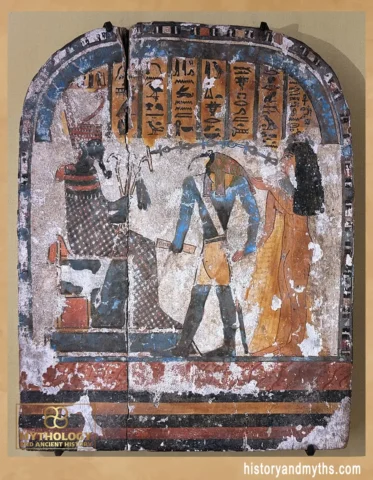
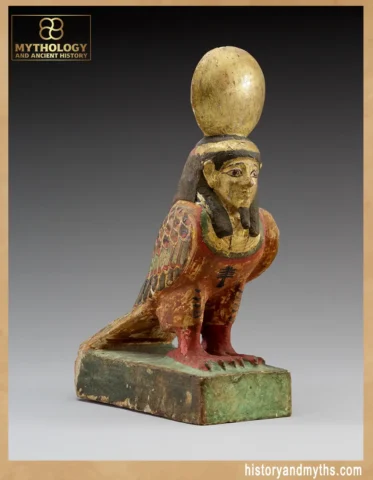
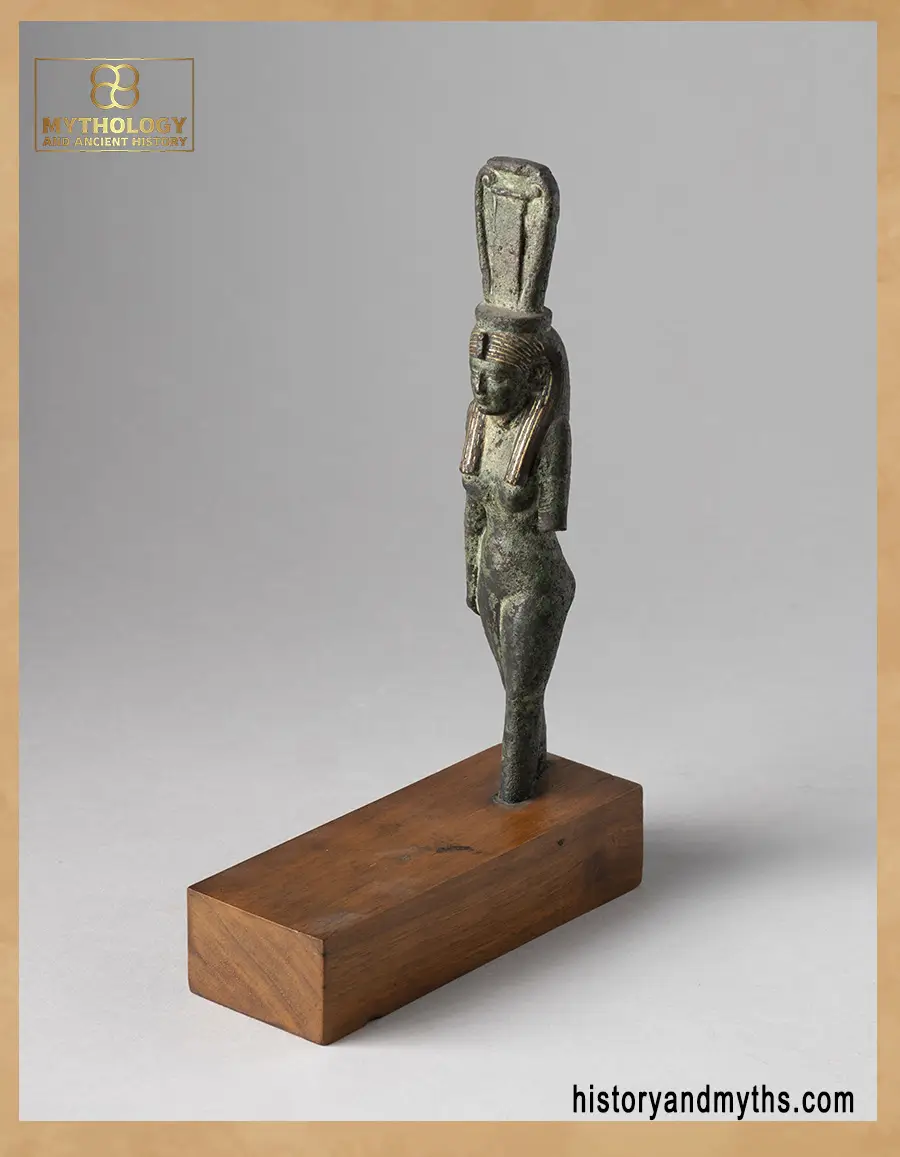
Most portrayals show her as a standing or seated woman wearing the solar disk and cow horns, a combination strongly linked to Hathor. This does not mean Nehmetawy is simply another form of Hathor, but it shows how Egyptian artists borrowed recognizable visual language to express protection, nurturing, and stability. The solar disk, in particular, signals renewal a reminder that protection restores the individual to a state of clarity and readiness.
In some representations she carries the scepter (was) or the ankh, symbols of authority and life. These are not decorative. They identify her protection as an active force capable of restoring strength, not merely offering comfort. When a deity associated with embracing the vulnerable holds instruments of power and vitality, the message is clear: protection is effective, not symbolic.
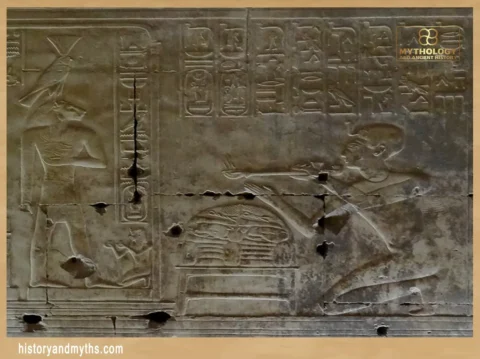
A few figures from Hermopolis show her sharing iconographic space with Thoth. This pairing visually reinforces her role as a guardian of the emotional and spiritual balance required for wisdom to function. Thoth provided structure; Nehmetawy ensured that structure could be sustained.
Even when her image is absent from artifacts, her conceptual presence is suggested through protective gestures and nurturing forms in Hermopolitan art. This influence indicates that her identity was understood more through function than physical depiction a trait shared by several protective goddesses who operated within local theological systems rather than national cults.
Nehmetawy’s iconography may be sparse, but it is precise. Every element, from the horned solar crown to the symbols she holds, articulates a single idea: that safeguarding a person required both emotional reassurance and the restoration of inner strength.
Key Insights on Nehmetawy
- A protective goddess whose role centers on emotional and spiritual reassurance.
- Her name means “She Who Embraces Those in Need”, reflecting a direct human connection.
- Closely linked to Thoth in Hermopolis, balancing wisdom with compassionate protection.
- Symbolizes the restoration of equilibrium rather than dramatic intervention.
- Iconography often borrows nurturing elements from Hathor, emphasizing care and stability.
- Represents the quieter, everyday side of Egyptian religion—protection rooted in lived experience.
Nehmetawy in Texts and Legacy: A Quiet Presence with Enduring Meaning
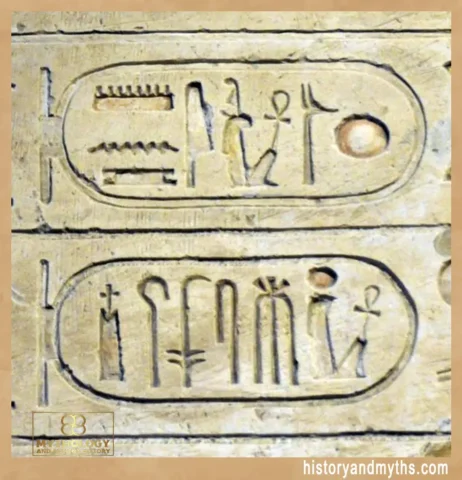
References to Nehmetawy are not abundant, yet the ones that survive highlight a consistent role: restoring stability where it has been disturbed. In Hermopolis, she appears in inscriptions identifying her as a local protective deity associated with the well-being of individuals and the proper functioning of the temple environment. Even in these brief mentions, her title emphasizes rescue and support, not dominion or cosmic authority.
Her name occasionally appears alongside rituals intended to reinforce personal or communal balance. These were not grand ceremonies but smaller acts of devotion that linked emotional reassurance with divine order. In such contexts, Nehmetawy symbolized the moment when the worshipper’s fear transitions into renewed strength an overlooked but essential part of Egyptian religious psychology.
Although she never developed a widespread cult, her connection to Thoth enabled her identity to endure. As Thoth’s theological importance expanded through the Late Period and into Greco-Roman Egypt, associated deities like Nehmetawy retained relevance as part of Hermopolitan tradition. Her protective qualities blended naturally with the intellectual and moral ideals that the city represented.
Today, scholars view Nehmetawy as a window into the quieter side of Egyptian religion: the deities who addressed private anxieties rather than public triumphs. She reflects how Egyptians understood salvation not as a dramatic rescue from disaster, but as a gentle return to balance achieved through divine presence.
Her legacy lies in this subtlety. Nehmetawy shows that even in a pantheon filled with powerful gods, there was room for deities who embodied the small, steady kinds of help that people needed most. In that sense, her story is not minor at all it is simply human.
Key Takeaways
- Nehmetawy embodies protection rooted in emotional and spiritual reassurance.
- Her name—“She Who Embraces Those in Need”—captures her core function as a stabilizing presence.
- Her association with Thoth in Hermopolis pairs wisdom with compassionate guardianship.
- She represents a subtle, human-centered form of divine rescue rather than dramatic mythic intervention.
- Her iconography reflects nurturing themes, emphasizing care, balance, and restored harmony.
- She reveals how Egyptian religion addressed everyday vulnerability, not only cosmic events.
FAQ — Nehmetawy
1. Who is Nehmetawy in ancient Egyptian religion?
She is a protective goddess whose name means “She Who Embraces Those in Need,” reflecting her role as a source of reassurance.
2. What was Nehmetawy’s main function?
Her role centered on restoring emotional and spiritual balance rather than dramatic intervention.
3. Why is Nehmetawy associated with Thoth?
In Hermopolis, she complemented Thoth’s wisdom with compassionate protection, creating a balanced theological pair.
4. Did Nehmetawy have her own cult or temple?
She did not have a major independent cult; her presence was mainly tied to the religious traditions of Hermopolis.
5. How was Nehmetawy depicted in Egyptian art?
Often with a solar disk and cow horns, using visual language borrowed from nurturing goddesses like Hathor.
6. Is Nehmetawy mentioned in major Egyptian myths?
No, her significance comes from her protective function in daily life rather than mythological narratives.
7. What makes Nehmetawy different from other protective goddesses?
She represents subtle, restorative protection rooted in personal experience and emotional steadiness.
8. Why is Nehmetawy important for understanding Egyptian religion?
She reveals the quieter side of worship—how Egyptians sought comfort, balance, and reassurance from their deities.
Sources & Rights
- Allen, James P. Middle Egyptian: An Introduction to the Language and Culture of Hieroglyphs. 3rd ed. Cambridge University Press, 2014.
- Assmann, Jan. The Search for God in Ancient Egypt. Cornell University Press, 2001.
- Bleeker, Claas J. Hathor and Thoth: Two Key Figures of the Ancient Egyptian Religion. Brill, 1973.
- Hart, George. A Dictionary of Egyptian Gods and Goddesses. Routledge, 2005.
- Hornung, Erik. Conceptions of God in Ancient Egypt: The One and the Many. Cornell University Press, 1996.
- Pinch, Geraldine. Egyptian Mythology: A Guide to the Gods, Goddesses, and Traditions of Ancient Egypt. Oxford University Press, 2004.
- Quirke, Stephen. Religion and Ritual in Ancient Egypt. Cambridge University Press, 2015.
- Teeter, Emily. Religion and Ritual in Ancient Egypt. Cambridge University Press, 2011.
- Wilkinson, Richard H. The Complete Gods and Goddesses of Ancient Egypt. Thames & Hudson, 2003.
- British Museum. Collection Online: Thoth and Hermopolis.
- The Metropolitan Museum of Art. Heilbrunn Timeline of Art History: Ancient Egyptian Religion.
- UCLA Encyclopedia of Egyptology. Hermopolis and Egyptian Theology.
- Digital Egypt for Universities (University College London). Hermopolis and Religious Life in Ancient Egypt.
- World History Encyclopedia. Thoth.
- Museo Egizio. Collection Catalogue: Bronze Statuette of Nehmetawy.
Written by H. Moses — All rights reserved © Mythology and History