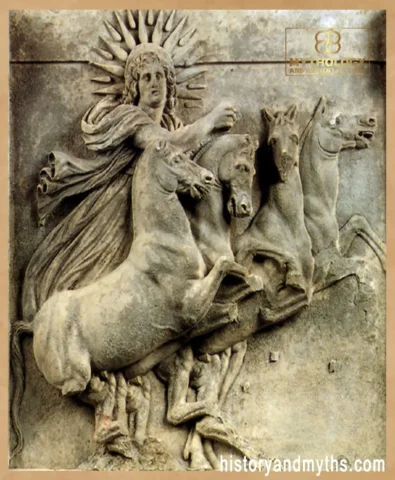
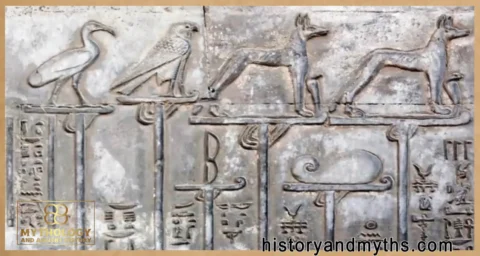
Night Journey of the Sun God (Ra) — Through the Duat
In ancient Egyptian belief, the sun’s disappearance at dusk did not mark rest or absence—it signaled the beginning of a dangerous cosmic passage. Each night, the sun god Ra descended into the Duat, the hidden realm beneath the horizon, where survival itself was uncertain. This nocturnal journey was not symbolic decoration added to myth; it was a necessary process without which sunrise—and existence—could not continue.
Unlike Ra’s familiar daytime voyage across the sky, the night journey unfolded through twelve distinct hours, each guarded by gates, deities, and challenges described in funerary texts such as the Amduat and the Book of Gates. Here, Ra traveled aboard a different solar barque, confronting forces of chaos and restoring order from within darkness. Crucially, this passage mirrored the fate of the dead: just as Ra had to navigate the Duat to be reborn at dawn, the justified soul followed similar paths to achieve renewal after death.
Understanding the night journey reveals why it stood at the heart of Egyptian afterlife belief. It was not merely a tale of a god’s struggle, but a cosmic model of survival, judgment, and rebirth, linking divine continuity with human destiny in the realm beyond life.
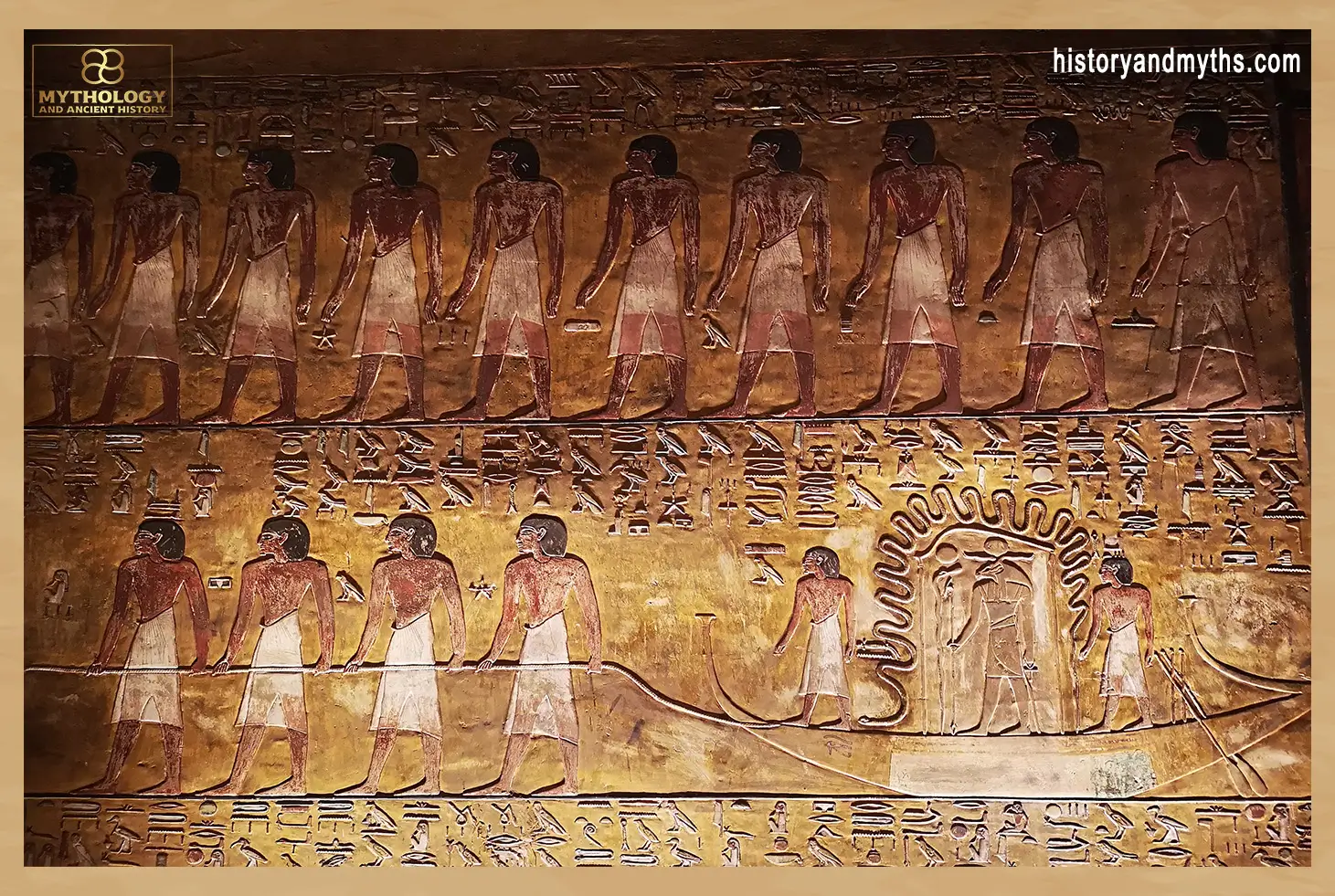
Source: Tomb of Seti I (KV17), Valley of the Kings — via Wikimedia Commons
Author: Carole Raddato
License: CC BY-SA 2.0
What Was the Night Journey of the Sun God?
The night journey of the sun god was the Egyptian explanation for how cosmic order survived darkness. Each evening, the sun did not vanish—it entered the Duat, a hidden realm beneath the horizon where renewal was forged through danger. This journey was essential: without it, dawn could not occur, and creation would stall.
Egyptian texts describe the night journey as a structured passage, not a random descent. It unfolded across twelve hours, each representing a phase of darkness governed by specific gates, guardians, and divine functions. The sun god traveled aboard a nocturnal solar barque distinct from the daytime vessel, signaling that night required different powers and protections than daylight.
Importantly, the night journey was functional, not theatrical. Its purpose was to restore vitality to the sun, defeat forces that threatened order, and regenerate light from within darkness. Chaos was confronted at its source, not avoided. In this sense, the journey was a nightly act of cosmic maintenance.
This model also shaped Egyptian afterlife belief. The dead did not imagine rebirth as automatic; it required guided movement through danger, knowledge of gates and names, and alignment with order—just as the sun god needed to pass through the Duat to rise again. The night journey thus served as a template for renewal, binding divine survival to human destiny beyond death.
| Stage | What Happens | Purpose |
|---|---|---|
| Descent at Dusk | Ra enters the Duat aboard the Mesektet barque | Beginning of regeneration through darkness |
| Early Hours | Navigation through guarded gates and hidden paths | Orientation and protection within the Duat |
| Middle Hours | Confrontation with hostile forces and Apophis | Neutralization of chaos and preservation of order |
| Renewal Phase | Restoration of Ra’s vitality within the Duat | Preparation for rebirth |
| Final Hours | Reassembly of the sun god before emergence | Transition from darkness to dawn |
| Rebirth at Dawn | Ra rises renewed on the eastern horizon | Continuation of cosmic order and life |
Mandjet vs. Mesektet: Two Solar Journeys
Ancient Egyptian texts distinguish clearly between two solar journeys, each with its own purpose and symbolism. By day, the sun god traveled in the Mandjet barque, moving across the visible sky and sustaining life through light and order. By night, however, Ra entered a different phase of existence, traveling in the Mesektet barque through the Duat. These were not variations of the same voyage—they represented two fundamentally different cosmic tasks.
The Mandjet was associated with visibility, stability, and renewal through light. Its journey affirmed continuity in the human world: time moved forward, crops grew, and society functioned. The Mesektet, by contrast, operated in secrecy. It moved through darkness, silence, and danger, where order was fragile and constantly threatened. Night demanded protection, regeneration, and confrontation with forces that daylight never faced.
This distinction explains why the night journey was considered more perilous. In the Mesektet, Ra was vulnerable. He required assistance from protective deities, magic, and sacred knowledge to survive the passage. The goal was not movement alone, but restoration—to rebuild the sun’s vitality so it could rise again at dawn. Failure of the Mesektet journey would mean cosmic collapse, not just the absence of sunrise.
For the dead, this division carried powerful meaning. Daylight rebirth was impossible without successful nocturnal passage. Just as Ra relied on the Mesektet to emerge renewed, the deceased depended on guidance through the Duat to achieve regeneration. The two barques together formed a complete cycle: visibility and invisibility, life and trial, order sustained by struggle.
Entering the Duat: Why Ra Had to Descend
Ra’s descent into the Duat was not a defeat or a moment of weakness—it was a cosmic necessity. Darkness was not something to be avoided; it was a realm that had to be entered, confronted, and reorganized. The Duat contained forces essential to renewal, but also threats capable of dissolving order if left unchecked. Ra descended because creation could not sustain itself from the surface alone.
Egyptian theology understood renewal as a process that occurred within darkness, not outside it. Life was regenerated in hidden places: seeds beneath soil, bodies within tombs, light within night. The Duat functioned as the womb of rebirth, and Ra’s passage through it activated this regenerative potential. Without descent, there could be no return.
This descent also had a judicial dimension. The Duat was where boundaries were enforced—between order and chaos, continuation and erasure. Ra’s presence stabilized these boundaries. By moving through the Duat, he reaffirmed cosmic hierarchy, empowered protective beings, and neutralized destabilizing forces that threatened both gods and the dead.
For the deceased, Ra’s descent carried direct implications. The dead did not travel alone; they moved within the wake of the sun god, drawing protection from his journey. Just as Ra had to descend to rise again, the soul had to pass through darkness to achieve renewal. The Duat was therefore not merely a place of danger—it was the only path through which rebirth could occur.
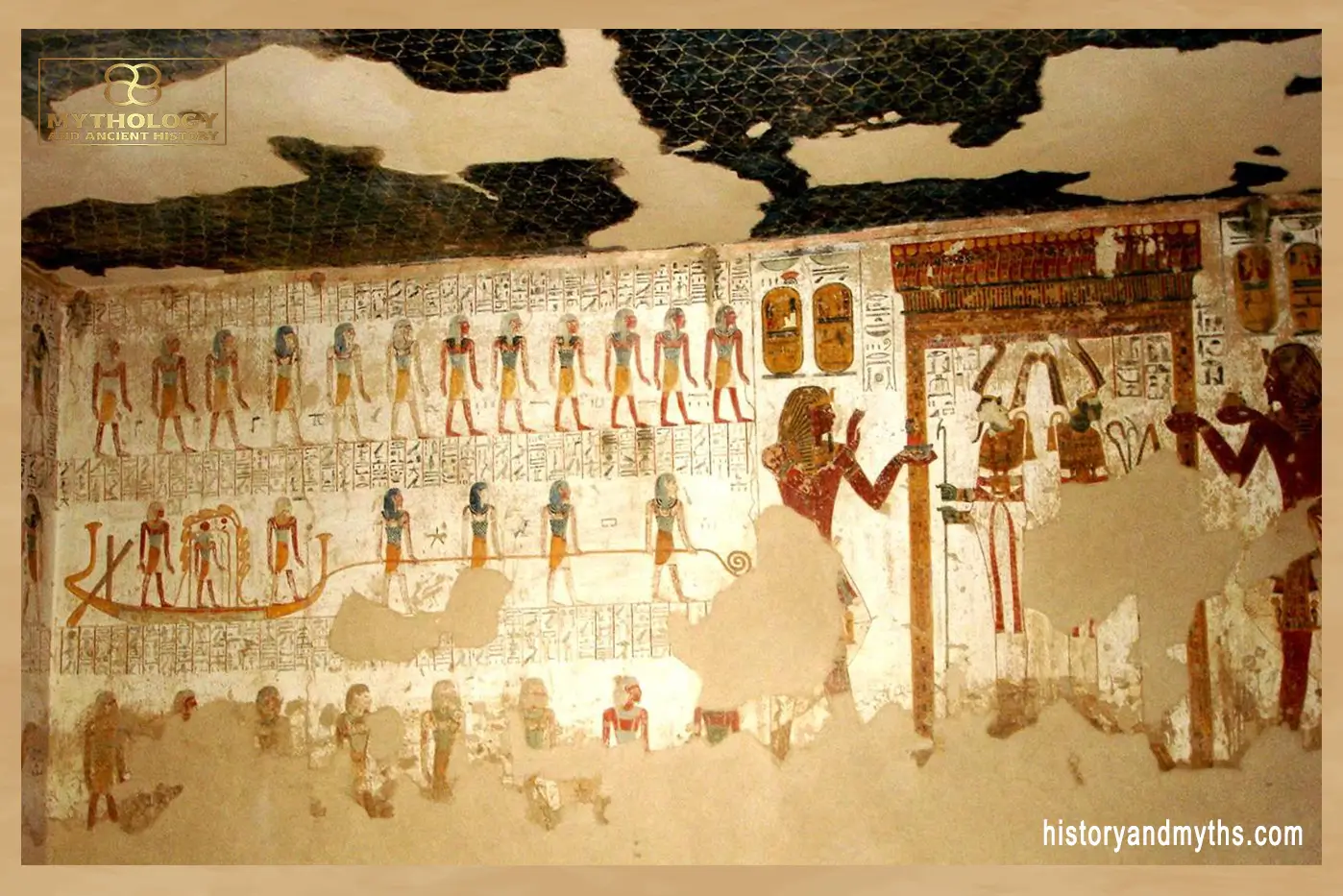
Source: Tomb of Merenptah, Luxor — via Wikimedia Commons
Author: Ben Pirard
License: Public Domain
The Twelve Hours of the Night Explained
In Egyptian belief, the night was not a single stretch of darkness—it was twelve distinct stages, each with its own dangers, guardians, and functions. These hours did not measure time in a modern sense; they marked progress through transformation. Every hour represented a threshold that had to be crossed for renewal to occur.
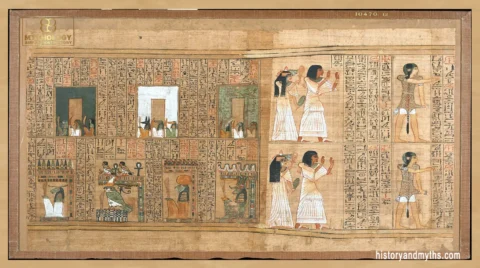
Funerary texts such as the Amduat and the Book of Gates describe how Ra’s solar barque passed through each hour, encountering gates that could only be opened through knowledge, names, and rightful authority. Progress was conditional. Without correct order, the journey would halt, and regeneration would fail. The night was therefore structured, not chaotic.
The early hours focused on entry and orientation. Darkness deepened, visibility vanished, and protection became essential. Midway through the night came the most dangerous phases, where hostile forces threatened to stop the barque entirely. Here, Ra’s power was at its weakest, requiring collective support from accompanying deities and spells. The final hours shifted toward reconstitution, as the sun gathered strength for rebirth.
This structure mirrored the experience of the dead. Just as Ra moved from vulnerability to renewal, the soul progressed from uncertainty to justified continuation. The twelve hours taught that rebirth was earned through passage, not granted instantly. Darkness was not the opposite of life—it was the sequence through which life was restored.
Night Journey of the Sun God — At a Glance
- Core Idea: A necessary nocturnal passage through the Duat to secure rebirth at dawn
- Vessel: Mesektet, the nocturnal solar barque
- Structure: Twelve ordered hours with gates, guardians, and functions
- Main Threat: Apophis (Apep), embodiment of recurring chaos
- Method: Knowledge, names, protection, and collective divine action
- Afterlife Link: Template for the justified dead navigating the Duat
- Outcome: Renewal of the sun and preservation of cosmic order
© historyandmyths.com — Educational use
Ra and the Dead: A Shared Journey
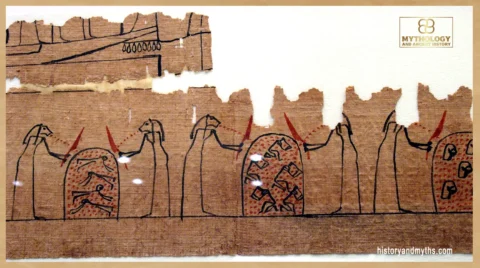
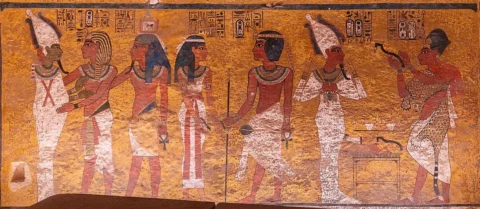
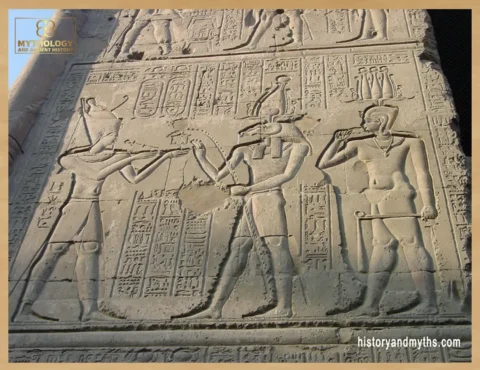
Egyptian funerary belief did not separate the fate of the dead from the fate of the sun. Ra’s night journey through the Duat was the model the deceased hoped to follow. Texts and tomb reliefs repeatedly show the justified dead traveling in proximity to the solar barque, protected by the same order, names, and gates that sustained the god’s passage.
This shared journey explains why knowledge mattered so deeply in the afterlife. Spells, passwords, and names were not magical decorations; they were functional requirements for movement through the Duat. Just as Ra could not pass each gate without proper authority, the dead required the same alignment to avoid stagnation or erasure. The night journey taught that renewal depended on correct participation in cosmic order, not on status alone.
The relationship was reciprocal. While the dead drew protection from Ra’s presence, Ra’s journey was strengthened by the company of the justified. Scenes in the Amduat depict blessed souls assisting, praising, or accompanying the barque. In this way, salvation was collective: the god’s survival and the dead’s renewal reinforced one another within the same nocturnal cycle.
By sharing Ra’s journey, the dead did not become gods—but they moved within a divine process. Dawn’s rebirth was proof that the passage had succeeded. For the deceased, to rise renewed meant to have passed the night as Ra did: through darkness, danger, and order restored. The afterlife was thus not an escape from the cosmos, but participation in its daily victory over chaos.
Defeating Chaos: Apophis and Cosmic Survival
At the heart of the night journey stood the threat of Apophis (Apep), the embodiment of chaos that sought to halt the solar barque and end renewal itself. His presence did not symbolize a villain to be slain once and forgotten; it represented a force that returned nightly, testing whether order could endure another cycle of darkness.
The confrontation with Apophis was ritualized and collective. Ra did not triumph alone. Protective deities, spells, and communal action bound the serpent, cut him, burned him, and restrained him long enough for the barque to pass. The goal was not permanent destruction—an impossibility in Egyptian thought—but containment. Chaos had to be neutralized repeatedly so that creation could continue.
This nightly struggle defined cosmic survival. If Apophis succeeded even once, the sun would not rise, time would collapse, and the boundary between order and non-being would dissolve. Victory, therefore, was measured not by annihilation of chaos but by continuity—another dawn, another renewal secured.
For the dead, this struggle carried direct meaning. To pass the Duat was to move through a realm where chaos remained active. Alignment with order, knowledge, and rightful authority offered protection—not invulnerability. By participating in Ra’s victory, the justified soul affirmed its place within a cosmos that survived precisely because chaos was managed, not ignored.
The night journey ends where it began: not in triumphal spectacle, but in survival achieved. Dawn proves that the system held. Each sunrise testifies that order endured one more night—and that both gods and the dead remained within a universe capable of renewal.
Key Takeaways
- The night journey was essential for cosmic survival, not a symbolic myth.
- Ra traveled through the Duat aboard the Mesektet barque during twelve ordered hours.
- Each hour represented a threshold requiring knowledge, protection, and authority.
- Apophis embodied recurring chaos that had to be contained nightly, not destroyed forever.
- The dead followed the same model of passage to achieve renewal after judgment.
- Dawn proved the success of the journey and the restoration of cosmic order.
Frequently Asked Questions About the Night Journey of the Sun God
What was the night journey of the sun god in ancient Egypt?
It was Ra’s nightly passage through the Duat, where he faced danger and chaos in order to be reborn at dawn and sustain cosmic order.
Why did Ra travel through the Duat at night?
Ra had to descend into the Duat to restore his power, defeat chaos, and renew creation. Without this journey, sunrise could not occur.
What is the Mesektet solar barque?
The Mesektet was the nocturnal solar boat used by Ra during his journey through the Duat, distinct from the daytime Mandjet barque.
What are the twelve hours of the night?
The twelve hours represent ordered stages of the night, each guarded by gates and deities that Ra had to pass to achieve renewal.
Who was Apophis (Apep)?
Apophis was the serpent of chaos who attempted nightly to stop Ra’s journey and prevent rebirth, threatening cosmic survival.
How was the night journey connected to the afterlife?
The journey served as a model for the dead, who followed Ra’s path through the Duat to achieve renewal after judgment.
Did Ra defeat chaos permanently?
No. Chaos was contained each night rather than destroyed, ensuring balance and continuity rather than final eradication.
Sources & Rights
- Assmann, Jan. Death and Salvation in Ancient Egypt. Cornell University Press, 2005.
- Taylor, John H. Death and the Afterlife in Ancient Egypt. British Museum Press, 2001.
- Taylor, John H. (ed.). Ancient Egyptian Book of the Dead: Journey through the Afterlife. British Museum Press, 2010.
- Hornung, Erik. The Ancient Egyptian Books of the Afterlife. Cornell University Press, 1999.
- Faulkner, Raymond O. The Ancient Egyptian Book of the Dead. University of Texas Press, 1990.
- British Museum. Funerary texts and afterlife material from the Amduat and Book of Gates collections.
- UCLA Encyclopedia of Egyptology. Entries on the Duat, solar cycle, and funerary cosmology.
Written by H. Moses — All rights reserved © Mythology and History