Heka: Magic as a Cosmic Force in Ancient Egyptian Myth
In ancient Egyptian thought, heka was not magic in the modern sense. It was the force that made existence function. Without heka, the gods could not act, words carried no power, and order could not sustain itself. Heka was not a tool used against nature—it was the energy that allowed nature, divinity, and humanity to operate at all.
Egyptians understood heka as a primordial force embedded in the universe from the moment of creation. The gods relied on it, the king embodied it, and humans accessed it through speech, symbols, and ritual. It did not belong to priests alone, nor was it limited to spells. Heka powered protection, healing, authority, and continuity in daily life and in the afterlife.
This article explains heka as a cosmic principle, not a collection of magical practices. By understanding how heka functioned—before rituals, before symbols, and even before the gods—we gain a clearer picture of how ancient Egyptians understood power, responsibility, and balance in their world.
What Is Heka? Why It Is More Than “Magic”
Translating heka simply as “magic” is misleading. In modern usage, magic implies something supernatural, irrational, or opposed to natural law. In ancient Egypt, heka was the opposite. It was a foundational force that made the universe intelligible and functional. Heka did not break the rules of the world; it enabled them to exist and operate.
Egyptian texts treat heka as a primordial element, present at creation alongside the first acts of order. It was not invented by gods, nor discovered by humans. The gods used heka to act, speak, heal, and maintain stability. In this sense, heka functioned like an operating system: invisible, constant, and essential. Without it, divine authority, spoken words, and protective actions would have no effect.
This explains why heka appears in contexts far beyond spells. It is present in healing, kingship, funerary preparation, and everyday protection. When Egyptians spoke of effective words, protective images, or authoritative commands, they were referring to actions powered by heka. The force itself was neutral. Its outcome depended on how responsibly it was directed.
Understanding heka this way clarifies a key point: magic was not an exception to reality in Egypt—it was a condition of reality. What mattered was not whether heka existed, but whether it was aligned with order and balance. That alignment determined whether power sustained the world or threatened it.
| Aspect | Heka | Modern “Magic” |
|---|---|---|
| Core Nature | A cosmic force embedded in creation | A supernatural or extraordinary act |
| Relation to Reality | Enables reality to function and remain stable | Often imagined as breaking natural rules |
| Connection to Order | Must operate in alignment with ma’at | Frequently portrayed as independent of order |
| Primary Users | Gods, kings, priests, and humans (regulated access) | Usually individuals with special abilities |
| Means of Activation | Words, symbols, ritual context, and intention | Spells or dramatic actions |
| Ethical Dimension | Use implies responsibility and restraint | Often portrayed as power without consequence |
| Ultimate Purpose | Sustain balance, protection, and continuity | Achieve immediate or personal goals |
Heka and Creation — Power Before the Gods
In Egyptian cosmology, heka existed before the fully formed world. Creation was not achieved through physical force alone, but through the activation of power that allowed form, name, and order to emerge. Heka was present at this earliest moment, enabling the transition from chaos to structure. It was not created by the gods; rather, it was the means through which they could create.
This idea reshapes how divine authority worked. Gods were powerful not because they existed, but because they could access and direct heka. Speech, naming, and command only had effect because heka allowed them to operate. Creation myths consistently emphasize the role of spoken words and intentional acts, underscoring that existence itself depended on activated power, not passive presence.
By placing heka before the gods, Egyptian thought avoided a common paradox: where does divine power come from? The answer was not hierarchy, but function. Heka was the condition that made divine action possible. The gods did not control reality by force; they sustained it by aligning power with order.
This also explains why creation was never considered complete. The world had to be continuously sustained through the correct use of heka. Creation was not a single event, but an ongoing process. Every act of protection, healing, or renewal echoed the original creative moment by reasserting structure over instability.
Seen this way, heka was not mysterious or arbitrary. It was the invisible infrastructure of existence itself—present at the beginning, active in the present, and necessary for the future to continue.
Heka and Ma’at — Power and Order
Heka did not operate in isolation. Its effectiveness depended on its alignment with ma’at, the principle of order, balance, and rightful arrangement. Without ma’at, heka became dangerous; without heka, ma’at became powerless. The two concepts were not opposites but complements. One provided direction, the other provided force.
Ma’at defined what should be. Heka enabled it to happen. Order, justice, and stability were ideals only as long as they could be enacted and sustained. Heka supplied the energy that allowed these ideals to function in the world. This is why Egyptian thought never treated order as self-sustaining. Balance required constant activation.
This relationship also explains why misuse of power was feared. Heka could strengthen order, but it could also amplify disruption if directed improperly. Chaos was not caused by too much power, but by power detached from order. When heka operated outside the framework of ma’at, it threatened continuity rather than preserving it.
For this reason, authority in ancient Egypt was inseparable from responsibility. Kingship, priesthood, and ritual practice were all judged by how well power served balance. The correct use of heka reaffirmed the cosmic structure; incorrect use weakened it. Power was never neutral in outcome, only in potential.
Understanding heka through ma’at reveals why Egyptian magic was conservative rather than revolutionary. Its goal was not to change reality, but to keep it functioning. Heka was valuable not because it could bend the world, but because it could hold it together.
Heka, Words, and Symbols — How Power Was Activated
In ancient Egypt, power did not act unless it was activated. Heka required a trigger, and that trigger was most often words and symbols. Speech was not descriptive; it was performative. To name something correctly was to give it presence and function. Words shaped reality because heka flowed through language.
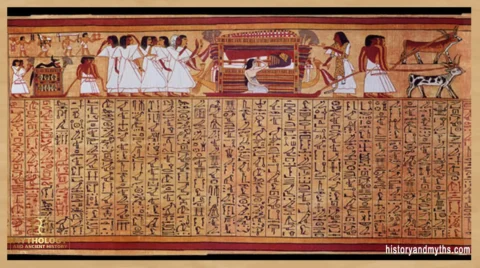
This is why spoken formulas, names, and short utterances appear constantly in Egyptian texts. A word spoken with intention was an act, not a statement. Once spoken—or written—it fixed reality into a stable form. Writing extended this effect across time. An inscribed word continued to act long after the speaker was gone, making writing one of the most powerful carriers of heka.
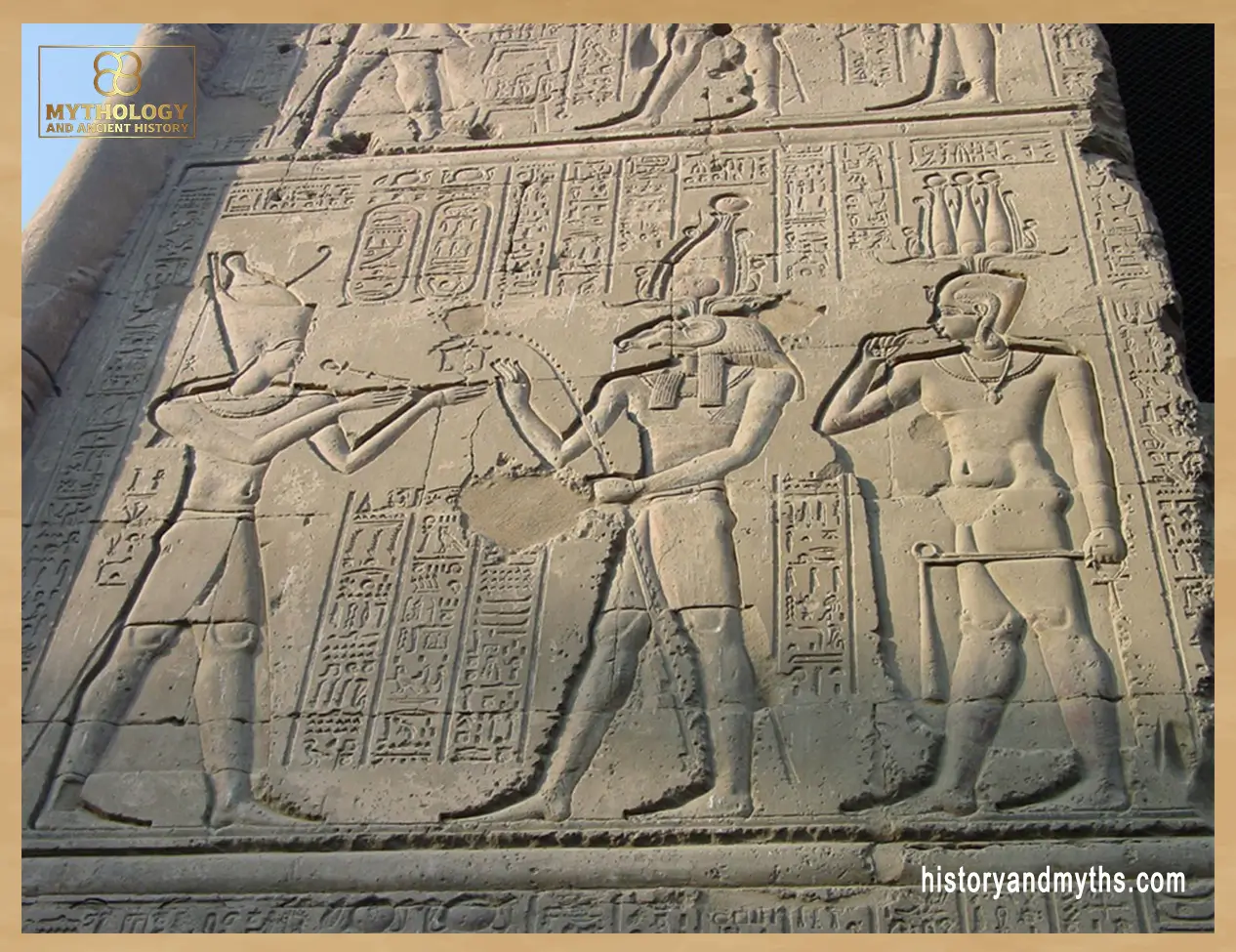
Symbols worked in the same way. An image did not represent protection; it performed it. A symbol placed on the body, on a doorway, or within a tomb activated heka continuously. Its effectiveness depended on accuracy, placement, and association with the correct words. A symbol without activation was inert; a symbol correctly activated became a constant force.
This system explains why repetition was so common. Repetition did not imply uncertainty. It reinforced activation. Each repetition renewed the flow of heka and ensured stability. Power was not consumed by use; it was maintained through correct alignment.
Together, words and symbols formed a controlled interface between humans, gods, and the cosmic system. They allowed power to move safely and predictably. Heka did not erupt spontaneously—it responded to structure. Language and imagery provided that structure, transforming invisible force into reliable action.
Who Could Use Heka? Gods, Kings, and Humans
Heka was not restricted to a single group. It functioned across different levels of existence, but access to it was regulated. The difference between gods, kings, and humans was not whether they used heka, but how and to what extent they were allowed to direct it.
The gods were the primary users of heka. They relied on it to speak, create, heal, and protect cosmic order. Their authority did not come from brute force, but from their ability to align power with balance. Divine actions were effective because they operated within ma’at. Even gods could not act meaningfully without heka.
The king occupied a unique position. As the link between gods and humanity, he embodied controlled access to heka. Royal authority was effective because it was ritually aligned with cosmic order. The king did not invent power; he channeled it. His role was to maintain stability by ensuring that heka flowed correctly through law, ritual, and governance.
Ordinary humans also had access to heka, but in limited and carefully framed ways. People activated it through speech, symbols, and small-scale rituals focused on protection, healing, and survival. This access was practical rather than cosmic. Humans did not shape the universe, but they could defend themselves within it.
This layered access reveals a key principle: heka was not democratized power. It was shared, but not equal. Each level of society interacted with it according to responsibility and risk. Misuse was dangerous because power without proper alignment threatened balance.
In this system, power was not about domination. It was about appropriate use. Heka worked when it respected limits, context, and order. The closer one stood to cosmic responsibility, the greater the care required in directing it.
Heka in One Framework — What It Really Means
- Not “magic tricks”: Heka was a cosmic force that made action, speech, and protection possible.
- Present from creation: Egyptians treated heka as part of the universe’s foundation, not a later invention.
- Works with ma’at: Order defined the goal; heka provided the power to sustain it.
- Activated through structure: Words, names, symbols, and context directed heka into reliable effects.
- Shared but regulated: Gods and kings used it at cosmic scale; humans accessed it for protection and healing.
- Responsibility mattered: Misaligned power increased chaos; disciplined power maintained balance.
© historyandmyths.com — Educational use
Heka as Responsibility, Not Power Fantasy
Ancient Egyptians did not view heka as a shortcut to unlimited power. It was never a fantasy of control or domination. Instead, heka carried obligation. Every use of power required awareness of consequence. Power was effective only when exercised within limits, purpose, and balance.
This perspective explains why Egyptian magic avoided excess. The goal was not to override reality, but to support its stability. Heka existed to preserve life, protect boundaries, heal disruption, and sustain continuity. Using it for personal gain at the expense of order was considered dangerous, not clever. Power misaligned with ma’at weakened the system it depended on.
Responsibility also meant restraint. Not every threat required confrontation. Often, heka worked best by containment—limiting access, redirecting harm, or reinforcing boundaries. This approach favored prevention over spectacle. Effective power was quiet, persistent, and measured.
Failure was not defined by lack of power, but by misuse. Chaos emerged when heka was applied without regard for balance. In this sense, chaos was not an opposing force—it was the result of power without responsibility. Egyptian thought placed blame not on the existence of power, but on its careless direction.
By framing heka as responsibility rather than entitlement, ancient Egyptian belief offered a disciplined model of power. Strength lay not in how much one could do, but in knowing when and how to act. This restraint ensured that power served life instead of threatening it.
Key Takeaways — Heka as a Cosmic Force
- Heka was foundational, not supernatural: It enabled reality to function rather than breaking natural order.
- Creation depended on heka: Power existed before the gods and allowed creation to unfold.
- Heka and ma’at worked together: Order set direction; heka supplied the force to sustain it.
- Words and symbols activated power: Speech, writing, and imagery channeled heka into action.
- Access was regulated: Gods, kings, and humans used heka at different levels and responsibilities.
- Responsibility defined effectiveness: Power aligned with balance preserved life; misuse increased instability.
Frequently Asked Questions About Heka in Ancient Egypt
What is heka in ancient Egyptian belief?
Heka was a cosmic force that enabled gods, humans, words, and symbols to act effectively. It was not magic in the modern sense, but a foundational power embedded in creation.
Is heka the same as magic?
No. Modern magic implies supernatural acts that break natural rules, while heka was understood as the force that allowed reality and order to function in the first place.
Did the gods create heka?
No. Egyptian thought treated heka as a primordial force that existed before the gods and made divine action possible.
How was heka activated?
Heka was activated through structured means such as spoken words, written texts, symbolic images, and ritual context. Correct form and intention were essential.
Could ordinary people use heka?
Yes, but in limited and regulated ways. Humans accessed heka mainly for protection, healing, and daily survival rather than cosmic control.
What is the relationship between heka and ma’at?
Ma’at defined order and balance, while heka provided the power to maintain and enact that order. One could not function meaningfully without the other.
Was heka considered dangerous?
Heka itself was neutral, but its misuse—especially when detached from order—was believed to increase instability and chaos.
Sources & Rights
- Assmann, Jan. The Search for God in Ancient Egypt. Ithaca: Cornell University Press, 2001.
- Assmann, Jan. Death and Salvation in Ancient Egypt. Ithaca: Cornell University Press, 2005.
- Hornung, Erik. Conceptions of God in Ancient Egypt: The One and the Many. London: Routledge & Kegan Paul, 1982.
- Hornung, Erik. The Ancient Egyptian Books of the Afterlife. Ithaca: Cornell University Press, 1999.
- Pinch, Geraldine. Magic in Ancient Egypt. Austin: University of Texas Press, 1994.
- Pinch, Geraldine. Egyptian Mythology: A Guide to the Gods, Goddesses, and Traditions of Ancient Egypt. Oxford: Oxford University Press, 2002.
- Ritner, Robert K. The Mechanics of Ancient Egyptian Magical Practice. Chicago: Oriental Institute of the University of Chicago, 1993.
Written by H. Moses — All rights reserved © Mythology and History