Monsters of the Duat, Terrifying Dangers of Egypt’s Underworld
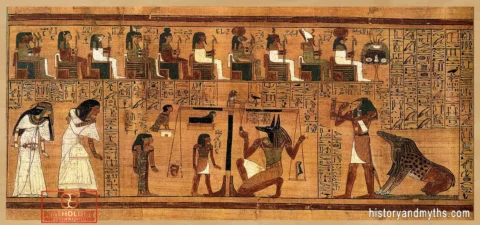
In the Egyptian imagination of the afterlife, the Duat was not filled only with gates, guardians, and judges. It also contained monsters—beings that did not negotiate, verify, or judge, but embodied danger itself. These creatures were not placed in the underworld to frighten the dead for dramatic effect. They existed to represent the risks that lay beyond order.
Unlike guardians, monsters did not stand at thresholds waiting for recognition. Unlike demons, they were not agents carrying out punishment. Monsters occupied unstable zones of the Duat, appearing as obstacles, threats, or forces of disruption that the soul had to endure or avoid. Some were named, but many were not—because their purpose was symbolic rather than administrative.
Modern descriptions often treat all hostile beings of the Duat as one category. Ancient Egyptian belief did not. This article explains what made a creature a “monster” in the Duat, why many of them had no names, and how they differed from guardians and demons. Rather than retelling famous figures already discussed elsewhere, it focuses on the lesser-known but essential role monsters played in defining danger, chaos, and vulnerability within the journey after death.
What Made a Creature a “Monster” in the Duat?
In ancient Egyptian belief, a creature was considered a “monster” not because of how it looked, but because of what it represented. Monsters were defined by function, not form. They embodied danger, instability, and the possibility of failure within the journey through the Duat.
Unlike guardians, monsters were not assigned to gates or thresholds. They had no role in verification or recognition. Unlike demons, they did not enforce punishment on behalf of higher authority. A monster existed as an active risk, something that could harm, consume, or erase the soul if it encountered it unprepared.
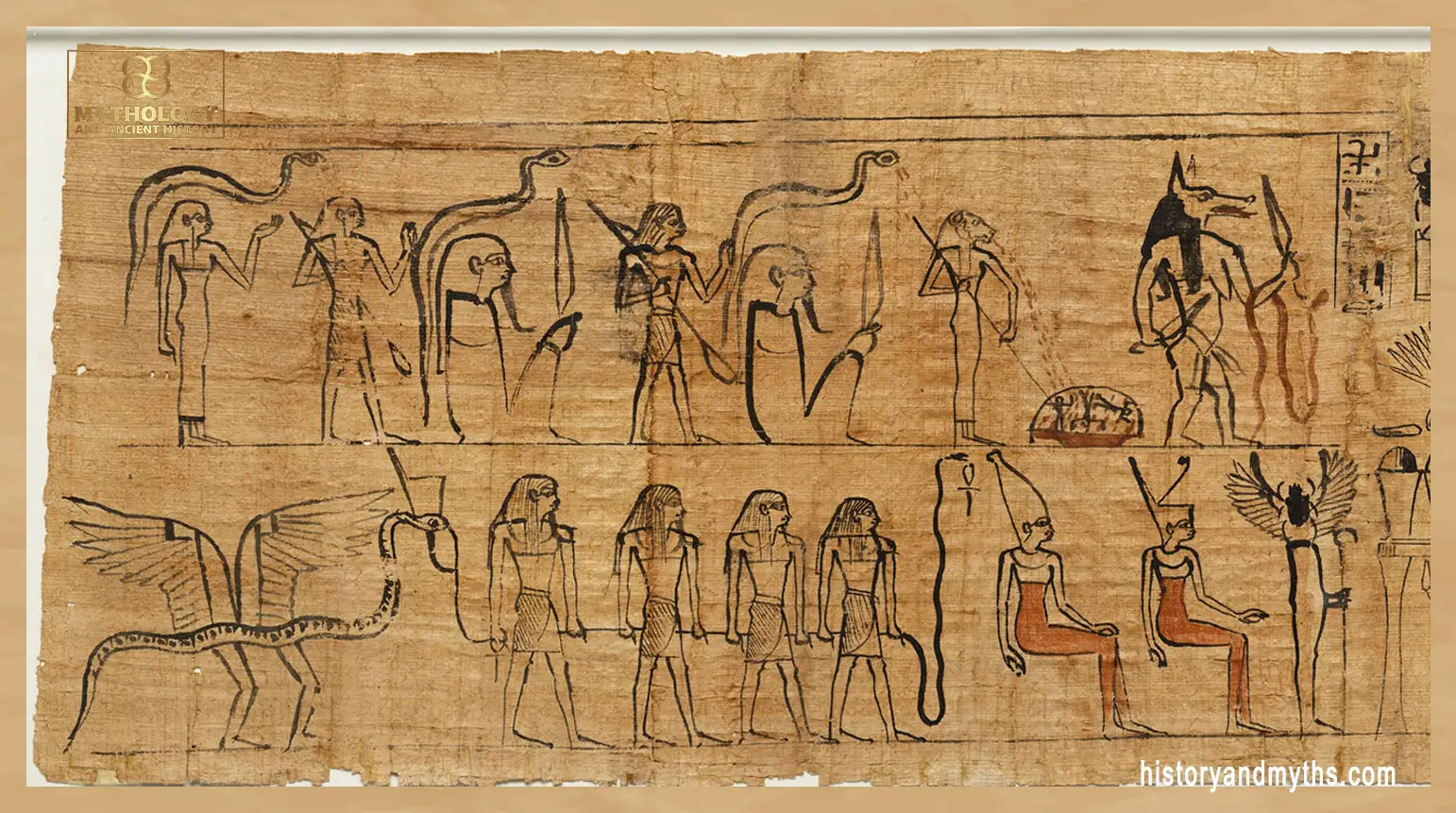
This is why many monsters were depicted as hybrids or exaggerated forms—serpents of immense size, creatures with multiple heads, or beings combining human and animal traits. These shapes were not literal zoology. They were visual expressions of threat, unpredictability, and chaos.
Most importantly, monsters did not speak. They did not ask names or listen to declarations. Where guardians tested awareness, monsters tested endurance and survival. Their presence marked zones of the Duat where order weakened and where the soul faced the consequences of losing control or coherence.
In this sense, monsters were not intruders in the afterlife system. They were part of it—representing the limits of order and the dangers that existed whenever chaos pressed too close to the structure of the cosmos.
| Category | Role in the Duat |
|---|---|
| Monsters | Embodied dangers and obstacles within unstable regions of the underworld. |
| Guardians | Verified identity and awareness at gates without punishment. |
| Demons | Enforced punishment or restraint after judgment. |
| Named Monsters | Recognized threats with defined symbolic roles. |
| Unnamed Creatures | Symbolic manifestations of chaos and instability. |
| Hybrid Forms | Visual expressions of danger and loss of order. |
Named vs Unnamed Monsters
One of the clearest signs that monsters were understood differently from other beings in the Duat is the way they were named—or left unnamed. In Egyptian belief, names mattered. A named being had a defined role within the cosmic system. An unnamed one represented something less controlled.
Some monsters appear in funerary texts with specific names. These usually mark repeating or recognizable threats—dangers that were known, expected, and symbolically contained within the structure of the Duat. Giving such a creature a name acknowledged its existence while limiting its scope. It could be identified, avoided, or overcome through knowledge.
Many other monsters, however, remain deliberately unnamed. They appear only as forms: serpents, devourers, shadowy beings, or composite creatures blocking paths or emerging from darkness. Their lack of names was not an omission. It reflected their nature. These monsters did not belong to the ordered system; they represented raw danger rather than a defined function.
This distinction explains why Egyptian texts do not attempt to catalogue every monster. Naming everything would imply control. By leaving many monsters unnamed, the texts preserved the idea that parts of the Duat remained unstable and risky. Monsters existed where order weakened—not as administrators of the afterlife, but as reminders of what awaited a soul that lost awareness or balance.
Monsters as Obstacles, Not Judges
Monsters in the Duat were not arbiters of fate. They did not decide whether a soul was worthy, nor did they deliver verdicts. Their role was simpler and more dangerous: they were obstacles—conditions of risk that tested whether the soul could continue intact.
Unlike judges or executioners, monsters did not respond to pleas, names, or declarations. They acted without dialogue. A soul that encountered a monster faced a situation, not a trial. Survival depended on preparation, awareness, and sometimes avoidance, rather than persuasion or correctness.
This is why monsters appear along paths, waterways, and shadowed regions rather than at formal thresholds. They occupied zones of instability, places where order thinned and chaos pressed closer. Passing such zones did not prove moral worth; it proved the soul’s ability to endure danger without losing coherence.
By framing monsters as obstacles instead of judges, Egyptian belief kept the logic of the afterlife intact. Judgment belonged to courts and scales; monsters belonged to the terrain. They defined the risks of the journey, not its outcomes.
Hybrid Forms and Symbolic Threats
The monsters of the Duat were rarely shown as simple creatures. Most appeared as hybrid forms—serpents with multiple heads, beasts combining human and animal features, or distorted bodies that defied natural order. These forms were not meant to describe real beings, but to visualize threat.
In Egyptian symbolism, hybridity often signaled instability. A creature that did not fit into a single category represented something that resisted control. Monsters embodied dangers that could not be negotiated with or reasoned away. Their shapes warned the soul: this was a region where familiar rules no longer applied.
These symbolic threats also helped explain why monsters were placed where they were. They appeared near dark waters, caverns, fiery zones, or stretches of the Duat lacking clear boundaries. Their presence marked areas where chaos intruded into the structured journey, turning space itself into a challenge.
Through these hybrid forms, Egyptian texts and images communicated risk without explanation. The monster’s body was the message. It told the soul what words could not—that survival depended on maintaining awareness while passing through places where order was weakest.
Why Did Egyptian Monsters Rarely Become Main Gods?
Unlike many cultures where terrifying creatures could themselves become major divine figures, ancient Egyptian religion generally kept monsters separate from the principal gods. This distinction reflected how Egyptians understood the relationship between order and chaos. Gods maintained the structure of the cosmos, while monsters represented the forces that threatened to disrupt it.
Even when certain deities displayed fierce or destructive aspects, they remained part of the divine order because their power ultimately protected Ma’at, the principle of balance and cosmic stability. Monsters, by contrast, had no role in preserving creation. They symbolized instability itself, existing beyond the organized hierarchy of gods, temples, and sacred rituals.
This difference explains why Egyptian religious texts describe monsters as obstacles rather than objects of worship. They were acknowledged, feared, and carefully depicted in funerary literature, but they were not honored through state cults or celebrated as guardians of civilization. Their purpose was to remind both the living and the dead that chaos always existed beyond the boundaries of order.
Seen from this perspective, the monsters of the Duat were not failed gods or forgotten deities. They represented the limits of the ordered universe, illustrating an important Egyptian belief that civilization endured only because chaos remained contained rather than conquered forever.
Why Monsters Did Not Speak or Negotiate
Monsters of the Duat were silent by design. Speech in Egyptian belief signaled awareness, identity, and participation in order. Guardians spoke because they verified; judges spoke because they ruled. Monsters did neither, so they had no voice.
Their silence marked them as forces outside dialogue. A monster could not be reasoned with, named into submission, or addressed for passage. Where words organized the afterlife, monsters represented what words could not control. Encountering them was not a test of knowledge, but a confrontation with risk.
This is why spells rarely address monsters directly. Instead, texts focus on protection, avoidance, or safe passage around them. The soul was expected to recognize danger and move through it without engagement. Silence, in this case, was not absence—it was a warning.
By removing speech from monsters, Egyptian belief preserved a clear boundary: order speaks; chaos does not. Monsters existed to remind the soul that not every threat could be managed through recognition—some had to be endured, bypassed, or survived.
Monsters of the Duat — A Quick Map of Meaning
- Monsters are obstacles: they represent danger inside unstable zones, not moral judgment.
- Many are unnamed: lack of a name signals chaos that is not fully “contained” by order.
- They rarely speak: silence marks forces outside dialogue, negotiation, or verification.
- Hybrid bodies are symbols: mixed forms visualize instability and loss of boundaries.
- Guardians are different: guardians regulate gates; monsters threaten the terrain itself.
- Demons are different: demons enforce punishment after judgment; monsters are not enforcers.
- The deeper idea: the Duat is structured, but fragile—monsters mark where order weakens.
© historyandmyths.com — Educational use
How Monsters Differed from Demons and Guardians
Although monsters, demons, and guardians all appear as dangerous figures in the Duat, ancient Egyptian thought treated them as distinct categories with different purposes. Confusing them erases how the afterlife was actually structured.
Guardians were stationary regulators. They belonged to gates and thresholds and existed to verify identity and awareness. They spoke, listened, and allowed or denied passage. Their role was administrative and orderly.
Demons were active agents of enforcement. They carried out punishment or restraint after judgment and acted on behalf of higher authority. Demons responded to commands and operated within a clear hierarchy.
Monsters, by contrast, had no administrative role and no authority to judge or punish. They were not assigned to gates, did not follow orders, and did not participate in dialogue. Monsters represented raw danger—the presence of chaos within the landscape of the Duat itself.
This distinction explains why monsters are often unnamed, silent, and placed in unstable regions. They were not part of the system that maintained order; they marked its limits. Where guardians enforced structure and demons enforced consequences, monsters embodied the risks that existed whenever order weakened.
By separating these roles, Egyptian belief preserved a coherent vision of the afterlife. Monsters were not rivals to judges or guards. They were reminders that beyond order lay danger—and that survival required awareness, preparation, and balance at every stage of the journey.
What the Monsters Ultimately Represented
The monsters of the Duat were not villains in a story, nor enemies placed to be defeated. They represented the presence of danger where order weakened. Their role was not to judge the soul or decide its fate, but to mark the limits of safety within the afterlife.
By existing without dialogue, hierarchy, or negotiation, monsters showed that not every threat could be managed through knowledge alone. Some dangers had to be recognized, avoided, or endured. In this way, monsters defined the risk of losing balance, rather than the certainty of punishment.
For the ancient Egyptians, the Duat was not a perfectly controlled space. It was structured, but fragile. Monsters reminded the soul that survival after death required constant awareness—and that chaos was never fully removed, only held at bay.
What Do the Monsters of the Duat Reveal About Egyptian Views of Chaos?
The monsters of the Duat reveal that ancient Egyptians did not imagine chaos as something completely defeated. Instead, they believed it remained present at the edges of creation, always capable of returning if order weakened.
This explains why monsters occupy unstable regions rather than places of judgment or authority. They symbolize the constant tension between Ma’at and Isfet, reminding the soul that cosmic order required continuous preservation rather than permanent victory.
Seen in this way, the monsters of the Duat were not simply frightening creatures. They expressed one of the central ideas of Egyptian religion: civilization survived because order was continually maintained against the ever-present possibility of chaos.
Key Takeaways — Monsters of the Duat
- Monsters in the Duat represented danger and instability, not judgment or punishment.
- They were obstacles within the landscape, not officials controlling passage.
- Many monsters remained unnamed to reflect chaos beyond full control.
- Hybrid forms symbolized broken boundaries and loss of order.
- Monsters did not speak or negotiate; silence marked forces outside dialogue.
- Guardians verified passage, demons enforced punishment, but monsters embodied risk itself.
Frequently Asked Questions About the Monsters of the Duat
What were the monsters of the Duat in ancient Egyptian belief?
They were embodiments of danger and instability within the underworld, acting as obstacles rather than judges or officials.
Were all monsters in the Duat named?
No. Many monsters were deliberately left unnamed to represent chaos beyond full control.
How were monsters different from guardians?
Guardians regulated gates and verified passage, while monsters threatened the landscape itself.
Did monsters punish or judge souls?
No. Punishment and judgment belonged to other figures; monsters represented risk, not verdict.
Why were monsters often shown as hybrid creatures?
Hybrid forms symbolized instability, broken boundaries, and loss of order.
Did monsters speak or respond to the dead?
Rarely. Their silence marked forces outside dialogue or negotiation.
In which texts do monsters of the Duat appear?
They appear in funerary sources such as the Book of Gates, Book of Caverns, Amduat, and Coffin Texts.
What did encountering a monster mean for the soul?
It marked a zone of danger that required awareness and survival, not persuasion or ritual speech.
Sources & Rights
- Allen, James P. The Ancient Egyptian Pyramid Texts. Society of Biblical Literature, 2005.
- Assmann, Jan. Death and Salvation in Ancient Egypt. Cornell University Press, 2005.
- Faulkner, Raymond O. The Ancient Egyptian Coffin Texts. 3 vols. Aris & Phillips, 1973–1978.
- Hart, George. A Dictionary of Egyptian Gods and Goddesses. Routledge, 2005.
- Hornung, Erik. The Ancient Egyptian Books of the Afterlife. Cornell University Press, 1999.
- Hornung, Erik. Conceptions of God in Ancient Egypt: The One and the Many. Cornell University Press, 1996.
- Pinch, Geraldine. Handbook of Egyptian Mythology. ABC-CLIO, 2002.
- Quirke, Stephen. Exploring Religion in Ancient Egypt. Wiley-Blackwell, 2015.
- Teeter, Emily. Religion and Ritual in Ancient Egypt. Cambridge University Press, 2011.
- Taylor, John H. Journey through the Afterlife: Ancient Egyptian Book of the Dead. British Museum Press, 2010.
- Wilkinson, Richard H. The Complete Gods and Goddesses of Ancient Egypt. Thames & Hudson, 2003.
- British Museum. Collection Online: Ancient Egyptian Funerary Beliefs.
- The Metropolitan Museum of Art. Heilbrunn Timeline of Art History: Ancient Egyptian Religion.
- UCLA Encyclopedia of Egyptology. Death and the Afterlife in Ancient Egypt.
- World History Encyclopedia. The Duat and Ancient Egyptian Afterlife Beliefs.
Written by H. Moses — All rights reserved © Mythology and History