Personal Hygiene and Cosmetics in Ancient Egypt
Modern discussions often treat hygiene and cosmetics in ancient Egypt as symbols of luxury or ritual purity. This assumption misses the point. For most Egyptians, cleanliness was neither ceremonial nor decorative. It was a daily expectation tied to health, social discipline, and public respectability.
Personal hygiene mattered because the Egyptian body was never private. It was visible in fields, workshops, streets, and administrative spaces. How a person smelled, appeared, and maintained their body affected how they were judged by others. Cosmetics and washing practices were therefore practical tools-used to protect the body, manage discomfort, and signal self-control within a tightly regulated society.
This article examines hygiene and cosmetics not as aesthetic curiosities, but as functional habits of everyday life. Each section answers a specific question: how Egyptians kept clean, why cosmetics were used by both men and women, how practices differed by class, and what cleanliness communicated in public settings. No myths, no exaggeration-only what daily life actually required.
Were ancient Egyptians actually clean in daily life?
Yes-but cleanliness in ancient Egypt had a clear, practical definition, not a modern one. Being “clean” did not mean constant bathing or luxury grooming. It meant meeting a socially expected minimum that allowed a person to function without causing discomfort or offense to others.
Daily cleanliness focused on what was immediately noticeable: body odor, visible dirt, hair condition, and skin irritation. In a hot climate with intense labor, neglecting these basics quickly became a social problem. Smell, lice, and skin infections affected work efficiency and social interaction, so managing the body was a necessity, not a preference.
Cleanliness was therefore situational and regular, not continuous. People washed when needed-after work, before public interaction, or when discomfort demanded it. Oils were applied to protect skin and reduce dryness, not as perfume. Shaving or trimming hair helped control parasites, especially among workers and officials.
Importantly, this standard applied across society. Cleanliness was not exclusive to elites. While access to tools differed by class, the expectation of not appearing neglected was widespread. A visibly unkempt body signaled disorder, irresponsibility, or lack of self-control.
So yes, ancient Egyptians were clean-but according to functional norms shaped by climate, labor, and social visibility, not by ideals of luxury or ritual purity.
| Question | Daily Practice | Social Meaning |
|---|---|---|
| Were Egyptians clean every day? | Regular washing of visible areas; full bathing when needed | Meeting minimum standards of public acceptability |
| How did they wash their bodies? | Water, scraping, oils, and basic abrasives | Efficiency over comfort or luxury |
| Why were oils and cosmetics used? | Skin protection, odor control, eye care | Self-control and readiness for social interaction |
| Did men and women use cosmetics? | Yes, with differences in intensity and materials | Function mattered more than gender |
| Did class affect hygiene? | Access differed, expectations did not | Cleanliness as a shared social discipline |
| Why did cleanliness matter publicly? | Reduced friction in shared spaces | Signal of reliability and order |
How did people wash and maintain their bodies?
Body care in ancient Egypt relied on simple, repeatable actions, not elaborate routines. Water was the core element. People washed at the Nile, canals, basins inside homes, or shared facilities when available. Full-body immersion was not always necessary; targeted washing of hands, feet, face, and underarms was often enough to meet daily expectations.
Oils played a central role. After washing, people applied plant-based oils to the skin. This was not cosmetic luxury. Oil reduced dryness, protected against sun exposure, and eased irritation caused by dust and sweat. In many cases, oil replaced frequent bathing by creating a protective layer on the skin.
Hair maintenance was equally practical. Shaving or closely trimming hair helped control lice and reduced heat discomfort. This practice applied to both men and women, though styles varied. Wigs were worn mainly by elites and officials in public settings, not as everyday hygiene tools.
Cleaning also included removal, not just washing. Dirt was scraped or rubbed off using cloth, sand, or mild abrasives. These methods sound harsh by modern standards, but they were effective and accessible.
What matters is consistency, not sophistication. Hygiene routines were shaped by availability of water, time after labor, and physical discomfort. Egyptians maintained their bodies in ways that were efficient, adaptable, and sufficient for daily social interaction, without aiming for constant physical cleanliness.
Why were cosmetics used by both men and women?
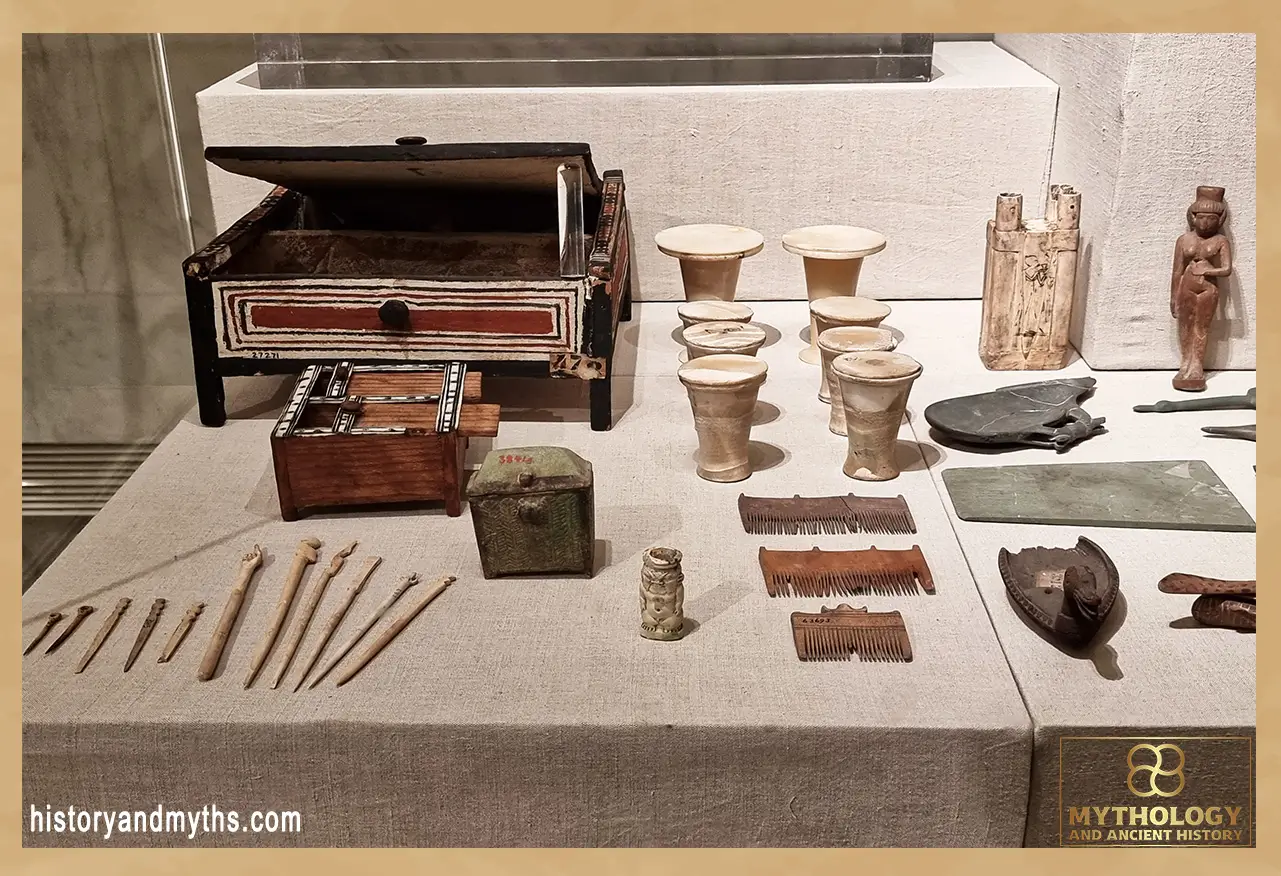
Cosmetics in ancient Egypt were functional tools, not expressions of vanity. Both men and women used them because they solved practical problems related to health, comfort, and social presence.
The most common cosmetic, eye paint (kohl), protected the eyes from glare, dust, and infection. Applied around the eyelids, it reduced irritation caused by sunlight and airborne particles. Its antibacterial properties made it especially useful in crowded or dusty environments. This is why kohl appears across genders and classes-it worked.
Skin preparations followed the same logic. Ointments and scented oils were applied to prevent cracking, soothe irritation, and mask unavoidable body odor in hot conditions. Scent mattered socially, not romantically. Smelling neutral-or pleasantly restrained-signaled self-control and consideration for others.
Cosmetics also helped manage visibility. Faces were public. In administrative, religious, or supervisory roles, appearing composed mattered. Cosmetics sharpened facial features and conveyed alertness rather than decoration.
There was no sharp gender divide in cosmetic use. The distinction lay in context and intensity, not permission. Elites used refined materials and more elaborate preparations, while common people relied on simpler mixtures. The purpose, however, remained the same: protection, maintenance, and social acceptability.
Cosmetics were therefore part of hygiene, not separate from it. They allowed the body to function comfortably and appear controlled in daily life-regardless of gender.
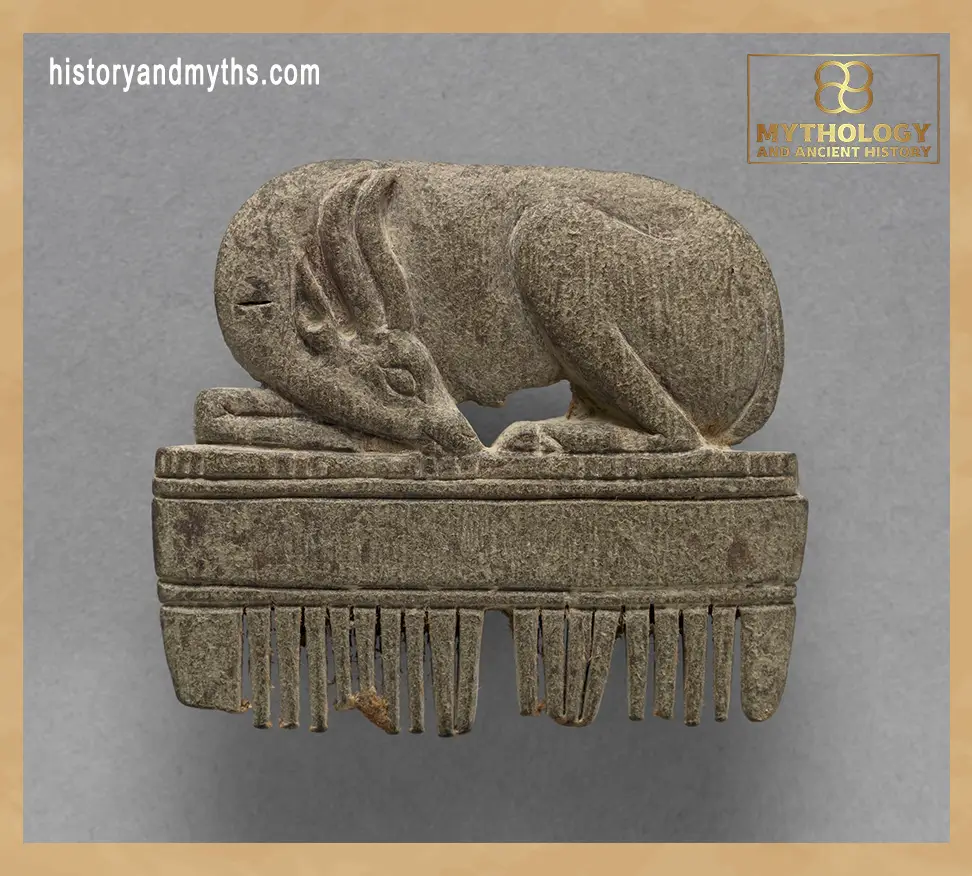
Did hygiene practices differ by class?
Yes-but the difference was in means, not in expectation. All Egyptians were expected to manage their bodies to a socially acceptable level. What changed by class was how easily that standard could be met.
Elites had better access to water, oils, and time. Their homes allowed for more frequent washing, and their work spared them constant physical strain. This made cleanliness easier to maintain, not fundamentally different. Refined oils, imported ingredients, and wigs marked status, but they built on the same basic routines used by everyone else.
Non-elites relied on simpler methods. Washing was less frequent and more targeted. Oils were basic and reused. Hair removal and body care were driven by necessity rather than appearance. These practices were not inferior-they were efficient responses to labor and environment.
Importantly, being poor did not mean being socially allowed to appear neglected. A worker who ignored basic hygiene risked social disapproval, reduced trust, and workplace friction. Cleanliness functioned as a minimum standard of discipline across classes.
So class shaped comfort and refinement, not the underlying logic of hygiene. Everyone participated in body maintenance. The difference lay in how much effort and material it required to do so.
Core Insight
In ancient Egypt, personal hygiene and cosmetics were tools of social discipline.
They managed heat, labor stress, and public presence, signaling self-control and
readiness to function within shared spaces rather than personal beauty.
© historyandmyths.com — Educational use
What did cleanliness signal in public life?
Cleanliness in ancient Egypt functioned as a public signal, not a private preference. How a person managed their body communicated whether they were disciplined, reliable, and fit to operate within shared spaces.
Public life-fields, workshops, streets, temples, offices-brought bodies into constant proximity. Neglecting hygiene affected others directly. Smell, visible dirt, or irritation suggested a lack of control. This was not read as poverty alone, but as failure to manage oneself properly.
Maintaining cleanliness signaled readiness. A clean body implied that a person could be trusted to follow routines, respect norms, and cooperate without causing disruption. This mattered especially in supervised environments, where appearance reinforced authority and order.
Cleanliness also marked boundaries. It distinguished public presence from private rest, work time from withdrawal, and discipline from disorder. Cosmetics, oils, and washing routines helped individuals transition into social visibility in an acceptable form.
In this sense, hygiene was part of social regulation. It reduced friction, stabilized interaction, and reinforced shared expectations. Cleanliness mattered not because it was beautiful, but because it made daily life work.
Key Takeaways
- Personal hygiene in ancient Egypt was a daily social requirement, not a luxury.
- Washing, oils, and hair removal were practical responses to heat, labor, and health.
- Cosmetics were used by both men and women for protection and social readiness.
- Class affected access and comfort, but not the expectation of cleanliness.
- Cleanliness functioned as a public signal of discipline and reliability.
Frequently Asked Questions
Were ancient Egyptians clean on a daily basis?
Yes. Cleanliness focused on meeting practical social standards through regular washing of visible areas and basic body care.
How did ancient Egyptians wash their bodies?
They used water from the Nile or basins, combined with scraping, rubbing, and applying oils to protect the skin.
Why did both men and women use cosmetics?
Cosmetics served protective and practical purposes, such as eye care, skin protection, and odor control.
Did hygiene practices differ between social classes?
Access to materials differed, but expectations of basic cleanliness applied across all classes.
What did cleanliness communicate in public life?
It signaled self-control, reliability, and readiness to function within shared social spaces.
Sources & Rights
- Davies, Norman de Garis. The Tomb of Amenemhet at Thebes. New York: Metropolitan Museum of Art, 1930.
- Dunand, Françoise, and Christiane Zivie-Coche. Gods and Men in Egypt: 3000 BCE to 395 CE. Ithaca: Cornell University Press, 2004.
- Ikram, Salima. Food and Drink in Ancient Egypt. Cairo: American University in Cairo Press, 2009.
- Ikram, Salima, and Aidan Dodson. The Mummy in Ancient Egypt: Equipping the Dead for Eternity. London: Thames & Hudson, 1998.
- Kemp, Barry J. Ancient Egypt: Anatomy of a Civilization. 2nd ed. London: Routledge, 2006.
- Lucas, Alfred. Ancient Egyptian Materials and Industries. 4th ed. London: Edward Arnold, 1962.
- Manniche, Lise. Sacred Luxuries: Fragrance, Aromatherapy, and Cosmetics in Ancient Egypt. Ithaca: Cornell University Press, 1999.
- Robins, Gay. Women in Ancient Egypt. Cambridge, MA: Harvard University Press, 1993.
- Szpakowska, Kasia. Daily Life in Ancient Egypt: Recreating Lahun. Malden, MA: Blackwell Publishing, 2008.
- Trigger, Bruce G., Barry J. Kemp, David O’Connor, and Alan B. Lloyd. Ancient Egypt: A Social History. Cambridge: Cambridge University Press, 1983.
- Wilkinson, Richard H. The Complete Gods and Goddesses of Ancient Egypt. London: Thames & Hudson, 2003.
- Wreszinski, Walter. Atlas zur altägyptischen Kulturgeschichte. Leipzig: J. C. Hinrichs, 1923.
Written by H. Moses — All rights reserved © Mythology and History