Goddess Amentet, Lady of the West and Egyptian Afterlife
To the ancient Egyptians, the journey into the afterlife was not a sudden leap into darkness but a passage guided by familiar, welcoming forces. Among the quiet yet powerful figures who shaped this transition stood Amentet—the “Lady of the West,” the goddess who awaited the dead at the threshold between the world of the living and the realm beyond. Unlike the dramatic gods of myth or the great deities of kingship, Amentet embodied something gentler and more intimate: the moment when the soul arrives at its new home.
Her presence appears again and again in tomb paintings, often offering water to the newly arrived spirit. This small gesture carried immense symbolic weight. For the Egyptians, water was renewal, life, and acceptance—a sign that the journey had succeeded and the dead had reached a place where they could be reborn. Amentet was not a judge or protector; she was the one who received, welcomed, and restored.
Though she was never the center of a major cult, Amentet held a role that touched every Egyptian life. She represented the west, the place of sunset, where the sun god Ra descended each evening and where human souls began their own passage into eternity. Understanding Amentet is understanding how the Egyptians softened the harsh reality of death, turning it into a passage watched over by a goddess of calm and assurance.
Who Is Amentet? The Quiet Goddess Who Welcomes the Dead
Amentet, often written as Imentet, holds one of the most understated yet emotionally significant roles in ancient Egyptian belief. Her name simply means “She of the West”, a reference not to geography but to the spiritual threshold where life ends and eternity begins. In Egyptian cosmology, the west was the land of sunset, the realm where the sun god Ra descended each evening to travel through the underworld. For humans, it symbolized the point where the soul left the physical world behind.
Amentet’s identity grew from this symbolic landscape. She was not the ruler of the afterlife, like Osiris, nor the guide who led the dead through perilous paths, like Anubis. Her role came after the trials, after the weighing of the heart, after the long journey. She was the goddess who stood at the moment of arrival, offering acceptance and renewal. Tomb inscriptions describe her as the one “who receives the justified dead,” emphasizing that her embrace was reserved for those who successfully completed their spiritual passage.
In many texts, Amentet also appears as a personification of the necropolis itself—an embodiment of the western desert and the hidden world of tombs. This dual nature, both divine and geographical, allowed the Egyptians to imagine the afterlife as a place not of isolation but of divine presence. When a person died, they did not enter an empty realm; they entered a space watched over by a goddess whose role was to welcome them into the eternal community.
What makes Amentet especially notable is her subtlety. She does not act through dramatic myths or powerful interventions. Instead, she represents reassurance. Her presence tells the departed that they are not alone, and that the west—the land of endings—can also be a beginning.
| Aspect | Details |
|---|---|
| Name Meaning | “She of the West” — goddess of the western horizon |
| Primary Role | Welcoming the justified dead at the threshold of the afterlife |
| Symbolic Realm | The West — land of sunset, transition, and rebirth |
| Key Gesture | Offering water to the deceased as a sign of acceptance and renewal |
| Iconography | Woman with the West hieroglyph on her head; often offering water or emerging from a sycamore tree |
| Associations | Linked with Hathor-West and occasionally connected to Osiris |
| Funerary Role | Marks the soul’s arrival into the afterlife after judgment |
| Temple/Cult | No major cult; appears mainly in tomb art and funerary texts |
| Legacy | A symbol of peace, arrival, and the gentle transition into eternity |
Why the West? The Meaning of the Sunset Realm in Egyptian Belief
To understand Amentet’s place in Egyptian religion, we must first understand why the west carried such deep spiritual meaning. For the Egyptians, the horizon was not just a direction—it was a doorway. Every evening, they watched the sun disappear into the western sky, and from that daily cycle they formed one of the most influential ideas in their entire religious worldview: the west is where life transforms into something new.
In this landscape of meaning, the west became the natural location for necropolises, tombs, and funerary temples. Cities like Thebes developed enormous “cities of the dead” across the western bank of the Nile, believing that placing the deceased in the land of sunset positioned them on the correct path toward eternity. Amentet’s identity emerged directly from this geography. She was the goddess of that horizon—the one who personified the moment of passage.
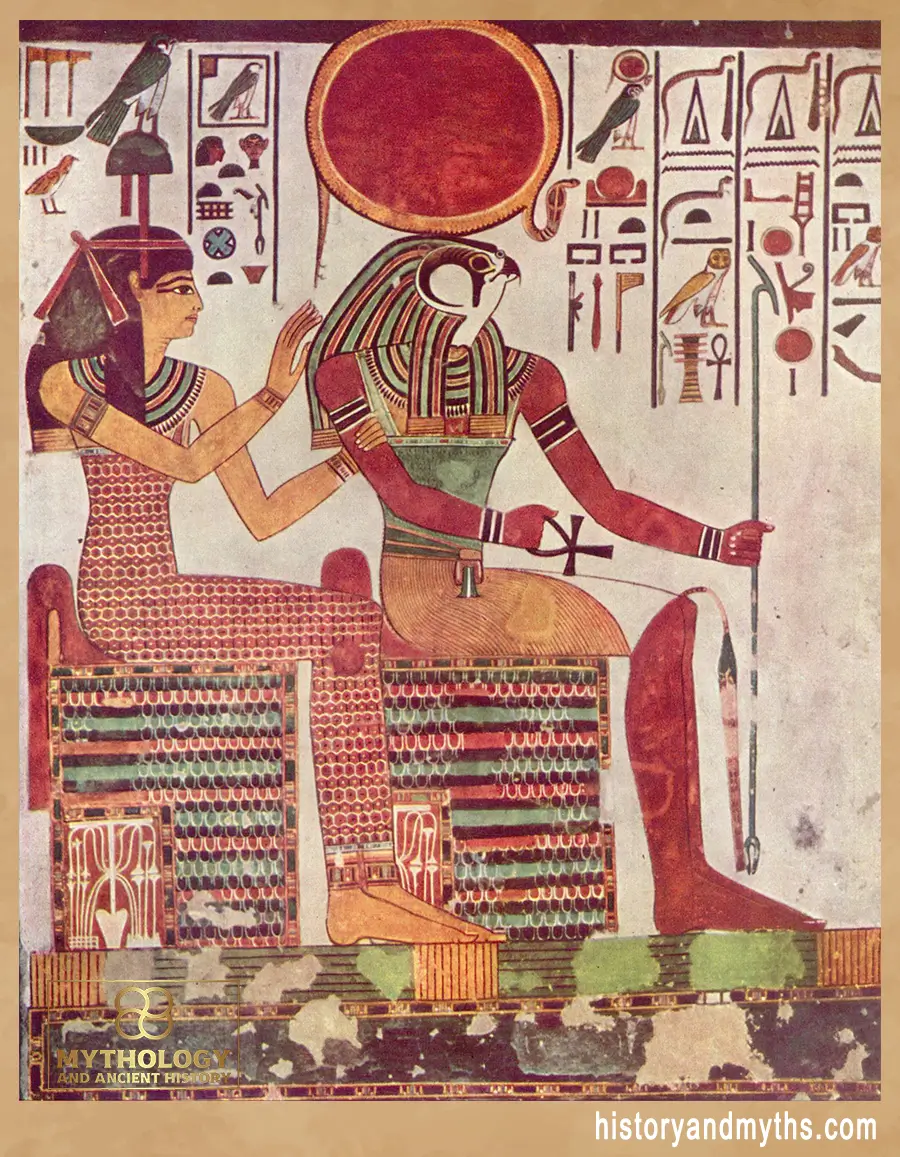
The west was also tied to the mythic journey of Ra. Each night, the sun god entered the underworld to battle chaos, rejuvenating himself for the next dawn. Humans were understood to follow a similar pattern: death was not a termination but an entry into a cycle of renewal. Amentet, as lady of the west, stood at the starting point of that journey. Her role was not to judge or to test but to receive—a quiet acknowledgment that the person had reached the threshold where transformation would begin.
Even the desert winds and colors of the western cliffs reinforced this symbolism. The golden tones of the limestone cliffs at sunset were seen as the light of Ra touching the necropolis. Temples facing the west were intentionally aligned to connect the living world with the realm Amentet represented.
Through Amentet, the west became more than a landscape. It became a promise: that every ending is guided, witnessed, and gently carried into the next stage of existence.
Amentet’s Role in the Journey of the Dead
Amentet appears at a very specific moment in the Egyptian afterlife: not during the trials of the soul, not in judgment, and not in resurrection. Her place is at the threshold, the instant after the dead have completed their journey and proven themselves worthy. This makes her one of the most emotionally significant figures in the funerary landscape—a goddess of arrival.
Texts describe her as the one who “receives the justified”, referring to those whose hearts were found pure in the Weighing of the Heart ceremony. Her task was not administrative or judicial; it was deeply symbolic. She met the newly accepted spirit with water, a gesture loaded with meaning. In Egyptian thought, water was life, renewal, and nourishment. To offer water to the deceased was to acknowledge their successful transformation and to welcome them into the afterlife as a reborn being.
In some depictions, Amentet offers more than water. She presents bread, beer, or fruits, reinforcing the idea that she provides not punishment or further trials, but hospitality. She is the goddess who ensures that the first steps into eternity are met with care, respect, and the reassurance that the soul has truly entered a blessed state.
Scholars also note that Amentet sometimes functions as a personification of the necropolis. This dual nature—both a goddess and a landscape—reinforces her liminal role. She is not the ruler of the afterlife like Osiris, nor is she the guide who protects the soul through darkness like Anubis. She is the guardian of the threshold, standing at the border between mortality and eternity.
Through Amentet, the Egyptians softened the stark boundary between life and death. She made the transition feel guided, dignified, and peaceful—an essential step in a worldview where death was not an end, but a carefully structured passage into renewed existence.
Symbolism and Iconography: How Amentet Appears in Tomb Art
Although Amentet never reached the prominence of major deities, her artistic representation carries some of the most iconic symbols in Egyptian funerary art. These symbols were not decorative; they were the visual language that explained her purpose to the living and reassured the dead that they had arrived safely in the west.
1. The Standard of the West
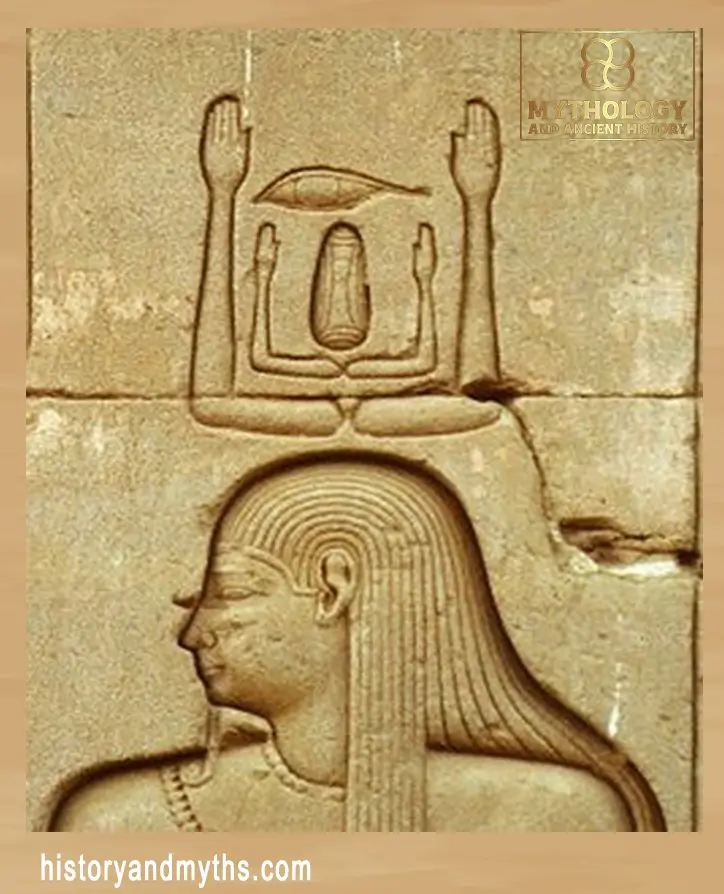
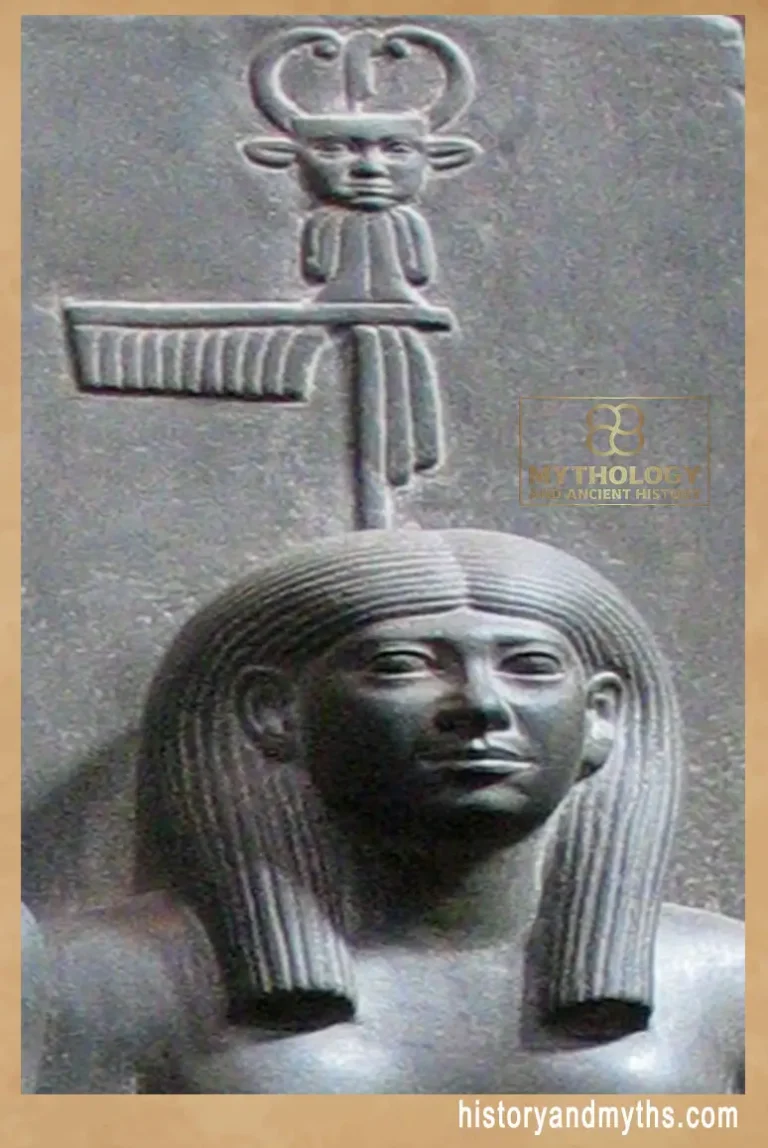
Amentet is almost always shown wearing the “west” hieroglyph on her head—a standard topped with a feather-like element. This symbol directly associates her with the necropolis and with the place where the sun sets. It tells viewers immediately that she belongs to the realm of transition, the point where earthly life meets eternal renewal.
2. Offering Water to the Deceased
One of her most repeated gestures is extending a jar, cup, or flowing water toward the newly arrived spirit. In Egyptian belief, this act held more meaning than nourishment. Water represented:
- rebirth
- purification
- acceptance into the blessed community
This imagery appears in tombs across Thebes and the broader Nile Valley, emphasizing that the first kindness the dead receive in the afterlife comes from Amentet herself.
3. The Sacred Sycamore Tree
In some representations, Amentet emerges from a sycamore tree, offering water and food to the deceased. The sycamore was a powerful symbol of protection and motherhood. By appearing within it, Amentet becomes both the giver of life and the embodiment of the natural world that nurtures the soul.
This imagery also associates her with Hathor, another goddess linked to the sycamore. But where Hathor’s tree represents maternal nourishment, Amentet’s tree symbolizes the moment of spiritual arrival.
4. Her Posture and Expression
Unlike fierce goddesses or triumphant deities, Amentet is usually depicted with calm features, a gentle tilt of the head, and a serene posture. These artistic choices underscore her function: she is not a defender or a judge, but a welcomer—the deity whose presence makes the afterlife feel like a place of peace rather than fear.
5. A Goddess of Thresholds
Almost all her appearances in tomb art occur near entrances, transitional scenes, or horizon imagery. Egyptian artists placed her strategically: wherever the soul was imagined to “enter” the afterlife, Amentet was there waiting.
Through these symbols, Amentet becomes more than a minor goddess. She embodies the moment every Egyptian hoped to reach—the instant of acceptance, refreshment, and the promise of eternal life.
Amentet — Lady of the West
Amentet represents the peaceful threshold between life and eternity.
As the “Lady of the West,” she welcomes the justified dead after their long journey
and offers water as a symbol of renewal and acceptance.
Her presence in tomb art reflects the Egyptian belief that death is not an end,
but an arrival into a guided and gentle beginning.
- Personification of the western horizon and the necropolis.
- Welcomes the deceased who have passed judgment successfully.
- Often shown offering water or emerging from a sacred sycamore.
- Associated with Hathor-West and linked to Osiris’s afterlife domain.
- Symbolizes transition, reassurance, and spiritual arrival.
© historyandmyths.com — Educational use
Amentet, Hathor-West, and Osiris: Overlapping Identities in the Afterlife
The role of Amentet becomes clearer when we compare her with other deities connected to the western horizon and the arrival of the dead. Ancient Egyptian religion often allowed divine identities to overlap, merge, or blend depending on region and ritual. Amentet is one of the clearest examples of this fluidity.
1. Amentet and Hathor-West
Hathor was one of the most beloved goddesses in Egypt, and one of her titles was “Hathor of the West.” In this form, Hathor appeared as the welcoming goddess who received the dead with nourishment and maternal embrace.
Amentet shares this role but in a quieter, more localized way.
Where Hathor-West represents a cosmic, nurturing force, Amentet represents a specific moment: the act of arrival. Scholars suggest that in some tomb contexts, Amentet is not a separate goddess but a function or aspect of Hathor, embodying her role at the threshold.
2. Amentet and Osiris
Osiris is the ruler of the afterlife, judge of the dead, and symbol of rebirth. Amentet does not compete with his authority but complements it. While he presides over the domain beyond, she receives the souls who cross into his territory.
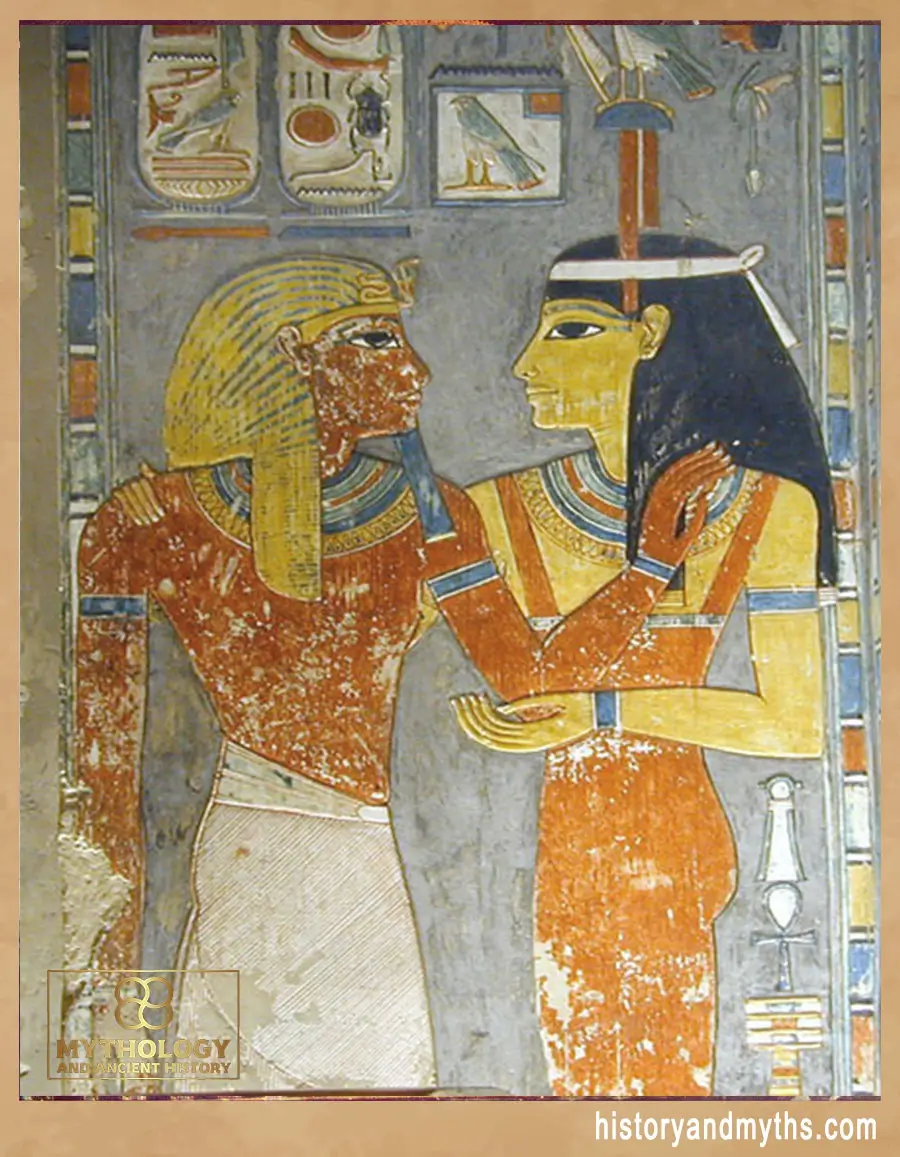
In some depictions, Amentet is shown standing beside Osiris as he receives offerings. This visual pairing reinforces her role as the goddess who introduces the deceased into the realm Osiris governs.
Early texts even refer to her as a consort or helper of Osiris in certain regional traditions, though these references are rare. Regardless, the connection shows that Amentet worked within the broader theological framework of the Osirian afterlife.
3. Theological Fluidity: Titles vs. Deities
One challenge in studying Amentet is determining when she appears as a full deity and when her name functions as a title or epithet. In many cases, “Amentet” may refer to:
- a goddess
- the western necropolis
- a role (the one who welcomes the dead)
This fluidity is typical of Egyptian religion, where boundaries between gods, places, and functions often overlapped. For the Egyptians, what mattered was the experience of the deceased: that someone divine stood at the western horizon to receive them.
4. Why Amentet Remains Distinct
Even with these overlaps, Amentet retains a unique identity because:
- She focuses on arrival, not guidance.
- She symbolizes threshold, not judgment.
- She personifies place and action simultaneously.
Her simplicity is what made her important to everyday Egyptians—she represented the comfort of being welcomed, not the fear of being judged.
Was Amentet Worshipped in Ancient Egypt?
Unlike major deities such as Osiris, Isis, or Hathor, Amentet was not the focus of a widespread temple cult. No large temples dedicated exclusively to her have been identified, and there is little evidence of an organized priesthood devoted to her worship. Instead, her importance is found primarily in funerary religion, where she appears repeatedly in tomb paintings, burial chambers, and sacred texts connected with the afterlife.
This does not mean Amentet was considered unimportant. Egyptian religion often distinguished between gods who governed public cults and deities whose significance was tied to specific stages of life or death. Amentet belonged to the latter group. Her role was deeply personal, offering reassurance to the deceased rather than serving as the center of public ritual.
Her continued appearance in funerary art over many centuries suggests that Egyptians valued her symbolic presence even without major temples or formal worship. She remained an enduring figure because she represented the peaceful welcome that every justified soul hoped to receive at the end of its journey.
The Legacy of Amentet in Funerary Texts and Egyptian Art
Even though Amentet never developed a major cult or extensive mythology, her presence endured for more than two thousand years in the most personal and sacred spaces of Egyptian life: tombs, funerary texts, and the rituals surrounding death. Her significance did not come from grand temples or priestly hierarchies but from the emotional and spiritual needs of ordinary Egyptians who hoped for a peaceful passage into the afterlife.
1. Amentet in Coffin Texts and the Book of the Dead
In the Coffin Texts and later in the Book of the Dead, Amentet appears as a figure associated with refreshment and acceptance. Spell formulas describe her as the one who provides sustenance to the justified dead and welcomes them at the entrance of the underworld. While she is not a central character in these texts, her brief appearances carry meaning: she is invoked at the moment when the soul transitions from trial to eternal life.
2. A Constant Presence in Tomb Decoration
From Old Kingdom mastabas to New Kingdom Theban tombs, Amentet’s iconography appears regularly:
- offering water to the deceased
- emerging from a sycamore tree
- standing beside horizon symbols
- shown near entrances or threshold scenes
These placements were intentional. Tomb artists used Amentet to mark the spiritual “border” between the world of the living and the realm of the dead. Anyone entering the tomb—physically or symbolically—would pass through her domain.
3. A Goddess of Reassurance, Not Power
Unlike Hathor, Isis, or Nephthys—whose roles in myth are dramatic—Amentet’s enduring legacy came from her gentleness. She does not protect through force or magic but through presence. She reminded the dead that their struggle was finished, that they had entered a place where they would be cared for and renewed.
This emotional dimension is part of why Amentet continued appearing in tomb art long after other minor deities faded from common practice. She provided a sense of peace that resonated deeply with Egyptian hopes for the afterlife.
4. The Western Goddess as a Symbol of Transition
Even as Egyptian religion evolved in the Late Period and under foreign influence, the symbolism of the west—and with it, Amentet—remained intact. Whether she was depicted as an independent goddess, a function of Hathor, or a personification of the necropolis, her core meaning did not change:
she marked the threshold where endings become beginnings.
5. Why Amentet Still Matters Today
Modern interest in Amentet often arises because she represents the quieter side of Egyptian spirituality. She was not a goddess of power but of arrival, not of trials but of acceptance. Her legacy invites us to see how the Egyptians approached death not with fear, but with the belief that a divine presence waited to welcome them home.
Key Takeaways — Amentet
- Amentet is the “Lady of the West,” welcoming the justified dead into the afterlife.
- She symbolizes the moment of arrival and renewal after the soul’s journey.
- Her iconography includes the West standard and offering water to the deceased.
- Often connected with Hathor-West and occasionally linked to Osiris’s domain.
- Appears mainly in tomb art and funerary texts rather than temple worship.
© historyandmyths.com — Educational use
Frequently Asked Questions about Amentet
Who is Amentet in ancient Egyptian mythology?
Amentet, also known as Imentet, is the “Lady of the West,” the goddess who welcomes the justified dead at the threshold of the afterlife.
What does Amentet represent?
She represents the western horizon, spiritual transition, and the peaceful arrival of the deceased into eternity.
Why is Amentet associated with the West?
The West symbolized sunset, death, and renewal in Egyptian belief, making it the natural realm for Amentet’s role as a welcoming goddess.
How is Amentet depicted in Egyptian art?
She is shown wearing the West hieroglyph, often offering water or emerging from a sycamore tree to refresh the newly arrived spirit.
Is Amentet related to Hathor or Osiris?
In some contexts, Amentet overlaps with Hathor-West and is occasionally linked to Osiris as a goddess associated with the afterlife realm.
Did Amentet have temples or major worship centers?
No major cults are known for Amentet; she appears mostly in tomb art and funerary texts rather than temple-based worship.
Sources & Rights
- Allen, James P. The Ancient Egyptian Pyramid Texts. Society of Biblical Literature, 2005.
- Assmann, Jan. Death and Salvation in Ancient Egypt. Cornell University Press, 2005.
- Faulkner, Raymond O. The Ancient Egyptian Book of the Dead. British Museum Press, 1972.
- Faulkner, Raymond O. The Ancient Egyptian Coffin Texts. 3 vols. Aris & Phillips, 1973–1978.
- Hornung, Erik. Conceptions of God in Ancient Egypt: The One and the Many. Cornell University Press, 1996.
- Hornung, Erik. The Ancient Egyptian Books of the Afterlife. Cornell University Press, 1999.
- Pinch, Geraldine. Egyptian Mythology: A Guide to the Gods, Goddesses, and Traditions of Ancient Egypt. Oxford University Press, 2004.
- Teeter, Emily. Religion and Ritual in Ancient Egypt. Cambridge University Press, 2011.
- Wilkinson, Richard H. The Complete Gods and Goddesses of Ancient Egypt. Thames & Hudson, 2003.
- Taylor, John H. Death and the Afterlife in Ancient Egypt. British Museum Press, 2001.
- British Museum. Collection Online: Ancient Egyptian Religion and Funerary Beliefs.
- The Metropolitan Museum of Art. Heilbrunn Timeline of Art History: Ancient Egypt.
- UCLA Encyclopedia of Egyptology. Articles on Egyptian Religion, Funerary Beliefs, the West, and the Afterlife.
Written by H. Moses — All rights reserved © Mythology and History