Goddess Anput — Wife of Anubis and Protector in Ancient Egypt
Among the many deities who shaped Egypt’s funerary world, few remain as mysterious—and as understated—as Anput, the feminine counterpart of Anubis. While she never gained a widespread cult or mythic cycle, her presence in Egyptian belief filled a specific and essential niche: she was the protective mother of the corpse, the divine woman who stood beside the jackal-god and safeguarded the body on its path toward purification and rebirth.
Anput appears in inscriptions from the Old Kingdom onward, most often as “the mother of Anubis” or “the goddess of the seventeenth Upper Egyptian nome”, a region centered around Cynopolis, the ancient hub of jackal worship. Her role was not ceremonial grandeur—it was intimate service. She belonged to the threshold between life and the embalming table; between the vulnerability of the dead and the rituals that gave them a second existence.
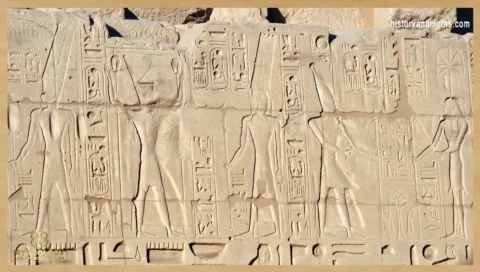
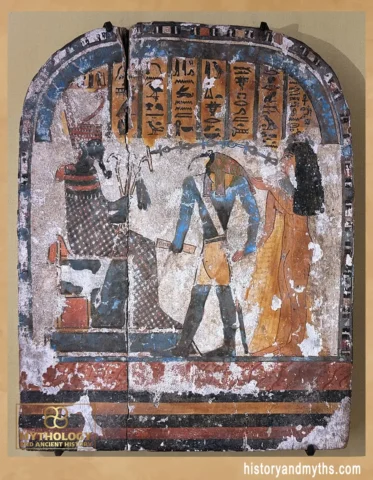
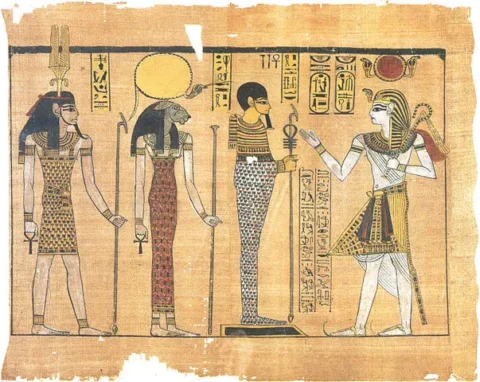
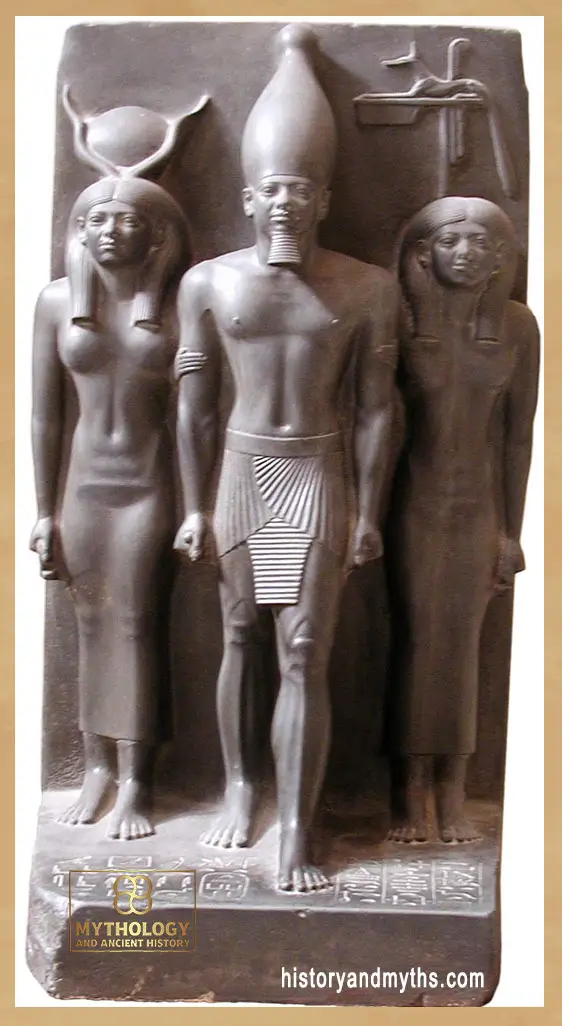
Her iconography is simple but striking: a woman wearing the nome emblem crowned with a recumbent jackal, a visual declaration of her guardianship over the territory of the dead. In rare scenes, she is shown accompanying Anubis or standing beside the deceased, emphasizing her role as a silent protector, a divine presence ensuring that the body is not abandoned.
Despite the scarcity of texts, Egyptologists agree that Anput’s function is tied to the transition from death to preservation—the moment when the body passes into the care of divine hands. Through her, the Egyptians expressed a belief that even in death, a nurturing guardian remained close.
Anput’s Role as a Protector in the Funerary Tradition
Anput occupies a narrow but meaningful space in Egyptian religious thought: she is the feminine force that stands beside Anubis during the earliest stages of the funerary process. While Anubis oversees embalming and guides the soul toward judgment, Anput represents the protective stillness that surrounds the newly deceased. Her presence marks the moment when the lifeless body is no longer vulnerable to chaos but has entered the care of a divine guardian.
Texts and artifacts depict Anput not as a ruler of the underworld but as a guardian of transition—the liminal state between death and preservation. She appears in association with coffins, funerary equipment, and local rituals from Cynopolis, where jackal guardianship had deep cultural roots. In this context, Anput embodies the idea that the dead required not only ritual skill but also nurturing protection, a concept the Egyptians valued profoundly.
Although her name does not dominate great temple inscriptions, it appears consistently wherever the care of the dead was emphasized. This consistency suggests a role that, while not mythically elaborate, was spiritually essential: she safeguarded the body until it could be purified, embalmed, and prepared for its journey toward judgment and rebirth.
| Aspect | Details |
|---|---|
| Name | Anput (jnpwt) — feminine counterpart of Anubis |
| Primary Role | Protector of the body before embalming; guardian of funerary transition |
| Symbol | Nome emblem crowned with a recumbent jackal |
| Domain | Seventeenth Upper Egyptian nome (Cynopolis) |
| Associations | Anubis (as consort or mother in some traditions) |
| Depictions | Human woman wearing the jackal-standard; appears in early funerary scenes |
| Role in Funerary Belief | Ensures the body is guarded and not abandoned before the rites begin |
| Cult Center | Local worship in Cynopolis; no major temples |
| Legacy | Enduring symbol of maternal protection and early funerary guardianship |
Anput and Anubis: A Relationship Rooted in Guardianship
Anput’s identity cannot be separated from Anubis. In many inscriptions, she appears as his feminine counterpart, his consort, or even his mother, depending on the regional tradition. This flexibility reflects the way Egyptian religion often allowed divine roles to shift or blend based on local needs.
What unifies these interpretations is their connection to guardianship. Anubis protects the soul by guiding it toward judgment; Anput protects the body, ensuring that it remains whole and undisturbed before the rites of purification begin. Their partnership expresses a complete vision of funerary care: one deity watches over the spirit, the other over the physical remains.
In the artistic record, Anput appears far less frequently than Anubis, but when she does, the message is consistent. She stands beside him during embalming scenes, or beside the deceased in early stages of funerary ritual. Her presence adds balance to the tableau—where Anubis is action and preparation, Anput is stillness and protection.
This duality also reflects an important Egyptian belief: that the deceased required both technical ritual skill (embalming) and divine maternal protection. Anput fills the second role. She is not a judge, not a ruler, not a mediator—she is the silent guardian who ensures the dead are not left alone.
Iconography: How Anput Appears in Egyptian Art
Because textual references to Anput are limited, her identity is understood mainly through her visual symbols. Egyptian artists expressed her role with a clarity that made her recognizable even without long inscriptions. Her appearance consistently emphasizes two ideas: protection and territorial guardianship.
1. The Nome Emblem with the Jackal
The most distinctive feature of Anput is the emblem she wears on her head:
a standard representing the seventeenth Upper Egyptian nome, crowned with a recumbent jackal.
The jackal immediately associates her with Anubis, death rituals, and the cemeteries that dotted the desert edge.
This emblem signals that she is not a cosmic goddess but a local protector, tied to Cynopolis, a region famous for the worship of jackal deities.
2. Appearance as a Human Woman
Unlike goddesses such as Sekhmet or Hathor who have animal aspects, Anput is almost always depicted as a human woman, emphasizing her maternal and protective qualities. Her femininity is part of her identity: she is the quiet counterpart to the active, animal-headed Anubis.
3. Presence in Funerary Scenes
In the rare scenes that show her, Anput is positioned beside:
- the deceased
- the embalming table
- Anubis himself
These compositions highlight her role as a guardian of the body, especially during the vulnerable period before preservation is complete.
4. Occasional Role as a Mother
In a few inscriptions, she is described as the mother of Anubis, which explains why some later funerary scenes show her in a position of authority over the corpse. This maternal interpretation reinforces her symbolic role as giver of protection rather than performer of ritual.
5. A Visual Language of Stillness
Where Anubis is often depicted in motion—bending over a mummy, guiding, preparing—Anput is frequently shown standing calmly. This contrast is intentional: she represents stillness, safety, and continuity, the conditions necessary before the dead can begin their journey.
Anput — Guardian of the Newly Dead
Anput is the little-known funerary goddess who stands beside Anubis during the earliest stage of death.
She embodies protection, stillness, and maternal presence as the body awaits purification.
Her role is quiet but essential: she ensures that the deceased is never left vulnerable in the realm between death and preservation.
- Feminine counterpart or consort of Anubis.
- Protector of the corpse before embalming begins.
- Symbolized by the jackal-topped nome emblem.
- Connected to the seventeenth Upper Egyptian nome (Cynopolis).
- Appears in early funerary scenes as a silent guardian.
© historyandmyths.com — Educational use
Legacy and Meaning: Why Anput Endured in Egyptian Belief
Even without a rich mythology or widespread temples, Anput retained a quiet but enduring place in Egyptian funerary culture. Her significance comes not from grandeur, but from the intimate, emotional needs of the Egyptians during one of life’s most vulnerable moments: death.
1. A Symbol of Protection Before Ritual
Anput represents the moment before transformation—the period when the body lies untouched, awaiting purification. Egyptians feared this interval, believing that spiritual and physical dangers were greatest before mummification began. Anput’s presence in early funerary scenes reassured families that the deceased was not abandoned, but already claimed by a divine guardian.
2. Complement to Anubis
Her relationship with Anubis also ensured her longevity. As long as Anubis remained central to funerary rites, a feminine counterpart representing stability and maternal safety had meaning. Anput supplied the emotional balance to his ritual authority.
3. A Local Goddess with Enduring Symbolism
Although tied to a specific region—Cynopolis—her protective symbolism spread beyond local boundaries. Even when Egyptian religion standardized many deities across the country, the idea of a female guardian of the corpse remained relevant, allowing Anput to survive as a conceptual figure even where her cult was minimal.
4. The Human Need for a Gentle Presence
Perhaps the strongest reason Anput endured is psychological. Death was not only a ritual transition but an emotional rupture. Anput’s role offered a message of gentleness: before judgment, before rebirth, before the trials of the underworld, someone stood watch. Someone waited. Someone protected.
This subtle emotional resonance kept her image alive in tomb art and minor inscriptions long after her original regional cult had faded.
Key Takeaways — Anput
- Anput is the feminine counterpart of Anubis and a protector in early funerary rites.
- She symbolizes the safe transition from death to embalming, ensuring the deceased is never left unguarded.
- Her iconography features the jackal-topped nome emblem linked to Cynopolis.
- Appears in limited but consistent funerary scenes beside Anubis or the corpse.
- Represents maternal protection, stability, and the stillness before ritual transformation.
© historyandmyths.com — Educational use
Frequently Asked Questions about Anput
Who is Anput in ancient Egyptian mythology?
Anput is the feminine counterpart of Anubis, serving as a protector of the body at the earliest stage of the funerary process.
What was Anput’s role in the afterlife?
She guarded the deceased before embalming began, ensuring the body remained safe during the vulnerable transition from death to preservation.
How is Anput depicted in Egyptian art?
She appears as a human woman wearing the jackal-topped nome emblem connected to Cynopolis and the worship of Anubis.
Was Anput worshipped as a major goddess?
No major temples are known for Anput; her presence is mainly found in local funerary contexts and inscriptions.
Is Anput considered the mother or wife of Anubis?
Different traditions portray her as either the mother or the consort of Anubis, reflecting the flexible nature of regional religious beliefs.
Sources & Rights
- Wilkinson, Richard H. The Complete Gods and Goddesses of Ancient Egypt. Thames & Hudson, 2003.
- Hart, George. A Dictionary of Egyptian Gods and Goddesses. Routledge, 2005.
- Faulkner, Raymond O. A Concise Dictionary of Middle Egyptian. Griffith Institute, 1962.
- Pinch, Geraldine. Egyptian Mythology: A Guide to the Gods, Goddesses, and Traditions of Ancient Egypt. Oxford University Press, 2002.
- Ancient Egypt Online. “Anput” — summary of regional traditions and iconography.
- Inscriptions and nome-reliefs referencing Anput as guardian of the body and feminine counterpart of Anubis.
Written by H. Moses — All rights reserved © Mythology and History