Ships, Boats, and River Transport in Ancient Egyptian Civilization
River transport was not a secondary feature of ancient Egyptian life; it was the operational backbone of the state. Long before roads connected cities, the Nile functioned as a continuous transportation network that linked quarries, farms, temples, administrative centers, and ports. Boats were not simply tools for movement—they were engineered solutions that allowed Egypt to function as a centralized, manageable territory.
Unlike land transport, which was slow, labor-intensive, and limited by terrain, river transport exploited predictable currents, seasonal floods, and prevailing winds. This natural system allowed heavy loads—stone blocks, statues, grain, and administrative supplies—to move efficiently across long distances. Egyptian boats were therefore designed with purpose: hull shape, construction method, and size were adapted to specific tasks, whether hauling limestone, carrying officials, or supporting ritual processions.
This article examines ships and boats as part of a coordinated transportation system, not as isolated artifacts. It focuses on how Egyptian river transport was engineered, how different boat types served distinct functions, and how this system enabled large-scale construction, economic distribution, and administrative control. Rather than describing boats in isolation, the goal is to understand how river transport made ancient Egypt operational as a complex state.
The Nile as Egypt’s Primary Transportation Network
For ancient Egypt, the Nile River was not simply a natural landmark; it was a fully functional transportation network that shaped how the state operated. Long before engineered roads or wheeled vehicles could support heavy movement, the river provided a continuous, reliable corridor linking Upper and Lower Egypt from south to north.
What made the Nile uniquely effective as a transport system was its predictable physical behavior. The northward current allowed boats to drift downstream with heavy cargo, while prevailing winds enabled sails to carry vessels southward against the flow. This natural balance eliminated the need for complex infrastructure and allowed two-way movement across hundreds of kilometers with minimal energy expenditure.
Seasonality further enhanced the Nile’s logistical value. During the inundation, floodwaters expanded navigable routes, allowing access to fields, storage centers, and quarry loading points that were unreachable during the dry season. Transport schedules were therefore aligned with the agricultural calendar, turning natural cycles into planned logistical advantages rather than obstacles.
Because the river functioned as Egypt’s primary transportation artery, settlements, temples, administrative centers, and quarries were deliberately positioned along its banks. Movement of goods, officials, and materials followed the river’s logic, not arbitrary routes. In this sense, river transport was not an auxiliary system—it was the structural framework that allowed Egypt to function as a unified and governable state.
| Aspect | River Transport in Ancient Egypt |
|---|---|
| Primary Role | Core transportation infrastructure enabling state operation. |
| Main Environment | The Nile River and its seasonal floodplain. |
| Boat Design Logic | Function-specific vessels adapted to cargo, administration, and ritual. |
| Engineering Features | Plank-built hulls, shallow draft, flexible joints, sail and oar propulsion. |
| Construction Support | Transport of stone, statues, columns, and building materials. |
| Administrative Function | Movement of officials, taxes, grain, and documentation. |
| Economic Importance | Distribution of agricultural produce and resource consolidation. |
| Advantage Over Land Transport | Higher capacity, lower cost, predictable movement, reduced labor. |
Types of Boats and Ships by Function
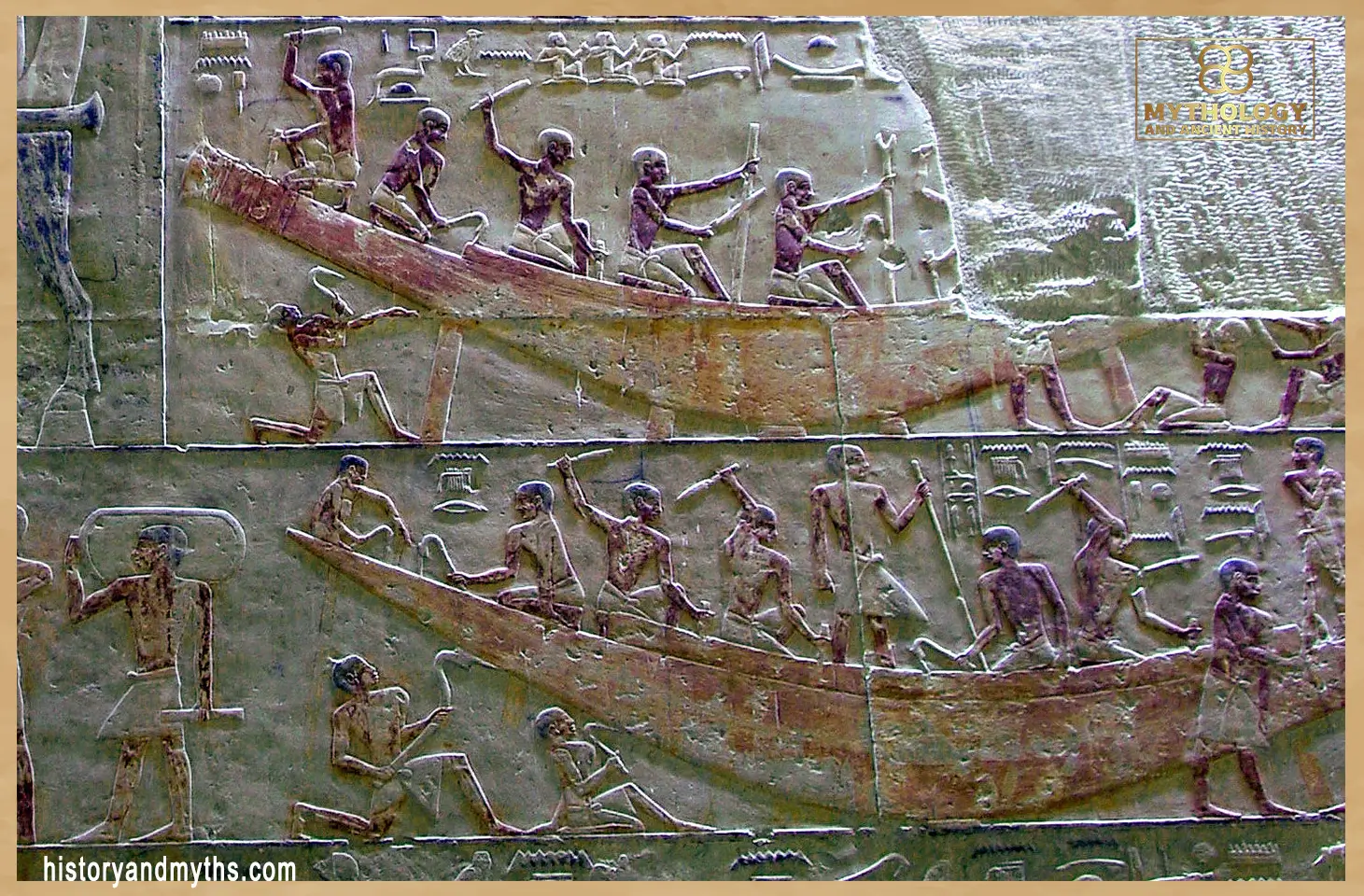
Ancient Egyptian boats were not generic vessels adapted for multiple tasks. They were function-specific designs, engineered to meet distinct logistical, economic, and administrative needs. Hull shape, size, construction method, and carrying capacity varied according to purpose, reflecting a practical understanding of river transport as a system rather than a single solution.
Cargo Boats for Heavy Transport
Boats used to move stone, timber, and large construction materials were built for stability and load-bearing capacity. Broad hulls and reinforced structures reduced draft pressure and improved balance when carrying dense cargo. These vessels prioritized function over speed, allowing massive loads to be transported safely along the Nile, especially during periods of high water.
Administrative and Transport Boats
State administration relied on boats designed for personnel movement and official transport. These vessels were lighter and more maneuverable, enabling officials, messengers, and inspectors to travel efficiently between regional centers. Their design supported regular movement rather than heavy hauling, reinforcing the Nile’s role as an administrative corridor.
Agricultural and Supply Boats
Grain, food supplies, and tax goods moved primarily by river. Boats assigned to this role balanced capacity and efficiency, allowing bulk transport from agricultural regions to storage facilities and distribution centers. Their operation was closely tied to harvest cycles, making river transport central to economic stability.
Ritual and Ceremonial Boats
Certain boats served symbolic and ceremonial functions, particularly in religious contexts. While not designed for heavy transport, these vessels followed specific proportions and decorative conventions. Their inclusion in the transport system reflects how ritual movement coexisted with economic and administrative logistics without interfering with them.
Local Utility Boats
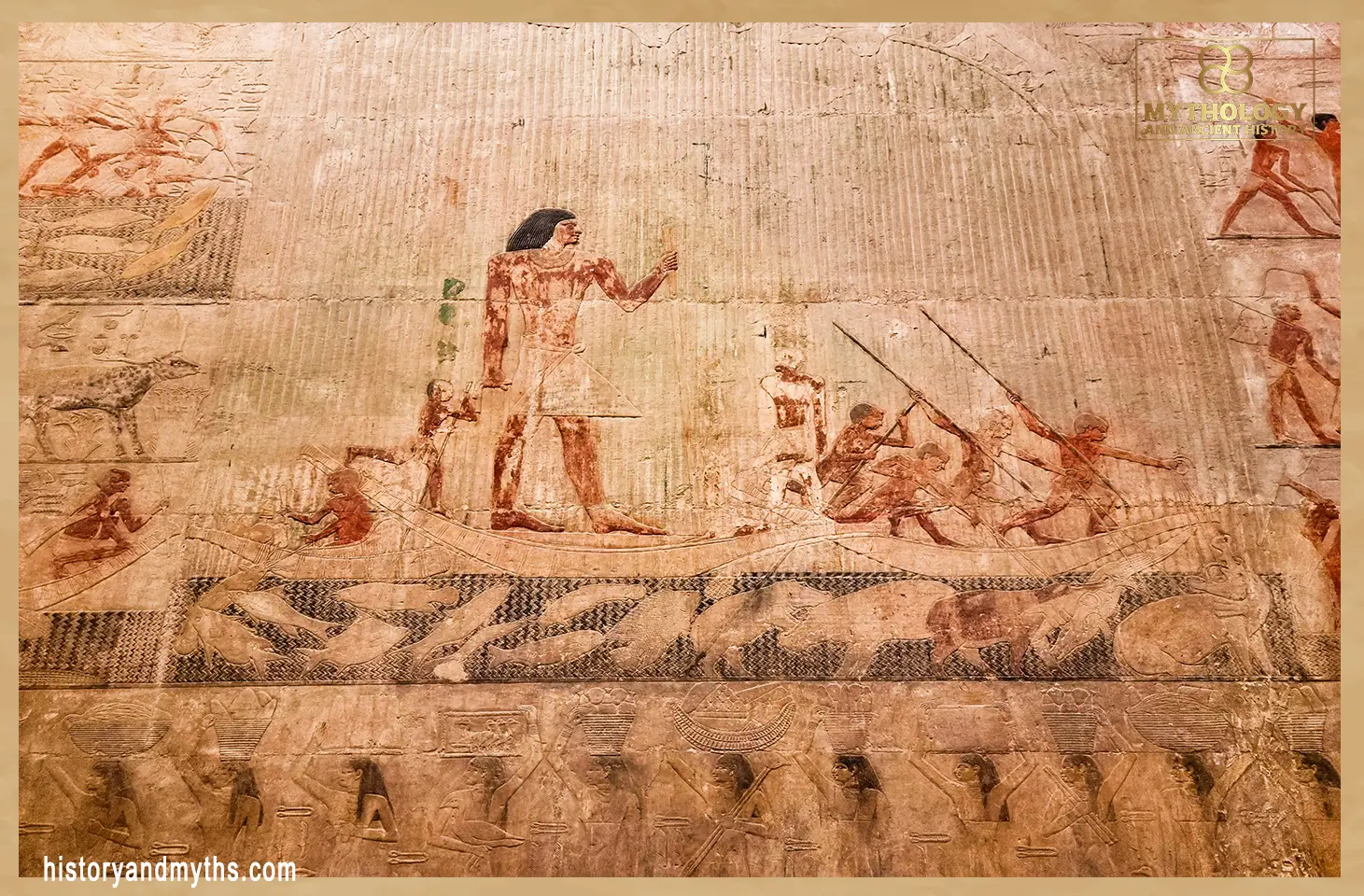
Smaller boats supported daily tasks such as fishing, short-distance transport, and maintenance along riverbanks. Though modest in scale, these vessels ensured continuity of movement at the local level, complementing larger transport operations.
This functional diversity demonstrates that Egyptian river transport relied on specialized vessel types, each optimized for a defined role. Boats were not interchangeable; they were engineered components within a coordinated transportation network that sustained construction, governance, and daily life.
Engineering Egyptian Boats for the Nile
Egyptian boat design was shaped by environmental constraints, not abstract theory. Builders worked within the realities of the Nile—shallow waters, seasonal floods, variable currents, and heavy cargo demands—and developed construction methods that were practical, adaptable, and repeatable without advanced metal tools.
One defining feature was plank-based hull construction. Wooden planks were joined edge to edge using mortise-and-tenon joints, lashings, and wooden dowels. This method created flexible hulls capable of absorbing stress without cracking, an essential quality for vessels navigating fluctuating water levels and uneven loads. Flexibility was not a weakness; it was an engineered response to river conditions.
Hull shape reflected function and river dynamics. Many boats featured flat or shallow keels, reducing draft and allowing navigation in shallow or flooded areas. This design made boats less dependent on dredged channels and enabled transport during inundation seasons when water spread across the floodplain. Stability was favored over speed, particularly for cargo vessels.
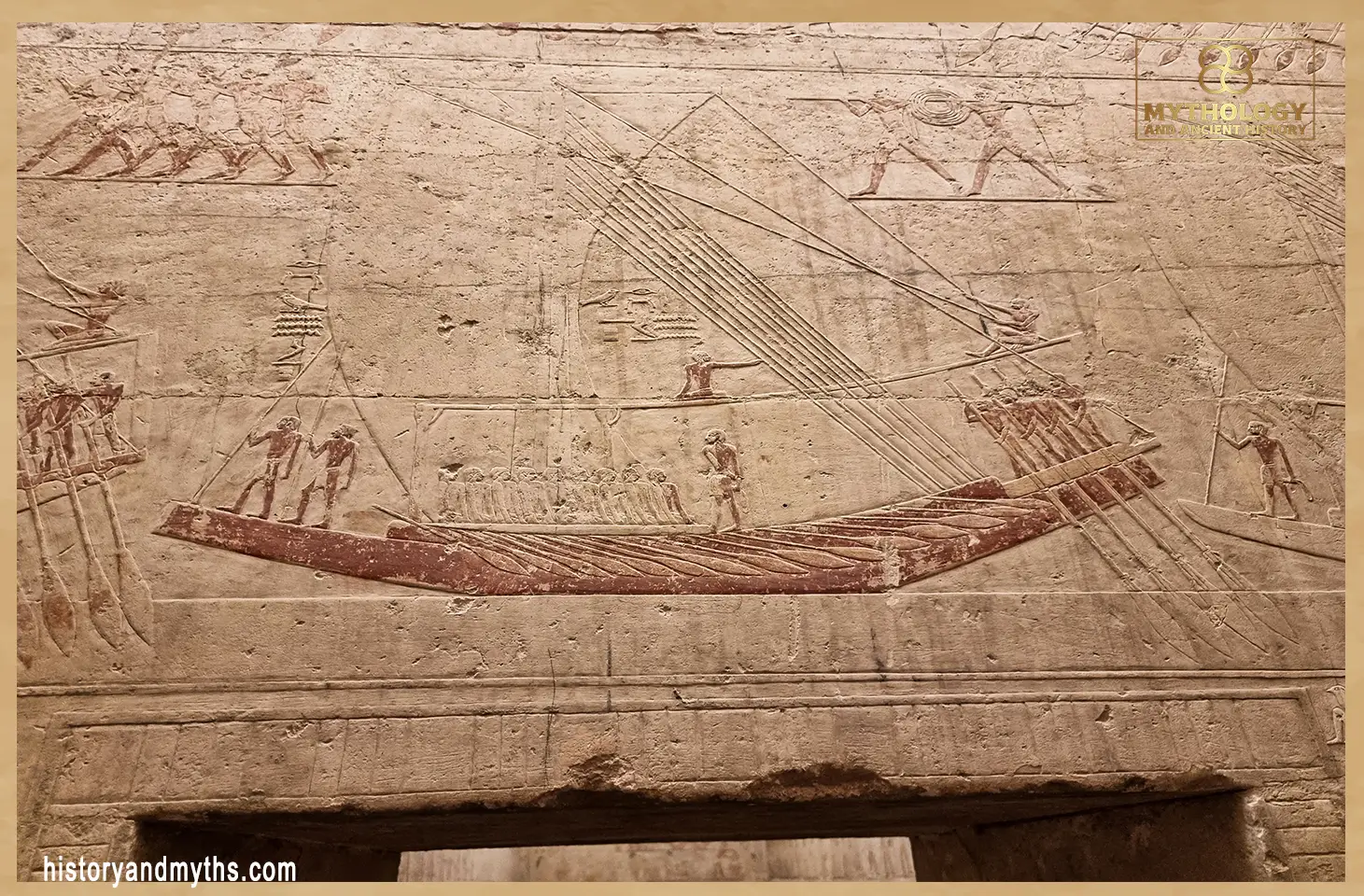
Rigging and propulsion were equally pragmatic. Oars provided control in confined or low-wind conditions, while sails exploited prevailing northward winds for upstream travel. This dual system allowed boats to move efficiently in both directions without mechanical complexity, turning natural forces into predictable transport advantages.
Materials were selected with availability and purpose in mind. Local woods were commonly used for smaller vessels, while imported timber was reserved for boats requiring greater strength or size. Construction techniques minimized waste and allowed damaged components to be repaired rather than replaced, supporting long-term use.
Egyptian boat engineering was therefore context-driven, not experimental. Designs evolved to meet specific logistical needs, balancing durability, flexibility, and efficiency. These vessels were not marvels because they defied physics, but because they worked reliably within it—making large-scale river transport sustainable over centuries.
Transporting Stone, Statues, and Building Materials
Large-scale construction in ancient Egypt depended on river transport as a logistical necessity, not a convenience. Quarries were often located far from building sites, and moving stone over land was slow, costly, and inefficient. The Nile solved this problem by providing a continuous transport route capable of handling extreme weight over long distances.
Stone blocks extracted from quarries were moved to the riverbank and loaded onto cargo boats designed for heavy, concentrated loads. Timing was critical. Transport frequently coincided with periods of higher water levels, when boats could carry greater weight with reduced risk of grounding. This seasonal planning transformed natural conditions into predictable construction advantages.
Statues, columns, and architectural elements were transported as integrated construction units, not as isolated objects. River transport allowed materials to arrive close to their final destination, reducing the need for extended land hauling. This efficiency explains how large temples and monumental structures could be supplied consistently over many years without exhausting local labor resources.
Boat design played a decisive role. Broad hulls distributed weight evenly, while flexible construction absorbed stress caused by uneven cargo placement. Stability mattered more than speed, especially when transporting stone. The goal was not rapid delivery, but reliable arrival without structural failure.
By enabling the steady movement of building materials, river transport made permanent stone architecture feasible on a national scale. Temples, tombs, and monuments were not built despite logistical challenges—they were built because a river-based transport system made such challenges manageable. Without this system, Egypt’s architectural achievements would have remained technically impossible.
River Transport and State Administration
River transport was essential to how ancient Egypt was governed and administered. The Nile did more than move goods; it enabled communication, supervision, and centralized control across a long and geographically narrow territory. Boats functioned as administrative tools that connected local regions to the state’s core.
Officials relied on river transport to travel between provinces, inspect resources, oversee construction projects, and enforce authority. Movement by boat was faster and more predictable than land travel, allowing administrators to maintain regular contact with distant regions. This mobility supported a centralized system in which orders, reports, and personnel circulated efficiently along the river.
Taxation and resource management also depended on the Nile. Agricultural produce, especially grain, was collected locally and transported by boat to storage centers and redistribution points. River transport allowed the state to consolidate resources, respond to shortages, and support large populations in urban and ceremonial centers. Without this system, large-scale economic coordination would have been impossible.
River transport further enabled record-keeping and accountability. Scribes, supplies, and documentation moved together with goods, ensuring that transport was monitored rather than informal. Boats became extensions of administrative infrastructure, integrating logistics with oversight.
By sustaining communication, taxation, and supervision, river transport transformed geography into governance. The Nile was not just Egypt’s lifeline; it was the mechanism through which the state exercised control, maintained coherence, and operated as a unified political entity.
River Transport in Ancient Egypt — At a Glance
- The Nile as Infrastructure: Egypt’s primary transportation network.
- Specialized Boats: Different vessels for cargo, administration, and ritual.
- Engineering Adaptation: Designs optimized for shallow water and heavy loads.
- Construction Logistics: Enabled transport of stone and monumental materials.
- Administrative Control: Supported taxation, inspection, and governance.
- Seasonal Planning: Transport aligned with floods and wind patterns.
Why River Transport Outperformed Land Transport
Compared to land transport, river transport offered clear logistical superiority in ancient Egypt. Overland movement depended heavily on human and animal labor, was limited by terrain, and required constant road maintenance. Transporting heavy loads such as stone or grain by land consumed time, manpower, and resources at unsustainable levels.
River transport, by contrast, exploited natural forces rather than fighting them. Currents carried cargo northward, while prevailing winds enabled sail-powered movement southward. This two-directional efficiency reduced energy expenditure and allowed consistent, predictable transport over long distances. Boats could carry loads that would have required hundreds of laborers to move by land.
Capacity was another decisive advantage. A single cargo vessel could transport quantities of stone or grain impossible to move efficiently across desert paths. Seasonal floods further expanded navigable routes, temporarily turning fields, canals, and riverbanks into extensions of the transport network. Land transport could not match this flexibility.
Risk management also favored river movement. Boats reduced exposure to theft, loss, and exhaustion by consolidating transport into monitored routes. Materials arrived closer to their final destinations, minimizing secondary handling and labor-intensive transfers.
Because of these advantages, river transport became the default solution for large-scale movement. Land transport remained useful for short distances and final positioning, but it never replaced the Nile as Egypt’s primary logistical system.
Conclusion — River Transport as the Foundation of Egyptian Infrastructure
Ships and boats in ancient Egypt were not marginal tools; they were foundational infrastructure. River transport connected agriculture, construction, administration, and ritual into a single operational system. Without it, large-scale architecture, centralized governance, and economic coordination would not have been possible.
By engineering boats suited to the Nile and organizing transport around natural cycles, Egyptians created a sustainable logistics network that endured for millennia. River transport did not merely support the state—it made the state workable.
Key Takeaways
- River transport was the backbone of the Egyptian state.
- The Nile functioned as a natural transportation network.
- Egyptian boats were engineered for specific logistical roles.
- Construction and monument building depended on river transport.
- Administration and taxation relied on boat-based movement.
- River transport outperformed land transport in capacity and efficiency.
FAQ — Ships, Boats, and River Transport in Ancient Egypt
1) Why was river transport so important in ancient Egypt?
Because it enabled efficient movement of goods, officials, and building materials across the country.
2) What types of boats did ancient Egyptians use?
Egyptians used cargo boats, administrative vessels, agricultural transport boats, ritual boats, and local utility craft.
3) How were heavy stones transported?
Stone blocks were loaded onto broad cargo boats and moved along the Nile, often during high-water seasons.
4) Were Egyptian boats technologically advanced?
They were technologically practical, using flexible construction suited to river conditions.
5) How did river transport support state administration?
It allowed officials, taxes, and records to circulate efficiently between regions.
6) Why was river transport better than land transport?
It required less labor, carried heavier loads, and followed predictable natural routes.
Sources & Rights
- Casson, Lionel. Ships and Seamanship in the Ancient World. Baltimore: Johns Hopkins University Press, 1995.
- Jones, Dilwyn. Boats. London: British Museum Press, 1990.
- Kemp, Barry J. Ancient Egypt: Anatomy of a Civilization. 2nd ed. London: Routledge, 2006.
- Landström, Björn. Ships of the Pharaohs. New York: Doubleday, 1970.
- Shaw, Ian, ed. The Oxford History of Ancient Egypt. Oxford: Oxford University Press, 2000.
- Ward, Cheryl. Boatbuilding and its Social Context in Early Egypt. College Station: Texas A&M University Press, 2000.
Written by H. Moses — All rights reserved © Mythology and History