Science and Religion in Ancient Egypt: Conflict or Integration?
In ancient Egypt, scientific knowledge did not develop in opposition to religion, nor was it hidden behind superstition or ritual alone. Instead, science operated within a religious framework that gave meaning, authority, and continuity to observation, measurement, and practical expertise. To understand Egyptian science, the question is not whether it was religious, but how religious structures shaped the way knowledge was produced, applied, and preserved.
What modern readers call “science” in ancient Egypt was a body of functional knowledge: astronomy used to regulate time and ritual, medicine applied to diagnose and treat the body, mathematics employed to measure land and build monuments, and engineering techniques refined through repeated practice. These forms of knowledge were empirical and practical, even when their explanations were framed in religious language. Accuracy mattered—not to prove theories, but to maintain stability in the natural and social order.
Religion provided the conceptual framework that made this system coherent. Through the principle of Ma’at—order, balance, and predictability—knowledge became a tool for sustaining the world as it was meant to function. Priests, administrators, and specialists were therefore not merely ritual performers, but trained experts responsible for observation, calculation, and correct execution. This article examines how scientific knowledge functioned inside religious structures, why this relationship enabled long-term continuity, and whether religious belief constrained or, in fact, supported scientific practice in ancient Egypt.
What “Science” Meant in Ancient Egypt
When asking whether ancient Egypt possessed “science,” the first mistake is applying a modern definition to an ancient context. Egyptian scientific knowledge was not theoretical or experimental in the modern sense. It was operational knowledge—focused on observation, measurement, classification, and repeatable results. The value of knowledge lay in its ability to work reliably, not in its capacity to explain natural laws abstractly.
Egyptian practitioners developed systematic ways to understand the world through pattern recognition and consistency. Astronomical observation tracked regular cycles in the sky, medicine categorized symptoms and treatments, and mathematics provided practical solutions for land measurement and construction. These practices were empirical: they depended on accumulated experience, correction of error, and long-term repetition. What mattered was that a method produced the expected outcome.
Crucially, this form of science did not seek novelty. Innovation was acceptable only when it reinforced stability. A successful method was preserved, taught, and reused, while deviation was discouraged if it threatened predictability. In this sense, Egyptian science prioritized control over discovery. Knowledge advanced by refinement and transmission, not by overturning existing frameworks.
Understanding science in ancient Egypt therefore requires shifting perspective. It was not an independent intellectual pursuit, but a tool for maintaining order in society, nature, and ritual life. This functional approach explains both the durability of Egyptian knowledge systems and their close integration with religious thought, which provided the framework within which scientific practice gained meaning and authority.
| Domain | Scientific Practice | Religious Framework | Purpose |
|---|---|---|---|
| Astronomy | Systematic observation of celestial cycles and timekeeping | Ritual calendars, festivals, cosmic order | Accurate timing of religious and state activities |
| Medicine | Diagnosis, treatment, pharmacology, surgery | Protective rituals and symbolic language | Restoration of health and bodily balance |
| Engineering | Measurement, geometry, surveying, construction | Sacred architecture and cosmic alignment | Creation of stable, ordered sacred spaces |
| Knowledge Authority | Observation, calculation, record-keeping | Temple institutions and priestly offices | Preservation and transmission of expertise |
Religion as a Knowledge Framework
In ancient Egypt, religion did not replace scientific practice; it structured it. Religious belief provided the conceptual framework that defined why knowledge mattered, how it should be used, and who was authorized to apply it. Rather than separating sacred and practical domains, Egyptian thought treated the maintenance of the world as a unified task requiring correct ritual, correct measurement, and correct timing.
At the center of this framework stood the concept of Ma’at—order, balance, and predictability. Maat was not a vague moral ideal; it functioned as a principle of regularity. Natural cycles, social stability, and ritual accuracy were all expressions of Ma’at in action. Scientific practices such as astronomy, medicine, and engineering were valued because they helped preserve this order. A calculation was “correct” not because it revealed a law of nature, but because it produced a stable and repeatable result.
Religion also defined the boundaries of interpretation. Explanations for why things worked could remain mythic or symbolic without undermining the effectiveness of the practice itself. What mattered was execution. As long as a method produced reliable outcomes and aligned with cosmic order, it was accepted and preserved. This allowed empirical techniques to flourish without challenging the religious worldview that framed them.
By functioning as a knowledge framework, religion gave Egyptian science continuity and authority. Knowledge was not personal or experimental in the modern sense; it was institutional, inherited, and guarded by tradition. This integration explains why scientific practice in Egypt remained stable over centuries: religion did not obstruct knowledge—it anchored it within a system designed to resist disruption.
Where Science Operated Inside Religion
Scientific knowledge in ancient Egypt was not theoretical or abstract; it was embedded in religious practice itself. The clearest evidence appears where accuracy, timing, and consistency were essential for ritual success. In these areas, observation and calculation were not optional—they were required.
Astronomy and Sacred Time
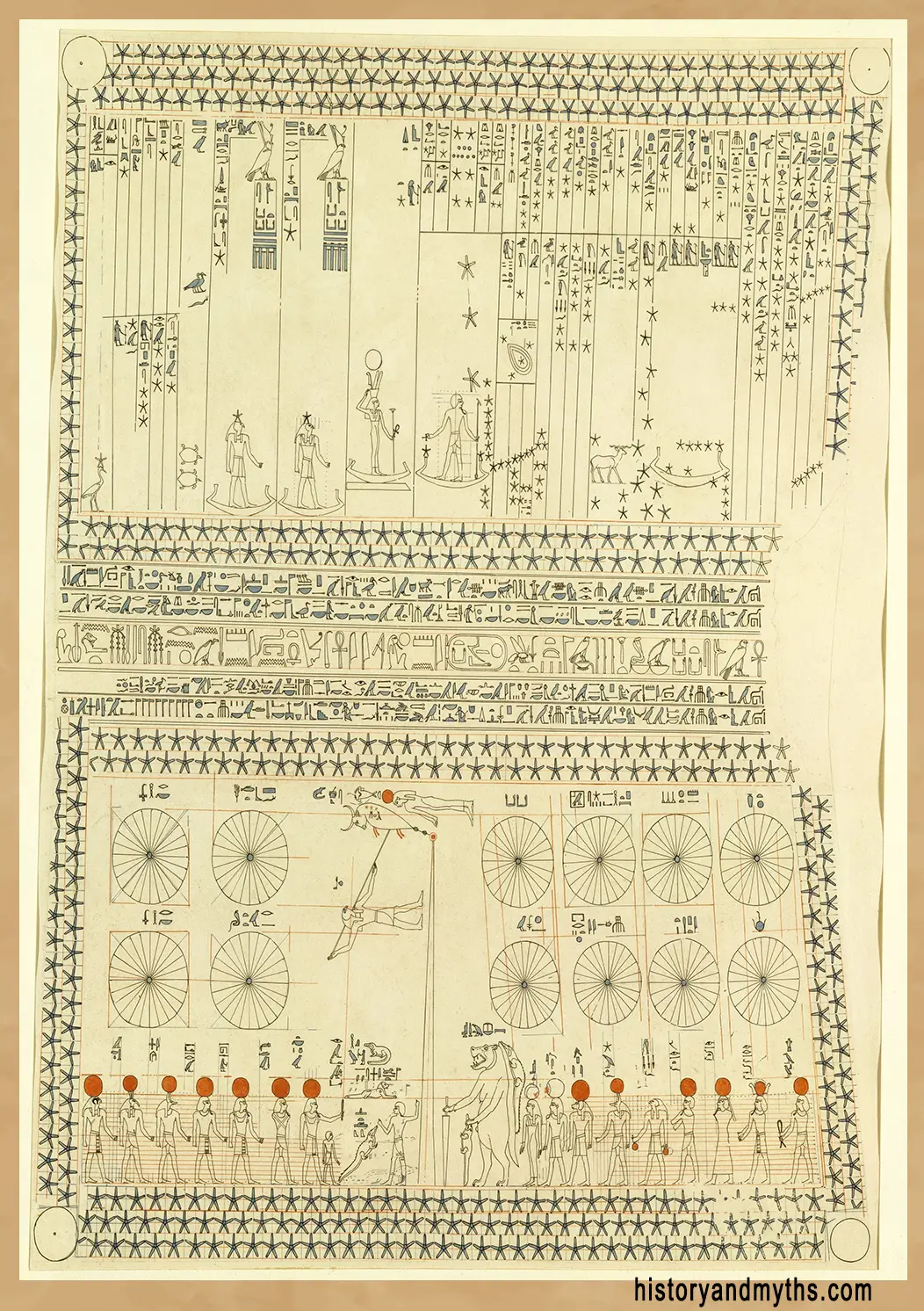
Astronomy was fundamental to religious order. Rituals, festivals, and temple activities depended on precise timing tied to celestial cycles. Priests monitored stars and solar movements to regulate the calendar, ensuring that ceremonies aligned with cosmic rhythms. This was not symbolic stargazing; it was systematic observation used to maintain temporal order. Errors in timing meant ritual failure, which reinforced the need for accurate astronomical knowledge.
Medicine Between Diagnosis and Ritual
Egyptian medicine combined empirical diagnosis with religious framing. Medical texts distinguish between observable symptoms, prognoses, and treatments that were clearly practical—bandaging, surgery, pharmacology. Religious elements accompanied treatment, but they did not replace diagnosis. The physician’s task was to identify the condition correctly; ritual language functioned as symbolic protection rather than as a substitute for medical skill.
Engineering, Measurement, and Sacred Space
Religious architecture demanded extreme precision. Temples and sacred spaces were constructed according to measured proportions, orientations, and alignments that required mathematical and engineering expertise. Geometry, surveying, and standardized measurement were essential tools, not metaphors. The sacred nature of these spaces increased—not reduced—the demand for technical accuracy, because physical order was understood as a reflection of cosmic order.
Across these fields, science operated inside religion as a practical necessity. Ritual created the demand for accuracy; scientific practice supplied the means. This integration explains why Egyptian science advanced through refinement and repetition rather than theoretical debate. Knowledge survived because it worked—and because religion required it to work correctly.
Priests as State Experts
In ancient Egypt, priests were not merely ritual specialists; they functioned as state-trained experts responsible for managing knowledge critical to administration, ritual, and stability. Their authority derived not only from religious status, but from technical competence—the ability to observe, calculate, record, and execute procedures correctly.
Priestly roles required mastery of multiple practical disciplines. Astronomical observation regulated calendars and festivals; mathematical calculation supported land measurement, taxation, and temple construction; medical knowledge informed diagnosis and treatment within institutional settings. These skills demanded training, standardization, and continuous practice. The temple served as both a religious center and a knowledge institution, where expertise was preserved and transmitted.
Record-keeping was central to this function. Priests documented rituals, observations, inventories, and outcomes, creating continuity across generations. Accuracy mattered because mistakes had consequences: an incorrectly timed ritual, a miscalculated offering, or an imprecise measurement disrupted both administrative order and religious obligation. This dual accountability reinforced discipline and precision.
Understanding priests as state experts clarifies why scientific knowledge remained stable and effective. Knowledge was institutional, not individual; validated by repetition, not speculation. By embedding expertise within religious offices tied to state authority, Egypt ensured that scientific practice was protected, regulated, and continuously applied. This arrangement did not suppress knowledge—it secured its survival.
Did Religion Restrict Science?
The short answer is no—but it did set boundaries. Religion in ancient Egypt did not prevent scientific practice; it shaped the way knowledge was interpreted and justified. The distinction is crucial. Egyptian society placed limits on explanation, not on method.
Scientific techniques were evaluated by their effectiveness, not by their theoretical foundations. As long as a practice produced reliable results—accurate measurements, successful treatments, correct timing—it was accepted and preserved. Religion provided symbolic explanations for why methods worked, but it did not interfere with how they were applied. A calculation did not need a rational proof in the modern sense; it needed to function correctly within the established order.
Where religion imposed constraints was in discouraging radical reinterpretation of the cosmos. Knowledge was not meant to challenge the existing worldview, but to reinforce stability. This meant that speculative inquiry into abstract causes was limited, while practical problem-solving was encouraged. Innovation occurred through refinement, not disruption.
This framework explains why Egyptian science appears conservative but highly effective. The goal was not discovery for its own sake, but maintenance of order. Religion ensured continuity and authority; science ensured functionality. Together, they formed a system optimized for long-term stability rather than rapid intellectual transformation.
Science and Religion in Ancient Egypt — How the System Worked
- Science as practice: Knowledge focused on observation, measurement, and repeatable results.
- Religion as framework: Belief systems defined purpose, authority, and acceptable outcomes.
- Ma’at as principle: Order and predictability guided both ritual and technical accuracy.
- Priests as experts: Trained specialists responsible for calculation, timing, and record-keeping.
- Boundaries, not barriers: Interpretation was constrained; methods were not.
- Stability over discovery: Refinement and transmission mattered more than innovation.
© historyandmyths.com — Educational use
Ancient Knowledge and Modern Science: A False Comparison
Comparing ancient Egyptian science directly with modern scientific practice creates a false problem. The two systems were designed to serve different goals. Modern science prioritizes explanation, experimentation, and the discovery of universal laws. Egyptian science prioritized reliability, continuity, and control within a stable cosmic and social framework.
This difference does not reflect intellectual limitation, but philosophical choice. Egyptian knowledge systems were optimized for predictability: floods had to be anticipated, rituals timed precisely, buildings aligned correctly, and treatments applied consistently. Success was measured by stability over generations, not by theoretical breakthroughs. In this context, preserving established methods was a strength, not a failure.
Modern readers often mistake the absence of abstract theory for the absence of scientific thinking. In reality, Egyptian practitioners relied on long-term observation, pattern recognition, standardization, and procedural rigor—all core elements of applied science. What they did not pursue was open-ended speculation that risked destabilizing the conceptual order sustaining society.
Understanding this distinction resolves the apparent tension between science and religion in ancient Egypt. Religion did not suppress knowledge; it defined its purpose. Science did not seek to overturn belief; it operated within it. Judged on its own terms, Egyptian scientific knowledge was coherent, functional, and extraordinarily durable—precisely because it was embedded within a worldview designed to preserve order rather than challenge it.
Key Takeaways
- Scientific knowledge in ancient Egypt functioned within religion, not in opposition to it.
- Egyptian science emphasized practical effectiveness over theoretical explanation.
- Religion provided structure, authority, and continuity for scientific practice.
- Priests acted as trained state experts responsible for observation, calculation, and accuracy.
- Scientific methods were preserved as long as they maintained order and predictability.
- The apparent conflict between science and religion is a modern misunderstanding.
Frequently Asked Questions
Was science separate from religion in ancient Egypt?
No. Scientific knowledge operated within a religious framework that defined purpose, authority, and continuity, rather than existing as an independent discipline.
Did religion prevent scientific progress in ancient Egypt?
Religion did not block scientific practice. It limited speculative interpretation but allowed practical methods to develop as long as they maintained order and reliability.
How did priests use scientific knowledge?
Priests applied astronomy for calendar regulation, mathematics for measurement, and record-keeping for administration, functioning as trained state experts.
Was ancient Egyptian medicine scientific or religious?
Egyptian medicine combined empirical diagnosis and treatment with religious language, where ritual elements complemented rather than replaced medical practice.
What role did Ma’at play in Egyptian knowledge systems?
Ma’at represented order and predictability, guiding both scientific practice and religious ritual toward stable and repeatable outcomes.
How did astronomy relate to religion in ancient Egypt?
Astronomy regulated sacred time, festivals, and rituals, requiring systematic observation and accurate calculation to maintain cosmic order.
Why did Egyptian science focus on stability rather than discovery?
The primary goal was preserving balance and continuity in society and nature, not pursuing abstract theoretical breakthroughs.
Is it accurate to compare ancient Egyptian science to modern science?
Direct comparison is misleading, as the two systems served different philosophical goals and operated under different definitions of knowledge.
Sources & Rights
- Kemp, Barry J. Ancient Egypt: Anatomy of a Civilization. 2nd ed. London: Routledge, 2006.
- Clagett, Marshall. Ancient Egyptian Science, Volume I: Knowledge and Order. Philadelphia: American Philosophical Society, 1989.
- Clagett, Marshall. Ancient Egyptian Science, Volume II: Calendars, Clocks, and Astronomy. Philadelphia: American Philosophical Society, 1995.
- Quirke, Stephen. Ancient Egyptian Religion. London: British Museum Press, 1992.
- Baines, John. “Practical Religion and Piety.” In Religion in Ancient Egypt, edited by Byron E. Shafer. Ithaca: Cornell University Press, 1991.
- Nunn, John F. Ancient Egyptian Medicine. London: British Museum Press, 1996.
- Rossi, Corinna. Architecture and Mathematics in Ancient Egypt. Cambridge: Cambridge University Press, 2004.
- Parkinson, Richard B. Reading Ancient Egyptian Poetry. Oxford: Oxford University Press, 2002.
- Assmann, Jan. The Mind of Egypt: History and Meaning in the Time of the Pharaohs. New York: Metropolitan Books, 2002.
- Shaw, Ian, ed. The Oxford History of Ancient Egypt. Oxford: Oxford University Press, 2000.
- Allen, James P. Middle Egyptian: An Introduction to the Language and Culture of Hieroglyphs. Cambridge: Cambridge University Press, 2010.
- Hornung, Erik. Conceptions of God in Ancient Egypt: The One and the Many. Ithaca: Cornell University Press, 1982.
Written by H. Moses — All rights reserved © Mythology and History