How Official Authority Was Recognized in Ancient Greece
Greek city-states recognized official authority through public office, legal structures, civic acceptance, and institutional legitimacy connected to the polis. Authority was not based only on personal strength or social influence, but on whether individuals were publicly acknowledged as legitimate holders of political or administrative power.
To maintain order and stability, Greek societies developed systems that identified who possessed recognized authority, how that authority was displayed, and why citizens accepted it as valid. Public institutions, civic procedures, religious traditions, and visible symbols of office all helped distinguish official power from ordinary personal influence.
Why Official Recognition of Authority Mattered
Greek political systems depended on recognized authority because governments required stable structures capable of organizing civic life, enforcing decisions, and coordinating public responsibilities. Without accepted forms of official authority, political institutions would have struggled to maintain order inside the polis.
Recognition also helped distinguish legitimate power from personal influence or temporary force. Citizens were more likely to obey officials whose authority operated through accepted civic systems connected to law, officeholding, and public procedure rather than through individual dominance alone.
Official legitimacy became especially important in politically active communities where multiple institutions and groups shared influence. Clear recognition of authority reduced uncertainty about who possessed the right to make decisions, supervise administration, or represent the interests of the state.
How Official Authority Was Recognized in Ancient Greece
| Source of Recognition | Role in Greek Political Authority |
|---|---|
| Public Office | Provided formal civic legitimacy to officials |
| Civic Acceptance | Strengthened public recognition of authority |
| Legal Institutions | Connected authority to laws and civic procedures |
| Public Ceremonies | Confirmed official roles through visible civic rituals |
| Symbols of Office | Made authority recognizable in public life |
Public Office and Legitimate Authority
In many Greek city-states, official authority depended heavily on holding recognized public office rather than relying solely on wealth, reputation, or personal influence. Political power became legitimate when it operated through accepted civic institutions connected to the polis.
Offices provided formal recognition that distinguished authorized officials from ordinary citizens. Magistrates, military commanders, treasurers, and civic administrators exercised authority because the political system acknowledged their role within established governmental structures.
This institutional framework made authority more stable and predictable. Citizens understood that power was connected to specific offices, responsibilities, and procedures rather than existing as unrestricted personal control.
Civic Acceptance and Public Legitimacy
Official authority in Ancient Greece depended partly on whether the wider community accepted power as legitimate and appropriate within the political order of the polis. Even formally recognized officials required a level of civic acceptance to exercise authority effectively in highly public political environments.
Public legitimacy developed through established procedures, visible participation in civic institutions, and adherence to accepted political norms. Authority appeared more stable when citizens believed officials operated within recognized boundaries rather than acting arbitrarily or outside accepted custom.
This relationship between authority and civic recognition helped reinforce political cohesion. Governments functioned more effectively when official power aligned with broader expectations about lawful leadership and public responsibility.
Symbols and Signs of Official Power
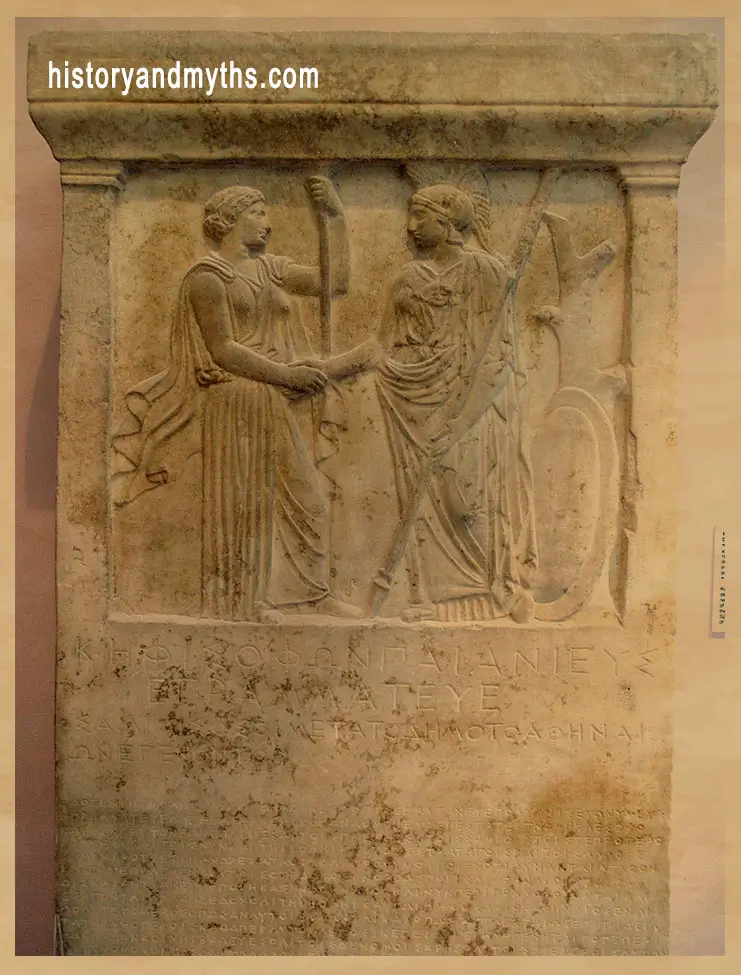
Greek societies used visible symbols to identify individuals who held recognized authority within the polis. Official staffs, ceremonial seating, inscriptions, military insignia, and public rituals all helped distinguish officeholders from ordinary citizens during civic and political activity.
These symbols made authority easier to recognize in public settings where political life remained highly visible. Citizens could identify magistrates, military leaders, priests, or administrators through accepted visual markers connected to official roles and institutional status.
Public symbolism also reinforced legitimacy by presenting authority as part of the organized structure of the state rather than as private personal influence. Visible signs of office helped communicate that power operated through recognized civic systems accepted by the community.
Authority Needed Public Legitimacy
Ancient Greek city-states recognized official authority through public office, civic acceptance, legal institutions, visible symbols, and ceremonial confirmation. Legitimate power depended on recognition by the polis rather than personal influence alone.
© historyandmyths.com — Educational use
Law and Institutional Authority
Greek political authority gained additional legitimacy through connection to laws and established institutions. Officials exercised recognized power more effectively when their actions operated within accepted legal frameworks supported by civic procedures and public administration.
Institutions such as councils, assemblies, courts, and magistracies helped define how authority functioned inside the polis. These structures limited arbitrary rule by connecting political power to organized systems rather than personal decision alone.
Institutional authority also created continuity within government. Officials could change over time while the broader political framework remained stable, allowing authority to survive beyond the influence of individual leaders.
Religion and Official Legitimacy
Religious traditions contributed to recognition of official authority in many Greek city-states by connecting political power to sacred customs, public rituals, and oaths associated with the gods. Civic ceremonies often reinforced the idea that official responsibilities carried moral and religious significance alongside political authority.
Magistrates, military leaders, and other officeholders could participate in rituals that symbolized lawful entry into public responsibility. Oaths and religious observances helped strengthen confidence that authority operated within accepted civic and sacred boundaries.
This connection between religion and public office did not create unlimited divine rule, but it helped support legitimacy by embedding political authority within traditions respected by the wider community.
Why Recognized Authority Strengthened Greek States
Recognition of official authority helped Greek governments operate more consistently by creating clearer structures for leadership, administration, and public decision-making. Citizens were more likely to cooperate with institutions when authority appeared legitimate, organized, and connected to accepted civic systems.
Recognized authority also reduced political instability by limiting confusion over who possessed the right to supervise public affairs or enforce state decisions. Governments functioned more effectively when official roles carried acknowledged legitimacy rather than depending entirely on personal influence or temporary force.
By linking authority to offices, laws, institutions, and civic recognition, Greek city-states developed political systems capable of maintaining greater coordination and long-term stability inside the polis.
Public Ceremonies and Official Recognition
Public ceremonies helped confirm official authority by presenting political roles before the wider community in visible and structured settings. Assemblies, oath-taking rituals, military gatherings, and civic events allowed citizens to witness the formal recognition of officeholders inside the polis.
These ceremonies reinforced legitimacy by connecting authority to established public procedures rather than private personal claims. Officials became recognized through participation in civic systems that openly acknowledged their role within government administration.
Ceremonial recognition also strengthened political continuity. Public confirmation of authority helped communities transition between changing officeholders while preserving confidence in the broader institutions of the state.
Why Authority Needed Public Visibility
Official authority in Ancient Greece depended heavily on visibility because political life operated within highly public civic environments. Citizens needed to recognize who possessed legitimate authority in order for government decisions, administration, and public coordination to function effectively.
Visible authority reduced uncertainty during political activity, military organization, legal proceedings, and civic gatherings. Recognizable officeholders made it easier for communities to identify responsibility, follow official decisions, and maintain organized public order.
Public visibility also reinforced trust in institutions by demonstrating that authority existed openly within the civic structure of the polis rather than operating through hidden or informal influence alone.
Key Takeaways
- Greek political authority depended heavily on public legitimacy and institutional recognition.
- Official power was connected to recognized civic offices rather than personal influence alone.
- Civic acceptance helped strengthen political stability inside the polis.
- Symbols, ceremonies, and public visibility reinforced recognition of authority.
- Legal institutions helped define legitimate political power.
- Religion and public rituals supported official legitimacy in many city-states.
- Recognized authority improved coordination and long-term governmental stability.
Frequently Asked Questions
How was official authority recognized in Ancient Greece?
Greek city-states recognized authority through public office, legal institutions, civic acceptance, public ceremonies, and visible symbols connected to the polis.
Why did official legitimacy matter in Greek politics?
Legitimacy helped governments maintain political stability, organize public administration, and encourage obedience to civic authority.
Did Greek authority depend only on personal power?
No. Official authority usually depended on recognized civic roles, institutions, and accepted political procedures rather than personal influence alone.
What symbols represented official authority in Ancient Greece?
Staffs, inscriptions, ceremonial seating, military insignia, and public rituals helped identify recognized officeholders.
How did laws support political authority in Greek city-states?
Laws and institutions helped define legitimate power and connected authority to organized civic systems.
Did religion influence official authority in Ancient Greece?
Yes. Oaths, rituals, and sacred traditions often reinforced political legitimacy and public recognition of officeholders.
Why was public visibility important for authority?
Visible authority helped citizens recognize legitimate leaders, maintain public order, and identify official responsibility.
How did public ceremonies strengthen legitimacy?
Ceremonies confirmed official roles before the community and reinforced trust in political institutions.
Sources & Rights
- Hansen, Mogens Herman. The Athenian Democracy in the Age of Demosthenes. University of Oklahoma Press, 1999.
- Ober, Josiah. Mass and Elite in Democratic Athens. Princeton University Press, 1989.
- Cartledge, Paul. Ancient Greek Political Thought in Practice. Cambridge University Press, 2009.
- Rhodes, P. J. The Greek City States: A Source Book. Cambridge University Press, 2007.
- Sealey, Raphael. The Athenian Republic. Pennsylvania State University Press, 1987.
- Finley, Moses I. Politics in the Ancient World. Cambridge University Press, 1983.
- Connor, W. Robert. The New Politicians of Fifth-Century Athens. Princeton University Press, 1971.
- Raaflaub, Kurt A. The Discovery of Freedom in Ancient Greece. University of Chicago Press, 2004.
- Osborne, Robin. Greece in the Making: 1200–479 BC. Routledge, 2009.
- Hornblower, Simon. The Greek World: 479–323 BC. Routledge, 2011.
- Aristotle. The Athenian Constitution. Academic translated editions.
- Hansen, Mogens Herman and Nielsen, Thomas Heine. An Inventory of Archaic and Classical Poleis. Oxford University Press, 2004.
- Parker, Robert. Polytheism and Society at Athens. Oxford University Press, 2005.
- Burkert, Walter. Greek Religion. Harvard University Press, 1985.
- Foxhall, Lin. Studying Gender in Classical Antiquity. Cambridge University Press, 2013.
- Davies, John K. Democracy and Classical Greece. Harvard University Press, 1993.
- Martin, Thomas R. Ancient Greece: From Prehistoric to Hellenistic Times. Yale University Press, 2000.
- Murray, Oswyn. Early Greece. Harvard University Press, 1993.
- Rhodes, P. J. A History of the Classical Greek World: 478–323 BC. Wiley-Blackwell, 2010.
- Meier, Christian. The Greek Discovery of Politics. Harvard University Press, 1990.
Written by H. Moses — All rights reserved © Mythology and History