What If Sekhmet Had Destroyed Humanity? Egyptian Mythology Reimagined
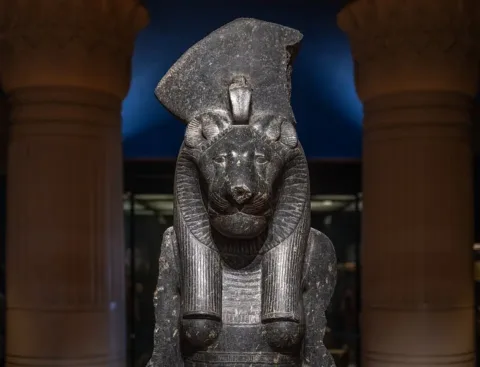
Sekhmet came closer than almost any other Egyptian deity to destroying humanity. In the myth preserved in the Book of the Heavenly Cow, Ra sends his divine Eye to punish humans for plotting against him. The goddess attacks with such violence that Ra eventually tries to stop the slaughter, using red-colored beer to calm her before mankind is wiped out.
But what if that plan had failed?
If Sekhmet had continued until no human communities remained, the result would have been more than a massacre. Egypt would have lost its kings, temples, priests and regular offerings, while the gods would have been left without the human society that served them on earth. Yet the destruction of humanity would not necessarily have meant the destruction of the Egyptian cosmos itself. Ra could still travel across the sky, the Duat could still exist, and Ma’at could continue as a cosmic principle even after its human institutions disappeared.
The real question, then, is not simply whether Sekhmet could have killed everyone. It is what an Egyptian universe without humanity would have looked like, and whether Ra, the gods and Sekhmet herself could have restored any form of order afterward.
The Original Myth: How Ra Stopped Sekhmet
In the Book of the Heavenly Cow, humanity turns against Ra as the sun god grows old. Ra calls the gods together and asks how the rebellion should be answered. The punishment comes through his divine Eye, represented by Hathor in the surviving text, in a destructive role closely associated with Sekhmet in Egyptian tradition.
The goddess attacks humans in the desert with such violence that Ra decides the punishment has gone far enough. The rebellion was meant to be crushed, not humanity itself.
Ra therefore uses deception rather than force. Beer is mixed with red coloring until it resembles blood and poured across the land before the goddess can resume the slaughter. She drinks it, becomes intoxicated, and the massacre stops. The remaining humans survive.
The crisis does not simply return the universe to its previous state. Ra later withdraws from direct life on earth and ascends into the sky, while the cosmos is reorganized around a greater separation between gods and humans.
In the original myth, humanity survives because Ra succeeds in stopping the destructive force he released. Our alternative history begins by changing that single outcome.
The Point of Divergence: Ra’s Plan Fails
Our alternative timeline changes one outcome: the red beer fails to pacify Sekhmet.
Ra has still ordered the punishment, humanity has still rebelled, and Sekhmet has already carried the violence farther than he intended. But this time the method that saves humanity in the original myth does not work. She drinks the red beer, but it fails to calm her, and the slaughter continues.
Ra is now left with a force he released but can no longer easily control. What began as divine punishment has become a threat to the entire human population.
From this point onward, the surviving myth gives us no answer. Egyptian texts do not explain what Ra would have done if the plan had failed, whether another god could have restrained Sekhmet, or how the divine order would respond to the extinction of humanity.
The rest of this scenario therefore follows the roles of Ra, Sekhmet, Ma’at, kingship and worship in Egyptian religion, while keeping the speculation separate from what the original myth actually says.
The Alternative Scenario: Sekhmet Destroys Humanity
Once Ra fails to stop the killing, the crisis changes completely.
Sekhmet is no longer simply punishing a rebellion. She is continuing
a slaughter that even Ra has already decided should end.
Human resistance would offer little protection. In Egyptian myth,
Sekhmet is a divine force released by Ra himself, associated with
violence, fire and overwhelming destruction. Ordinary soldiers or
rulers are never presented as powers capable of defeating her.
Survivors might flee the areas she had already devastated, but continued
attacks would gradually break apart the human world. Settlements would
empty, political authority would collapse, and temples and royal
institutions would lose the people who maintained them.
Eventually there would be no organized rebellion left to suppress.
Only scattered survivors would remain, and if Sekhmet continued the
slaughter, those communities would disappear as well.
Egypt itself would remain: the Nile, the deserts, temples, tombs and
monuments. What would be gone is the living society that gave those
places meaning.
Sekhmet would have completed a punishment Ra never intended to carry
to its end. The rebellion would be over because humanity itself was gone.
based on Egyptian religious concepts. It is not part of the surviving
ancient myth.
What Would Ra Do After Humanity Was Gone?
Ra would face the result of a punishment that had gone far beyond its purpose. The rebellion would be over, but so would the population he had ruled.
In the original myth, Ra withdraws from direct life on earth after the crisis and reorganizes the cosmos, creating a greater separation between gods and humans. If Sekhmet had destroyed humanity first, that retreat could still happen, but there would be no human society left below for Ra to govern.
The deeper problem would be restoring divine order. Sekhmet was acting as Ra’s Eye and had been released through his authority. Humanity’s destruction would therefore not represent a victory over Ra, but a failure to control the force he had set in motion.
The surviving myth gives no second method for stopping Sekhmet and does not say that Ra would create humanity again. A direct battle between them would also be speculation. Ra’s immediate concern would more likely be containing the destructive Eye and stabilizing the divine world.
The cosmos could then be reorganized around gods, the dead and the structures of creation, but without any living human population remaining beneath them.
Would Ma’at Collapse Without Humanity?
The disappearance of humanity would not automatically destroy Ma’at.
In Egyptian thought, Ma’at was more than human law or morality. It represented the ordered state of creation itself: the regular movement of the sun, the stability of the cosmos, justice, proper rule and the balance that opposed chaos.
As long as Ra continued his solar journey and the divine order remained intact, that cosmic dimension of Ma’at could survive without living humans.
What would vanish is Ma’at as a lived human principle. There would be no society in which justice, proper rule or ordered relationships could operate, even if the larger structure of creation remained stable.
Sekhmet could therefore destroy human civilization without destroying the universe itself. The sun could still rise, the Nile could still flow and the gods could still occupy their places, while the human world that once reflected divine order had disappeared.
Ma’at would remain part of the cosmos, but there would be no living society left to embody it on earth.
What Happens to Kingship and Worship?
The disappearance of humanity would end two institutions at the center of Egyptian religious life: kingship and temple worship.
The pharaoh was more than a political ruler. Egyptian ideology presented him as the central human intermediary between the gods and the ordered world on earth. He sponsored temples, offered sacrifices in the divine cult and was expected to uphold Ma’at against disorder. With no living population, there could be no successor, royal court or human authority performing that role.
Temple worship would also cease. Priests maintained cult statues, presented food and drink, burned incense, recited hymns and carried out daily rituals on behalf of the king. Festivals brought divine images into contact with communities beyond the temple. All of these practices depended on living people.
That does not mean the gods would cease to exist when offerings stopped. Egyptian religion does not present divine existence as simply dependent on human belief. What would disappear is the active relationship between gods and human society. Temples might remain standing, but the rituals that made them functioning religious institutions would end.
Sekhmet’s destruction of humanity would therefore remove the entire human system through which divine authority was represented and maintained on earth.
What Would Happen to the Dead and the Afterlife?
Human extinction would not empty the Egyptian afterlife. The dead would not simply disappear, and the Duat would remain part of the divine cosmos.
What would vanish is the living society that maintained a relationship with them.
Egyptian funerary religion placed great importance on remembrance, offerings and ritual. Families brought food and drink, maintained tomb cults and preserved the names of the deceased. Tomb scenes also show descendants presenting offerings to dead relatives, reflecting the continuing bond between the living and the dead.
If Sekhmet destroyed every human community, those practices would end. No one would remain to maintain tombs, perform mortuary rites or replenish offerings for the deceased.
That would not necessarily erase those already established in the afterlife. Egyptian funerary traditions also relied on texts, images and magical provisions intended to sustain the dead beyond the immediate presence of living relatives. What would be lost permanently is the social link between the dead and their descendants.
The result would be a populated realm of the dead with no living humanity left to remember it, join it or maintain the rituals that once connected both worlds.
Would Sekhmet Stop Once Humanity Was Gone?
Once the last humans were gone, Sekhmet would face a situation the original myth never reaches: there would be no one left to punish.
Her violence begins as a response to human rebellion. She acts as the destructive Eye of Ra, not as an enemy of creation itself. Nothing in the surviving story suggests that she would automatically turn against the gods or attempt to destroy the cosmos after humanity disappeared.
That does not mean her rage would end immediately. In the original account, Sekhmet does not stop on her own. Ra has to intervene and pacify her. If that intervention failed, the end of humanity would remove her target without necessarily bringing the destructive Eye back under control.
She might eventually cease because there was no one left to attack, or she might remain dangerous until the gods found another way to restrain her. The texts give no answer.
What the myth does not support is an endless campaign against all creation. Sekhmet’s violence is directed at rebellious humanity, not at the destruction of the Egyptian cosmos itself.
Could Another God Have Stopped Her?
The surviving myth gives no second plan for stopping Sekhmet. Once Ra’s red-beer trick succeeds, the crisis ends, so the text never tells us what the gods might have tried if it failed.
A direct battle is difficult to justify. Sekhmet is not an invading enemy like Apophis. She is acting as the Eye of Ra, a divine force released through the solar god’s own authority. Destroying her would mean turning against the very power Ra had sent to punish humanity.
Another god might have helped restrain or calm her, but the myth names no alternative rescuer. Egyptian religion included deities associated with wisdom, healing, protection and restoration, yet none is presented in this episode as Sekhmet’s opponent.
A more plausible response would therefore be another attempt to control the Eye rather than destroy it. Ra and the other gods would need to pacify, redirect or contain Sekhmet until her destructive state could be brought to an end.
Anything more specific would move beyond what the surviving story allows us to say.
Would the Egyptian Cosmos Continue Without Humans?
Human extinction would not necessarily bring the Egyptian cosmos to an end.
Egyptian religion imagined the universe as sustained by forces larger than human society. Ra’s daily journey across the sky and through the Duat, the separation of heaven and earth, and the roles of the gods all belonged to a divine order that did not depend on the continued existence of living humans.
The Book of the Heavenly Cow is especially important here. After the rebellion, Ra reorganizes the cosmos and assigns responsibilities to gods such as Geb, Osiris and Thoth. Humanity survives in the original story, but the structure of the new universe is established through divine action.
A world without humans could therefore still have sunrise and nightfall, the Nile, the Duat, the gods and the dead. What would be missing is the human society that once lived within that order and responded to it through rule, ritual and worship.
Sekhmet’s victory would not have to become a cosmic apocalypse. She could erase humanity while creation itself continued.
The result would be a functioning divine cosmos with no living human world inside it.
Read More
Sekhmet: Egyptian Goddess of War, Healing, and Divine Wrath
The Eye of Ra in Ancient Egyptian Mythology: Power and Symbolism
Could Humanity Ever Return?
Human extinction would not make a second humanity impossible within Egyptian mythology, but the Book of the Heavenly Cow never says that Ra would create humans again.
Egyptian creation traditions were not limited to a single account. Different religious centers explained the origins of the world and humanity in different ways, often giving creator gods an active role in bringing life into existence. A second act of creation is therefore imaginable within this religious framework, but it is not part of the Sekhmet story itself.
If Ra chose to restore humanity, it would be a new beginning rather than the simple return of the civilization that had been destroyed. The previous relationship between gods and humans had ended in rebellion and catastrophe, so any restored human world would have to begin under different circumstances.
There is also no reason to assume Ra would make that choice immediately. Creating another population would mean rebuilding the same relationship with mortals that had already failed once.
Humanity could return in this alternative scenario, but only as speculation grounded in Egyptian ideas of divine creation. The surviving myth promises no second humanity after Sekhmet’s slaughter.
A World of Gods Without Humanity
If humanity never returned, the Egyptian cosmos would not be empty, but it would be profoundly altered.
The gods would still occupy their realms, the dead would remain in the Duat, and the cycles of nature could continue. What would be missing is the living human society that once inhabited that order.
Temples and tombs might remain, but no living communities would gather around them. The monuments of Egypt would outlast the civilization that created them.
Sekhmet’s victory would therefore produce something stranger than total destruction. She would not have ended creation. She would have removed humanity from it.
Conclusion
If Sekhmet had destroyed humanity, she would not necessarily have ended the Egyptian cosmos. She would have ended humanity’s place within it.
The rebellion would be over, but only because the people Ra had meant to punish no longer existed. The gods, the Duat and the wider order of creation might continue, while Egypt as a living human civilization disappeared completely.
Academic Sources
This article draws on Egyptological studies of the Book of the Heavenly Cow,
Sekhmet and the Eye of Ra, Ma’at, temple religion, and ancient Egyptian beliefs
about death and the afterlife.
- Guilhou, Nadine.
“Myth of the Heavenly Cow.”
UCLA Encyclopedia of Egyptology, 2010.
UCLA Encyclopedia of Egyptology
- Spalinger, Anthony.
“The Destruction of Mankind: A Transitional Literary Text.”
Studien zur Altägyptischen Kultur, Vol. 28, 2000, pp. 257–282.
JSTOR
- Germond, Philippe.
Sekhmet et la protection du monde.
Aegyptiaca Helvetica 9, Geneva, 1981.
WorldCat
- Pinch, Geraldine.
Egyptian Myth: A Very Short Introduction.
Oxford University Press, 2004.
Oxford Academic
- Assmann, Jan.
Ma’at: Gerechtigkeit und Unsterblichkeit im Alten Ägypten.
C. H. Beck, 1990.
JSTOR
- Teeter, Emily.
Religion and Ritual in Ancient Egypt.
Cambridge University Press, 2011.
Cambridge University Press
- Smith, Mark.
Following Osiris: Perspectives on the Osirian Afterlife from Four Millennia.
Oxford University Press, 2017.
Oxford Academic
Copyright Notice
This article is an original work published by
History & Myths. All rights reserved.
The text may not be copied, republished, translated, or redistributed
in whole or in substantial part without prior written permission.