Destroyed Cities in Greek Mythology: Why Gods Destroyed Civilizations
In Greek mythology, the destruction of a city was rarely presented as a simple military defeat or natural disaster. When an entire city fell, myth often treated the event as evidence that something deeper had gone wrong in the relationship between humans and the divine. Cities could prosper for generations, yet a single act of arrogance, impiety, or moral failure might place an entire community under divine judgment.
This pattern appears in some of the most famous stories of the Greek mythological tradition. From Atlantis and Troy to Thebes and Helike, ruined cities became powerful symbols of what happens when human ambition collides with forces greater than itself. The destruction of these places was not merely about physical ruin. It was used to explain questions about justice, responsibility, power, and the limits of human authority.
Understanding these myths therefore requires looking beyond the disasters themselves. The stories reveal why Greek mythology often portrayed entire cities—not just individual heroes—as subjects of divine punishment. Their downfall reflected a broader belief that communities, like individuals, could violate the cosmic order and suffer the consequences.
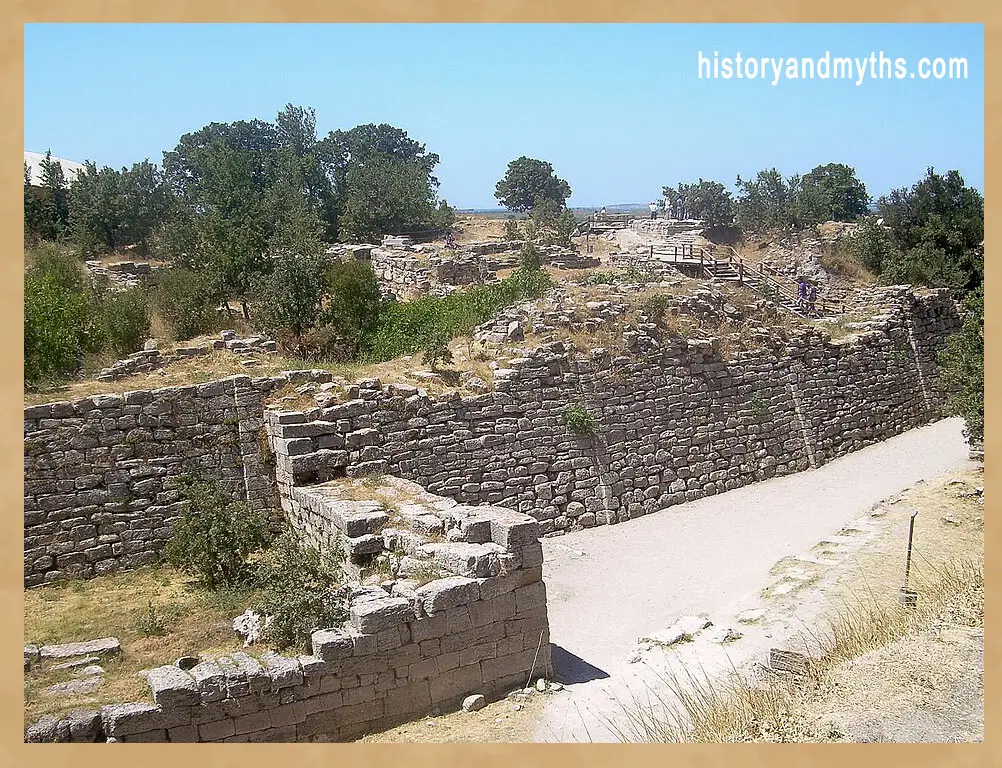
Why Gods Destroy Cities in Greek Mythology
Greek mythology treats cities as more than collections of buildings and people. A city represents a social order, a shared identity, and a relationship with the gods. Because of this, the destruction of a city carries a meaning far greater than the downfall of an individual hero. When a city falls, an entire way of life is judged.
This idea reflects the Greek belief that communities could be held accountable for collective actions. A ruler’s arrogance, a violation of sacred laws, or a pattern of impiety might bring consequences not only upon the guilty individual but upon the wider society that tolerated or shared the offense. Mythological cities therefore become symbols of collective responsibility.
The gods also destroy cities because cities embody human achievement. Walls, temples, armies, and wealth demonstrate the power of civilization, but they can also create the illusion that humans are self-sufficient. Mythological destruction often serves as a reminder that no city, regardless of its strength, stands above divine authority.
Another reason cities occupy this role is scale. The fall of a single person may teach a moral lesson, but the fall of an entire city transforms that lesson into a warning for generations. A ruined city becomes a permanent symbol of what can happen when a society loses balance, forgets its obligations, or challenges forces greater than itself.
For this reason, the destruction of cities appears repeatedly throughout Greek mythology. These stories are not simply accounts of catastrophe. They are reflections on power, responsibility, and the limits of human ambition in a world governed by divine order.
| City | Cause of Destruction | Mythological Meaning |
|---|---|---|
| Thebes | Generational curses and divine judgment | The consequences of inherited wrongdoing |
| Troy | Divine conflict and war | Human vulnerability to larger forces |
| Atlantis | Hubris and moral decline | The dangers of unchecked power |
| Helike | Wrath of Poseidon | Divine punishment through natural disaster |
| Mythological Cities (General) | Collective failure and divine intervention | The fragility of civilization |
Hubris and Collective Punishment
Few concepts are more important to understanding destroyed cities in Greek mythology than hubris. The term refers to excessive pride, arrogance, or the belief that human power can rival the authority of the gods. In mythological narratives, hubris is often the first step toward catastrophe.
What makes these stories distinctive is that the consequences rarely stop with the individual responsible. A king’s arrogance can bring suffering upon an entire city. This pattern reflects the Greek view that leaders and communities were deeply connected. When a ruler violated the divine order, the society under his rule could become part of the resulting punishment.
The logic behind this idea is not always presented as simple guilt by association. Myth often portrays cities as sharing the values, ambitions, and failures of their leaders. A community that celebrates arrogance, ignores warnings, or tolerates injustice may become vulnerable to the same fate as the individual who initiated the offense.
This theme appears repeatedly across Greek mythology. Whether the threat comes through war, plague, natural disaster, or divine intervention, the underlying message remains similar: prosperity does not guarantee security. A city can possess wealth, military strength, and impressive monuments yet still collapse if it loses sight of the limits imposed by the gods.
Hubris therefore functions as more than a personal flaw. It becomes a social danger capable of destabilizing entire communities. The destruction of mythological cities serves as a warning that collective success can create collective vulnerability when power is no longer balanced by humility and respect for the divine order.
Thebes: A City Marked by Divine Curses
Among all the cities of Greek mythology, Thebes stands out because its destruction was not the result of a single event. Instead, the city endured a long sequence of disasters, each connected to earlier acts of violence, impiety, and broken relationships between mortals and the gods. Thebes became a symbol of a community trapped within a cycle of inherited misfortune.
The pattern begins with the city’s legendary foundations and continues through several generations of rulers. Figures such as Cadmus, Laius, and Oedipus are linked to crimes, curses, and divine warnings that gradually shape the city’s fate. Rather than experiencing one moment of punishment, Thebes suffers repeated crises that accumulate over time.
This makes Thebes different from stories centered on sudden destruction. The city is damaged by internal failures as much as by external forces. Plagues, civil conflict, family violence, and political instability all contribute to its decline. Divine punishment operates through these events, but it often works indirectly rather than through a single catastrophic intervention.
The myth suggests that unresolved wrongdoing can become embedded within a community. One generation’s actions create consequences that later generations inherit, even when they had no role in the original offense. Thebes therefore represents the idea that cities, like families, can carry the weight of past mistakes.
For Greek audiences, the story of Thebes served as a warning that destruction does not always arrive suddenly. Sometimes it develops gradually through a chain of decisions, failures, and curses that weaken a society from within until collapse becomes unavoidable.
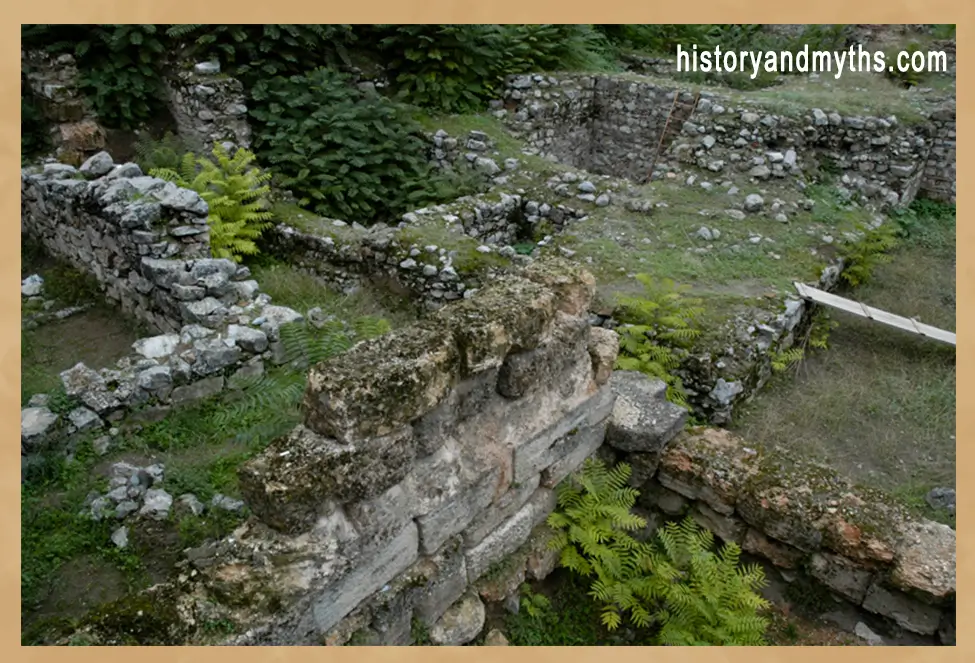
Troy and the Cost of Divine Conflict
The destruction of Troy occupies a unique place among mythological cities because its downfall was shaped not only by human decisions but also by disagreements among the gods themselves. Unlike stories focused primarily on punishment for a specific offense, Troy becomes the stage on which divine rivalries unfold with devastating consequences for an entire population.
The chain of events begins with the Judgment of Paris, when the Trojan prince chose Aphrodite over Hera and Athena. What might appear to be a personal decision quickly escalated into a conflict involving powerful gods with competing interests. From that point forward, divine support and divine hostility became central forces in the city’s fate.
Throughout the Trojan War, the gods repeatedly intervene on both sides. Some protect Trojan heroes, while others assist the Greeks. The city’s destruction is therefore not presented as the result of military weakness alone. It reflects a larger struggle in which mortal communities become entangled in conflicts they cannot control.
This aspect of the myth highlights a recurring theme in Greek thought: human societies are vulnerable to forces beyond their understanding. Even a wealthy, fortified, and powerful city can be drawn into events shaped by divine agendas. Troy’s walls, famous for their strength, ultimately prove incapable of protecting the city from these larger forces.
For Greek audiences, Troy demonstrated that destruction does not always stem from internal corruption or collective guilt. Sometimes a city suffers because it becomes the battleground for powers far greater than itself. The myth therefore explores not only punishment but also the fragility of human achievement in a world where divine conflicts can reshape history.
Why Mythological Cities Were Destroyed
Greek mythology rarely presents the destruction of a city as a random event. Whether through divine punishment, inherited curses, natural disasters, or conflicts among the gods, ruined cities often symbolize the collapse of a social order that has lost balance. These stories explore the limits of power and the consequences of collective failure.
© historyandmyths.com — Educational Use
Atlantis and the Fall of an Ideal Civilization
No destroyed city in Greek tradition has generated more fascination than Atlantis. Unlike Troy or Thebes, Atlantis is presented not as a city struggling with a specific curse or conflict but as an entire civilization whose power and prosperity eventually became the cause of its downfall.
According to the account preserved by Plato, Atlantis began as a well-ordered and prosperous society favored by the gods. Over time, however, its rulers became increasingly driven by ambition and the desire for domination. As moral discipline weakened, material success ceased to reflect virtue and instead became a source of arrogance.
This transformation is central to the story. Atlantis is not destroyed because it lacks strength. It is destroyed because it possesses immense strength without the restraint necessary to use it wisely. The myth suggests that power alone cannot guarantee stability. A civilization may achieve extraordinary success and still collapse if it abandons the principles that originally sustained it.
The destruction itself is dramatic. Earthquakes and floods erase the civilization in a single catastrophe, leaving little trace of its former greatness. The suddenness of the event reinforces the message that no society, regardless of its achievements, is immune from decline.
For Greek audiences, Atlantis functioned as a warning about the dangers of unchecked ambition. Its fall represents one of mythology’s clearest examples of collective punishment, where an entire civilization suffers because prosperity gradually turns into pride. The story remains influential because it addresses a question that extends far beyond mythology: how powerful societies lose the qualities that made them successful in the first place.
Helike and the Wrath of Poseidon
Among the cities linked to divine destruction, Helike occupies a unique position because its story stands at the intersection of mythology and historical memory. Ancient writers describe the city as being swallowed by the sea after provoking the anger of Poseidon, the god most closely associated with earthquakes and the destructive power of the ocean.
According to the tradition, the disaster followed an act of impiety connected to Poseidon’s sanctuary. Soon afterward, the city was struck by a catastrophic earthquake and inundated by the sea, disappearing beneath the waters. The event became one of the most famous examples of divine punishment in the Greek imagination.
What makes Helike particularly significant is that a real city by that name was indeed destroyed by an earthquake and tsunami in the fourth century BCE. This historical catastrophe likely reinforced the mythological interpretation, making the story more persuasive to later generations. The boundary between myth and history became unusually blurred.
Unlike Atlantis, which represents the fall of a powerful civilization, Helike illustrates the sudden vulnerability of even an ordinary city. There is no long decline or extended war. Destruction arrives almost instantly through natural forces associated with an offended god.
The story reflects an important Greek belief about the natural world. Earthquakes, floods, and other disasters were not always viewed as random events. They could be understood as expressions of divine will, especially when they struck communities perceived to have violated sacred obligations. Helike therefore became a lasting symbol of how quickly a city could disappear when human society lost harmony with the powers believed to govern the world.
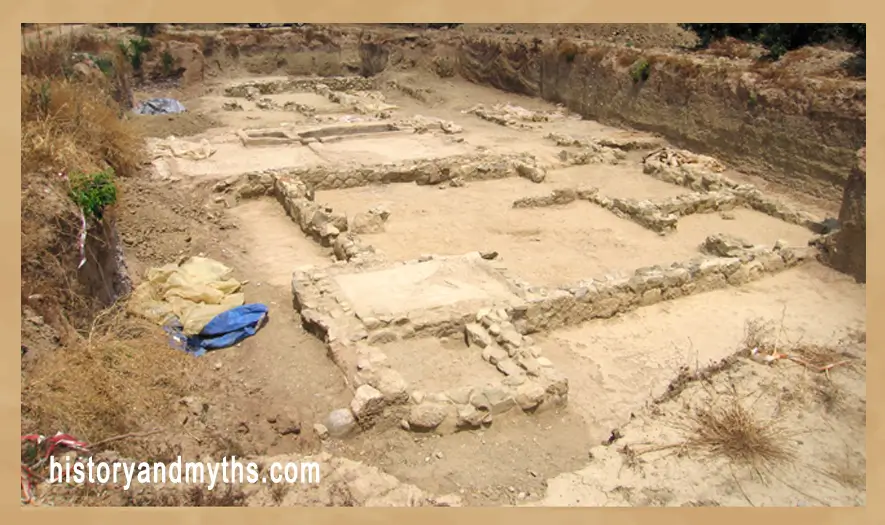
What the Destruction of Cities Symbolized
The destruction of cities in Greek mythology is rarely about architecture, territory, or military defeat alone. Cities function as symbols of human civilization itself. They represent law, social order, prosperity, political authority, and the collective achievements of a community. When a city falls, mythology is often commenting on the failure of those larger systems.
This symbolic role explains why ruined cities appear so frequently in stories about divine punishment. The destruction of a single individual can illustrate a personal lesson, but the destruction of an entire city allows mythology to explore the fate of societies. Such stories ask whether power can become dangerous, whether success can lead to arrogance, and whether communities can lose sight of the principles that sustain them.
Many of these myths also reflect anxiety about permanence. Cities are built to endure. Their walls, temples, and monuments are intended to outlast generations. By showing great cities reduced to ruins, mythology reminds audiences that no human achievement is immune to change. Stability can prove temporary, regardless of how secure it appears.
The symbolism extends beyond punishment. Some destroyed cities serve as warnings, while others function as reflections on memory and loss. Their ruins become reminders of what once existed and of how quickly prosperity can disappear. The city survives in stories even after it vanishes from the landscape.
For this reason, mythological destruction should be understood as more than catastrophe. It is a way of exploring the strengths and weaknesses of civilization itself. Through ruined cities, Greek mythology examines the fragile balance between human ambition, social order, and the forces believed to govern the world.
Divine Punishment vs Human Responsibility
A striking feature of many myths about destroyed cities is the tension between divine punishment and human responsibility. The stories often attribute catastrophe to the will of the gods, yet they rarely portray communities as completely innocent victims. Human choices usually play a crucial role in creating the conditions that lead to disaster.
This pattern allows mythology to operate on two levels at once. On the surface, a city falls because a god becomes angry, withdraws protection, or actively intervenes. Beneath that explanation, however, the narrative often highlights arrogance, injustice, poor leadership, broken oaths, or moral decline. The gods may deliver the final blow, but human actions frequently set the process in motion.
The result is a more complex view of responsibility than it may first appear. Myths do not simply claim that divine forces randomly destroy cities. Instead, they suggest that societies participate in their own downfall when they ignore warnings, abandon moderation, or place excessive confidence in their power and success.
This theme helps explain why these stories remained meaningful long after belief in their literal events faded. They address a question that every society faces: when disaster occurs, how much responsibility belongs to external forces and how much belongs to human decisions? Greek mythology expresses this question through divine narratives, but the underlying issue remains deeply human.
For that reason, the destruction of mythological cities should not be understood solely as an expression of divine anger. It is also a reflection on accountability. The myths repeatedly suggest that communities shape their own fate, even in a world where the gods remain powerful and unpredictable.
The destruction of cities occupies a special place in Greek mythology because it transforms individual moral lessons into reflections on entire societies. Whether the examples are Thebes, Troy, Atlantis, or Helike, the focus extends beyond physical ruin. These stories explore how communities respond to power, prosperity, ambition, and their relationship with forces greater than themselves.
Although the details vary, a common pattern emerges. Cities fall when the balance between human achievement and divine order breaks down. Sometimes the cause is arrogance, sometimes inherited curses, sometimes divine conflict, and sometimes a combination of several factors. In every case, the destruction serves as a warning that no society is immune to decline.
The enduring appeal of these myths lies in their broader symbolism. Ruined cities represent the fragility of civilization itself. They remind audiences that wealth, military strength, and political influence cannot guarantee permanence. Every community remains vulnerable to internal failures as well as external forces beyond its control.
Seen in this light, mythological cities destroyed by the gods are not merely stories of catastrophe. They are reflections on power, responsibility, and the limits of human ambition—questions that remain relevant long after the ancient myths were first told.
Key Takeaways
- Greek mythology often uses destroyed cities as symbols of collective punishment.
- Hubris is one of the most common causes of mythological destruction.
- Thebes represents the long-term effects of curses and inherited wrongdoing.
- Troy demonstrates how divine conflicts can reshape human history.
- Atlantis symbolizes the collapse of a powerful civilization corrupted by ambition.
- Helike connects divine punishment with natural disaster and historical memory.
- Destroyed cities reflect concerns about power, morality, and social order.
- These myths explore both divine intervention and human responsibility.
Frequently Asked Questions
Why do gods destroy cities in Greek mythology?
Myths often portray city destruction as a response to hubris, impiety, moral decline, or violations of divine order.
What is the most famous destroyed city in Greek mythology?
Atlantis is probably the most famous example, although Troy is equally significant in the mythological tradition.
Was Troy destroyed because of the gods?
Greek myths present Troy’s fall as heavily influenced by divine rivalries and interventions during the Trojan War.
Why is Atlantis important in Greek mythology?
Atlantis symbolizes the downfall of a prosperous civilization that became corrupted by power and ambition.
What happened to Helike?
Ancient tradition states that Helike was destroyed by an earthquake and tsunami linked to Poseidon’s anger.
Was Thebes destroyed in a single event?
No. Thebes suffered a series of curses, conflicts, and disasters across multiple generations.
What does the destruction of cities symbolize?
It often symbolizes the fragility of civilization and the consequences of losing balance between human ambition and divine order.
Do these myths focus on divine punishment or human failure?
Most combine both elements, presenting disaster as the result of human actions and divine responses.
Sources & Rights
- Homer. Iliad.
- Homer. Odyssey.
- Hesiod. Theogony.
- Apollodorus. Bibliotheca.
- Pausanias. Description of Greece.
- Herodotus. Histories.
- Diodorus Siculus. Library of History.
- Strabo. Geographica.
- Plato. Timaeus.
- Plato. Critias.
- Walter Burkert. Greek Religion.
- Timothy Gantz. Early Greek Myth.
- Richard Buxton. The Complete World of Greek Mythology.
- Robin Hard. The Routledge Handbook of Greek Mythology.
- Sarah Iles Johnston. Ancient Greek Religion.
- Emma Griffiths. Greek Myth: A Very Short Introduction.
- Fritz Graf. Greek Mythology.
- H.J. Rose. A Handbook of Greek Mythology.
- Robert Parker. On Greek Religion.
- Edith Hall. Introducing the Ancient Greeks.
Written by H. Moses — All rights reserved © Mythology and History