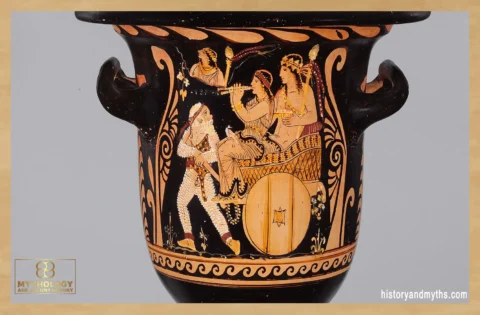
Sacred Caves in Greek Mythology: Gateways Between Worlds
Sacred caves appear throughout Greek mythology, but their importance goes far beyond providing dramatic settings for myths. These underground spaces were often treated as places where the ordinary world gave way to something deeper and more mysterious. Gods were hidden in caves, nymphs lived within them, and sacred encounters frequently occurred in their darkness. For the Greeks, a cave was not simply a geological feature—it was a threshold between different realms of existence.
This symbolic role explains why caves appear in so many religious and mythological traditions. They served as places of birth, revelation, protection, and transformation. Some were associated with powerful deities such as Zeus, while others became sacred landscapes inhabited by nymphs and chthonic forces connected to the earth itself. Their isolation and mystery made them natural locations for experiences that seemed to lie beyond ordinary human life.
Understanding sacred caves therefore means looking beyond individual myths. These places reveal how the Greeks imagined the boundaries between humanity, nature, and the divine. More than hidden shelters, sacred caves functioned as gateways where different worlds could meet, making them some of the most powerful symbols in Greek mythology.
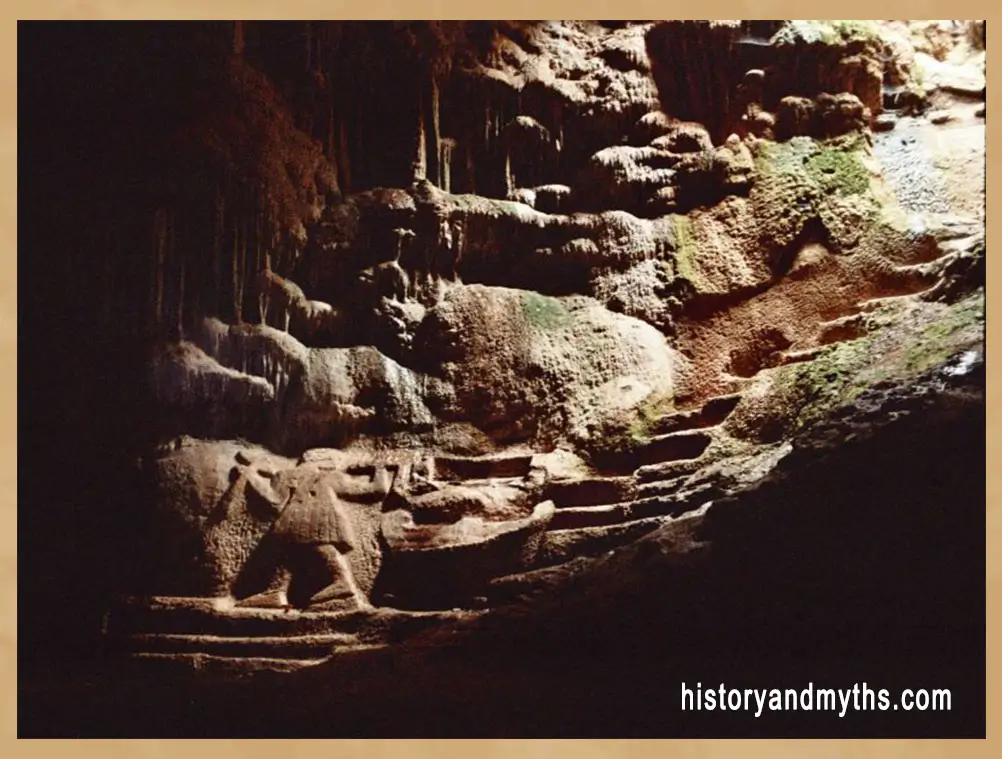
Why Caves Were Sacred in Greek Mythology
The sacred status of caves in Greek mythology came from their unique position between different environments. Neither fully part of the open world nor completely separated from it, caves existed in a transitional space that encouraged religious interpretation. They felt hidden, ancient, and removed from ordinary human activity, qualities that made them natural locations for encounters with the divine.
Unlike temples, which were built and controlled by communities, caves were products of nature. Their darkness, depth, and irregular forms created an atmosphere that many Greeks associated with powers older than human civilization. Entering a cave often meant leaving the familiar world behind and crossing into a space governed by different forces.
This symbolism made caves suitable for a wide range of sacred functions. They could protect an infant god, shelter divine beings, serve as places of revelation, or act as entrances to hidden realms. Their meaning was flexible because they represented transition itself. A cave could connect the surface world to the earth below, humanity to nature, or mortals to the divine.
The natural environment also contributed to their religious importance. Springs, underground water, echoes, and unusual rock formations often appeared within cave systems, reinforcing the impression that these places possessed a power distinct from ordinary landscapes. Such features encouraged the belief that supernatural beings might inhabit them.
For the Greeks, caves were sacred not because they belonged to a single god or myth. They were sacred because their physical nature embodied mystery, transformation, and access to realities beyond everyday experience. These qualities allowed caves to become some of the most enduring religious spaces in Greek mythology.
| Sacred Function | Role of the Cave | Mythological Meaning |
|---|---|---|
| Divine Birth | Shelter for infant gods | Creation, protection, and transformation |
| Sacred Threshold | Boundary between worlds | Transition from ordinary to divine space |
| Nymph Worship | Natural dwelling of sacred beings | Connection to fertility and nature |
| Chthonic Powers | Access to the earth below | Hidden forces and sacred mystery |
| Mystery Cults | Ritual and initiation space | Spiritual transformation and revelation |
Caves as Places of Divine Birth
One of the most important reasons caves became sacred in Greek mythology is their association with divine beginnings. Several myths place the birth, protection, or early life of gods within caves, suggesting that these spaces were viewed as environments where extraordinary transformations could occur.
The most famous example is Zeus. According to tradition, the infant god was hidden in a cave on Crete to protect him from Cronus, who devoured his children to prevent a challenge to his power. The cave functioned as a place of concealment, safety, and survival. Without it, the future king of the gods could never have reached adulthood.
This pattern reveals an important symbolic idea. Before a divine figure can emerge into the world, there is often a period of hidden development. The cave provides the ideal setting for that process because it separates the individual from ordinary space and time. What enters the cave is vulnerable; what emerges from it is transformed.
The symbolism extends beyond Zeus. In many mythological traditions, caves represent origins rather than endings. They are places where life begins, where power is nurtured, and where new realities take shape away from public view. Their darkness is not associated solely with danger but also with creation and potential.
For the Greeks, the cave where Zeus was protected became more than a location in a story. It illustrated a broader theme that appears repeatedly throughout mythology: the idea that profound beginnings often occur in hidden places before they become visible to the world.
Caves as Gateways Between Worlds
In Greek mythology, caves frequently function as places where different realms intersect. They are neither fully part of the surface world nor completely removed from it, making them ideal settings for encounters that blur ordinary boundaries. This position between worlds gave caves a symbolic importance that extended far beyond their physical appearance.
Many myths place divine encounters, revelations, or supernatural beings within caves because these locations naturally suggest transition. A person entering a cave moves from light into darkness, from open space into enclosure, and from familiar surroundings into uncertainty. Mythology transformed this physical experience into a spiritual one.
The same symbolism explains why caves are often connected to hidden knowledge. What lies beyond the entrance cannot be seen immediately, creating an association with mysteries that must be discovered rather than observed. In mythological narratives, caves become places where truths are revealed, destinies are shaped, or contact with divine forces becomes possible.
Their role as boundaries also links them to the wider structure of Greek sacred geography. Mountains connected the world to the heavens, while caves connected it to deeper and less visible realms. They represented thresholds rather than destinations—a space where movement between different states of existence could occur.
For this reason, sacred caves appear repeatedly across Greek mythology. Their importance did not depend on a single deity or legend. They mattered because they embodied the idea of passage, serving as symbolic gateways where the ordinary world could briefly touch something beyond itself.
Nymphs, Nature Spirits, and Sacred Grottos
Among the beings most closely associated with caves in Greek mythology were the nymphs. These divine nature spirits were often believed to inhabit grottos, springs, and hidden caverns where the natural world appeared especially vibrant or mysterious. Their presence helped transform many caves into sacred spaces long before formal sanctuaries were established nearby.
The connection was not accidental. Nymphs embodied the life forces of specific landscapes, and caves frequently contained features associated with fertility and renewal, such as fresh water, vegetation, and sheltered environments. A cave could therefore function as a natural dwelling place for beings linked to the vitality of the earth.
Greek worship reflected this association. Archaeological evidence shows that many caves served as sites of offerings dedicated to nymphs, suggesting that people regarded these locations as places where contact with supernatural powers was possible. Visitors left gifts, performed rituals, and sought divine favor within environments that seemed closer to nature than to civilization.
The relationship between nymphs and caves also reveals a broader pattern in Greek mythology. Unlike the Olympian gods, who were often imagined in grand temples or on Mount Olympus, nymphs remained embedded within the landscape itself. Their sacred spaces were not constructed by human hands but formed by the natural world.
For this reason, caves became important centers of local religious life. They were places where nature, mythology, and worship converged, reinforcing the idea that certain landscapes possessed a sacred presence that could be experienced directly rather than merely imagined.
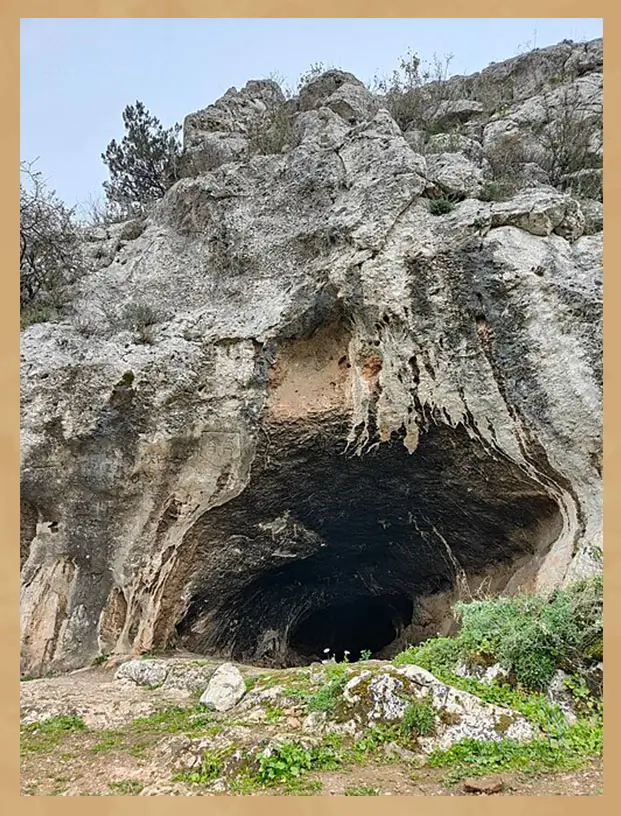
Why Sacred Caves Matter in Greek Mythology
Sacred caves were not important because of a single god or myth. Their significance came from their symbolic role as places of transition, concealment, revelation, and transformation. Whether protecting the infant Zeus, housing nymphs, or serving as locations for mystery rituals, caves represented points where the human world could briefly intersect with deeper divine realities.
© historyandmyths.com — Educational Use
Caves and the Powers Beneath the Earth
Sacred caves were not only associated with nymphs and divine births. They also carried connections to forces believed to exist beneath the surface of the world. In Greek thought, the earth was more than solid ground; it concealed ancient powers, hidden knowledge, and realms inaccessible to ordinary human experience.
Because caves descended into darkness, they naturally became linked to chthonic forces—deities and spiritual powers associated with the earth itself. Unlike the Olympian gods, whose authority was often expressed through the sky, light, and mountaintops, chthonic beings were connected to depth, mystery, and what lay hidden below.
This symbolism made caves suitable locations for rituals involving fertility, prophecy, death, and renewal. The same underground space could evoke fear and reverence because it represented access to forces beyond human control. Entering a cave meant approaching a realm where the boundaries between the visible and invisible worlds became less certain.
The association also explains why some cave traditions overlap with myths connected to Gaia, the primordial Earth, and other ancient powers tied to the natural foundations of existence. These myths reflect a worldview in which the earth was not passive matter but a living source of sacred energy and hidden influence.
For the Greeks, caves provided a physical expression of this idea. They were openings into the depths of the world, places where the unseen foundations of reality seemed closer to the surface. That perception helped make caves some of the most powerful and enduring sacred spaces in Greek mythology.
Sacred Caves and Greek Mystery Cults
The atmosphere of a cave made it an ideal setting for religious experiences centered on secrecy, initiation, and transformation. Many Greek mystery traditions emphasized knowledge that could not be fully explained to outsiders, and caves provided a physical environment that reflected this idea. Hidden from public view, they reinforced the sense that sacred truths required a journey away from ordinary life.
Unlike large public temples, caves created a feeling of separation. Participants entered a confined and unfamiliar space where everyday distinctions seemed less important. Darkness, silence, and isolation encouraged a heightened awareness of ritual, making the cave itself part of the religious experience.
This connection between caves and mystery cults was not based solely on practicality. The symbolism was equally important. Entering a cave resembled a descent into an unknown realm, while emerging from it could represent renewal, enlightenment, or spiritual change. Such imagery aligned closely with initiation rituals that emphasized personal transformation.
The relationship also reflects a broader theme in Greek religion. Sacred knowledge was often associated with hidden places rather than open landscapes. What was most valuable was not always visible. Caves embodied this principle by concealing what lay within and requiring individuals to cross a threshold before gaining access.
For this reason, caves became more than natural shelters. They functioned as ritual spaces where mystery, symbolism, and religious experience could converge, reinforcing their role as some of the most powerful sacred environments in Greek mythology and religion.
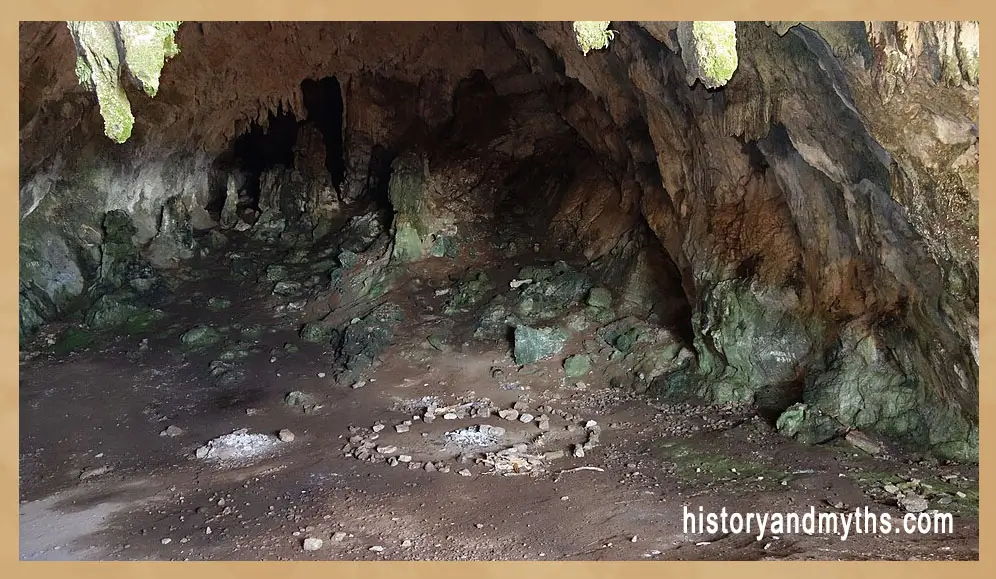
Sacred Caves vs Mount Olympus
Sacred caves and Mount Olympus represent two very different dimensions of Greek mythology. Both were associated with divine power, yet they embodied opposite ways of experiencing the sacred. Olympus was elevated, visible, and linked to the authority of the Olympian gods. Caves were hidden, enclosed, and associated with mystery, transformation, and the deeper forces of nature.
The contrast reflects a broader division within Greek religious thought. Olympus symbolized order, hierarchy, and the established rule of the gods. It was the center of divine governance and the place from which cosmic authority was exercised. Its imagery is dominated by height, light, and visibility.
Caves expressed a different aspect of the sacred. Rather than representing power already revealed, they represented forces that remained concealed. Their darkness and isolation made them natural settings for birth, initiation, prophecy, and encounters with beings connected to the earth. If Olympus stood above the world, caves reached beneath it.
This distinction also explains why both settings appear repeatedly in mythology. The Greeks did not view the sacred as existing in only one form. Some divine experiences were associated with open skies and mountaintops, while others emerged from hidden places where mystery and transformation played a central role.
Seen together, Olympus and sacred caves reveal the range of Greek religious imagination. One symbolized the visible order of the cosmos; the other symbolized the hidden processes that operated beneath that order. Both were essential parts of the mythological landscape, but they conveyed very different visions of how humans might encounter the divine.
Why Caves Remained Powerful Symbols in Greek Mythology
Sacred caves continued to appear throughout Greek mythology because they embodied several ideas at once. They were places of origin, places of concealment, places of revelation, and places where contact with the divine seemed possible. Few other landscapes carried such a wide range of symbolic meanings.
Their enduring power came from the experience they created. Entering a cave involved moving away from ordinary surroundings into an environment defined by darkness, silence, and uncertainty. This physical transition naturally encouraged mythological interpretations centered on transformation and hidden knowledge.
Caves also connected many different layers of Greek belief. They could be associated with Zeus and divine birth, with nymphs and the natural world, with chthonic powers beneath the earth, or with mystery cults seeking spiritual insight. Because they were not tied to a single deity or tradition, they remained relevant across a wide range of myths and religious practices.
Perhaps most importantly, caves represented the unknown. Ancient Greeks could explore them, worship within them, and tell stories about them, yet their depths often remained mysterious. That combination of familiarity and uncertainty made caves ideal symbols for realities that could be approached but never fully understood.
For this reason, sacred caves occupied a unique position within Greek mythology. They were more than settings for individual stories. They became enduring symbols of transition, mystery, and the hidden dimensions of the world, helping explain why they remained sacred for centuries and continued to shape the Greek religious imagination.
Sacred caves were among the most meaningful landscapes in Greek mythology because they represented far more than natural formations. They functioned as places of divine birth, gateways between worlds, homes of nymphs, centers of mystery rituals, and points of contact with powers hidden beneath the earth. Their significance came from what they symbolized rather than from any single myth attached to them.
Unlike Mount Olympus, which expressed the visible authority of the gods, caves embodied the unseen side of the sacred. They were places where transformation occurred, where knowledge could be revealed, and where boundaries between different realms seemed less certain. This symbolic flexibility allowed caves to play important roles across many different traditions and stories.
Understanding sacred caves therefore reveals an essential aspect of Greek mythology. The Greeks did not locate the divine only in temples or on mountaintops. They also found it in hidden places where mystery, nature, and imagination converged. That belief made caves some of the most enduring sacred spaces in the mythological landscape of the ancient Greek world.
Key Takeaways
- Sacred caves were among the most important religious landscapes in Greek mythology.
- They frequently served as places of divine birth, protection, and transformation.
- Caves symbolized boundaries between the human world and the divine realm.
- Nymphs and nature spirits were often associated with caves and grottos.
- Many caves were linked to chthonic powers connected with the earth below.
- The secrecy of caves made them ideal settings for mystery cult rituals.
- Caves represented hidden sacred forces, while Olympus represented visible divine authority.
- Their symbolism explains why caves appear repeatedly across Greek myths and religious traditions.
Frequently Asked Questions
Why were caves sacred in Greek mythology?
Caves were viewed as places of mystery, transformation, and contact with divine powers, making them important religious spaces.
Which god was associated with a sacred cave?
Zeus is the most famous example, as myths describe him being hidden and protected in a cave on Crete during infancy.
Why were nymphs connected to caves?
Nymphs were nature spirits associated with springs, grottos, and fertile landscapes, making caves natural sacred dwellings for them.
Were caves connected to the Underworld?
Many caves symbolically linked the surface world to hidden realms beneath the earth and were associated with chthonic powers.
Did the Greeks worship in caves?
Yes. Archaeological evidence shows that offerings and rituals were performed in many caves dedicated to nymphs and other divine beings.
What is the difference between Olympus and sacred caves?
Olympus represented visible divine authority, while caves symbolized mystery, hidden knowledge, and spiritual transformation.
Why were caves used in mystery cults?
Their isolation and darkness created an atmosphere that suited rituals focused on initiation, secrecy, and personal transformation.
What did caves symbolize in Greek mythology?
They symbolized transition, hidden power, sacred origins, and the meeting point between different realms of existence.
Sources & Rights
- Homer. Odyssey.
- Hesiod. Theogony.
- Homeric Hymn to Zeus.
- Apollodorus. Bibliotheca.
- Pausanias. Description of Greece.
- Strabo. Geographica.
- Walter Burkert. Greek Religion.
- Jennifer Larson. Greek Nymphs: Myth, Cult, Lore.
- Sarah Iles Johnston. Ancient Greek Religion.
- Karl Kerényi. The Gods of the Greeks.
- Fritz Graf. Greek Mythology.
- Robin Hard. The Routledge Handbook of Greek Mythology.
- Richard Buxton. The Complete World of Greek Mythology.
- Timothy Gantz. Early Greek Myth.
- Robert Parker. On Greek Religion.
- Emma Griffiths. Greek Myth: A Very Short Introduction.
- William Hansen. Classical Mythology.
- H.J. Rose. A Handbook of Greek Mythology.
- Edith Hall. Introducing the Ancient Greeks.
- Gregory Nagy. The Ancient Greek Hero in 24 Hours.
Written by H. Moses — All rights reserved © Mythology and History