Judgment of Souls in Greek Mythology: How Fate Was Decided
In Greek mythology, the fate of a soul after death was not entirely random. Different souls could receive very different outcomes, ranging from the rewards of Elysium to the punishments of Tartarus. Between death and these destinations stood a crucial process: judgment. This system determined why some individuals received extraordinary rewards while others faced severe consequences.
The Greeks believed that certain figures in the underworld were responsible for evaluating the dead and assigning their final place within the afterlife. Their role was not simply to punish wrongdoing but to maintain order by ensuring that each soul received a fate appropriate to its life, actions, and relationship with divine justice.
Understanding the judgment of souls therefore means understanding the mechanism that made the Greek afterlife function. Without judgment, there could be no meaningful distinction between reward and punishment. By examining who judged the dead, what standards were applied, and how those decisions shaped a soul’s destiny, we gain a clearer picture of how the Greeks understood justice, responsibility, and life beyond death.
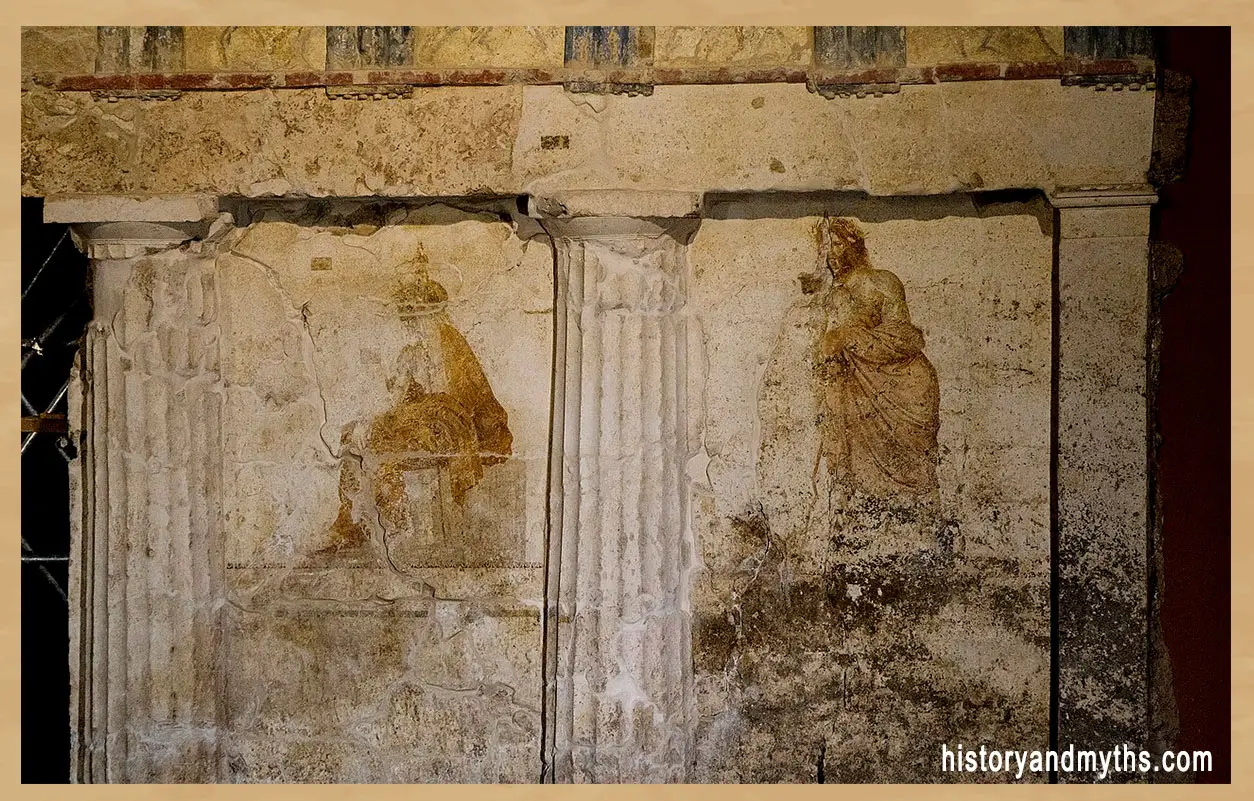
Why Greek Mythology Needed Judgment After Death
The Greek afterlife contained multiple possible destinations, but those destinations would have little meaning without a way to distinguish one soul from another. Elysium rewarded exceptional individuals, Tartarus punished the worst offenders, and most souls entered more ordinary regions of the underworld. Judgment existed to determine which outcome each soul deserved.
This need for judgment reflects a broader Greek concern with order. The universe of Greek mythology was not meant to operate through chance alone. Just as the gods maintained balance among cosmic forces, the afterlife required a system that could separate heroic achievement from serious wrongdoing and assign consequences accordingly.
Judgment also helped explain why different individuals experienced different fates after death. Without it, the distinction between a celebrated hero and a notorious offender would disappear once both entered the underworld. The judging process preserved those differences and ensured that a person’s actions continued to matter beyond mortal life.
More importantly, judgment connected the Greek ideas of justice and responsibility. The afterlife was not simply a destination but a continuation of a larger moral order. By placing judgment between death and final reward or punishment, Greek mythology reinforced the belief that human actions carried lasting consequences and that the fate of a soul should reflect the life that soul had lived.
| Judge | Role in the Afterlife | Why He Was Chosen |
|---|---|---|
| Minos | Final authority in difficult cases | Legendary king associated with wisdom and judgment |
| Rhadamanthus | Judge known for fairness and integrity | Reputation for impartial justice |
| Aeacus | Judge linked to law and responsibility | Celebrated as a wise and lawful ruler |
Who Were the Judges of the Dead?
Greek mythology eventually identified three figures as the principal judges of the dead: Minos, Rhadamanthus, and Aeacus. All three were associated with wisdom, authority, and justice during their lives, which made them suitable candidates to evaluate souls after death.
Rhadamanthus was often linked to fairness and integrity. Ancient sources frequently portray him as a judge who applied justice without favoritism. Aeacus was similarly respected for his reputation as a wise and lawful ruler. Together, they represented the idea that judgment should be based on merit rather than power or status.
Minos occupied a particularly important position among the three. In several traditions, he acted as the final authority when difficult cases required a decisive ruling. This role reflected his reputation as a legendary king whose decisions carried exceptional weight.
What matters most is that these judges were not random figures assigned to the underworld. They were chosen because Greek mythology associated them with justice long before their role in the afterlife. Their presence reinforced the idea that judgment after death was intended to be orderly and deliberate rather than arbitrary. The fate of a soul depended on evaluation, not chance, and the judges embodied the principles that made that evaluation possible.
What Were Souls Judged For?
Greek mythology does not present a single list of rules that every soul was judged against. Instead, the myths suggest that judges looked at the overall character of a person’s life, including their actions, relationships, and respect for divine and social order.
Serious offenses against the gods carried particular weight. Individuals who displayed extreme arrogance, challenged divine authority, or violated sacred obligations often faced harsher outcomes than those who simply made ordinary mistakes. This reflects the Greek belief that some actions threatened the balance between mortals and the divine world.
At the same time, judgment was not focused solely on punishment. Heroic achievements, exceptional service, and qualities admired by the gods could also influence a soul’s fate. The possibility of entering Elysium shows that judgment considered positive distinctions as well as negative ones.
This balance reveals an important aspect of Greek thought. The purpose of judgment was not merely to identify wrongdoing but to determine what kind of afterlife best matched the life a person had lived. In that sense, judgment acted less like a simple legal trial and more like an assessment of a soul’s place within the larger moral and cosmic order.
How Judgment Determined Different Afterlives
The judgment of souls mattered because it determined where a soul would spend eternity. Greek mythology did not treat the afterlife as a single destination shared by everyone. Instead, different outcomes existed, and judgment served as the process that directed souls toward the fate considered appropriate for them.
For a small number of exceptional individuals, judgment could lead to Elysium, a blessed realm associated with peace and reward. At the opposite end stood Tartarus, where the most serious offenders faced punishment. Between these extremes lay the fate of most souls, who entered the ordinary regions of the underworld without receiving either extraordinary rewards or extraordinary penalties.
This structure helped the Greeks explain why human lives produced different consequences after death. A heroic figure, an ordinary person, and a notorious wrongdoer were not expected to receive identical outcomes. Judgment created distinctions that reflected the differences between their lives.
The system also reinforced a broader idea found throughout Greek mythology: actions mattered beyond death. What a person did during life influenced not only their reputation among the living but also their place within the order of the afterlife. Judgment was the mechanism that connected those two worlds, turning earthly actions into lasting consequences.
Why Judgment Mattered in the Greek Afterlife
The judgment of souls was the mechanism that connected life and afterlife in Greek mythology. It explained why different souls received different destinies and ensured that reward, punishment, and ordinary existence after death all had a clear place within the cosmic order.
- Judgment determined a soul’s final destination.
- The system helped distinguish reward from punishment.
- Minos, Rhadamanthus, and Aeacus represented ideal justice.
- Judgment reflected Greek ideas about order and responsibility.
- The concept evolved as Greek religious beliefs developed.
- The afterlife was seen as a continuation of cosmic justice.
© historyandmyths.com
Was Greek Judgment Based on Morality Alone?
Greek judgment after death was not based solely on morality in the modern sense. The myths rarely suggest that souls were evaluated according to a simple list of good and bad behaviors. Instead, judgment considered a broader range of factors, including a person’s actions, reputation, relationship with the gods, and overall place within the cosmic order.
This helps explain why some mythological heroes could receive special rewards despite possessing flaws that modern readers might view critically. Greek mythology often valued courage, achievement, loyalty, and greatness alongside moral behavior. A person’s significance and accomplishments could matter as much as their personal virtues.
Likewise, punishment was not always reserved for those who committed ordinary crimes. Many of the most severely punished figures were condemned because they challenged divine authority, violated sacred obligations, or disrupted boundaries that the Greeks considered essential. Their offenses carried consequences beyond personal wrongdoing.
As a result, Greek judgment reflected a different understanding of justice from many later traditions. The goal was not simply to measure moral perfection but to determine how a person’s life fit within the larger balance of gods, mortals, and the order that governed the universe.
Judgment and the Greek Concept of Justice
The Greek idea of justice was closely tied to balance. Rather than focusing only on punishment, justice aimed to preserve order between gods, mortals, and the wider cosmos. The judgment of souls reflected this principle by assigning each individual a fate that matched the life they had lived.
This concept can be seen throughout Greek mythology. Heroes were not automatically rewarded, and wrongdoers were not punished simply because they broke rules. What mattered was whether a person’s actions supported or disrupted the order that the Greeks believed held the world together. Respect for the gods, fulfillment of obligations, and recognition of proper limits all played important roles.
The judges of the dead therefore acted as guardians of balance rather than simple enforcers of laws. Their role was to ensure that actions carried appropriate consequences and that extraordinary lives received outcomes different from ordinary ones. Justice was not about treating every soul identically but about placing each soul where it belonged.
This perspective helps explain why Greek myths often emphasize proportion and consequence. The afterlife was designed to reflect the reality of a person’s life rather than erase it. Through judgment, the Greeks expressed the belief that order depends on recognizing differences in conduct, achievement, and responsibility, both among the living and among the dead.
How Judgment Changed in Later Greek Traditions
The idea of judging souls did not remain exactly the same throughout Greek history. Early Greek sources often focus on heroic figures and exceptional cases, with less emphasis on a detailed system that evaluated every soul after death. The afterlife existed, but the process of judgment was not always described in a systematic way.
Over time, Greek religious thought became more complex. Mystery cults, Orphic traditions, and later philosophical movements paid greater attention to the fate of the soul and the possibility that a person’s choices could influence life after death. As these ideas developed, judgment became more closely connected to personal responsibility and the condition of the soul itself.
This evolution also changed how people understood reward and punishment. Earlier traditions often emphasized heroic status and divine favor, while later beliefs increasingly explored concepts such as spiritual purity, moral conduct, and preparation for the afterlife. The destination of a soul became tied not only to reputation and achievement but also to deeper questions about how a person had lived.
These changes show that Greek mythology and religion were not static systems. As Greek society evolved, so did its understanding of justice after death. The judgment of souls remained important, but the reasons behind that judgment gradually expanded, reflecting new ways of thinking about morality, destiny, and the human soul.
Did Every Soul Face Judgment?
Greek mythology does not always describe a detailed judgment process for every soul. In early traditions, many of the dead simply entered the underworld without extensive explanation of how their fate was determined. As Greek beliefs evolved, however, judgment became a more prominent part of the afterlife system.
Later traditions increasingly emphasized the idea that souls could be evaluated before receiving their final destination. This development helped explain why some individuals reached Elysium while others faced punishment or a more ordinary afterlife.
Why Were Former Kings Chosen as Judges?
The judges of the dead were not selected randomly. Minos, Rhadamanthus, and Aeacus were all remembered as rulers associated with wisdom, justice, and effective leadership during their lives. Their reputations made them natural candidates to oversee judgment after death.
By choosing former kings as judges, Greek mythology linked earthly authority with cosmic justice. The qualities that made a good ruler among the living were believed to make a fair judge among the dead.
Could the Judges Be Wrong?
Greek myths generally present the judges of the dead as trustworthy and impartial figures. Unlike human courts, their decisions are not portrayed as the result of ignorance, corruption, or personal bias. Their authority rests on the assumption that they possess the wisdom necessary to judge fairly.
For this reason, the fate assigned to a soul is usually treated as legitimate and final. The focus of the myths is not on challenging the judgment itself but on showing that justice ultimately reaches everyone, even after death.
The judgment of souls was one of the most important mechanisms in the Greek vision of the afterlife. It explained why different souls received different destinies and provided the link between life on earth and existence after death. Without judgment, there would be no meaningful distinction between the rewards of Elysium, the punishments of Tartarus, and the ordinary fate of most souls.
Greek mythology also shows that judgment was about more than simple punishment. The process reflected broader ideas about justice, responsibility, achievement, and the proper relationship between mortals and the divine world. A soul’s fate was shaped by the life it had lived, the choices it had made, and the role it had played within the larger cosmic order.
Over time, Greek beliefs about judgment evolved, but the central idea remained remarkably consistent: actions had consequences that extended beyond death. Whether through reward, punishment, or an ordinary afterlife, the judgment of souls ensured that life and afterlife remained connected by a system of justice that gave meaning to both.
Key Takeaways
- The judgment of souls determined a person’s fate after death.
- Greek mythology used judgment to connect actions with consequences.
- Minos, Rhadamanthus, and Aeacus served as the principal judges of the dead.
- Judgment considered more than simple morality alone.
- Elysium, Tartarus, and the ordinary afterlife depended on judgment.
- Later Greek traditions expanded and refined ideas about judgment.
- The process reflected broader Greek concepts of justice and order.
Frequently Asked Questions
Who judged souls in Greek mythology?
Minos, Rhadamanthus, and Aeacus were traditionally considered the principal judges of the dead.
Why were souls judged after death?
Judgment determined the fate a soul would receive in the afterlife, including reward, punishment, or an ordinary existence.
What did the judges consider when judging souls?
They evaluated actions, character, achievements, respect for divine order, and a person’s overall life.
Was Greek judgment based only on morality?
No. Greek mythology also valued heroism, achievement, divine favor, and respect for sacred boundaries.
Did every soul face judgment?
Early traditions are unclear, but later Greek beliefs increasingly emphasized judgment as part of the afterlife process.
Could a soul enter Elysium through judgment?
Yes. Judgment helped determine whether a soul deserved the rewards associated with Elysium.
What role did Minos play among the judges?
Many traditions describe Minos as the final authority in difficult or disputed cases.
Could the judges make mistakes?
Greek myths generally portray them as wise and impartial figures whose decisions were considered just and final.
Sources & Rights
- Homer. Odyssey. Translated by Robert Fagles. Penguin Classics.
- Plato. Gorgias. Translated by Donald J. Zeyl. Hackett Publishing.
- Plato. Phaedo. Oxford World’s Classics.
- Apollodorus. The Library of Greek Mythology. Oxford University Press.
- Pindar. Olympian Odes. Harvard University Press.
- Virgil. Aeneid. Oxford World’s Classics.
- Burkert, Walter. Greek Religion. Harvard University Press.
- Graf, Fritz. Greek Mythology: An Introduction. Johns Hopkins University Press.
- Hard, Robin. The Routledge Handbook of Greek Mythology. Routledge.
- Gantz, Timothy. Early Greek Myth. Johns Hopkins University Press.
- Bremmer, Jan. The Rise and Fall of the Afterlife. Routledge.
- Johnston, Sarah Iles. Restless Dead. University of California Press.
- Garland, Robert. The Greek Way of Death. Cornell University Press.
- Nilsson, Martin P. A History of Greek Religion. Oxford University Press.
- Dodds, E. R. The Greeks and the Irrational. University of California Press.
- Vernant, Jean-Pierre. Myth and Society in Ancient Greece. Zone Books.
- Buxton, Richard. The Complete World of Greek Mythology. Thames & Hudson.
- Morford, Mark, and Robert Lenardon. Classical Mythology. Oxford University Press.
- Rose, H. J. A Handbook of Greek Mythology. Routledge.
- Edmonds, Radcliffe G. Greek Myth. Routledge.
Written by H. Moses — All rights reserved © Mythology and History