How Money Was Used in Daily Ancient Greek Transactions
Money in ancient Greek markets was used for direct, face-to-face payment, not as an abstract system. Buyers paid with coins on the spot, prices were understood in familiar values, and transactions were completed immediately without intermediaries. Small payments were handled through different coin sizes or adjusted through negotiation, while coins were often checked by sight and weight before being accepted. In practice, money made daily trade faster, clearer, and more reliable than barter, turning exchange into a quick, repeatable process across the market.
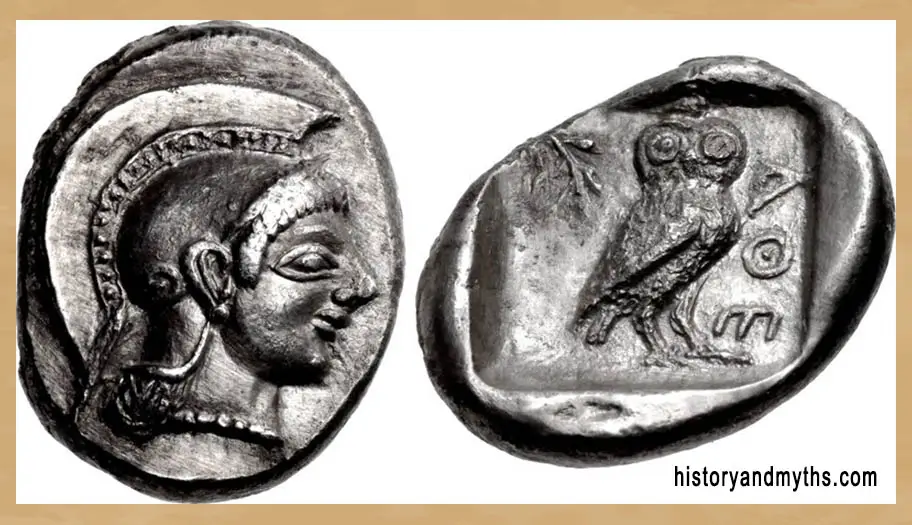
How Payments Were Actually Made in the Market
Payment was immediate and direct. Once a price was agreed, coins moved hand to hand and the exchange ended without delay or record. There were no intermediaries or deferred steps; the buyer carried the money, and the seller verified it on the spot.
Coin mix and selection. Buyers paid using combinations of denominations rather than a single coin. A price was met by assembling pieces that matched the value—larger coins for most of the amount, smaller ones to complete it. This made exact payment possible even without a universal “small change” system.
On-the-spot counting. Counting was done openly and quickly. Both sides saw the coins as they were placed and confirmed the total before the goods changed hands. This visibility reduced disputes and replaced any need for written proof.
Instant verification. Sellers checked coins by sight and touch—recognizable designs, edges, and weight in the hand. Suspicious pieces could be refused immediately, forcing the buyer to replace them or abandon the deal.
No carryover. Each transaction stood alone. There was no balance kept between buyer and seller within the market interaction; once coins were accepted, the exchange was final.
This method made payment a short, reliable step embedded inside the deal itself. Speed came from simplicity: agreed price, counted coins, immediate transfer.
| Transaction Element | How It Worked | Effect on Trade |
|---|---|---|
| Payment | Coins exchanged directly hand-to-hand | Fast completion of deals |
| Price Expression | Values stated in familiar units | Quick understanding of cost |
| Small Payments | Mix of coins, rounding, or bundling | Flexible transactions |
| Coin Checking | Visual and physical verification | Maintained trust |
| Non-Cash Cases | Credit or goods used when needed | Kept trade moving |
How Prices Were Expressed and Understood
Prices were communicated in familiar value units, not explained from scratch each time. Buyers and sellers shared a working sense of what common goods should cost, so a quoted price immediately signaled whether a deal was reasonable.
Reference units. Prices were stated in widely recognized denominations (such as drachma-based values), allowing quick mental comparison across different goods. Even when exact coins varied, the value reference stayed consistent.
Relative pricing. A price gained meaning through comparison with nearby offers. Buyers did not evaluate a number in isolation—they judged it against what similar items were selling for within the same market space.
Quality adjustments. The stated price already reflected visible differences—size, condition, or craftsmanship. When quality varied, the price shifted accordingly without requiring a detailed explanation.
Short verbal exchange. Pricing was delivered in brief terms and adjusted through a few words during negotiation. There was no extended justification; the market itself provided the context needed to understand the number.
Because prices were expressed in shared units and tested against immediate alternatives, both sides could interpret value quickly and move straight to decision without additional clarification.
How Small Payments and Change Worked
Small payments were handled through denomination mix and adjustment, not a universal “change” system. When the exact amount could not be matched cleanly, the transaction adapted.
Use of smaller coins. Buyers carried low-value pieces to complete totals. Sellers expected mixed payments and accepted combinations that reached the agreed value without recalculating the entire price.
Rounding within the deal. If exact change was unavailable, the final amount shifted slightly. The seller might reduce the price to close quickly, or the buyer might accept a small increase to avoid delay. The adjustment stayed within a narrow, understood range.
Bundling as compensation. Instead of returning coins, sellers could add a small extra portion—an additional item or quantity—to balance the difference. This kept the exchange moving without searching for exact denominations.
Price alignment to coin reality. Many prices were set with available coins in mind. Sellers avoided awkward totals that required uncommon combinations, reducing friction at the moment of payment.
Handling small amounts was therefore flexible and integrated into negotiation. Exact precision mattered less than completing the exchange efficiently under the constraints of the coins in hand.
- Coins enabled direct and immediate payment
- Shared value units simplified pricing decisions
- Flexible handling of small amounts avoided delays
- Verification ensured trust without central control
- Non-cash adjustments allowed transactions to continue
© historyandmyths.com — Educational use
How People Checked Coins Before Accepting Them
Coins were not accepted automatically. Verification was part of every payment and happened in seconds.
Visual check. Sellers looked for familiar designs, clear strikes, and consistent wear. Unusual markings or blurred images raised suspicion immediately.
Weight and feel. A coin’s mass in the hand mattered. Experienced traders could detect underweight pieces quickly without scales, using touch as a first filter.
Sound test. Dropping or tapping a coin produced a distinct ring. A dull sound suggested impurities or damage and could lead to rejection.
Edge inspection. Trimming or filing reduced metal content. Sellers checked edges for irregular cuts that indicated loss of weight.
Quick refusal. Doubt stopped the transaction. The buyer either replaced the coin with a trusted one or the deal ended. There was no obligation to accept uncertain currency.
These checks kept trust local and practical. Instead of relying on distant guarantees, each exchange confirmed the coin’s value before the goods changed hands.
How Money Changed the Speed of Trade
Money removed the need to match goods to goods, which is what slowed exchange in non-monetary systems. With a known value in hand, a buyer could complete a deal immediately without searching for a seller who wanted the same item in return.
Fewer steps per transaction. Payment required agreement on price and delivery of coins—nothing more. There was no secondary negotiation over equivalent goods, which shortened each interaction.
Continuous flow. Sellers could move from one buyer to the next without resetting the terms of exchange. Each completed sale freed them to engage the next customer with the same structure, keeping the market in constant motion.
Standard decision points. Because value was expressed in shared units, both sides reached decisions faster. The question was not “what is this worth to you,” but “is this price acceptable,” which reduced uncertainty.
Higher transaction volume. Shorter interactions allowed more deals within the same time window. Even small gains per sale accumulated because the number of completed exchanges increased.
Money did not just replace barter—it compressed the process of exchange, turning trade into a rapid, repeatable sequence of transactions across the market.
When Money Was Not Enough
Not every exchange could be completed with coins alone. Gaps appeared when cash on hand, denomination fit, or timing did not match the deal.
Shortfall handling. If the buyer lacked the exact amount, the transaction could split: part paid in coins, the remainder settled through added goods or adjusted quantity. This avoided canceling the sale when the gap was small.
Seller-led credit. For known customers, sellers sometimes allowed a portion to be paid later. This was informal and limited—used to close a sale when trust was already established, not as a general system.
Non-cash exchange. Certain items—tools, livestock, or bulky goods—could enter the deal as part payment when coins were inconvenient or insufficient. Value was agreed quickly against current market expectations.
Deferred completion. In some cases, the agreement was made first and payment followed after goods were delivered or resold. This shifted risk but enabled transactions that immediate cash could not support.
These workarounds kept trade moving when coins alone did not fit the situation. Money remained central, but flexibility around it allowed deals to proceed under practical constraints.
What Daily Money Use Reveals About Greek Markets
Everyday use of money shows a system built on immediacy and local judgment, not centralized control.
Value was enacted, not declared. A coin’s worth was confirmed in each exchange through acceptance, not guaranteed beyond it. Trust came from recognition and quick checks, not external enforcement.
Liquidity drove decisions. Having spendable coins at the right moment mattered more than holding goods. The ability to pay instantly determined whether opportunities could be taken.
Standard units enabled flexibility. Shared value references allowed prices to adjust without breaking the transaction. Even when exact change was imperfect, both sides could settle within a narrow range.
Exchange remained situational. Payment methods adapted to constraints—denominations, time, and availability—without halting the deal. The system absorbed small mismatches and kept moving.
Daily money use therefore reflects a market that operated through rapid validation, constant adjustment, and practical solutions at the point of exchange.
- Money allowed instant, face-to-face transactions
- Prices were understood through shared value systems
- Small payments were handled through flexible methods
- Coins were checked before acceptance to prevent loss
- Money increased speed and efficiency of trade
Frequently Asked Questions
How was money used in ancient Greek markets?
Money was used for direct payment with coins, allowing fast and simple transactions between buyers and sellers.
Did Greeks use coins for everyday transactions?
Yes. Coins were commonly used for daily purchases and market exchanges.
How did people handle small payments?
They used smaller coins, rounded prices, or adjusted the deal through goods or quantity.
How did Greeks check coins?
They checked coins by appearance, weight, and sound before accepting them.
Did money replace barter completely?
No. Barter and credit were still used when coins were not suitable for the transaction.
Why did money improve trade?
It reduced negotiation complexity and allowed faster, repeatable transactions.
Sources & Rights
- Bresson, Alain. The Making of the Ancient Greek Economy. Princeton University Press, 2016.
- Finley, M.I. The Ancient Economy. University of California Press.
- Morley, Neville. Trade in Classical Antiquity. Cambridge University Press.
- Cohen, Edward E. Athenian Economy and Society. Princeton University Press.
- Davies, J.K. The Greek Economy. Cambridge University Press.
- Harris, Edward M. Democracy and the Rule of Law in Classical Athens. Cambridge University Press.
- Shipton, Katherine. Money and the Elite in Classical Athens. Cambridge University Press.
- Loomis, William T. Wages, Welfare Costs and Inflation in Classical Athens. University of Michigan Press.
- Isager, Signe, and Jens Erik Skydsgaard. Ancient Greek Agriculture. Routledge.
- Aristotle. The Athenian Constitution.
- Xenophon. Oeconomicus.
- Demosthenes. Private Orations.
Written by H. Moses — All rights reserved © Mythology and History