Religious Dreams in Ancient Egypt: Divine Messages Beyond Temples
In ancient Egypt, dreams were not dismissed as private fantasies or random images of the sleeping mind. They were treated as meaningful experiences that could carry warning, guidance, or divine intervention. Unlike temple rituals, dreams required no priest, no sacred space, and no formal preparation. They occurred beyond human control, in a state where consciousness was suspended and ordinary defenses were lowered. This very lack of control made dreams religiously significant.
Dreams mattered because they appeared at moments of uncertainty—illness, fear, moral doubt, or social vulnerability. They offered a channel through which the divine could act without institutional mediation. Not every dream was sacred, and not every dream demanded action, but certain dreams were taken seriously enough to be interpreted, regulated, and sometimes feared. Their meaning was never neutral; it carried consequences.
This article examines religious dreams and visions in ancient Egypt as a practical response to uncertainty rather than mystical storytelling. It does not catalogue famous dream narratives or symbols. Instead, it asks why dreams were trusted as a religious medium, who was believed to receive meaningful dreams, and how interpretation functioned as a way to manage anxiety. By focusing on dreams beyond temples and priesthood, the article reveals how religion entered daily life through the most vulnerable state of human experience—sleep.
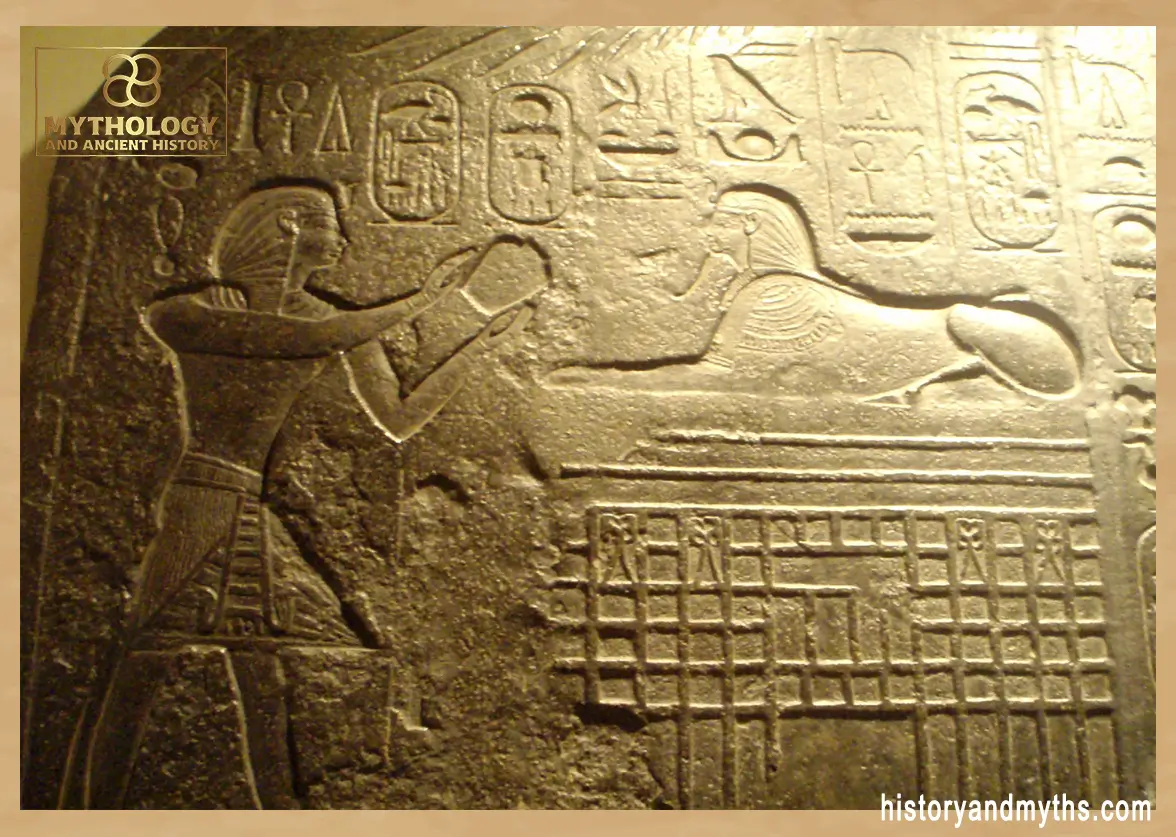
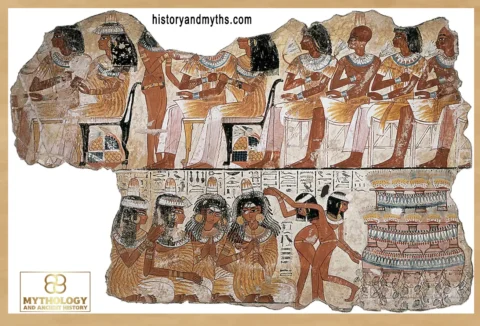
Source: Wikimedia Commons, photo by Captmondo (CC-BY-SA 3.0, GFDL)
Dreams as a Religious Channel
Dreams occupied a unique position in ancient Egyptian religious thinking because they occurred beyond conscious control. Sleep suspended normal awareness, weakened rational judgment, and removed the individual from the ordered routines of daily life. This liminal state made dreams a plausible channel for divine communication. What happened during sleep was not shaped by intention, ritual correctness, or social status, and therefore could not be easily fabricated or manipulated.
Unlike temple rituals, dreams required no preparation and no authorized space. Their authority came precisely from their unpredictability. Because the dreamer did not actively seek the experience, the message—if one was perceived—was understood as external rather than imagined. This distinction mattered in a religious system where controlled ritual usually governed access to the divine. Dreams inverted that logic: they were meaningful because they escaped human planning.
Religious significance did not arise from the content of every dream, but from the condition in which the dream occurred. Sleep placed the individual in a vulnerable state, open to influence and intervention. In this context, dreams were seen as moments when boundaries between the human and divine worlds became temporarily unstable. This instability made them dangerous as well as potentially instructive.
For this reason, dreams were treated cautiously. Their religious value lay not in emotional intensity or vivid imagery, but in the belief that the sleeping mind could receive messages inaccessible to waking consciousness. Dreams functioned as a religious channel precisely because they bypassed institutions, language, and ritual form—entering daily life through a state no one could fully control.
| Aspect | Religious Dreams | Temple Religion |
|---|---|---|
| State of Experience | Sleep, loss of conscious control | Wakefulness, controlled ritual |
| Access to the Divine | Direct, unmediated | Mediated by priests and liturgy |
| Trigger | Fear, illness, uncertainty, crisis | Calendar cycles and cult duties |
| Authority | Personal experience and interpretation | Institutional priesthood |
| Need for Interpretation | Essential to control fear and meaning | Ritual meaning predefined |
| Historical Visibility | Selective, often private or exceptional | Extensively documented and public |
Who Received Divine Dreams — and Who Did Not
Not every dream was considered religious, and not every dreamer was believed to receive divine messages. Ancient Egyptians drew implicit distinctions between ordinary dreams and those regarded as meaningful. These distinctions were not based on social rank alone, but on context, vulnerability, and perceived consequence.
Dreams experienced during moments of crisis—illness, moral uncertainty, fear, or prolonged anxiety—were more likely to be taken seriously. A dream that appeared without emotional or situational weight could be ignored. What mattered was not the dream itself, but whether it intersected with an unresolved problem in waking life. Religious significance emerged when a dream addressed uncertainty that could not be resolved through ordinary means.
Social position shaped interpretation, but it did not guarantee meaning. While royal or elite dreams could be formalized and recorded, this reflected political importance rather than intrinsic religious value. Ordinary individuals were also believed to receive significant dreams, especially when access to temples or priests was limited. The difference lay in what followed the dream: elites could institutionalize interpretation, while non-elites responded privately or within the household.
Equally important is what was excluded. Dreams that were incoherent, repetitive, or disconnected from real concern did not demand interpretation. This selective approach prevented dreams from overwhelming religious life. By distinguishing between meaningful and meaningless dreams, Egyptians contained the potential danger of treating every dream as divine, preserving dreams as a controlled religious channel rather than a source of constant anxiety.
Interpreting Dreams to Control Fear
The interpretation of dreams in ancient Egypt was not driven by curiosity or symbolic fascination. It was a practical response to fear. Once a dream was perceived as meaningful, uncertainty increased rather than decreased. Interpretation existed to contain that uncertainty and prevent uncontrolled anxiety.
Dream interpretation transformed an unsettling experience into a manageable one. By assigning meaning, Egyptians reduced ambiguity and restored a sense of order. Whether a dream was judged favorable or dangerous mattered less than the fact that it could be classified. Interpretation turned the unknown into something actionable, even when the outcome remained unclear.
This explains why dream interpretation followed patterns rather than personal intuition. Structured explanations limited emotional escalation. A dream that could be interpreted could also be neutralized, acted upon, or dismissed. Without interpretation, dreams risked becoming sources of persistent fear, capable of disrupting daily life.
In this context, interpretation was not about predicting the future. It was about stabilizing the present. Dreams threatened to blur the boundary between the human and divine worlds; interpretation reasserted control by translating that experience into recognizable categories. The process did not eliminate fear, but it prevented fear from becoming unmanageable.
Dreams Beyond Temples and Priests
Religious dreams operated outside the formal structures of Egyptian religion. They required no priestly mediation, no ritual space, and no official authorization. This made dreams especially significant for individuals who lacked regular access to temples due to distance, status, or circumstance. In such cases, the dream became a direct point of contact with the divine, unfiltered by institutional control.
This independence did not place dreams in opposition to temple religion. Instead, dreams filled a functional gap. When formal channels were unavailable or inadequate, dreams provided an alternative means of religious engagement. Their legitimacy came not from doctrine, but from experience and perceived consequence.
Because dreams bypassed religious authority, they carried both value and risk. Without priestly oversight, interpretation depended on personal judgment or informal guidance. This uncertainty explains why dreams were treated cautiously and why not every dream was acted upon. The dream’s power lay in its immediacy, but its danger lay in its ambiguity.
In this way, dreams extended religion into daily life without challenging institutional religion. They allowed belief to operate at the individual level while remaining compatible with the broader religious system. Dreams did not replace temples; they ensured that religious meaning remained accessible even beyond them.
Religious Dreams as a Controlled Form of Risk
In ancient Egypt, religious dreams were not valued for mystery or revelation alone. They represented moments of heightened risk, when divine intervention could occur outside ritual control. Interpretation existed to contain that risk. By classifying dreams and deciding whether action was required, individuals transformed a vulnerable experience into a manageable one. Dreams were therefore not escapes from order, but mechanisms for restoring it when ordinary religious structures were unavailable.
When Dreams Required Action
Not all religious dreams demanded a response, but some were considered too serious to ignore. When a dream suggested danger, moral imbalance, or impending misfortune, inaction itself became risky. The dream created an obligation—not to worship, but to act in order to restore stability.
Action did not follow a single prescribed form. It could involve caution, restraint, purification, or a change in behavior rather than a ritual performance. What mattered was acknowledgment. By responding, the dreamer demonstrated awareness of the message and reduced the threat posed by uncertainty. Ignoring such dreams risked allowing disorder to persist unchecked.
This logic reinforces the practical nature of religious dreaming. Dreams were not valued for revelation alone, but for their capacity to prompt corrective behavior. They functioned as warning systems embedded in personal experience. Action transformed the dream from a source of anxiety into a mechanism for regaining control.
In this sense, religious dreams completed the cycle of daily belief. They emerged from vulnerability, required interpretation, and sometimes demanded response. Through this process, religion entered daily life not as doctrine or ritual, but as a dynamic system for managing fear, responsibility, and uncertainty.
Key Takeaways
- Dreams were treated as religious experiences because they occurred beyond conscious human control.
- Not every dream was considered meaningful; significance depended on context, fear, and consequence.
- Religious dreams functioned as alternatives to temple-based communication with the divine.
- Dream interpretation existed to reduce uncertainty and manage anxiety, not to predict the future.
- Dreams carried risk as well as meaning, which is why they required classification and response.
- Through dreams, religion entered daily life without priestly mediation or ritual form.
Frequently Asked Questions
Were dreams considered messages from the gods in ancient Egypt?
Sometimes. Egyptians could treat certain dreams as meaningful divine communication, especially during illness, fear, or uncertainty.
Did ancient Egyptians believe every dream was religious?
No. Many dreams were ordinary and ignored; religious significance depended on context, consequence, and perceived clarity.
How did Egyptians interpret dreams?
They used interpretation to classify a dream as favorable or dangerous and to decide whether any response was required.
Why was dream interpretation important?
Because it reduced ambiguity. Interpretation helped manage anxiety by turning an unsettling experience into something understandable and actionable.
Were religious dreams connected to temples and priests?
Not necessarily. Dreams could bypass institutions and function as a direct channel to the divine, especially for people with limited access to temples.
Did religious dreams require action?
Some did. When a dream was seen as warning of danger or disorder, a response—such as caution, restraint, or purification—could be expected.
What is the difference between a vision and a dream in ancient Egypt?
A dream occurs during sleep, while a vision may be understood as an unusual waking experience; both could be treated as meaningful depending on context.
Sources & Rights
- Assmann, Jan. The Mind of Egypt: History and Meaning in the Time of the Pharaohs. Cambridge, MA: Harvard University Press, 2002.
- Baines, John. “Dreams.” In The Oxford Encyclopedia of Ancient Egypt, edited by Donald B. Redford, Vol. 1, 414–416. Oxford: Oxford University Press, 2001.
- Frankfurter, David. Religion in Roman Egypt: Assimilation and Resistance. Princeton: Princeton University Press, 1998.
- Hornung, Erik. Idea into Image: Essays on Ancient Egyptian Thought. New York: Timken Publishers, 1992.
- Pinch, Geraldine. Magic in Ancient Egypt. London: British Museum Press, 1994.
- Ritner, Robert K. The Mechanics of Ancient Egyptian Magical Practice. Chicago: Oriental Institute of the University of Chicago, 1993.
- Shafer, Byron E., ed. Religion in Ancient Egypt: Gods, Myths, and Personal Practice. Ithaca: Cornell University Press, 1991.
- Szpakowska, Kasia. Through a Glass Darkly: Magic, Dreams and Prophecy in Ancient Egypt. Swansea: Classical Press of Wales, 2003.
- Teeter, Emily. Religion and Ritual in Ancient Egypt. Cambridge: Cambridge University Press, 2011.
- Wilkinson, Richard H. The Complete Gods and Goddesses of Ancient Egypt. London: Thames & Hudson, 2003.
Written by H. Moses — All rights reserved © Mythology and History