Popular Saints and Deified Humans in Ancient Egypt
Ancient Egyptian religion was not confined to temples or dominated solely by distant gods. Alongside official cults, a parallel form of belief developed at ground level—one in which certain humans, after death, became trusted intermediaries. These figures were not gods by doctrine, nor priests by office, yet people addressed them directly, left offerings in their names, and expected intervention in personal matters.
This phenomenon did not arise from theological innovation but from practical need. When divine justice felt delayed, rituals seemed remote, or official religion appeared inaccessible, individuals turned toward human figures whose lives had demonstrated wisdom, fairness, or effectiveness. Reputation, not myth, formed the basis of their authority. What mattered was not cosmic power, but perceived responsiveness.
This article examines popular saints and deified humans as a feature of lived religion rather than formal belief. It asks why Egyptians trusted certain individuals after death, how popular veneration differed from official deification, and what conditions allowed these figures to function as intermediaries between people and the divine. By grounding the analysis in named historical examples, the article reveals how sanctity could emerge organically from experience rather than institution.
Why People Needed Human Intercessors
Official religion in ancient Egypt offered stability, not immediacy. Gods governed cosmic order, temples preserved ritual continuity, and priests mediated access through formal procedures. This system worked well for maintaining balance, but it was not always suited to urgent personal needs. When problems felt immediate—illness, injustice, fear, or uncertainty—distance became an obstacle.
Human intermediaries filled this gap. Unlike major gods, they were familiar figures whose lives had unfolded within the same social world as their petitioners. People understood their struggles, recognized their virtues, and trusted their judgment. This familiarity mattered. It reduced the psychological distance between problem and solution.
The turn toward human intercessors did not imply rejection of the gods. Rather, it reflected a layered religious logic. Individuals sought someone closer, more approachable, and perceived as attentive. In moments of stress, appeal shifted from abstract divine order to personal mediation. The human figure acted as a bridge—still within the religious framework, but easier to reach.
This need intensified in situations where formal justice or ritual response felt slow or inaccessible. Human intercessors offered a sense of immediacy. They represented fairness remembered, wisdom proven, or assistance already experienced in life. After death, these qualities did not disappear; they were reactivated through popular belief.
By understanding this demand for proximity, the emergence of popular saints becomes intelligible. Sanctity was not assigned; it was recognized. People turned to humans not because gods were absent, but because closeness mattered when stakes were personal.
| Aspect | Popular Saints & Deified Humans | Official Gods & State Deification |
|---|---|---|
| Origin | Bottom-up, emerging from popular belief | Top-down, sanctioned by temple and state |
| Basis of Authority | Reputation, proximity, perceived effectiveness | Mythology, cosmic function, doctrine |
| Recognition | Informal and local | Institutional and universal |
| Religious Function | Immediate intercession in personal crises | Maintenance of cosmic order and balance |
| Geographic Reach | Regional or community-based | Kingdom-wide or multi-regional |
| Durability | Dependent on continued belief and use | Stabilized by ritual and canon |
| Relationship to the Gods | Intermediaries within the religious system | Central divine authorities |
What Made a Person “Saintly”
Sanctity in popular belief was not defined by theology, lineage, or official titles. A person became “saintly” because people believed they worked. Effectiveness, not doctrine, was the foundation. This effectiveness could take several forms, but it always rested on lived experience rather than myth.
The first factor was reputation. Individuals remembered for fairness, wisdom, or restraint carried moral authority beyond their lifetime. Governors known for justice, officials praised for integrity, or sages admired for counsel retained credibility after death. Their moral record functioned as proof of reliability.
The second factor was proximity. These figures belonged to the same social environment as their petitioners. They spoke the same language of daily concerns—debts, illness, family conflict, or fear of misfortune. This shared context made them intelligible intermediaries. People trusted those who had once navigated similar problems.
The third factor was perceived responsiveness. Popular veneration intensified only when petitions seemed to produce results. Whether through coincidence, reinterpretation, or communal reinforcement, successful appeals circulated by word of mouth. Repetition transformed individual experience into collective belief.
Crucially, none of this required official recognition. No priesthood needed to approve, no doctrine needed to change. Popular sanctity operated through accumulation: memory, trust, and expectation layered over time. A person was not saintly because they were declared so, but because people continued to return to them.
This explains why sanctity remained fluid. It could grow, stabilize, or fade depending on perceived effectiveness. Popular saints were not fixed institutions; they were relational figures whose authority depended entirely on ongoing belief.
From Reputation to Veneration
The transition from respected individual to popular saint did not occur through proclamation, but through repetition. A reputation established in life provided the initial credibility; what followed was a gradual accumulation of trust after death. When people continued to address a deceased individual and believed their appeals were answered, veneration took shape organically.
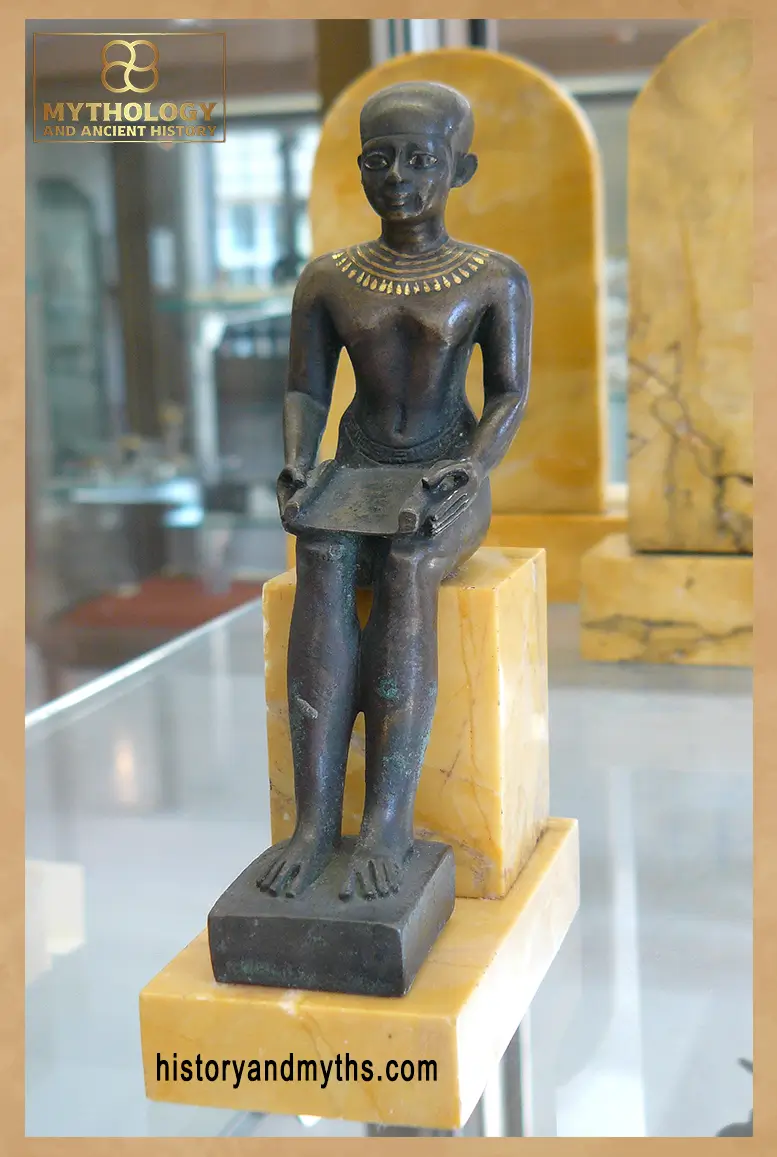
A clear example is Imhotep. Known in life as a skilled administrator and builder, his posthumous reputation centered on healing and wisdom. Long before state-sponsored cults embraced him, individuals sought his intercession for health. The appeal lay not in myth, but in competence remembered. Healing was associated with someone who had once mastered order and structure.
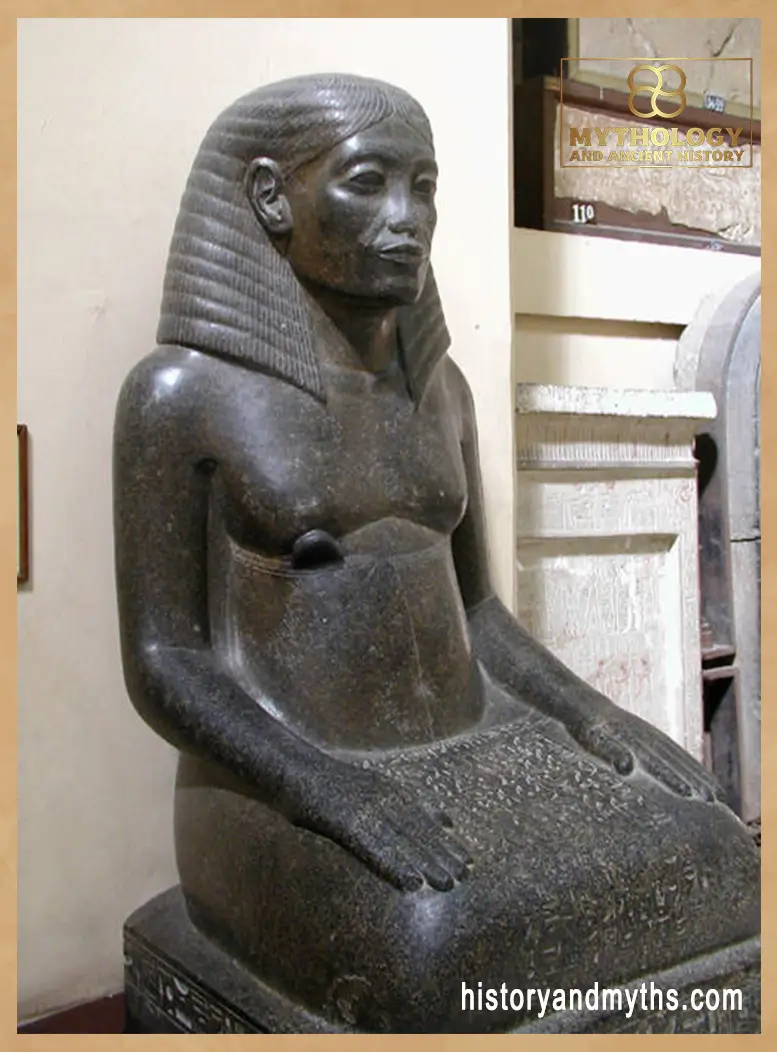
A similar process can be seen with Amenhotep son of Hapu. Celebrated during his lifetime for learning and restraint, he became, after death, a figure approached for counsel and protection. His authority rested on intellectual integrity rather than divine lineage. People trusted him because he had been known as wise, not because he was declared sacred.
Local figures followed the same pattern. Hekaib, a governor at Elephantine, gained posthumous veneration rooted in justice and protection of the community. Offerings left in his name suggest that people appealed to him in matters of dispute and security. His sanctity was regional and practical, shaped by memory of fair governance.
These cases reveal a consistent mechanism. Popular veneration emerged when three elements aligned: remembered virtue, perceived effectiveness, and ongoing appeal. No formal ritual was required to initiate the process. Once people believed a figure could intervene, practice reinforced belief.
This bottom-up development distinguishes popular saints from officially deified figures. Authority was not bestowed; it was negotiated continuously through experience. Sanctity, in this context, was not a status but a function—maintained only as long as people found it useful.
Popular Veneration vs Official Deification
Popular veneration and official deification operated according to different logics. Official deification was a top-down process. It required priestly endorsement, integration into temple cult, and alignment with state theology. Deified figures became part of a fixed religious system, governed by ritual calendars and institutional authority.
Popular veneration worked in the opposite direction. It was informal, localized, and dependent on practice rather than doctrine. No temple needed to be founded, no myth composed, and no priest appointed. What sustained veneration was continued appeal. If people believed a figure responded, devotion persisted; if not, it faded.
This distinction explains why popular saints did not challenge official religion. They did not replace gods, nor did they introduce alternative theology. Instead, they occupied a functional space between individual need and divine order. Their authority was situational and conditional, not absolute.
Another key difference lies in scope. Official deification aimed at universality. Popular veneration remained selective. A saint revered in one region or community might be unknown elsewhere. This limited reach was not a weakness but a defining feature. Effectiveness mattered more than recognition.
Importantly, popular saints could coexist with official cults without contradiction. A person might pray to a god for cosmic balance while appealing to a saintly human for immediate concerns. These practices were complementary rather than competing. One addressed order; the other addressed urgency.
By separating these two systems, the phenomenon becomes clearer. Popular sanctity was not a diluted form of theology, nor a step toward formal deification. It was a practical religious strategy shaped by experience, proximity, and trust—maintained only as long as it continued to serve those who relied on it.
Popular Sanctity as a Practical Solution
Popular saints and deified humans in ancient Egypt did not emerge from theology, but from experience. They functioned as accessible intermediaries when official religion felt distant or slow to respond. Their authority rested on remembered virtue and perceived effectiveness, making sanctity a practical tool rather than a doctrinal category.
Why Popular Saints Persisted
Popular saints persisted because they solved a specific problem that official religion did not prioritize: immediacy. Gods embodied cosmic order and long-term balance, but human intercessors addressed urgent, personal concerns. This functional distinction ensured continuity rather than conflict.
Their persistence was reinforced by flexibility. Popular veneration did not require permanent institutions or fixed rituals. It adapted to circumstance. When belief in a figure’s effectiveness remained strong, devotion continued. When it weakened, practice diminished without theological crisis. This adaptability allowed popular saints to respond to changing needs without restructuring religious doctrine.
Memory also played a decisive role. Saints were remembered as people who had lived within the same moral and social framework as their petitioners. Their authority derived from shared experience rather than abstraction. As long as communities recalled fairness, wisdom, or protection associated with a name, that figure retained relevance.
Finally, popular saints endured because they were relational. Their power existed only through continued interaction—prayer, offerings, or appeal. This ongoing exchange kept belief grounded in lived experience rather than institutional permanence. Sanctity was renewed through use.
In this way, popular saints were not marginal figures but essential components of lived religion. They reveal how ancient Egyptians navigated uncertainty by combining divine order with human proximity, preserving religious coherence while meeting immediate needs.
Key Takeaways
- Popular saints in ancient Egypt emerged from lived experience, not formal theology.
- Human intercessors were sought when official religion felt distant or slow to respond.
- Reputation, proximity, and perceived effectiveness defined popular sanctity.
- Veneration developed organically through repeated personal appeals.
- Popular sanctity differed fundamentally from official deification.
- These figures complemented, rather than challenged, the state religious system.
Frequently Asked Questions
Did ancient Egyptians have saints like later religions?
Not in a formal theological sense. However, certain individuals were venerated after death as trusted intermediaries based on reputation and perceived effectiveness.
Why did people turn to human figures instead of gods?
Human figures felt closer and more approachable, especially when problems were urgent and official religious channels seemed distant.
Were popular saints officially recognized by temples?
In most cases, no. Popular veneration developed independently of priestly institutions and did not require formal approval.
How did a person become venerated after death?
Through remembered virtue, repeated personal appeals, and the belief that petitions brought results.
Did popular saints replace the gods?
No. They functioned alongside the gods, serving as intermediaries rather than alternatives.
Was this practice common across all of Egypt?
It varied by region and community. Popular veneration was usually local rather than universal.
Could popular saints lose their status?
Yes. If belief in their effectiveness faded, veneration could diminish without religious crisis.
Sources & Rights
- Assmann, Jan. The Mind of Egypt: History and Meaning in the Time of the Pharaohs. Cambridge, MA: Harvard University Press, 2002.
- Baines, John. “Practical Religion and Piety.” In Religion in Ancient Egypt: Gods, Myths, and Personal Practice, edited by Byron E. Shafer, 79–98. Ithaca: Cornell University Press, 1991.
- Frankfurter, David. Religion in Roman Egypt: Assimilation and Resistance. Princeton: Princeton University Press, 1998.
- Hornung, Erik. Conceptions of God in Ancient Egypt: The One and the Many. Ithaca: Cornell University Press, 1982.
- Pinch, Geraldine. Magic in Ancient Egypt. London: British Museum Press, 1994.
- Quirke, Stephen. Ancient Egyptian Religion. London: British Museum Press, 1992.
- Teeter, Emily. Religion and Ritual in Ancient Egypt. Cambridge: Cambridge University Press, 2011.
- Van Dijk, Jacobus. “Religion.” In The Oxford Encyclopedia of Ancient Egypt, edited by Donald B. Redford, Vol. 3, 144–149. Oxford: Oxford University Press, 2001.
- Wildung, Dietrich. Egyptian Saints: Deification in Pharaonic Egypt. New York: New York University Press, 1977.
Written by H. Moses — All rights reserved © Mythology and History