Nefertem, The Lotus God of Dawn, Healing, Rebirth in Ancient Egypt
To the ancient Egyptians, the first light of dawn was more than a moment in the sky it was a sign that creation was beginning again. And rising at the heart of that moment stood Nefertem, the lotus-born god whose beauty, fragrance, and healing power symbolized the renewal of life itself. He was neither a distant cosmic force nor a warrior of thunder; he was the quiet breath that restored balance each morning, the divine scent that soothed the gods, and the youthful presence that bridged creation and healing.
Nefertem’s role grew from a simple idea deeply rooted in Egyptian belief: life begins with a bloom. Just as the blue lotus opened with the sunrise, Egyptians imagined the young god emerging from the watery darkness of Nun, carrying light, purity, and the promise of rebirth. Over time, he became the son of Ptah and Sekhmet in the Memphis triad, a symbol of calm arising from creative power and fierce protection. The more his story spread, the more he became associated with perfumes, medicine, amulets, and the gentle rituals meant to preserve harmony in the world.
Today, Nefertem stands out among Egyptian deities for one reason: he embodies the beauty and fragility of beginnings. Understanding him means understanding why Egyptians regarded dawn, healing, and fragrance as sacred threads in the cycle of life.
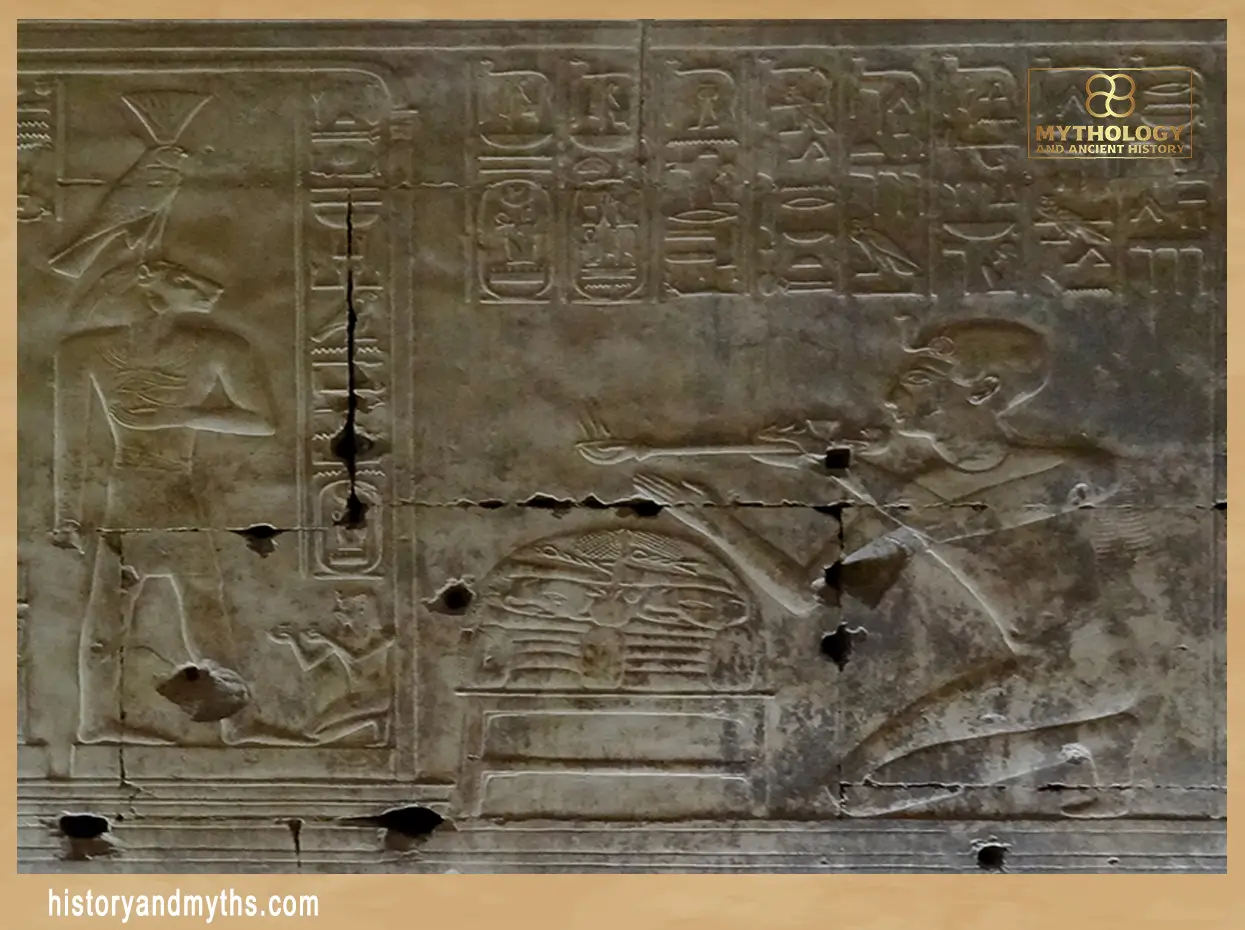
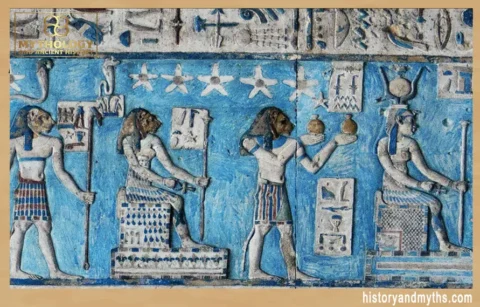
Source: Olaf Tausch — Wikimedia Commons (CC BY 3.0 / GFDL).
Who Was Nefertem? The Lotus-Born God of Dawn
Nefertem was understood as the first light rising from darkness, a youthful god who embodied renewal at the moment creation begins. In Egyptian cosmology, before the world took shape, only the endless waters of Nun existed. From this stillness, a blue lotus was said to rise and open revealing a child-god whose radiance pushed back the night. That child was Nefertem.
This idea shaped everything about his identity. Unlike solar gods who rule the sky, Nefertem represents the transition itself the gentle shift from shadow to clarity. He is the beauty of the sunrise rather than the power sustaining the sun. Egyptians viewed him as the promise of a new day, the first breath after darkness, and the purity that marks the world’s rebirth each morning.
He also carried a healing dimension. The blue lotus, his primary symbol, was prized for its fragrance and associations with health and ritual cleansing. Because of this, Nefertem became the divine patron of perfumes, medicine, and soothing offerings that restored harmony among gods and humans. In temple scenes, he is often shown presenting a lotus to the creator gods, as if offering freshness back to the universe.
Understanding Nefertem begins here: he is a god of beginnings quiet, restorative, and life-affirming whose presence signaled that creation was unfolding again.
| Name | Nefertem (Nefertum, Nefertemu) |
| Meaning | “The Perfect One” / “The Exquisite One” |
| Role | God of the Blue Lotus, Dawn, Renewal, Healing, Perfume |
| Parents | Ptah and Sekhmet (Memphis Triad) |
| Main Symbols | Blue lotus, perfumes, sun disk, youthful form, lion aspects |
| Primary Cult Center | Memphis |
| Main Associations | Rebirth, purification, fragrance, aesthetic healing, morning light |
The Symbolism of the Blue Lotus — Why Nefertem Matters
The blue lotus was one of the most meaningful symbols in ancient Egypt, and Nefertem was its living expression. To Egyptians, the lotus was not just a beautiful flower it was a message about how life emerges, heals, and renews itself. Every aspect of the lotus shaped how Nefertem was understood.
Lotus and Rebirth
The lotus closes at night and opens again at sunrise. This daily cycle mirrored the cosmic renewal Egyptians believed sustained the world. By linking Nefertem to the lotus, they emphasized a god whose power lies in the moment of becoming, when darkness gives way to ordered light. He personified the quiet rebirth that occurs each morning, a reminder that creation is a continuous act.
Lotus and Healing
The lotus was associated with cleansing, medicine, and emotional restoration. Its oils and extracts were used in rituals meant to relieve pain and calm the mind. As a result, Nefertem became a divine healer not through aggressive power, but through restoration, purity, and inner balance. Texts describe him as one who “brings pleasantness to the nostrils of the gods,” suggesting his presence soothed both the divine and human realms.
Lotus and Perfume: The “Scent of the Gods”
Temples and workshops in Memphis produced sacred perfumes used in offerings and daily rituals. These fragrances symbolized spiritual clarity and cleanliness. Nefertem, as their patron, embodied the idea that beauty and purity could keep the world in harmony. His cult connected fragrance with the sacred, making him central to rituals designed to refresh statues, shrines, and worshippers.
Through the lotus, Nefertem stood for renewal, healing, and the subtle forces that hold life together qualities that made him unique among Egyptian gods.
Why Did the Lotus Become a Sacred Symbol in Ancient Egypt?
The lotus became sacred not simply because it was beautiful, but because its natural behavior perfectly reflected the Egyptian understanding of creation. Rising from the muddy waters each morning before opening with the sunlight, the flower appeared to reenact the birth of order from the primeval waters of Nun every single day.
Nefertem in the Memphis Triad (Ptah – Sekhmet – Nefertem)
In Memphis, Nefertem became part of one of Egypt’s most influential divine families: the triad of Ptah, Sekhmet, and Nefertem. Each member represented a different force in the cycle of creation, and together they formed a complete vision of how the world comes into being, is protected, and renewed.
Ptah, the father, was the cosmic craftsman a god who created the universe through thought and speech. His power was deliberate, structured, and intellectual.
Sekhmet, the mother, embodied fierce protection, justice, and the unstoppable energy that defends the cosmic order. She was fire, intensity, and purification.
In this setting, Nefertem played a very different role. He was the gentle beginning that followed creation and protection. If Ptah shaped the world and Sekhmet defended it, Nefertem restored it. He softened Sekhmet’s destructive potential and balanced Ptah’s disciplined creativity with light, fragrance, and rejuvenation.
This triad explained a natural truth Egyptians observed: creation requires power, protection, and renewal. Nefertem was the renewing breath the moment when harmony returns after force has done its work. His presence in Memphis strengthened his ties to healing and perfumes, which were central to the temple rituals practiced there.
Through this triad, Nefertem became not just a symbol of dawn, but a mediator between strength and serenity, completing the cycle that kept the world stable.
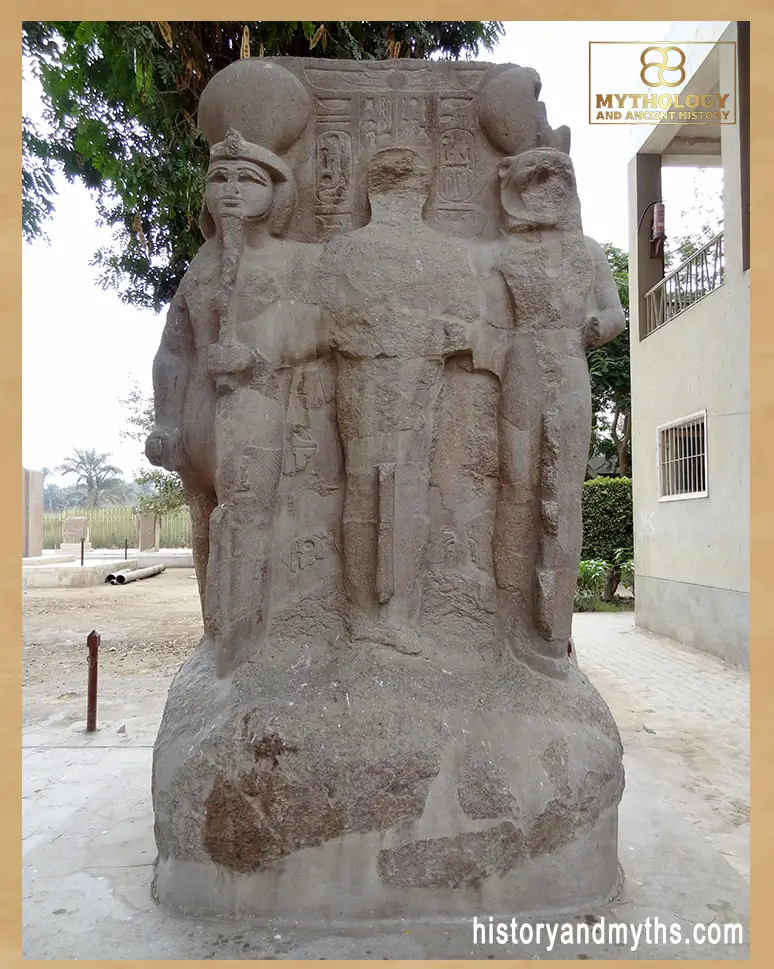
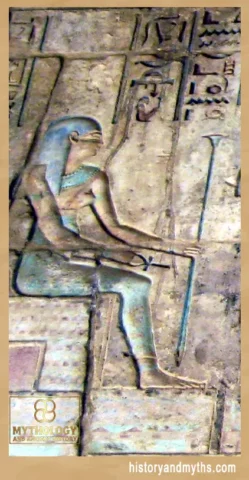
Source: Olaf Tausch — Wikimedia Commons (GFDL 1.2).
Myths and Religious Role of Nefertem
Although ancient Egyptian texts do not preserve long narrative myths focused solely on Nefertem, his role is clearly defined through hymns, funerary texts, and temple tradition. Together, these sources show him as a god of creation’s first light, healing, and gentle protection.
Nefertem in Creation and Coffin Texts
In early theological thought, Nefertem is described as the lotus that rises from the primeval waters, carrying the newborn sun. He represents the first beam of light emerging from darkness and the fragrance of the blue water-lily that opened at dawn. Some Coffin Text passages and later interpretations describe him as “the lotus at the nose of Ra,” the blossom whose scent refreshes the sun god and signals the renewal of creation.
Rather than ruling the universe like Ra or Ptah, Nefertem marks the moment when the universe awakens an intimate, sensory expression of the act of creation.
Healing, Perfume, and Daily Ritual
Because the blue lotus was associated with ointments, oils, and remedies, Nefertem became closely tied to healing and perfumery. Temple workshops in Memphis produced sacred oils and incense that were offered to the gods, and Nefertem was invoked as the divine patron of these fragrant substances.
He did not heal through force like a war god, but through restoration and sensory balance pleasant smells, cooling unguents, and rituals that calmed body and spirit. In this sense, Nefertem embodied what one modern interpreter calls “aesthetic healing”: the idea that beauty and fragrance can renew life and protect against illness.
Protection and the Afterlife
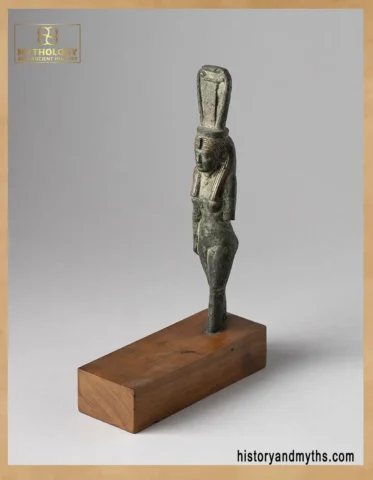
Nefertem also had a protective role, especially in the afterlife. As a lotus-born god of dawn, he promised that the dead could experience a new beginning, just as the sun rises each day from the horizon. Amulets of Nefertem, often showing him as a striding young god with a lotus crown, were placed with the deceased to ensure rebirth, protection, and spiritual freshness in the next world.
Some traditions even emphasize a more forceful side to him: like other solar-associated gods, he could take on a lion form and carry a curved sword or scimitar, driving away enemies of light and order.
Through these roles, Nefertem appears less as a storyteller’s hero and more as a living principle: the gentle but powerful renewal that comes with dawn, healing, and the sweet breath of the lotus.
What Does Nefertem Reveal About Egyptian Ideas of Renewal?
Nefertem reveals that renewal in ancient Egypt was not understood only as survival after death or the return of the sun. It was also experienced through beauty, fragrance, purity, and the quiet restoration of balance. His lotus did not conquer darkness by force. It opened after darkness, showing that creation could return gently as well as powerfully.
This makes Nefertem different from many solar and creator gods. Ra represents the visible power of the sun, and Ptah represents the intellectual act of creation, but Nefertem represents the freshness that follows creation. He is the first breath after disorder, the moment when life becomes pleasant, ordered, and livable again.
Through Nefertem, Egyptian religion expressed a subtle but important idea: the world was not renewed by power alone. It also needed harmony, fragrance, healing, and sensory beauty. His role shows that Egyptians saw renewal as both cosmic and deeply human, touching the body, the senses, and the soul.
The Iconography of Nefertem — How the Egyptians Depicted Him
Nefertem’s imagery is some of the most recognizable among Egyptian deities because it communicates his identity through beauty, youth, and the fragrant lotus. Every visual element tied to him expresses renewal, healing, or the moment creation awakens.
The Youth with the Lotus Crown
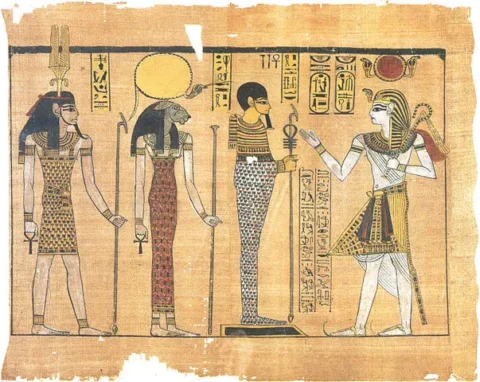
The most common depiction shows Nefertem as a young man wearing a tall blue-lotus headdress, sometimes with two plumes or a sun disk. The lotus crown symbolizes the flower that opened at dawn, releasing the first light and its refreshing scent. His youthfulness reinforces his role as a god of beginnings and morning rebirth.
The Lion-Headed Form
In later periods, Nefertem could appear as a lion-headed deity, blending his identity with protective solar forces. This form emphasized a more defensive side of his nature driving away danger and restoring order yet still anchored in the idea of renewal rather than aggression. It reflects the belief that even gentle gods had protective potency when the cosmos required balance.
Amulets and Figurines
Across the New Kingdom and Late Period, small Nefertem amulets became widespread. They typically show him striding forward with the lotus crown, echoing a youthful god “arising” each day. These amulets were placed on mummies or worn by the living for protection, purification, and assurance of rebirth mirroring his role in funerary texts.
Statues and Temple Art
In temple reliefs, Nefertem is often seen presenting a lotus to other gods, especially Ptah or Ra. This gesture captures his essence: he offers not power or dominance, but beauty, fragrance, and renewal, the qualities that refresh both the divine and human worlds. Some statues show him as a child seated on a lotus, directly referencing his emergence from the primeval waters.
Through these depictions, Egyptians expressed Nefertem as a god who embodies the gentle sunrise, the sweet breath of the lotus, and the healing freshness that restores harmony to all creation.
Worship and Temples of Nefertem
Although Nefertem was not a major state god like Amun or Ra, his worship was deeply rooted in the daily religious life of Memphis and surrounding regions. His cult focused on cleansing, renewal, and the fragrances used to maintain divine harmony.
Memphis: The Center of His Cult
Nefertem was primarily worshipped in Memphis, where he formed part of the triad with Ptah and Sekhmet. Temples and workshops in the city produced perfumes and sacred oils associated with him, reflecting his role as the patron of fragrance and healing. Rituals performed at dawn often invoked him to “open the day” with purity and freshness.
Shrines, Chapels, and Local Devotion
Beyond Memphis, smaller shrines dedicated to Nefertem appeared in several temples, especially where perfumery and healing practices were important. Offerings typically included lotus flowers, unguents, and incense substances believed to carry his renewing power. His presence in medical and magical papyri further shows that Egyptians called upon him to restore emotional balance and protect against illness.
Funerary Worship
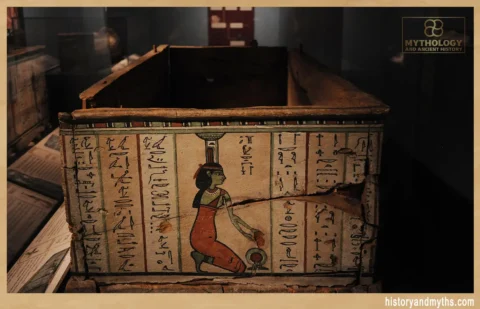
In tombs, Nefertem was invoked for rebirth and safe passage into the next world. Amulets, figurines, and depictions of the lotus were placed with the deceased so they could “rise like Nefertem” at the dawn of the afterlife. This funerary role helped keep his cult active well into the Late Period.
Through these practices, Nefertem functioned as a quiet but essential force one that refreshed creation daily and safeguarded both the living and the dead through purity, fragrance, and renewal.
Nefertem at a Glance
- Born from a blue lotus emerging from the primeval waters.
- The first light of dawn and symbol of daily cosmic renewal.
- Patron of perfumes and healing — linked to sacred oils and soothing rituals.
- Member of the Memphis Triad with Ptah and Sekhmet.
- Embodies purity, balance, and restoration rather than force or authority.
- Common in amulets to grant rebirth, protection, and spiritual freshness.
What Makes Nefertem Unique Among Egyptian Gods?
Nefertem stands apart from other Egyptian deities because he represents a side of creation that is subtle, sensory, and deeply human. Instead of thunder, authority, or cosmic dominance, he embodies renewal through beauty, fragrance, and gentle healing qualities Egyptians viewed as essential to maintaining balance in the world.
A God Defined by the Moment of Becoming
Most creator gods shape the universe through speech or force. Nefertem represents the instant after creation takes effect the first breath of morning, the opening of the lotus, the return of clarity after night. No other god captures this delicate threshold with the same precision.
Healing Through Purity, Not Power
While many gods protect through strength or justice, Nefertem heals by restoring harmony. His connection to perfumery and lotus fragrance reflects a belief that wellness begins with emotional calm and spiritual freshness. This made him the divine model for purification rituals used in temples and everyday life.
A Bridge Within the Memphis Triad
As the son of Ptah and Sekhmet, Nefertem completes a cycle: creation (Ptah), protection (Sekhmet), and renewal (Nefertem). He softens the intensity of his mother and complements the intellectual power of his father, symbolizing balance between force and serenity.
Symbol of Rebirth for the Living and the Dead
Because he emerged from the lotus at dawn, Egyptians saw him as the promise that darkness even death could be followed by light. His amulets became one of the most common funerary charms precisely because he offered a simple, powerful hope: the day will rise again.
Through these qualities, Nefertem occupies a rare place in Egyptian thought a god whose power lies not in dominance, but in the quiet beauty that sustains life.
More than a god of the lotus, Nefertem reflects an Egyptian belief that creation is renewed not only through the rising sun, but through purity, harmony, healing, and the quiet restoration of life itself.
Key Takeaways
- Nefertem represents the moment creation awakens—dawn, renewal, and purity.
- He embodies the blue lotus, a symbol of rebirth, healing, and sacred fragrance.
- As the son of Ptah and Sekhmet, he completes the Memphis triad’s cycle of creation, protection, and restoration.
- His healing power is gentle and aesthetic, connected to perfumes, oils, and emotional balance.
- Nefertem’s amulets were widely used to grant protection and ensure rebirth in the afterlife.
Frequently Asked Questions
Who is Nefertem in ancient Egyptian mythology?
Nefertem is the youthful god of the blue lotus, rebirth, healing, and the first light of dawn. He is part of the Memphis triad with Ptah and Sekhmet.
What does the blue lotus symbolize in relation to Nefertem?
The blue lotus represents purity, renewal, and the daily rebirth of the sun—qualities that Nefertem embodies.
Was Nefertem considered a healing deity?
Yes, he was associated with healing perfumes, aromatic oils, and restorative rituals that soothed both body and spirit.
Who were Nefertem’s parents?
Nefertem is traditionally regarded as the son of Ptah and Sekhmet, though some late sources associate him with Bastet.
How was Nefertem depicted in Egyptian art?
He is usually shown as a young man with a lotus crown, sometimes accompanied by lions or holding symbols of rebirth.
What role did Nefertem play in the afterlife?
Amulets of Nefertem were placed in tombs to ensure rebirth, purity, and protection for the deceased.
Why was Nefertem connected to the sunrise?
Because he personified the first light emerging from the lotus, symbolizing the moment creation reawakens each day.
Sources & Rights
- Allen, James P. The Ancient Egyptian Pyramid Texts. Society of Biblical Literature, 2005.
- Allen, James P. Middle Egyptian: An Introduction to the Language and Culture of Hieroglyphs. 3rd ed. Cambridge University Press, 2014.
- Assmann, Jan. The Search for God in Ancient Egypt. Cornell University Press, 2001.
- Assmann, Jan. Death and Salvation in Ancient Egypt. Cornell University Press, 2005.
- Hart, George. A Dictionary of Egyptian Gods and Goddesses. Routledge, 2005.
- Hornung, Erik. Conceptions of God in Ancient Egypt: The One and the Many. Cornell University Press, 1996.
- Lesko, Barbara S. The Great Goddesses of Egypt. University of Oklahoma Press, 1999.
- Pinch, Geraldine. Egyptian Mythology: A Guide to the Gods, Goddesses, and Traditions of Ancient Egypt. Oxford University Press, 2004.
- Quirke, Stephen. Religion in Ancient Egypt. British Museum Press, 1992.
- Teeter, Emily. Religion and Ritual in Ancient Egypt. Cambridge University Press, 2011.
- Wilkinson, Richard H. The Complete Gods and Goddesses of Ancient Egypt. Thames & Hudson, 2003.
- British Museum. Collection Online: Nefertem, Ptah, and the Memphis Triad.
- The Metropolitan Museum of Art. Heilbrunn Timeline of Art History: Ancient Egyptian Religion.
- UCLA Encyclopedia of Egyptology. Memphis and Memphite Theology.
- World History Encyclopedia. Nefertem.
Written by H. Moses — All rights reserved © Mythology and History