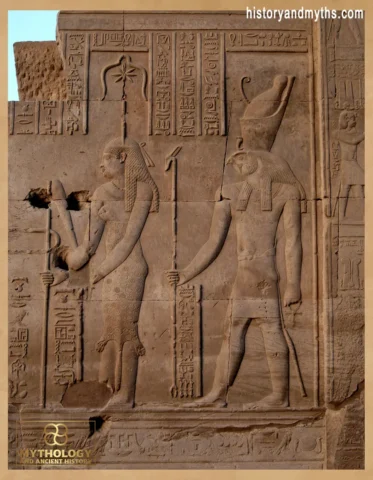
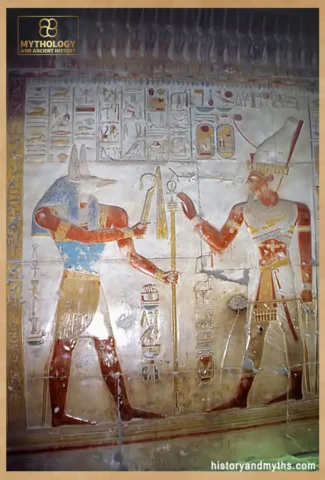
Maahes, the Fierce Lion God of Protection and War in Ancient Egypt
Few ancient Egyptian gods capture the tension between danger and protection as vividly as Maahes. To the Egyptians, the lion was not just a creature of the desert it was the embodiment of divine fury, the force that guarded sacred spaces, and the power that punished threats to cosmic order. Maahes emerged from this worldview as a god who could unleash overwhelming strength, yet use it with purpose, defending the land and those who lived under its sun. His presence was not chaotic; it was a warning that the world’s balance was fiercely protected.
Across temples and inscriptions, Maahes stands as a figure shaped by two worlds: the nurturing fierceness of feline goddesses like Bastet and Sekhmet, and the political needs of Egypt’s rulers, who invoked his image to express authority grounded in controlled power. He became a symbol of righteous wrath strength used not for conquest, but for shielding the vulnerable and enforcing justice. For modern readers, this duality raises important questions: Why did Egyptians create multiple lion gods? How did Maahes differ from them? And what made this deity essential to understanding Egyptian concepts of security, royalty, and divine retribution?
Who Was Maahes? The Lion God of Righteous Fury
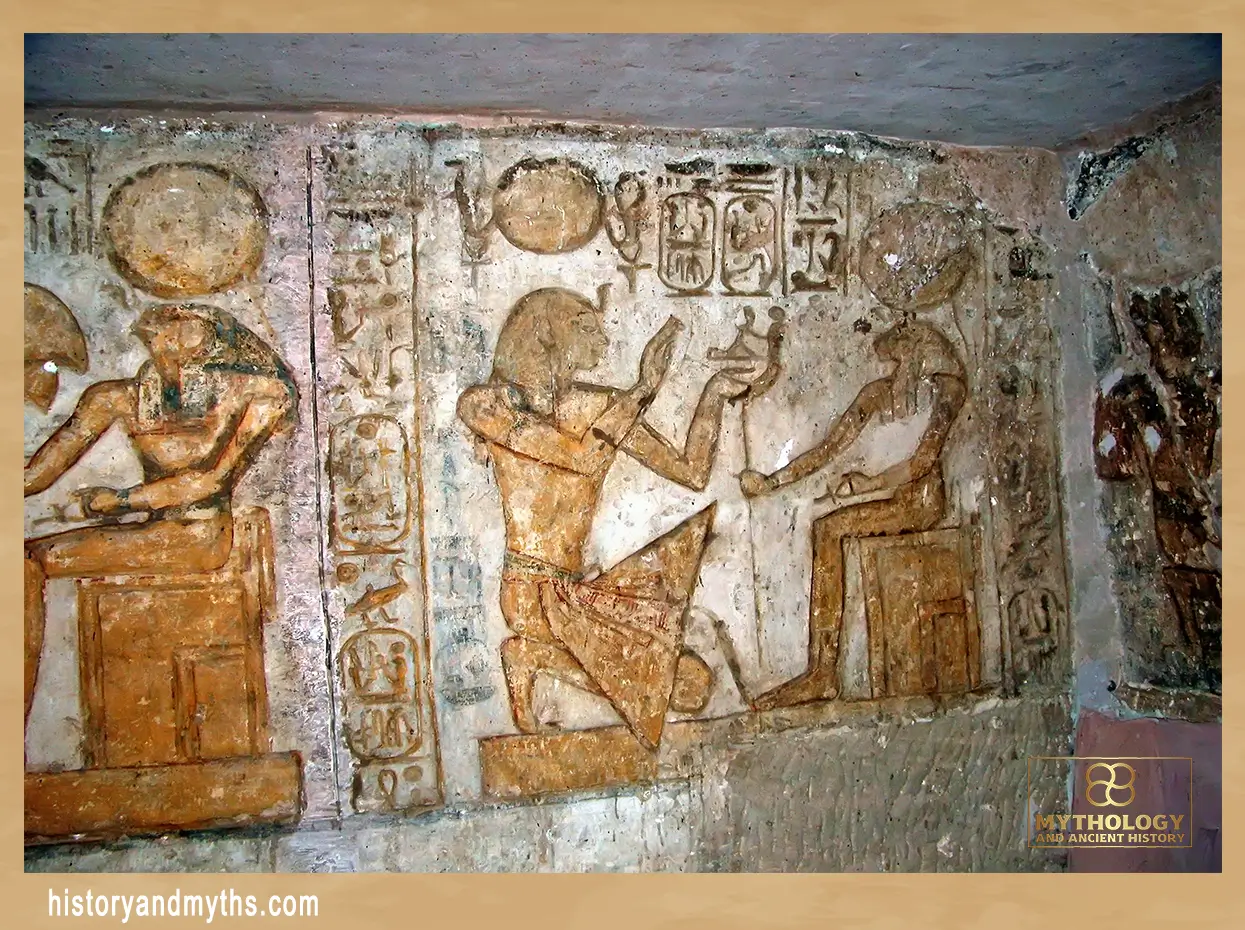
Although often described simply as a “lion-headed god,” Maahes represented a far more complex idea in Egyptian thought. He embodied controlled aggression the kind of strength that emerges only when order is threatened. Where other deities symbolized healing, fertility, or cosmic creation, Maahes stood for the moment when protection becomes active: when danger must be met with force. This made him a guardian of sacred boundaries, a punisher of wrongdoing, and a divine ally for kings who needed to express both authority and justice.
Unlike purely warlike gods, Maahes does not appear as a deity who seeks conflict. Instead, he is invoked when conflict is necessary. His lion face reflects the belief that divine power could be both compassionate and terrifying, depending on what the situation demanded. This balance between martial strength and moral purpose is what separates Maahes from every other feline deity in Egypt’s religious landscape.
| Aspect | Details |
|---|---|
| Name | Maahes (also Mahes, Mihos) |
| Meaning of Name | “He Who Is True Beside Her” or “The Lion Lord” |
| Main Domains | Warfare, protection, judgment, hunting, solar power |
| Symbols | Lion, solar disk, uraeus, ceremonial knife |
| Parents | Bastet or Sekhmet (varies by region), linked to Ra |
| Primary Cult Centers | Leontopolis, Bubastis, Abydos, Memphis |
| Role in Afterlife | Hunter of demons, protector of souls, guardian of sacred gateways |
| Titles | “Lord of the Massacre,” “The True Lion,” “He Who Protects the Temple” |
Why the Egyptians Had Multiple Lion Gods — And Where Maahes Fits Among Them
To the ancient Egyptians, the lion was not just a powerful animal it was a symbol of raw cosmic force. But this force had many faces, so the Egyptians created several lion deities, each expressing a different dimension of strength. Sekhmet embodied destructive heat and divine punishment. Bastet softened this energy into protection, motherhood, and household safety. Pakhet represented the hunter’s precision in the desert cliffs.
Into this landscape stepped Maahes, representing something unique: the righteous use of power. While Sekhmet could unleash plague and Bastet could guard the home, Maahes acted as the divine executor of justice. He was not a destroyer, nor a domestic guardian, but the force that moves when wrongdoing threatens the moral fabric of society.
This is why many texts describe him as a “lord of the massacre” and at the same time as “he who protects the innocent.” His dual nature reflects how Egyptians saw justice not as cold punishment, but as the active restoration of order. Maahes was the lion who intervened at the exact moment when chaos needed to be stopped.
Origins of Maahes: His Parentage and How His Role Evolved Through the Dynasties
Maahes did not appear fully formed in the earliest layers of Egyptian religion. Instead, he emerged gradually as different cities developed their own interpretations of divine power. In most traditions, he is the son of Bastet, inheriting her protective nature but channeling it outward into active defense rather than domestic guardianship. In other regions, especially around Leontopolis, Maahes is described as the son of Sekhmet, linking him to the fierce solar heat that both destroys and purifies.
These variations weren’t contradictions they reflected Egypt’s regional religious landscape. Every temple emphasized the aspect of the lion that mattered most to its people. What remained constant, however, was the understanding that Maahes belonged to the solar family. His association with Ra meant that he carried divine authority not just to fight, but to judge.
By the New Kingdom, Maahes had moved from being a localized guardian to a recognized national deity of justice and military strength. Soldiers invoked him before battle; priests described him as the god who “slaughters the enemies of order”; and ordinary Egyptians saw him as the lion who acted when human courage alone wasn’t enough. His evolution shows how Egyptian religion adapted political and military needs into new divine identities.
Titles and Epithets of Maahes — What They Reveal About His True Nature
The Egyptians did not describe Maahes with a single title. Instead, they used a constellation of epithets each one highlighting the aspect of the lion-god they relied on most. These titles are some of the clearest windows into how ancient people understood his character and his power.
One of the most common names was “The Lord of the Massacre.” This did not simply portray brutality; it reflected Egypt’s belief that cosmic order had to be defended against forces of chaos. In temple inscriptions, the title appears when Maahes is described leading divine armies or destroying enemies who threatened sacred boundaries.
Another prominent epithet is “He Who Wears the Red Linen.” The red cloth was a symbol of both danger and divine fire. In ritual scenes, Maahes’ red linen echoes the burning heat of the sun at noon the moment when Ra’s light becomes a weapon. This imagery placed Maahes among the gods who acted decisively rather than symbolically.
He was also called “The Avenger of Wrongs.” This title moved Maahes beyond warfare into the realm of justice. Egyptians saw him as the deity who stepped in when human systems failed: the protector of those who had been harmed and the punisher of those who acted outside moral order.
Through these titles, Maahes appears not just as a lion-god, but as a complex figure of fire, law, vengeance, and sacred authority. Each epithet captures a different facet of the same divine identity a god who fought not for chaos, but for the restoration of balance.
Maahes in Warfare and Kingship — A Divine Weapon in the Hands of Pharaoh
In Egyptian ideology, war was never merely a human affair. Every battle was framed as a continuation of the cosmic struggle between order and chaos. Within this worldview, Maahes stood out as one of the gods whose presence could tip the balance in favor of the king.
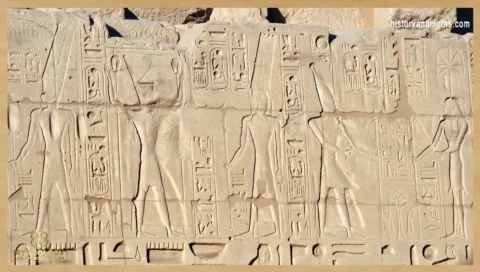
Maahes was invoked as a divine warrior who fought beside Pharaoh, not as a distant symbol but as an active force. In temple reliefs especially at Karnak, he appears advancing with weapons or tearing down enemies with the unstoppable strength of a lion. These images were not decorative; they served a political purpose. They reassured the population that when the king marched to war, he did so backed by a god whose nature was built for combat.
His connection to the Eye of Ra strengthened this role. Goddesses like Sekhmet and Bastet represented the Eye’s wrathful and protective aspects, and Maahes inherited that same fiery energy. To supporters of the king, Maahes symbolized controlled violence force used properly, in defense of the land and restoration of order.
Maahes was also tied to kingship through the ritual protection of sacred spaces. He appears at temple entrances, on ceremonial knives, and in inscriptions guarding thresholds. Just as a lion patrols its territory, Maahes guarded Egypt’s borders and its sanctuaries. This imagery elevated the king as the earthly counterpart of the lion-god: vigilant, strong, and responsible for keeping the world safe.
To the Egyptians, Maahes was not only a war god; he was a statement. His presence in royal art and liturgy broadcast the message that Egypt’s enemies faced not just soldiers but divine judgment.
What Does Maahes Reveal About Egyptian Ideas of Power?
Maahes shows that the ancient Egyptians did not admire violence for its own sake. Military strength was considered legitimate only when it defended Ma’at, protected sacred places, and preserved the stability of the kingdom. A god who fought without purpose would have represented chaos rather than justice.
This helps explain why Maahes was closely associated with kingship. Pharaoh was expected to rule with the same balance that Maahes embodied: capable of overwhelming force, yet restrained by moral responsibility. Royal power gained its legitimacy not from conquest alone, but from its ability to restore order whenever disorder threatened Egypt.
Seen in this way, Maahes was more than a lion-headed warrior. He expressed an Egyptian political ideal in which strength existed to protect civilization rather than dominate it.
Maahes, Bastet, and Sekhmet — Understanding His Divine Family and Their Roles
Maahes never existed in isolation. To understand him, we have to look at the divine family he belonged to one of the most powerful and complex in Egyptian religion. His identity as a lion-god, his temperament, and even his duties all come from this lineage.
Son of Bastet (or Sekhmet): Two Mothers, Two Traditions
Egyptian religion evolved over thousands of years, which led to more than one theological tradition. In some cities, Maahes was described as the son of Bastet, the gentle protector of households; in others, especially in Memphis, he was called the son of Sekhmet, the fierce Eye of Ra whose rage brought plagues and fire.
Both versions are intentional:
- Bastet’s connection gave Maahes a protective, watchful aspect. As her son, he inherited the duty of guarding the innocent and maintaining harmony.
- Sekhmet’s connection emphasized his aggressive, fiery nature in battle. As her son, he became a divine weapon swift, brutal, and unstoppable.
The coexistence of these traditions allowed Egyptians to understand Maahes as a balanced force: a guardian when peace prevailed and a destroyer when danger rose.
Linked to the Lion Imagery of the Royal Family
Both Bastet and Sekhmet share a deep association with lion symbolism. Worshippers understood lions as beings that could shift from serene stillness to explosive violence in an instant. Maahes, as “the lion born from the lioness,” embodied both sides perfectly.
His birth from either goddess also connected him to the solar lineage of Ra, since the Eye of Ra whether expressed through Sekhmet or Bastet was a solar power. This is why Maahes often appears with a solar disk above his mane or with a uraeus curling forward in attack.
A Family of Protectors
Together, Bastet, Sekhmet, and Maahes formed a unit that oversaw:
- Protection of temples
- Defense of Egypt’s borders
- Preservation of cosmic order
- Punishment of enemies or agents of chaos
Where Sekhmet unleashed divine wrath and Bastet guarded homes and mothers, Maahes became the active enforcer, the one who physically confronted threats.
A Divine Role That Mirrors Human Society
This family dynamic made sense to Egyptians: a mother who protects, a mother who destroys evil, and a son who carries their strength into action. It reflected the ideal structure of Egyptian rule the king (like Maahes) acting between the gentle mercy and harsh justice of the gods.
Why Did Egypt Need Both Maahes and Sekhmet?
At first glance, Maahes and Sekhmet appear to represent the same idea. Both are lion deities connected with warfare, protection, and the Eye of Ra. Their coexistence reflects an important feature of Egyptian religion: divine powers were rarely limited to a single god.
Sekhmet embodied overwhelming destructive force, capable of unleashing plague, divine anger, and the terrifying heat of the sun. Maahes represented a narrower and more practical function. His strength was directed toward defending sacred boundaries, assisting kings, protecting temples, and confronting specific threats against Ma’at.
Rather than duplicating one another, the two gods expressed different applications of divine power. Sekhmet symbolized the destructive potential of cosmic force, while Maahes showed how that same force could be disciplined into righteous protection.
Symbols, Titles, and Animal Associations of Maahes
Maahes was one of the most instantly recognizable gods in the Egyptian pantheon because his identity was built around powerful visual symbols. These elements were not decorative they expressed what Egyptians believed about his nature and how he acted in the world.
1. The Lion: His Primary and Most Dominant Symbol
As a lion-god, Maahes represented speed, strength, and the ability to attack without hesitation. Egyptians viewed lions as guardians of borders and desert edges, where dangers often emerged. By giving Maahes this form, they placed him at the frontline of cosmic protection.
His lion imagery stressed:
- Fearlessness in combat
- Regal authority
- A natural role as a protector and hunter of enemies
In many depictions, his mane appears stylized like rays of the sun, linking him directly to solar power.
2. The Solar Disk and Uraeus
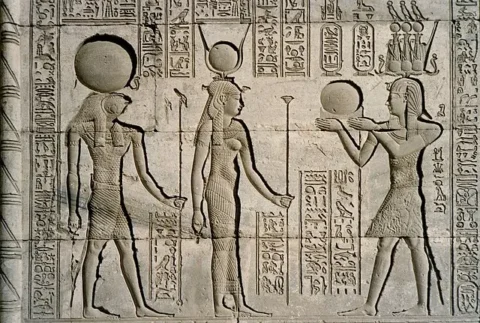
The solar disk on Maahes’ head connects him to Ra and to the fiery energy of the Eye of Ra. This symbol meant he was not merely strong he was divinely sanctioned to use his strength.
The uraeus (the raised cobra) reinforced this authority. Cobras symbolized royal legitimacy, aggressive defense, and instantaneous divine punishment. With both symbols combined, Maahes stood as a god whose anger was both righteous and controlled.
3. Knife or Sword in Hand
In reliefs, Maahes often holds a knife, sword, or ceremonial blade. This was unusual for Egyptian gods; weapons were more common in military scenes than in divine iconography. Maahes’ weapon signaled that he did not only symbolize war he participated in it.
It also aligned him with kings who were depicted smiting enemies with similar blades.
4. The Title “Lord of the Massacre”
One of Maahes’ most striking epithets was “Lord of the Massacre.”
This did not mean uncontrolled violence but rather:
- The power to destroy forces of chaos
- The ability to wipe out threats at their root
- Divine enforcement of justice on the battlefield
The epithet shows how seriously Egyptians viewed the cosmic role of war they believed it had to be executed by a god who understood both destruction and protection.
5. Associated Animals: Lions and Domesticated Cats
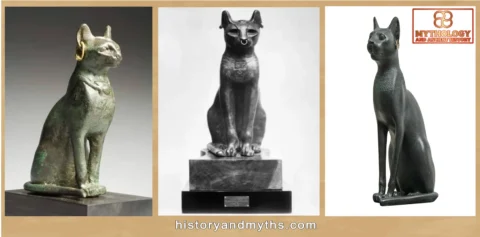
While Maahes is always depicted as a lion, he still belongs to the broader family of feline deities connected to Bastet and Sekhmet. Priests sometimes associated him with both wild lions (symbolizing his ferocity) and sacred temple cats (symbolizing his protective side).
This duality wild and domestic reflected his dual role as both warrior and guardian.
Worship and Cult Centers of Maahes — Where the Lion God Was Honored
Although Maahes was not worshipped across all of Egypt with the same intensity as Osiris or Horus, his cult was strong in specific regions where feline deities held special importance. In these areas, Maahes was revered as a protector, a warrior, and the living embodiment of the sun’s fiery judgment.
1. Leontopolis (Tell el-Muqdam) — His Primary Cult Center
Leontopolis was the most important city dedicated to lions and sacred felines.
Here, Maahes was regarded as:
- The chief divine guardian of the city
- The overseer of sacred lions kept in temple precincts
- A powerful symbol of royal protection and border security
The discovery of mummified lions from this region strongly supports his central role in local worship.
2. Bubastis — The City of Bastet and His Divine Family
In Bubastis, the famous center of Bastet’s cult, Maahes occupied a complementary role within the divine household. His presence in this temple system reflects:
- His identity as the son of Bastet in certain traditions
- His function as the “fierce extension” of her protective nature
- The balance between nurturing protection and violent defense
Bubastis made Maahes a familiar and approachable god, closely tied to everyday religious life.
3. Abydos — A Guardian in the Realm of the Dead
In Abydos, the sacred city of Osiris, Maahes appeared as a divine protector within funerary landscapes. Egyptians believed he:
- Guarded tombs and sacred spaces
- Repelled dangerous spirits and chaotic forces
- Assisted in rituals ensuring the safe passage of the deceased
This connection strengthened his dual identity as both a warrior and a spiritual guardian.
4. Memphis — Linked to the Army and Royal Protection
Memphis, Egypt’s administrative and military hub, offered Maahes a natural place within the ideology of state power. Textual and artistic evidence suggests he:
Featured in rituals blessing the army before campaigns
Represented the sanctioned force of the state
Paralleled the role of lion skins worn by priests and elite guards
This made Maahes not only a mythological figure but also a symbol woven into the political and military structure of Egypt.
Maahes and the Underworld — A Fierce Protector in the Realm of Souls
While Maahes is best known as a warrior on earth, his presence extended into the spiritual world as well. In Egyptian belief, the afterlife was full of dangers chaotic spirits, hostile forces, and obstacles that threatened the soul’s journey. Maahes served as one of the divine guardians who ensured that order, not chaos, prevailed.
A Lion Who Hunts the Enemies of the Dead
Texts and temple scenes describe Maahes as a hunter of wandering demons a role that suited his lion form perfectly. Just as lions stalk prey in the physical world, Maahes was believed to hunt malevolent beings in the unseen realm, clearing the path for righteous souls.
This made him especially important for:
- Protecting the deceased during the perilous nightly journey
- Assisting other guardian deities like Anubis and the sons of Horus
- Enforcing divine justice against spirits that threatened the cosmic order
A Companion of Osiris in the Afterlife
Maahes appears in certain contexts as an assistant to Osiris, strengthening the king of the dead through his unmatched ferocity. In this role, he acted as:
- A punisher of those who tried to subvert the laws of Ma’at
- A defender of sacred spaces within the necropolis
- A guardian placed at symbolic gateways or thresholds
This association deepened his reputation as a god whose power continued beyond the human world.
Fire, Judgment, and Renewal
Because he inherited the fiery nature of the Eye of Ra, Maahes embodied a type of divine justice that was both destructive and cleansing. In the underworld, this manifested as:
- Burning away impurities
- Defending light against darkness
- Removing threats before they reached the soul
His destructive force was understood as a form of protection a necessary act to restore balance.
Why Maahes Mattered to Ordinary Egyptians
For common Egyptians, the journey after death was one of their biggest spiritual concerns. A god like Maahes offered reassurance: a powerful ally who fought the battles that the soul could not.
To them, Maahes represented:
- Strength when the soul was vulnerable
- Justice in a realm without earthly laws
- A divine guardian ensuring safe passage into eternity
Relationships with Other Gods — Maahes, Bastet, Sekhmet, Ra, and the Divine Family
Maahes does not stand alone in the Egyptian pantheon. His identity is shaped by a network of divine relationships that explain his powers, his temperament, and the roles he played in religion and kingship. Understanding these connections helps reveal why the Egyptians saw him as a controlled but formidable force.
1. Bastet — The Mother Who Softens His Image
In many traditions, Maahes is described as the son of Bastet, the goddess associated with protection, grace, and domestic harmony.
Through her, he inherited:
- Protective instincts
- A connection to sacred felines
- A role in guarding households and temples
Bastet’s gentle nature balanced Maahes’ martial identity. She represented controlled protection, and he represented forceful protection the two forming a complementary pair.
2. Sekhmet — The Fiery Warrior Aspect
Other traditions identify Sekhmet as his mother instead. This version emphasizes Maahes’ aggressive, solar aspect.
From Sekhmet he inherited:
- The scorching heat of the sun
- The destructive power of the Eye of Ra
- A divine mandate to strike down threats without hesitation
When viewed as Sekhmet’s son, Maahes becomes even more closely tied to warfare, plague, and divine punishment.
3. Ra — The Solar King Who Shapes His Mission
As a child of the Eye of Ra (whether through Bastet or Sekhmet), Maahes is directly linked to Ra, the supreme solar deity.
This connection gives him:
- A share of the sun’s authority
- A cosmic role in maintaining order
- A justified, sacred purpose for violence
He functions like a divine enforcer of Ra’s will—acting when the sun god’s justice must be carried out swiftly and forcefully.
4. Atum and Ptah — Extended Connections Through Theology
In the theological systems of various cult centers:
- If Bastet is connected to Atum, Maahes inherits ties to Heliopolitan creation theology.
- If he is associated with Ptah (through Memphis), he gains a presence in Memphite state ideology.
These links expanded his role beyond warfare into kingship, protection of cities, and the spiritual order of the state.
5. The Divine Lion Family — A Network of Feline Deities
Maahes belongs to a larger symbolic family of lion and cat gods, including:
- Sekhmet (fury, punishment)
- Bastet (protection, harmony)
- Pakhet (the fierce desert huntress)
- Shu–Onuris (associated through lion symbolism and war)
Together, these gods represent different expressions of divine power—from nurturing guardianship to unstoppable force. Maahes sits at the center of this spectrum.
Maahes at a Glance — Key Facts
- Divine Identity: A lion-headed god embodying controlled violence, justice, and solar fire.
- Parentage: Traditionally the son of Bastet or Sekhmet, inheriting their protective and destructive aspects.
- Main Powers: Fierce protector, hunter of enemies, warrior beside Pharaoh, guardian of sacred spaces.
- Symbolic Weapons: Often depicted holding a knife or sword — rare for Egyptian gods — signifying active combat.
- Solar Connection: Linked to the Eye of Ra, representing divine wrath used against forces of chaos.
- Cult Centers: Strongly worshipped in Leontopolis, Bubastis, Abydos, and Memphis.
- Afterlife Role: Protector of souls, destroyer of malevolent spirits, and defender of Osiris’ domain.
- Iconography: Lion head with a heavy mane, solar disk, uraeus, ceremonial blade, and sometimes a long red mane symbolizing fire.
© historyandmyths.com — Educational use
Legacy and Later Interpretations — How Maahes Survived in Art, Ritual, and Modern Imagination
Although Maahes never became one of the most widespread gods in Egypt, his presence left a distinct mark on religious practice, artistic representation, and later cultural interpretations. His image as a lion-warrior continued to resonate long after pharaonic religion faded.
1. Artistic Legacy — The Enduring Power of the Lion-God
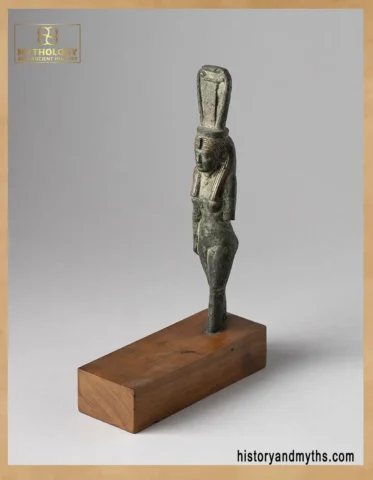
Depictions of Maahes appear in temples, reliefs, and small statues, especially in places connected to feline cults. These artworks emphasize:
- His lion head with a full, stylized mane
- The solar disk and uraeus that signal divine authority
- His weapon usually a knife or sword symbolizing active protection
Even centuries later, these images maintain a sense of dynamism and controlled violence. They communicate a message that transcends time: strength used for justice.
2. Ritual Influence — A Protector at the Thresholds
While few complete rituals dedicated exclusively to Maahes have survived, references indicate that he:
- Guarded sacred spaces
- Was invoked for protection against chaotic forces
- Played a role in ceremonies related to kingship and warfare
In this sense, Maahes functioned not only as a mythological figure but as a spiritual presence woven into daily and royal religious life.
3. Survival in Greco-Roman Egypt
During the Ptolemaic and Roman periods, many Egyptian deities changed or blended with foreign ones. Maahes retained his lion form but began to appear with Hellenistic artistic features. This adaptation shows:
- His image remained meaningful even in multicultural Egypt
- His association with strength and justice was compatible with Greek heroic ideals
- Local cults continued to honor him despite shifting political powers
Such persistence proves that his symbolism remained relevant to communities long after Egypt’s political landscape changed.
4. Modern Interpretations — The Lion-God Beyond Egypt
Today, Maahes appears in:
- Academic discussions of feline deities
- Museum collections featuring lion-god statues
- Popular books and documentaries on ancient religion
- Artistic reinterpretations inspired by his fierce imagery
Although he is not as well-known as Anubis or Horus, Maahes fascinates modern audiences because he represents a rare blend of violence, justice, guardianship, and solar divinity.
5. Why Maahes Matters Today
For many readers exploring ancient religion, Maahes offers insight into how Egyptians understood power. He is:
- A reminder that protection sometimes requires strength
- A symbol of justice that acts rather than observes
- A bridge between the natural world (the lion) and the divine order
His legacy endures because it speaks to a universal idea: the world needs guardians who can confront danger without losing their moral purpose.
Key Takeaways — Maahes, the Lion God of Fierce Protection
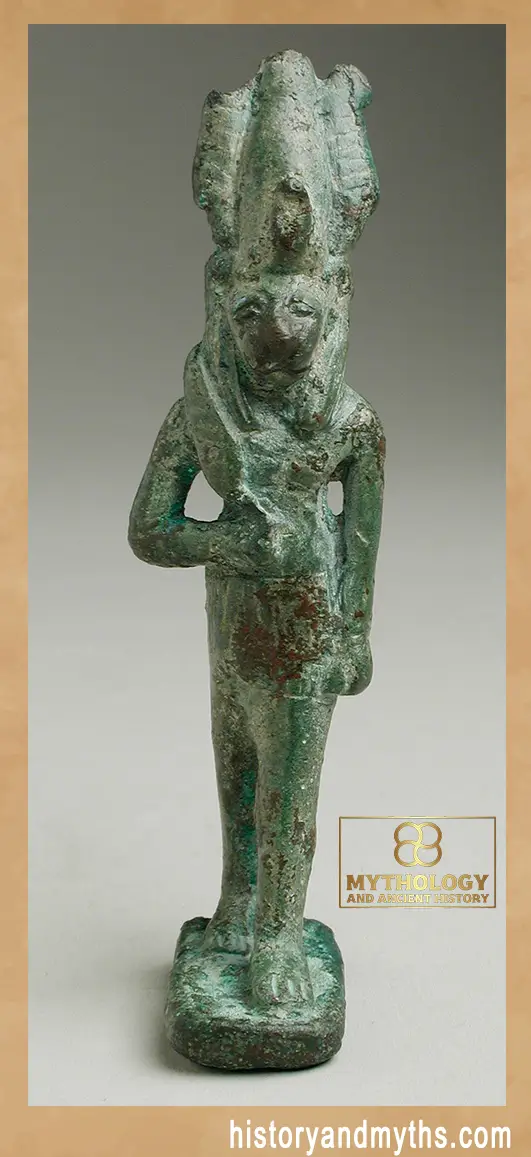
- Maahes embodies Egypt’s concept of controlled divine force—a warrior who uses violence only to restore balance and protect the righteous.
- His lion form symbolized unmatched strength and alert guardianship, making him one of Egypt’s most formidable protective deities.
- He inherited dual aspects from Bastet and Sekhmet: gentle protection and fierce solar wrath.
- Maahes fought alongside Pharaoh, reinforcing royal authority and defending Egypt’s borders and temples.
- In the afterlife, he hunted chaotic spirits and safeguarded the journey of the deceased through dangerous realms.
- His cult centers—especially Leontopolis and Bubastis—kept alive a tradition of sacred lions reflecting his divine presence.
© historyandmyths.com — Educational use
Frequently Asked Questions about Maahes
1. Who is Maahes in ancient Egyptian mythology?
Maahes is a lion-headed god associated with warfare, protection, justice, and the fierce power of the sun. He served as both a guardian and a divine warrior acting on behalf of the gods and the king.
2. Was Maahes the son of Bastet or Sekhmet?
Depending on the region, Maahes was considered the son of either Bastet or Sekhmet. Both traditions highlight his connection to feline deities and the fiery energy of the Eye of Ra.
3. What symbols are associated with Maahes?
Maahes is commonly shown with a lion’s head, a solar disk, a uraeus serpent, and often a knife or sword — a rare weapon symbol among Egyptian gods.
4. What was Maahes’ role in battles?
He was believed to fight beside Pharaoh, representing the divine force that destroys enemies and restores order. His presence reaffirmed the king’s legitimacy and strength.
5. Where was Maahes worshipped?
His major cult centers were Leontopolis, Bubastis, Abydos, and Memphis — all regions associated with feline worship or royal protection.
6. Did Maahes have a role in the afterlife?
Yes. Maahes protected souls by hunting chaotic spirits and guarding sacred gateways. He assisted Osiris in maintaining order in the realm of the dead.
7. Why is Maahes called the “Lord of the Massacre”?
The title reflects his role as a divine enforcer against chaos. It signifies righteous destruction — violence used to defend Ma’at and eliminate threats.
8. How is Maahes related to the Eye of Ra?
Through Bastet or Sekhmet, Maahes inherits the solar fire of the Eye of Ra. This connection grants him the authority to punish enemies and protect the cosmic order.
9. Are there surviving statues or reliefs of Maahes?
Yes. He appears in temple reliefs and statues, especially in feline cult centers. His lion head and solar symbols make him instantly recognizable.
10. What makes Maahes unique among Egyptian gods?
He is one of the few gods shown holding a weapon, emphasizing active combat. His combination of solar power, feline strength, and protective ferocity sets him apart.
Sources & Rights
- Assmann, Jan. The Search for God in Ancient Egypt. Cornell University Press, 2001.
- Assmann, Jan. Death and Salvation in Ancient Egypt. Cornell University Press, 2005.
- Hart, George. A Dictionary of Egyptian Gods and Goddesses. Routledge, 2005.
- Hornung, Erik. Conceptions of God in Ancient Egypt: The One and the Many. Cornell University Press, 1996.
- Lesko, Barbara S. The Great Goddesses of Egypt. University of Oklahoma Press, 1999.
- Pinch, Geraldine. Handbook of Egyptian Mythology. ABC-CLIO, 2002.
- Quirke, Stephen. The Cult of Ra: Sun Worship in Ancient Egypt. Thames & Hudson, 2001.
- Teeter, Emily. Religion and Ritual in Ancient Egypt. Cambridge University Press, 2011.
- Wilkinson, Richard H. The Complete Gods and Goddesses of Ancient Egypt. Thames & Hudson, 2003.
- British Museum. Collection Online: Lion Deities and Egyptian Religion.
- The Metropolitan Museum of Art. Heilbrunn Timeline of Art History: Ancient Egyptian Religion.
- UCLA Encyclopedia of Egyptology. Lion Deities, Kingship, and Divine Protection in Ancient Egypt.
- Digital Egypt for Universities (UCL). Religion, Kingship, and Egyptian Gods.
- Griffith Institute, University of Oxford. Topographical Bibliography of Ancient Egyptian Religious Monuments.
- World History Encyclopedia. Maahes.
Written by H. Moses — All rights reserved © Mythology and History