Ammit: The Egyptian Devourer of Souls and the Fear of Final Judgment
In Ancient Egypt, death was not silence.
It was a courtroom.
The soul did not drift into the dark; it stood trial. And beside the scales of justice waited not a god, not a demon, but something more terrifying than both — Ammit.
She was not worshipped.
She was not prayed to.
She was not forgiven.
Ammit did not judge.
She executed.
While Osiris ruled the court and Ma’at defined truth, Ammit was the outcome. If a heart failed, she did not punish — she erased. To face Ammit was not to suffer. It was to vanish.
No afterlife.
No rebirth.
No memory.
Only absence.
This made her the most feared figure in Egyptian imagination — not because she was evil, but because she was final. The Egyptians could endure pain. They could accept suffering. What terrified them was non-existence.
Ammit was that fear given a body.
Part crocodile, part lion, part hippopotamus, she was not designed to symbolize terror alone. Her form was constructed from the three most dangerous predators Egyptians knew. Not monsters from imagination — but from their rivers, deserts, and skies.
Ammit was not fantasy.
She was recognition.
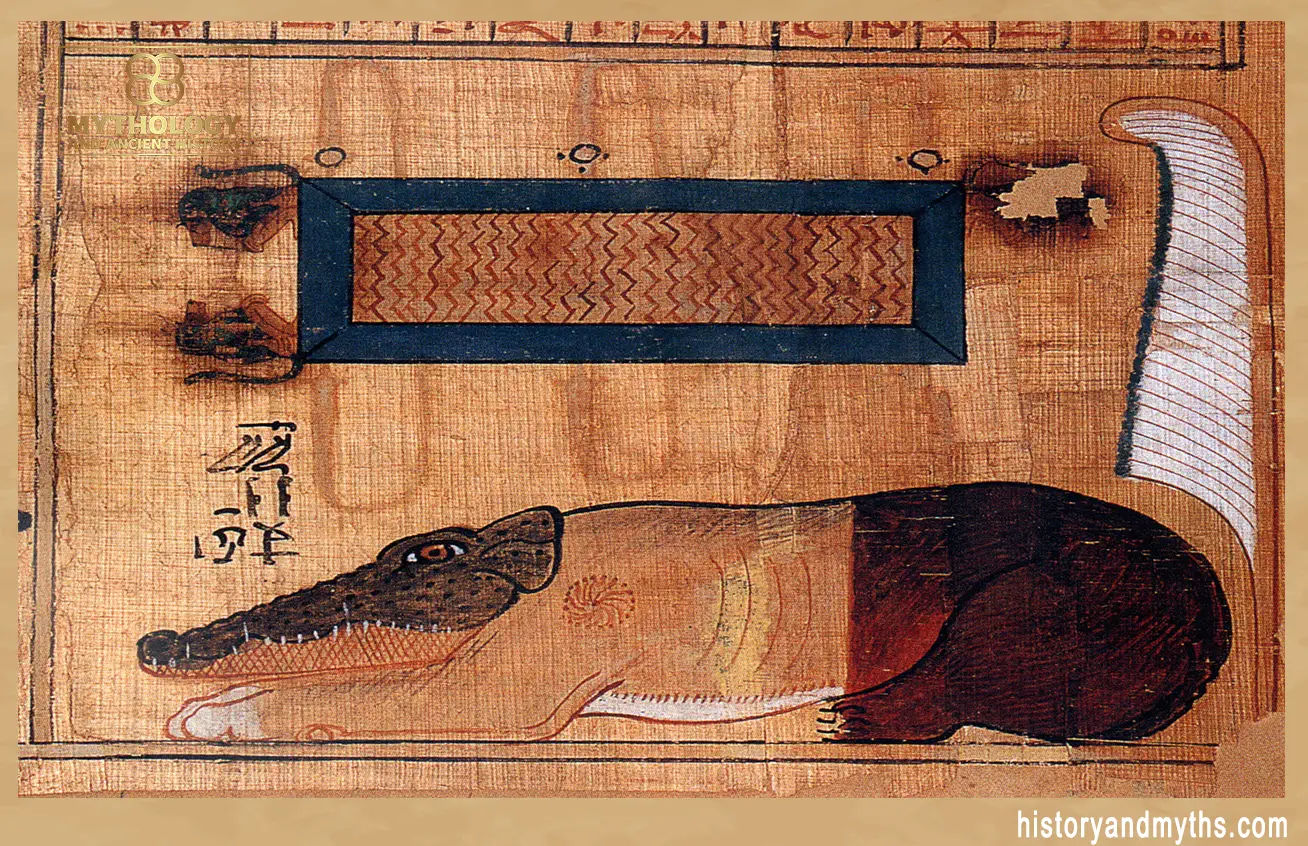
Ammit in the Book of the Dead of Nebqed, Dynasty 18, reign of Amenhotep III — Public Domain.
The Judgment Scene — Where Ammit Truly Stands
Ammit does not belong to the underworld alone.
She belongs to the moment of decision.
In the Egyptian vision of death, the soul did not escape judgment — it entered it.
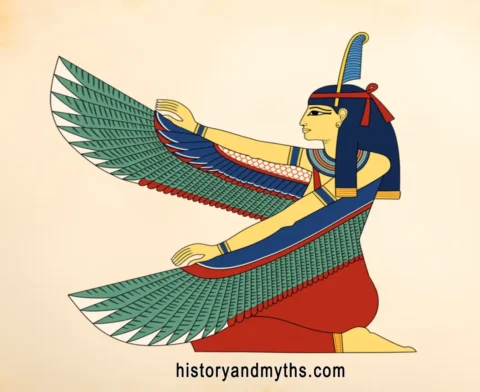
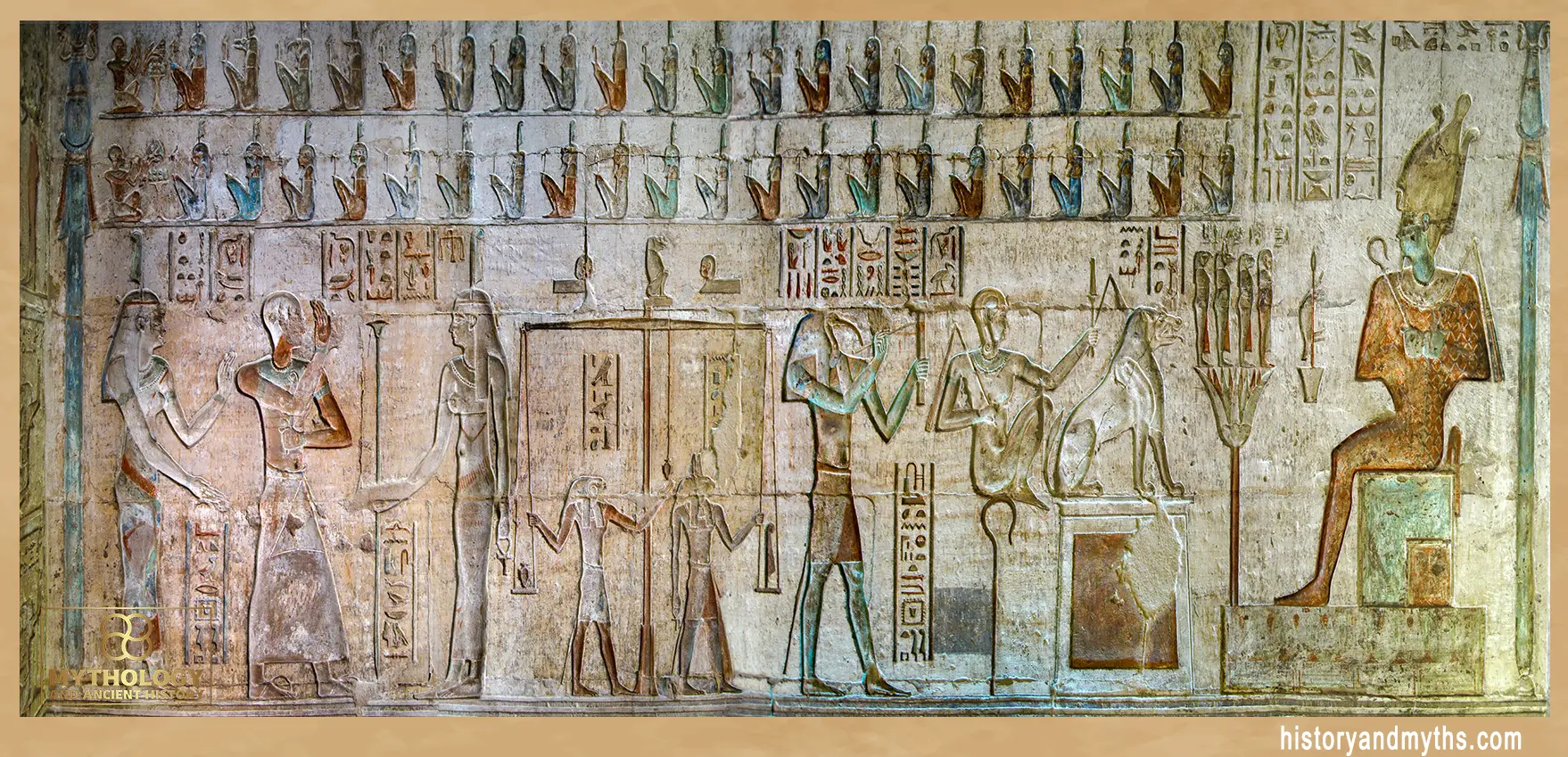
After death, every person faced a tribunal known as the Hall of Two Truths, where the heart was weighed against the feather of Ma’at, the principle of justice and order. This was not symbolic ritual. It was believed to be literal fate.
To the Egyptians, the heart was not emotion.
It was memory.
It was intention.
It was proof.
Unlike modern cultures that place thought in the head, Egypt placed identity in the heart. If it was heavy, it carried guilt. If it was light, it carried truth.
Anubis adjusted the scale.
Thoth recorded the verdict.
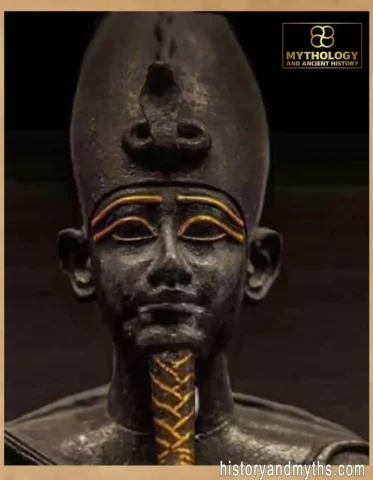
Osiris presided.
And beside the scale sat Ammit.
She did not move unless called.
Nothing in this scene happens because of Ammit — except the end.
She is not an obstacle.
She is the verdict.
If the heart outweighed justice, she consumed it immediately.
No trial after that.
No appeal.
No resurrection.
When Ammit devoured a heart, the soul vanished completely. There was no Christian hell, no suffering in flame, no continued existence in torment. There was simply non-being.
This is why Ammit mattered.
She was not created to terrorize.
She was created to finalize.
| Aspect | Details |
|---|---|
| Name | Ammit |
| Meaning | “Devourer of the Dead” / “Eater of Hearts” |
| Type | Underworld entity (executioner of judgment) |
| Domain | Judgment of the dead / Hall of Ma’at |
| Role | Consumes the heart of the unworthy |
| Appearance | Crocodile head, lion body, hippopotamus hindquarters |
| Associated Deities | Osiris, Anubis, Thoth, Ma’at |
| Cultural Function | Final annihilation of the unjust |
| Worship | None (not an object of cult) |
| Symbolic Meaning | Justice as irreversible consequence |
| Historical Period | Prominent in New Kingdom funerary texts |
| Concept | Second death / erasure of the soul |
Was Ammit a Goddess, a Demon, or Something Else?
Ammit was none of them.
She was not a goddess in the Egyptian sense. No temples were raised for her. No priests served her. No offerings were made in her name. She had no cult. No festivals.
And she was not a demon either — not in the later Christian meaning of the word. Demons tempt. Demons deceive. Demons corrupt.
Ammit did none of that.
She did not belong to chaos.
She belonged to law.
In Egyptian theology, the gods did not absorb all responsibilities. Some forces existed solely as functions. They were created not for worship, but for necessity.
Ammit was one of those.
Egypt saw her not as a personality but as a principle given a body. She did not choose. She enacted.
The gods judged.
Ammit executed.
That is why she stands apart from the pantheon. She ruled no domain. She held no title. She did not intervene in the world of the living. Her entire existence was confined to a single moment in the afterlife: the instant when truth becomes irreversible.
She did not love.
She did not betray.
She did not forgive.
She concluded.
This distinction matters.
Calling Ammit a “goddess” weakens what she truly represented.
Calling her a “monster” misunderstands her role.
She was neither worshipped nor feared as a power.
She was feared as inevitability.
Why Was Ammit Made of Three Beasts?
Ammit’s body was not imagination.
It was geography.
Her form combined the three fiercest animals Egyptians knew:
- the crocodile — ruler of the river
- the lion — lord of dry land
- the hippopotamus — chaos in flesh
These were not symbols chosen for drama.
They were chosen because they were real dangers.
Egyptians did not invent monsters.
They observed them.
The Nile was life — and death. Crocodiles dragged the careless into black water. Lions hunted at dusk beyond fields and cities. Hippopotamuses destroyed boats and crushed crops in seconds.
Ammit was built from what Egypt feared most.
Not myth.
Reality.
And that is the point.
When a guilty soul faced Ammit, it did not fear fantasy.
It feared things it had seen.
Her body taught a lesson before she ever moved:
Judgment is not gentle.
Justice is not safe.
Truth is not soft.
By combining these three animals into one, Egypt created a being more than predator.
They created inevitability.
Wherever you ran in life, one of these creatures could reach you.
In death, Ammit contained all of them.
There was no escape from her body — because her body was built from Egypt itself.
The Second Death — What Ammit Truly Destroyed
To the Egyptians, death was not the end.
But Ammit was.
When she devoured a heart, she did not torture the soul.
She erased it.
Egypt did not imagine eternal hell.
It imagined something worse: non-existence.
This was called the second death.
The first death was physical.
The second was spiritual annihilation.
A person whose heart was eaten by Ammit did not suffer.
They did not wander.
They did not haunt.
They failed to continue.
In Egyptian thought, to live after death was not automatic. It was earned. The afterlife was not reward — it was survival through truth.
To be devoured meant:
- no rebirth
- no memory
- no return
- no eternity
Your name vanished.
Your shadow was cut.
Your soul ended.
This is why Ammit mattered so deeply.
Not because she was violent —
but because she was final.
Egypt feared suffering less than it feared oblivion. Pain could be survived. Existence without form could not.
Ammit represented the one fate beyond prayer.
When she moved, life itself stopped.
Ammit at a Glance
- Essence: Executioner of divine judgment.
- Known As: “Devourer of the Dead.”
- Realm: Hall of Judgment, Duat (Egyptian underworld).
- Function: Final annihilation of unjust souls.
- Form: Crocodile, lion, and hippopotamus combined.
- Associated Gods: Osiris, Anubis, Thoth, Ma’at.
- Worship: None — feared, not prayed to.
- Meaning: Truth as survival; falsehood as extinction.
Did Ammit Change Over Time?
Not in power.
But in visibility.
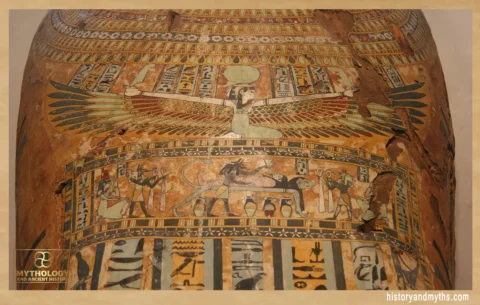
Ammit appears clearly in funerary texts from the New Kingdom, especially in illustrated copies of the Book of the Dead. Earlier periods mention judgment and annihilation, but without always naming her. She emerges as Egyptian religion becomes more precise about the afterlife.
This is important.
Egyptian theology did not invent Ammit suddenly.
It revealed her when language and ritual matured.
As the funerary system grew more detailed—scales, verdicts, recording gods—the need for a final figure became unavoidable. Justice required conclusion. Ammit became that conclusion.
Across centuries, while gods merged, rose, and faded, her role did not expand.
It narrowed.
She did not gain stories.
She did not gain worship.
She did not gain personality.
She retained only one function: execution of fate.
That is why she never became popular.
Deities gained followers because they offered protection, fertility, healing, or favor.
Ammit offered none of those.
She offered certainty.
And certainty has no congregation.
By the Late Period, Ammit remains fixed in judgment scenes, unchanged in body and duty. Where mythology shifted, she remained still. She was not part of cosmic drama.
She was its end.
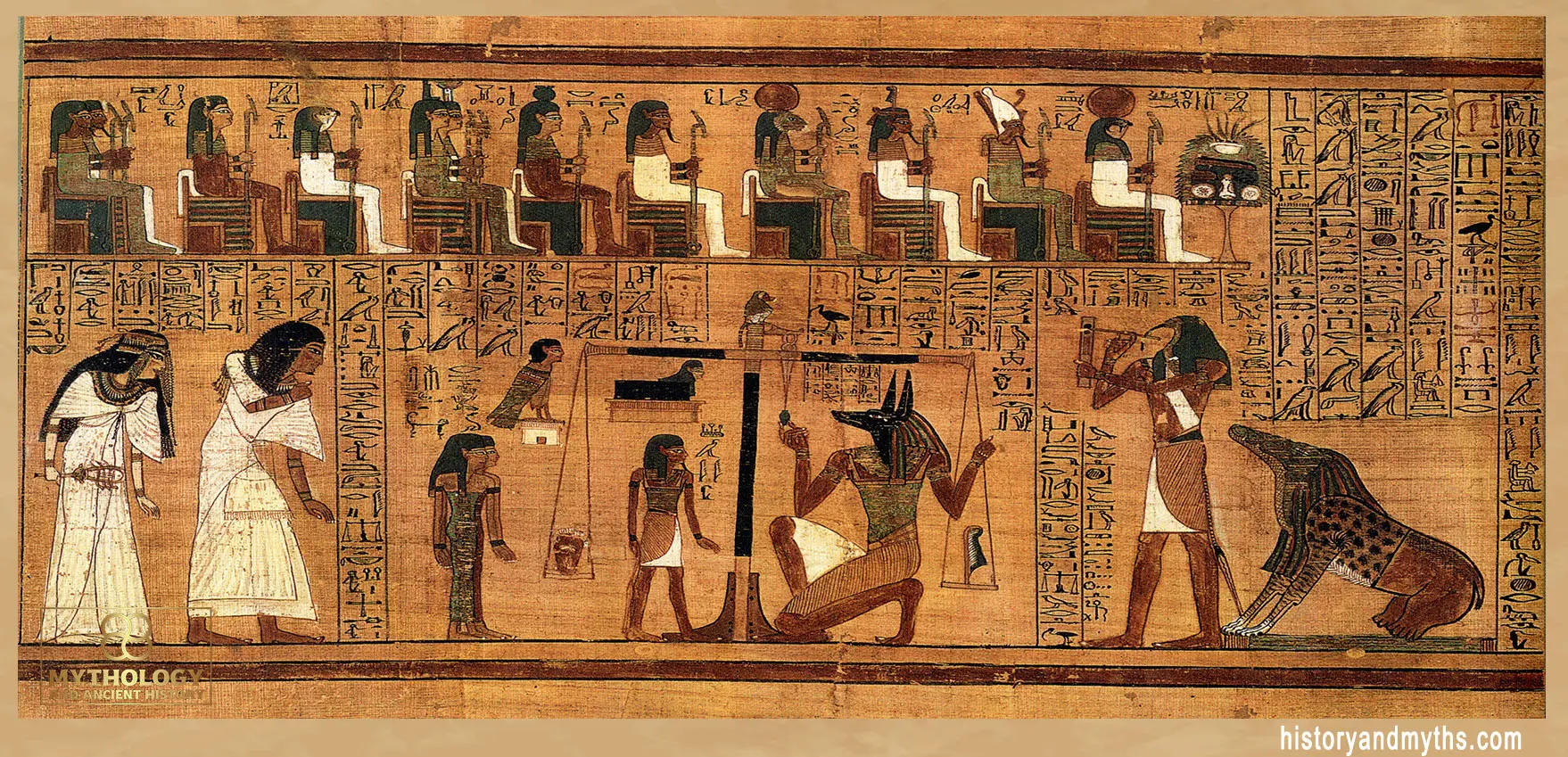
Ammit awaits judgment in the Book of the Dead of Ani, c. 1300 BC — British Museum (Public Domain).
Was Ammit Evil — or Was She Justice?
Ammit was not evil.
She was necessary.
Ancient Egypt did not divide the world into good and evil the way later religions did. It divided existence into order and collapse. Ma’at was balance. Anything that broke it was not sin — it was threat.
Ammit did not attack innocence.
She did not hunt.
She did not choose.
She responded.
Justice in Egypt was not mercy.
It was alignment with truth.
When a heart failed, Egypt did not imagine punishment. It imagined correction by removal. A soul that could not exist in balance could not exist at all.
Ammit was not rage.
She was sanitation.
She did not avenge Ma’at.
She preserved it.
This is what makes her frightening to modern readers. We expect judgment to hurt. Egypt expected it to clean.
There is no cruelty in her role — only cold logic.
And that is far worse.
Ammit in World Myth — How Egypt Punished Without Hell
Most civilizations feared punishment.
Egypt feared erasure.
In Mesopotamia, the dead entered a shadowy underworld. In Greece, souls wandered in Hades. In later religions, sinners burned in eternal fire. Existence continued — painfully.
Egypt chose a more absolute threat.
It chose non-existence.
While other cultures imagined eternal suffering, Egypt imagined an end so complete it left nothing behind.
No torment.
No memory.
No second chance.
Compared to monsters in other mythologies, Ammit does not torture. She does not chase. She does not imprison.
She deletes.
This is uniquely Egyptian.
Egypt did not build hells because it did not believe identity could survive without Ma’at. If balance failed, reality itself failed.
That also explains why Ammit has no counterpart elsewhere.
Other cultures invented demons.
Egypt invented termination.
In this worldview, justice does not continue forever.
It concludes.
And when it concludes, the unjust simply stop being.
That idea — of justice as annihilation rather than pain — is among the darkest and boldest concepts ever imagined.
Not because it is cruel.
But because it is final.
What Ammit Taught the Living
Ammit was not meant for the dead alone.
She was a warning.
Egypt did not design judgment to comfort the living. It designed it to discipline them. Ammit stood in religious imagination like a blade held behind the law — unseen but certain.
No ceremony could protect the guilty.
No god could negotiate with truth.
Ammit’s presence told every Egyptian something simple:
You will not be saved by rank.
You will not be spared by prayer.
You will not buy your way through death.
Only the heart mattered.
Not status.
Not wealth.
Not reputation.
Truth lived inside you — and would outlive you.
This made Egyptian morality internal, not theatrical. There were no flames to scare children into obedience. There was erasure — the loss of becoming.
Ammit did not encourage fear of suffering.
She encouraged fear of non-being.
And that fear shaped an entire civilization.
Conclusion — Ammit
Ammit was never meant to be loved, and never meant to be feared as a monster.
She was meant to be understood as an ending.
In Egyptian thought, justice did not burn forever—it stopped what did not belong. Creation depended on balance, and when balance failed, existence itself failed with it. Ammit was not cruelty. She was closure.
Where other cultures promised punishment, Egypt threatened disappearance.
Where others built hells, Egypt built a sentence with no echo.
And that is why Ammit still unsettles.
She does not scream.
She does not pursue.
She simply waits.
Quietly.
Key Takeaways
- Ammit is not a goddess but a judicial entity of the afterlife.
- She represents final annihilation, not eternal punishment.
- The heart, not the mind, defined identity in ancient Egypt.
- Her form reflects Egypt’s three most dangerous animals.
- There was no worship of Ammit — only fear of her result.
- The “second death” meant total erasure, not suffering.
- Ammit embodies the ultimate consequence of moral failure.
Frequently Asked Questions about Ammit
Who was Ammit in ancient Egypt?
Ammit was a fearsome underworld being who devoured the hearts of the unjust during the final judgment of the soul.
Was Ammit a goddess?
No. Ammit was not worshiped as a goddess and had no temples or cults. She functioned as an executioner of judgment rather than a deity of worship.
What does Ammit’s name mean?
Her name literally means “Devourer of the Dead” or “Eater of Hearts.”
Where did Ammit appear?
She appeared in the Hall of Judgment in the Duat, the Egyptian underworld, beside the scales where the heart was weighed.
What happened if Ammit ate the heart?
The soul was destroyed completely and ceased to exist. There was no afterlife or rebirth after this “second death.”
Why was Ammit part crocodile, lion, and hippopotamus?
These were the three most feared animals in Egypt, symbolizing river, desert, and chaos combined into one being.
Did Ammit punish good people?
No. Only those whose hearts were heavier than the feather of Ma’at faced her.
Is Ammit mentioned in the Book of the Dead?
Yes. Ammit appears in spells associated with the Weighing of the Heart ceremony.
Does Ammit exist in modern beliefs?
No. She belongs strictly to ancient Egyptian beliefs, though she appears in modern media and fiction.
Why is Ammit still important today?
She represents the idea of moral responsibility and the fear of complete erasure rather than punishment.
Sources & Rights
- Wilkinson, Richard H. The Complete Gods and Goddesses of Ancient Egypt. London: Thames & Hudson, 2003.
- Pinch, Geraldine. Egyptian Mythology: A Guide to the Gods, Goddesses, and Traditions of Ancient Egypt. Oxford: Oxford University Press, 2002.
- Assmann, Jan. Death and Salvation in Ancient Egypt. Ithaca: Cornell University Press, 2005.
- Hornung, Erik. The Idea of an Ancient Egyptian God. Ithaca: Cornell University Press, 1982.
- Allen, James P. Middle Egyptian: An Introduction to the Language and Culture of Hieroglyphs. Cambridge: Cambridge University Press, 2010.
- Faulkner, Raymond O. The Ancient Egyptian Book of the Dead. London: British Museum Press, 1994.
- Quirke, Stephen. The Cult of Ra: Sun-Worship in Ancient Egypt. London: Thames & Hudson, 2001. (context for judgment and afterlife beliefs)
- Redford, Donald B., ed. The Oxford Encyclopedia of Ancient Egypt. Oxford: Oxford University Press, 2001.
- Shaw, Ian, ed. The Oxford History of Ancient Egypt. Oxford: Oxford University Press, 2000.
- Baines, John, and Jaromír Málek. Atlas of Ancient Egypt. New York: Facts on File, 2000.
- Oppenheim, Adela, Dorothea Arnold, and James P. Allen. Ancient Egypt Transformed: The Middle Kingdom. New York: The Metropolitan Museum of Art, 2015.
Written by H. Moses — All rights reserved © Mythology and History