How Waste Was Managed in Ancient Greek Cities
Ancient Greek cities managed waste through drainage channels, public rules, manual removal, and disposal areas outside city walls rather than modern sewer systems. Household wastewater flowed through street gutters, solid waste was carried away from crowded districts, and local authorities enforced basic sanitation rules to keep markets and streets functional. The system was simple and often unpleasant, but it helped Greek cities handle daily urban life without collapsing under their own waste.
Why Waste Management Mattered in Ancient Greek Cities
Ancient Greek cities produced large amounts of waste every day. Crowded markets, workshops, livestock, food trade, and public gathering spaces filled urban districts with wastewater, animal remains, spoiled food, smoke, and garbage, especially in major centers such as Athens.
Without regular removal, streets could become blocked, polluted, and difficult to use during hot weather or periods of heavy commercial activity. The problem was most visible inside the agora, where trade depended on movement, access, and usable public space.
Greek cities therefore needed practical ways to control waste accumulation even without modern sanitation technology. Managing garbage and wastewater became part of maintaining trade, public order, and daily urban life rather than cleanliness alone.
| Waste Type | How Greek Cities Handled It |
|---|---|
| Household Wastewater | Directed into open gutters and stone drainage channels along streets. |
| Food and Organic Waste | Removed from markets and dumped outside populated districts. |
| Animal Waste | Cleared manually from roads, markets, and transport routes. |
| Workshop Debris | Often concentrated near city edges away from dense residential zones. |
| Broken Pottery and Ash | Disposed in pits or dumping grounds beyond city walls. |
How Greek Cities Actually Removed Waste
Ancient Greek cities removed waste through drainage channels, manual transport, and dumping areas outside populated districts rather than large centralized sewer systems.
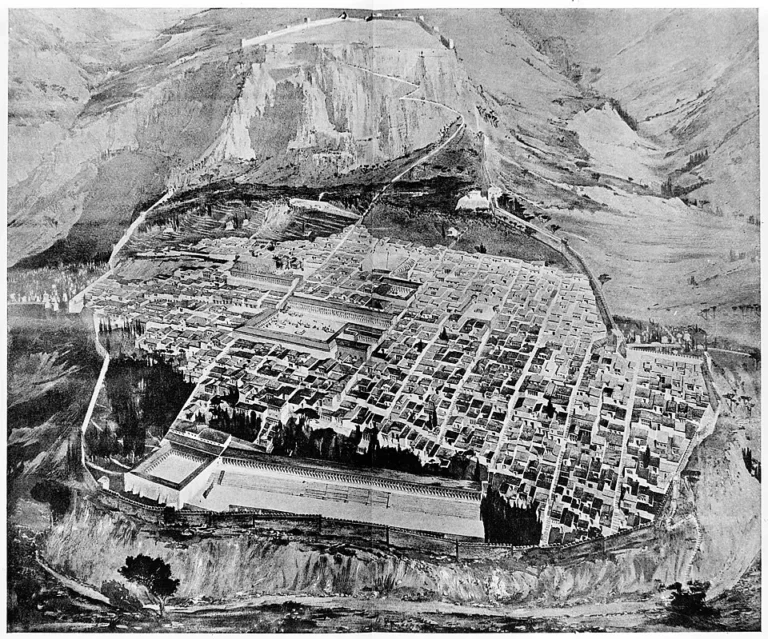
Household wastewater usually flowed through open gutters or stone drains built along streets. In planned cities such as Priene, sloped roads helped move dirty water downhill and away from crowded neighborhoods, especially after rain.
Solid waste was physically removed from the city. Ash, broken pottery, food remains, and animal waste were commonly dumped beyond city walls or placed in disposal pits. Archaeologists have identified many of these dumping zones through large concentrations of ceramics, bones, and organic debris outside urban boundaries.
Markets produced the most immediate sanitation pressure. Fish sellers, butchers, and food merchants generated waste daily inside the agora, where blocked streets or rotting material could disrupt trade and public movement. Local cleaning and waste removal therefore became necessary for keeping commercial areas operational.
Workshops created additional waste that cities tried to separate from dense residential districts. Pottery production, metalworking, dyeing, and olive processing generated smoke, polluted water, and industrial debris, which is one reason many workshops appeared near the edges of Greek cities rather than at their crowded centers.
The Role of Streets and Drainage in Greek Sanitation
Street design played a major role in waste management across many Greek cities. Without modern underground sewer networks, urban sanitation depended heavily on drainage flow, elevation, and the physical layout of roads.
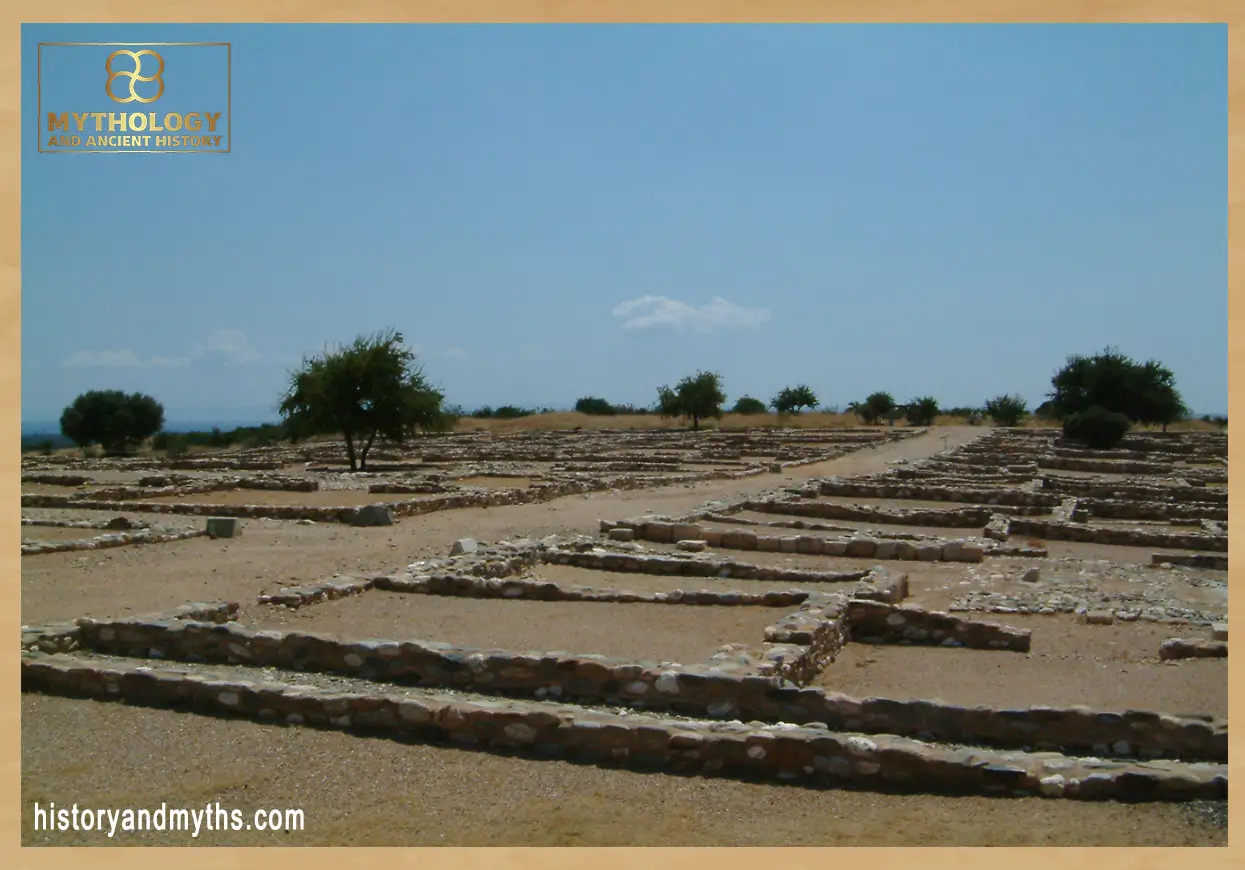
Many streets were built with slight slopes that directed rainwater and wastewater away from busy areas. Open gutters along the sides of roads carried dirty water through the city and reduced stagnant pools near homes and markets. In some planned settlements such as Olynthus, archaeologists have found organized drainage systems connected to residential blocks and public streets.
Stone channels appeared in wealthier or more structured districts where water movement needed better control. These drains handled runoff from homes, fountains, workshops, and public spaces, especially during seasonal rain. Some houses even included small internal drains connected to nearby street channels.
Drainage also affected where people built important parts of the city. Markets, workshops, and public gathering spaces worked better in areas where waste and water could move away instead of collecting in enclosed streets. Geography therefore became part of sanitation itself. Hillsides, slopes, and natural runoff patterns helped Greek cities manage daily urban pressure with limited infrastructure.
The system had clear weaknesses. Open drains could clog with mud, garbage, or animal waste, and heavy rain sometimes pushed polluted water back into crowded streets. During periods of neglect or crisis, sanitation conditions deteriorated quickly because the entire system depended on continuous flow rather than sealed containment.
Who Was Responsible for Cleanliness in Ancient Greece?
Cleanliness in Ancient Greek cities was not handled by a single centralized sanitation department. Responsibility was divided between households, local officials, workers, and businesses that operated inside public spaces.
Homeowners were expected to manage much of their own waste, especially wastewater and household garbage. In many cities, residents could face penalties for blocking streets, damaging drains, or dumping waste in areas that interfered with movement and trade.
Public authorities focused mainly on keeping shared spaces functional. Markets, fountains, roads, and gathering areas required regular maintenance because they carried heavy daily traffic. Officials connected to the agora monitored commercial activity and could enforce local rules related to obstruction, dumping, and street use.
Manual labor played an important role in the system. Workers removed waste, cleared drains, transported debris, and cleaned areas where organic material accumulated quickly. These tasks became especially important in markets that handled fish, meat, and agricultural products.
Religious and civic concerns also influenced sanitation. Temples, sacred spaces, and public ceremonies required cleaner surroundings than industrial or workshop districts. Greek cities therefore treated sanitation partly as a matter of civic order and public respect, not only health.
Urban Sanitation in Ancient Greece
Ancient Greek cities did not rely on massive underground sewer systems like later Roman cities. Instead, sanitation depended on movement: sloped streets carried wastewater downhill, workers removed solid waste manually, and disposal zones developed outside crowded districts. The system was simple but effective enough to support active markets, workshops, and dense urban life for centuries.
© historyandmyths.com — Educational use
The Limits of Sanitation in Ancient Greek Cities
Greek waste management reduced accumulation inside cities, but it did not create clean urban environments by modern standards. Open drains, animal traffic, food waste, and crowded markets produced constant smells and pollution, especially during hot seasons.
Most drainage systems were exposed rather than enclosed. Wastewater often moved through public streets before leaving populated districts, which meant mud, sewage, and garbage could mix during heavy rain or periods of intense commercial activity. Areas near workshops and slaughter spaces were particularly unpleasant.
Poorer districts usually had weaker infrastructure than organized or wealthier sections of the city. Some neighborhoods relied almost entirely on nearby pits, runoff, or informal dumping areas. During war, economic decline, or population pressure, maintenance became more difficult and sanitation conditions deteriorated quickly.
Greek cities also lacked the large-scale sewer engineering later associated with Rome. Their system depended more on movement and disposal than enclosed waste control. As long as garbage continued leaving the urban core, the city could function. When that movement slowed, sanitation problems became visible very fast.
How Waste Management Helped Greek Cities Survive
Ancient Greek cities could not function without some form of waste control. Markets depended on open movement, workshops required usable streets, and dense urban districts needed continuous drainage to avoid blockage and decay. Sanitation therefore became part of maintaining the city’s economic and social stability rather than a separate public service.
The system succeeded because it matched the scale of most Greek poleis. Many cities remained smaller and more open than later imperial capitals, which made runoff, manual cleaning, and external dumping more manageable. Geography also helped. Hillsides, coastal winds, and lower building density reduced some of the pressure created by daily waste accumulation.
Greek sanitation was practical, not advanced in the modern sense. Cities stayed operational through constant removal, flowing water, and urban layouts that pushed heavy waste activity away from central spaces. Even with limited infrastructure, these methods allowed many Greek urban centers to remain active for centuries without collapsing under the pressures of trade, population, and daily public life.
Waste management in Ancient Greece relied on drainage, manual labor, urban planning, and continuous removal rather than complex sewer engineering. Wastewater moved through open channels, garbage was carried beyond populated areas, and city authorities enforced basic rules to keep streets and markets usable.
The system had obvious limits, especially during overcrowding or poor maintenance, but it allowed Greek cities to support trade, public gatherings, workshops, and dense daily activity for long periods. Greek sanitation worked because it focused on keeping the urban core functional, not because ancient cities were clean by modern standards.
Key Takeaways
- Ancient Greek cities relied on drainage channels and manual waste removal rather than complex sewer networks.
- Most garbage and wastewater were moved outside populated districts to keep streets and markets usable.
- Street slopes and natural runoff played a major role in urban sanitation.
- Markets created the greatest sanitation pressure because of food waste and animal activity.
- Greek sanitation systems focused on keeping cities functional, not clean by modern standards.
- Poor maintenance or overcrowding could quickly create pollution and foul conditions inside cities.
FAQ
Did Ancient Greece have sewer systems?
Some Greek cities had basic drainage channels and stone drains, but they did not build large enclosed sewer systems comparable to later Roman engineering.
Where did Ancient Greeks dump garbage?
Most solid waste was carried outside city walls or placed in disposal pits beyond populated districts.
How did Greek cities deal with wastewater?
Wastewater usually flowed through open gutters and street drains that carried dirty water away from crowded areas.
Were Ancient Greek cities clean?
No. Greek cities often contained smells, mud, and polluted areas, especially near markets and workshops, but sanitation systems helped prevent total urban collapse.
Who cleaned the streets in Ancient Greece?
Manual workers and local authorities handled much of the cleaning, especially in public and commercial spaces.
Why was sanitation important in Ancient Greece?
Waste management helped cities maintain trade, movement, public gatherings, and daily urban life without dangerous waste accumulation.
Did Greek markets create sanitation problems?
Yes. Fish sellers, butchers, and food merchants generated large amounts of organic waste that required constant removal.
How did geography help Greek sanitation systems?
Many Greek cities were built on slopes, allowing rainwater and wastewater to flow downhill through drainage channels.
Sources & Rights
- Garland, Robert. The Greek Way of Life. Ithaca: Cornell University Press, 1990.
- Morris, Ian, and Barry Powell. The Greeks: History, Culture, and Society. New York: Pearson, 2014.
- Owens, E. J. The City in the Greek and Roman World. London: Routledge, 1991.
- Hansen, Mogens Herman. Polis: An Introduction to the Ancient Greek City-State. Oxford: Oxford University Press, 2006.
- Wycherley, R. E. How the Greeks Built Cities. New York: Norton, 1976.
- Jameson, Michael H. “Private Space and the Greek City.” Greek, Roman and Byzantine Studies 35, no. 2 (1994): 171–195.
- Burford, Alison. Land and Labor in the Greek World. Baltimore: Johns Hopkins University Press, 1993.
- Cahill, Nicholas. Household and City Organization at Olynthus. New Haven: Yale University Press, 2002.
- Pedley, John Griffiths. Greek Art and Archaeology. Upper Saddle River: Prentice Hall, 2012.
- Camp, John McK. The Athenian Agora. London: Thames & Hudson, 1986.
- Travlos, John. Pictorial Dictionary of Ancient Athens. London: Thames & Hudson, 1971.
- Hellmann, Marie-Christine. L’Architecture Grecque. Paris: Picard, 2002.
- Kolb, Frank. The City in the Ancient World. Cambridge: Harvard University Press, 1984.
- Snodgrass, Anthony. Archaeology and the Rise of the Greek State. Cambridge: Cambridge University Press, 1977.
- Waterfield, Robin. Athens: A History. London: Macmillan, 2004.
- Boardman, John. The Greeks Overseas. London: Thames & Hudson, 1999.
- Anderson, James C. Greek and Roman Architecture. Baltimore: Penguin Books, 1997.
- Adam, Jean-Pierre. Roman Building: Materials and Techniques. Bloomington: Indiana University Press, 1994.
- Tomlinson, Richard A. Greek Architecture. London: Bristol Classical Press, 1991.
- Lawrence, A. W. Greek Architecture. New Haven: Yale University Press, 1996.
Written by H. Moses — All rights reserved © Mythology and History