Ancient Egyptian Gods: Daily Rituals, Temples, and Divine Worship
Ancient Egyptian gods were believed to be living divine beings who required daily care through ritual worship. Priests purified their sacred images, presented food and incense, dressed the statues in fine linen, and performed carefully prescribed ceremonies that were believed to sustain the gods and preserve Ma’at, the cosmic order on which both nature and society depended.
These rituals took place inside temple sanctuaries that served as religious, political, and economic centers throughout ancient Egypt. Although only trained priests could enter the innermost sacred spaces, festivals, processions, and public ceremonies connected ordinary people with their gods and reinforced the relationship between the divine world and human society.
This article explains how ancient Egyptian gods were worshipped, how temples organized daily ritual life, the responsibilities of priests, the purpose of offerings, and why divine worship remained one of the foundations of Egyptian religion for more than three thousand years.
The Gods of Ancient Egypt: Human-like Needs and Divine Worship
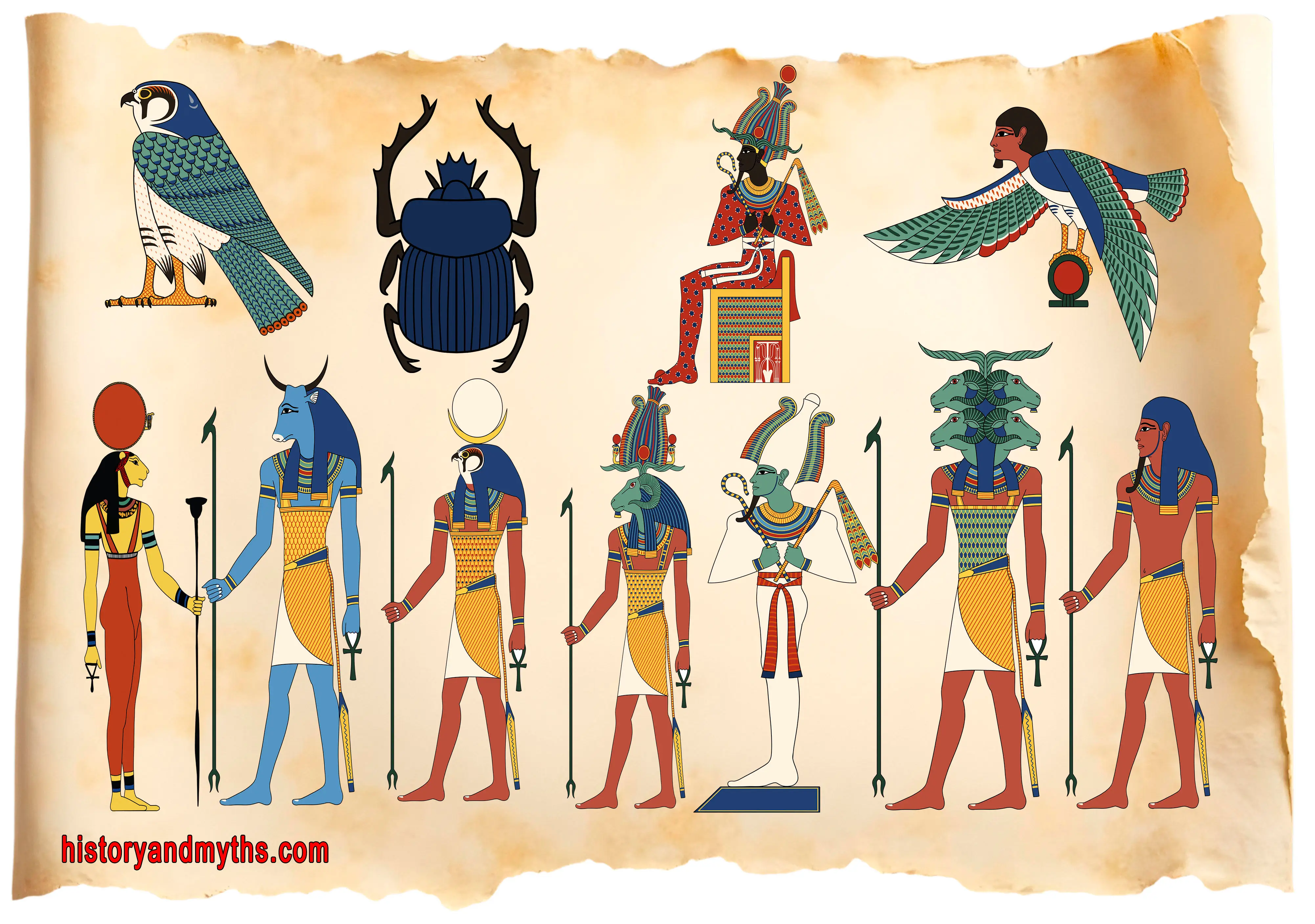
The gods of ancient Egypt were believed to share many traits with humans. They required food, clothing, entertainment, and recreation, much like their mortal worshippers.
These basic needs were met through a series of ritualistic actions and ceremonies, which were formalized into cult practices and liturgies. These pre-established rituals served the gods’ needs, and their repetitive nature created a predictable routine for interaction between humans and the divine. This interaction was central to Egyptian religion, ensuring the gods’ favor and maintaining cosmic order.
For more details about Great Gods of Ancient Egypt
Sources of Evidence for Divine Cults
Archaeological and Written Evidence
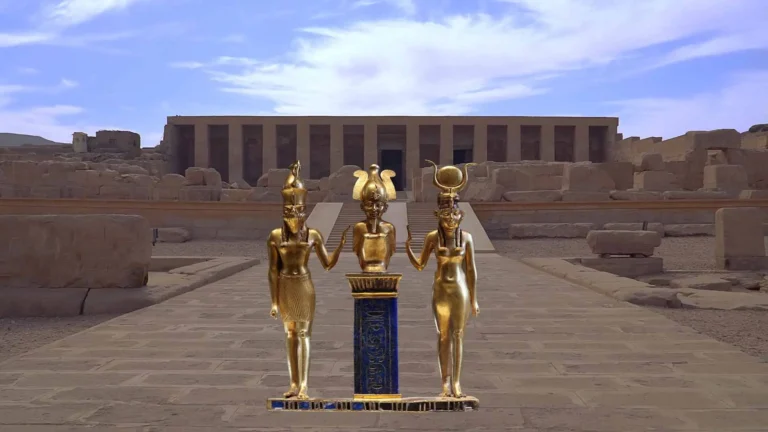
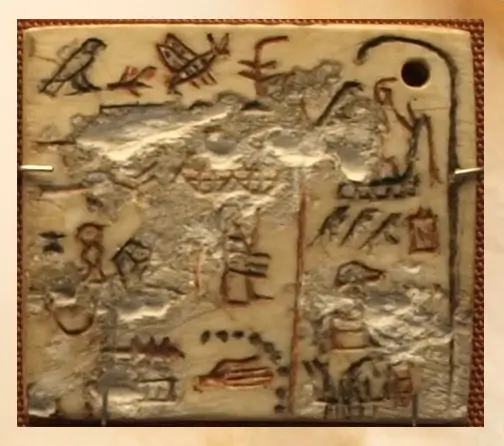
Documentation for divine cults comes from a wide range of sources. These include depictions of deities and brief references to gods and their festivals, recorded on ivory labels and carvings from the First Dynasty, as well as the annals on the Palermo Stone. Later and more detailed information is provided by the reliefs that adorn the walls of temples. Key examples include the eastern interior wall of the hypostyle hall of the Temple of Amun at Karnak, the chapels of the Temple of Seti I at Abydos, and the sanctuaries of the Temples of Horus at Edfu and Hathor at Dendera. These sources are particularly valuable because they depict the individual acts that made up the divine service.
Temple Records and Ritual Texts
Calendars and so-called “menus” carved on temple walls list the types and quantities of offerings used in the cult. Biographical inscriptions record the duties that priests and priestesses performed for the gods. Papyri, such as Papyrus Berlin 3055, contain lengthy records of the liturgies and actions performed before the gods. Although these records date to the New Kingdom or later, there is little reason to assume that the basic services performed for the gods were significantly different in earlier, less well-documented eras.
| Aspect | Role in Divine Cults |
|---|---|
| Divine Needs | Egyptian gods were believed to require food, clothing, purification, and ritual attention, mirroring human needs. |
| Daily Rituals | Performed three times daily, involving purification, offerings, adornment of the divine statue, and formal prayers. |
| Priestly Roles | Hierarchical system including wab priests, lector-priests, and high priests responsible for ritual and administration. |
| Cult Centers | Temples across Egypt acted as focal points for worship, often linked through festivals and ritual processions. |
| Economic Function | Temple cults supported large workforces; offerings redistributed as sustenance and wages for temple personnel. |
| Popular Worship | Beyond temples, individuals left votive offerings and petitions seeking personal divine intervention. |
The Origins and Spread of Divine Cults
A conventional anthropological model suggests that divine cults originated in the worship of local deities, whose veneration eventually spread throughout the country. However, this model does not fully align with the Egyptian context. Textual evidence indicates that the cult centers of many Egyptian deities were unrelated to a god’s earliest attested place of origin. For example, Khnum, whose main cult center developed at Elephantine, was first worshipped in Memphis and Abydos. Similarly, Amun, who became closely associated with Thebes, only gained this geographic link during the early New Kingdom after he supplanted Montu, who had previously been associated with Thebes.
Alongside these gods, who gained their cult centers secondarily, there were purely local deities whose cult centers matched their earliest attestations. Divine cults can be traced well back into the Early Dynastic Period. The cult of Neith, perhaps at Sais, is mentioned on an ivory label of the First Dynasty, and that of a baboon deity called Hedjwer, to whom votive offerings were left, is attested from a label of Semerkhet of the First Dynasty. The Palermo Stone records festivals of the Second Dynasty that may be associated with early divine cults.
|Source=Own work (photo) |Date=August 19, 2008
Fluctuations in the Popularity of Divine Cults
The popularity of certain divine cults fluctuated over time. For example, the cult of Hathor was especially prevalent during the Old Kingdom, while the cult of Amun became important only during the New Kingdom. The worship of Isis did not gain significance until the Ptolemaic Period. These fluctuations may have been influenced by political changes, shifts in religious focus, or the rise of new theological ideas.
The Geographic Distribution of Divine Cults
Divine cults were celebrated throughout Egypt, Nubia, and Egypt’s foreign outposts. Although specific areas were associated with certain gods—Amun with Thebes, Ra with Heliopolis, Satet and Khnum with Elephantine, the cult of a single god was not restricted to a particular area. For example, Hathor had temples in Dendera, Thebes, Nubia, Sinai, and elsewhere. In addition, a deity might have several temples in one area, as documented by the many shrines of Amun in his various aspects in Eastern and Western Thebes.
These cult centers were often linked by divine rituals. For instance, during the annual festival of the marriage of Hathor and Horus, the goddess of Dendera traveled to Edfu. Similarly, Amun of Karnak traveled to the Luxor Temple, and Amun of the Luxor Temple on the eastern bank of the Nile traveled to cult centers at Deir el-Bahri and Medinet Habu on the western bank.
The Economic Role of Divine Cults
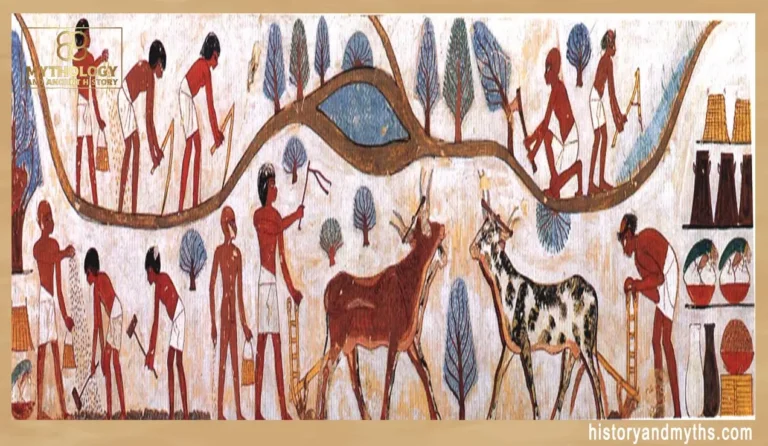
Divine cults played a significant role in the Egyptian economy. Great numbers of people were involved in the fulfillment of rituals, from those who served as priests to those who built and maintained the shrines, wove the fabric of offerings, and grew and prepared the food offerings. The economic structure of the divine cult paralleled that of the state’s, in that the offerings given to the divine image during the thrice-daily offering service reverted to the temple workers as part of their compensation.
The Priestly Hierarchy and Roles
The cult actions were executed by men and women of various ranks, arranged in a hierarchical structure. These roles included the wab priest, a part-time priest who served in the temple on a rotational basis, and the lector-priest, responsible for reciting prayers during the rituals. High-ranking priests, such as the prophets, administered the vast temple domains. The method of priestly appointment is not entirely understood, though inheritance played a significant role. Some appointments were made directly by the king.
Daily Rituals in Divine Worship
The daily cult was enacted three times a day, roughly coinciding with the intervals of meals. The rituals involved adoration of the god and the presentation of offerings. The priest would purify the shrine, present food, and adorn the divine statue. The statue was then returned to its shrine, and the priest exited, erasing his footprints. These rituals mirrored human needs, ensuring the gods’ continued favor and participation in the cosmic order.
How Divine Worship Worked in Practice
- The divine image inside the temple was treated as a living presence that required daily care.
- Ritual service followed a strict sequence of purification, offerings, prayers, and adornment.
- Only ritually pure priests could enter the sanctuary, and service was performed on a rotating basis.
- Offerings presented to the god were later redistributed to temple staff, sustaining the cult economy.
- Major festivals connected different cult centers through ritual journeys and processions.
- Alongside formal temple worship, personal devotion was expressed through votive offerings and prayers.
Informal Worship and Votive Offerings
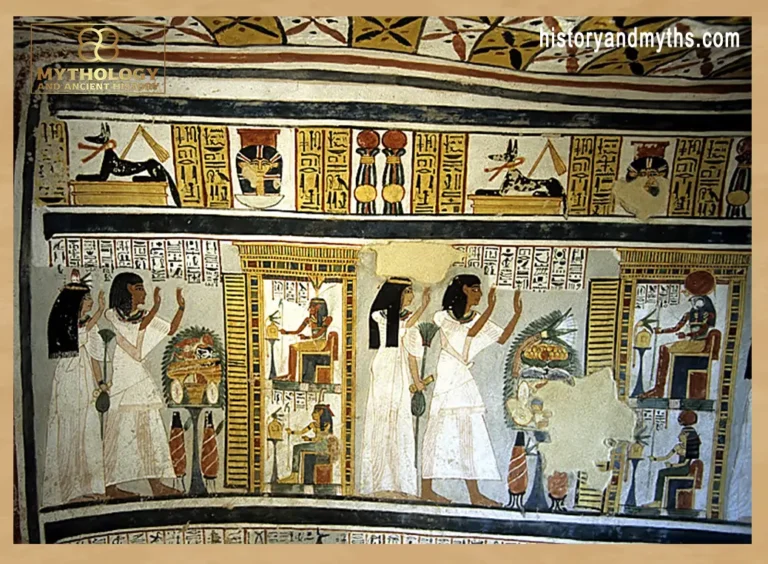
Outside the formalized context of the temple, worship often focused on personal petitions. Individuals would leave votive offerings, such as figurines or food, at shrines in hopes of divine intercession. Evidence of such practices dates back to the Early Dynastic Period, with figurines and offerings found at sites like the Temple of Satet at Elephantine. The cult of Hathor at Deir el-Bahri exemplifies this blend of divine and funerary elements.
Cults of Deified Kings and Individuals
Some kings were worshipped as gods during their lifetimes, with statues serving as focal points for rituals. For example, Ramesses II and Amenhotep III were venerated in this way. Similarly, deified individuals like Imhotep and Amenhotep, son of Hapu, were worshipped for their ability to intercede with the gods. These cults often involved offerings and prayers, with the deified individual acting as an intermediary between the worshipper and the gods.
The Legacy of Divine Worship
Ancient Egyptian divine worship remained remarkably consistent for more than three millennia. Although political dynasties and religious priorities changed, the daily care of the gods, temple rituals, priestly service, and sacred festivals continued to express the Egyptian belief that maintaining Ma’at depended upon an active relationship between humanity and the divine. These traditions shaped not only religious life but also the political, economic, and cultural foundations of ancient Egypt.
Key Takeaways
- Ancient Egyptian gods were believed to have human-like needs that required constant ritual care.
- Daily temple rituals followed a strict sequence repeated three times a day to maintain cosmic order.
- Divine cults relied on a complex priestly hierarchy with clearly defined ritual and administrative roles.
- Temples functioned as major economic institutions, supporting large workforces through offerings.
- Worship extended beyond temples through personal devotion, votive offerings, and local shrines.
- The prominence of specific gods rose and fell over time, shaped by politics and theology.
Frequently Asked Questions
Did ancient Egyptian gods really need food and clothing?
Egyptians believed the gods possessed human-like needs that were fulfilled symbolically through ritual offerings and care.
How often were rituals performed for the gods?
Daily temple rituals were conducted three times a day, reflecting regular human meal times.
Who was allowed to serve the gods inside the temples?
Only ritually purified priests and priestesses could enter the sanctuary and perform divine services.
What was the purpose of daily temple rituals?
These rituals sustained the gods and helped maintain maat, the cosmic order of the universe.
Were divine cults limited to one city or region?
No, most gods were worshipped across multiple regions, even if they had a primary cult center.
How did divine cults affect the Egyptian economy?
Temples functioned as economic hubs, redistributing offerings as food and payment for temple workers.
Did ordinary people interact with the gods outside temples?
Yes, individuals left votive offerings and prayers at shrines seeking personal divine assistance.
Why did some gods become more popular than others over time?
Shifts in political power, theology, and royal patronage influenced the prominence of certain deities.
Sources
- Assmann, Jan. The Search for God in Ancient Egypt. Ithaca: Cornell University Press, 2001.
- Assmann, Jan. Death and Salvation in Ancient Egypt. Ithaca: Cornell University Press, 2005.
- Baines, John, and Jaromír Málek. Atlas of Ancient Egypt. New York: Facts On File, 1980.
- David, Rosalie. Religion and Magic in Ancient Egypt. London: Penguin Books, 2002.
- Frankfort, Henri. Ancient Egyptian Religion: An Interpretation. New York: Harper & Row, 1948.
- Hornung, Erik. Conceptions of God in Ancient Egypt: The One and the Many. Ithaca: Cornell University Press, 1982.
- Hornung, Erik. Idea into Image: Essays on Ancient Egyptian Thought. New York: Timken Publishers, 1992.
- Kemp, Barry J. Ancient Egypt: Anatomy of a Civilization. 2nd ed. London: Routledge, 2006.
- Lesko, Leonard H. “Ancient Egyptian Cults.” In Religion in Ancient Egypt: Gods, Myths, and Personal Practice, edited by Byron E. Shafer. Ithaca: Cornell University Press, 1991.
- Pinch, Geraldine. Egyptian Mythology: A Guide to the Gods, Goddesses, and Traditions of Ancient Egypt. Oxford: Oxford University Press, 2002.
- Quirke, Stephen. Ancient Egyptian Religion. London: British Museum Press, 1992.
- Redford, Donald B., ed. The Oxford Encyclopedia of Ancient Egypt. 3 vols. Oxford: Oxford University Press, 2001.
- Shafer, Byron E., ed. Temples of Ancient Egypt. Ithaca: Cornell University Press, 1997.
- Teeter, Emily. Religion and Ritual in Ancient Egypt. Cambridge: Cambridge University Press, 2011.
- Wilkinson, Richard H. The Complete Gods and Goddesses of Ancient Egypt. London: Thames & Hudson, 2003.
- Wilkinson, Richard H. The Complete Temples of Ancient Egypt. London: Thames & Hudson, 2000.
- British Museum. Ancient Egyptian Religion Collection.
- The Metropolitan Museum of Art. Heilbrunn Timeline of Art History: Ancient Egypt.
- UCLA Encyclopedia of Egyptology. Temple Rituals and Divine Cults in Ancient Egypt.
- Griffith Institute, University of Oxford. Topographical Bibliography of Ancient Egyptian Temples and Religious Sites.
Written by H. Moses — All rights reserved © Mythology and History