What If Ashurbanipal Had Ruled 20 More Years? Assyria’s Fate
Nineveh fell in 612 BCE, roughly nineteen years after Ashurbanipal’s reign probably ended around 631 BCE. By then, Nabopolassar had established his rule in Babylonia, and the Medes had become a major military threat to Assyria. But what if Ashurbanipal had remained on the throne for another twenty years?
His experience might have helped him manage the royal succession, respond earlier to Babylon’s rebellion, and strengthen Assyria’s defenses. Yet his earlier victories had not eliminated political tensions or secured lasting control over every frontier. An extended reign could have changed the events leading to Nineveh’s destruction, but whether it could have preserved the empire itself is a more difficult question.
When Did Ashurbanipal Die?
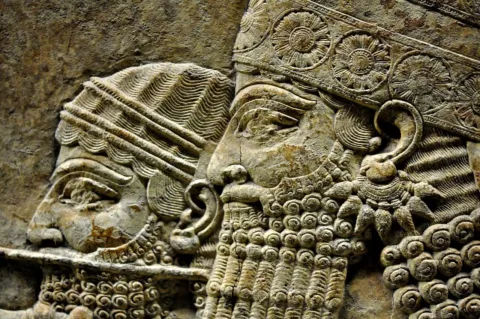
Ashurbanipal ruled Assyria from 668 to approximately 631 BCE, although the exact date and circumstances of his death remain unknown. The last securely dated contemporary evidence of his reign is a Babylonian document from Nippur, dated June 5, 631 BCE, during his thirty-eighth regnal year.
A later inscription commemorating Adad-guppi, the mother of King Nabonidus, credits Ashurbanipal with forty-two years on the throne, suggesting a reign ending in 627 BCE. Written nearly a century after the events, this account conflicts with evidence that his son Aššur-etel-ilāni had succeeded him around 630 BCE.
Most modern reconstructions therefore place the end of Ashurbanipal’s reign around 631 BCE. Whether he died, abdicated, or was removed from power remains uncertain. The later Greek legend of Sardanapalus dying in a burning palace provides no reliable evidence for his fate.
For this alternate history, 631 BCE serves as the point of divergence, with Ashurbanipal continuing to exercise royal authority for another twenty years.
HISTORICAL COUNTERFACTUAL
The Alternate Scenario: Ashurbanipal Rules Until 611 BCE
Ashurbanipal remains on the Assyrian throne for another twenty years, retaining the health and authority needed to govern until approximately 611 BCE, beyond the year Nineveh historically fell.
Everything before 631 BCE remains unchanged. Ashurbanipal has defeated his brother’s rebellion in Babylonia, devastated Elam, and lost effective control over Egypt. His continued reign begins with the same military achievements and unresolved political tensions.
The immediate consequence concerns the succession. Aššur-etel-ilāni does not inherit the throne around 630 BCE, and the subsequent struggle for royal authority cannot unfold as it did historically. Ashurbanipal’s sons and powerful court officials, however, still have competing interests that he must manage.
Babylonia presents the first major test. Historically, Kandalanu died in 627 BCE, and Nabopolassar became king in 626 BCE. With Ashurbanipal still in power, the response to Kandalanu’s death could have been different, potentially changing the circumstances that allowed Nabopolassar to establish his rule.
The question is whether Ashurbanipal could use those additional years to prevent the Babylonian and Median advances that eventually brought enemy armies to Nineveh.
The Assyrian Empire in Ashurbanipal’s Final Years
In the final decade of Ashurbanipal’s reign, Assyria still commanded a vast empire and a powerful army. Yet its recent victories had not secured lasting control over every territory.
Babylonia had been the scene of a particularly damaging conflict. In 652 BCE, Ashurbanipal’s brother Šamaš-šuma-ukīn, the king of Babylon, rebelled against him. Four years of warfare ended with Babylon’s defeat in 648 BCE. Kandalanu subsequently took the Babylonian throne under Assyrian supremacy, but the rebellion had exposed the difficulty of maintaining control over the region.
To the east, repeated Assyrian campaigns devastated Elam, including the sack of Susa in the mid-640s BCE. These victories weakened a longstanding rival without establishing permanent Assyrian control over Elamite territory. Campaigns against Arab tribal leaders placed further demands on the army.
Egypt had also escaped Assyrian control. Following Assyria’s final campaign there around 664/663 BCE, Psamtik I consolidated his authority, extending his rule to Thebes by 656 BCE. By the end of Ashurbanipal’s reign, Egypt had emerged as an independent kingdom.
How much these conflicts had weakened Assyria by 631 BCE is difficult to establish. Most surviving royal inscriptions describe earlier victories, while evidence for the final decade is scarce. We lack reliable figures for the empire’s military strength, financial resources, or territorial losses during those years.
Ashurbanipal therefore remained the ruler of a powerful state, but the surviving evidence does not establish how well equipped it was to withstand another prolonged period of warfare.
Why the Royal Succession Mattered
Ashurbanipal’s departure exposed tensions within the Assyrian royal court. His son Aššur-etel-ilāni succeeded him around 630 BCE, but securing the throne required the intervention of Sîn-šumu-līšir, an influential chief eunuch who helped suppress an early rebellion. Royal land grants acknowledge the official’s role, revealing how heavily the new king depended on powerful figures within the administration.
By 627 BCE, the situation had developed into a struggle involving Aššur-etel-ilāni, his brother Sîn-šarra-iškun, and Sîn-šumu-līšir, who had claimed kingship himself. A document from Nippur, dated to Aššur-etel-ilāni’s fourth regnal year, shows that he remained alive after rival royal claims had emerged. The evidence does not establish who initiated the conflict or precisely how it unfolded. Sîn-šarra-iškun eventually secured the throne.
Had Ashurbanipal remained in power, the succession of 630 BCE would not have taken place. He might have managed his sons’ competing ambitions and limited the influence of officials seeking greater authority. This could have preserved a unified royal command during a critical period, although a prolonged reign might also have intensified competition among potential heirs awaiting their father’s death.
Could Ashurbanipal Have Stopped Nabopolassar?
Kandalanu’s death in 627 BCE left Babylonia without an established successor, while rival Assyrian authorities struggled for control. The Babylonian Chronicle records a year without a recognized king before Nabopolassar took the throne in November 626 BCE. This period of uncertainty offered an opportunity for rebellion.
Assyria was still capable of mounting a military response. According to the Early Years of Nabopolassar Chronicle, Assyrian forces compelled Nabopolassar to withdraw from Nippur but subsequently retreated after confronting him at Uruk. Another offensive ended in a major defeat near Babylon. These setbacks strengthened Nabopolassar’s position, although control of several Babylonian cities remained contested.
Had Ashurbanipal remained king, he could have arranged Kandalanu’s succession, coordinated military operations, and negotiated with influential Babylonian elites. His authority might have prevented the competing claims and divided command that complicated Assyria’s response.
Yet suppressing Nabopolassar would have required more than battlefield victories. Ashurbanipal had already defeated his brother Šamaš-šuma-ukīn’s rebellion, only to face continuing difficulties maintaining Babylonian loyalty. Securing the cooperation of major cities and their religious institutions would have been essential to restoring stable rule.
An earlier intervention might have prevented Nabopolassar from establishing an independent kingdom in 626 BCE. The harder task would have been maintaining Assyrian authority over Babylonia without provoking another prolonged rebellion.
The Medes, Elam, and Egypt: Allies or Enemies?
The Medes would eventually become one of Assyria’s most dangerous enemies, although their political strength around 631 BCE remains uncertain. Earlier Assyrian records describe local rulers and communities in the Zagros region rather than a clearly unified Median kingdom. By 614 BCE, however, Median forces under Cyaxares had captured Aššur, and two years later they joined the Babylonians in the assault on Nineveh.
Ashurbanipal might have used his extended reign to reinforce Assyria’s eastern defenses and negotiate with individual Median leaders before a powerful coalition emerged. The difficulty would have been identifying which rulers could be trusted and whether such agreements could survive the growing influence of Cyaxares.
Elam offered a different diplomatic challenge. Ashurbanipal had sacked Susa in 646 BCE, but Elamite political life survived the destruction. Instead of pursuing further campaigns, he could have sought agreements with local rulers to secure Assyria’s southeastern frontier and reduce the risk of renewed hostility.
Egypt presented an opportunity for cooperation. Although Psamtik I had established an independent kingdom, Egyptian and Assyrian forces cooperated against Nabopolassar in 616 BCE, pursuing his army as far as Gablini before withdrawing without catching him. Ashurbanipal might have pursued such an alliance earlier, particularly to defend Assyrian interests along the Euphrates and in the Levant. Recovering Egypt by force would have demanded far greater resources without assuring its lasting submission.
Would Nineveh Still Have Fallen in 612 BCE?
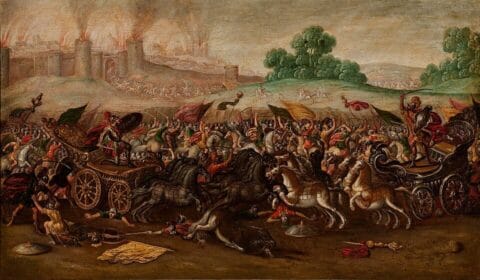
Nineveh’s fall followed a series of military defeats that brought Babylonian and Median forces into the Assyrian heartland. In 615 BCE, Assyria repelled a Babylonian attack on Aššur. The following year, however, the Medes captured Tarbiṣu near Nineveh and sacked Aššur itself. Nabopolassar then formed an alliance with the Median king Cyaxares.
In 612 BCE, their combined armies besieged Nineveh for three months. Although Sîn-šarra-iškun had reinforced the city’s defenses, the attackers captured and plundered the capital. The Fall of Nineveh Chronicle records the Assyrian king’s death during these events but does not explain how he died.
For Ashurbanipal, the decisive opportunity would have come before the siege. Retaining control of Babylonia could have deprived the Medes of a powerful ally, while stronger frontier defenses might have delayed their advance into northern Assyria. Preventing the loss of Aššur in 614 BCE would have been particularly important.
If the Babylonian and Median armies nevertheless reached Nineveh, Ashurbanipal would have faced a formidable military challenge. His experience might have improved the city’s defense or allowed him to organize a retreat and continue resistance elsewhere. Neither outcome would have required Nineveh to survive.
The strongest possibility for changing the events of 612 BCE therefore lay in preventing the two enemy armies from combining their forces against the capital, rather than relying on Ashurbanipal to win a siege under the same conditions that defeated his successors.
What If the Assyrian Empire Had Never Collapsed?
Explore a different alternate history in which Nineveh survives the Babylonian and Median assault of 612 BCE.
The Problems Even Ashurbanipal Could Not Solve
Assyria’s vast territory depended on provincial governors, military commanders, and dependent rulers who collected tribute, maintained order, and supplied troops. Ashurbanipal could direct these officials, but governing distant provinces still required their cooperation and sufficient resources to enforce royal decisions.
Military campaigns posed another challenge. Suppressing rebellions demanded troops, supplies, and repeated intervention, while victories did not always secure lasting obedience. Reducing these burdens might have required Ashurbanipal to accept greater local autonomy or abandon territories that were becoming too costly to control.
Environmental pressures may also have affected Assyria’s stability. A 2019 study of stalagmites from Kuna Ba Cave in northern Iraq identified prolonged drought during the seventh century BCE and proposed that declining agricultural productivity contributed to the empire’s collapse. The extent of the resulting economic damage remains uncertain. A separate 2016 study examining an earlier drought hypothesis questioned the evidence for prolonged famine and highlighted grain storage and irrigation as ways Assyrian communities could withstand poor harvests.
The surviving records provide too little information to measure Assyria’s financial reserves or military strength during its final decades. Ashurbanipal might have improved the administration of his empire, but maintaining distant territories, financing armies, and managing agricultural uncertainty would still have demanded difficult choices.
Three Possible Futures for Assyria
1. Assyria Maintains Its Imperial Power
If Ashurbanipal had prevented Nabopolassar from establishing his kingdom in 626 BCE, Assyria might have retained Babylonia and the resources needed to defend its northern territories. Without an independent Babylonian army attacking from the south, the Medes would have faced a more difficult campaign against the Assyrian heartland.
This could have preserved Assyria as a major regional power beyond 612 BCE. Its longer-term stability, however, would have depended on maintaining control of Babylonia and securing the succession after Ashurbanipal’s death.
2. A Smaller Assyrian Kingdom Survives
Ashurbanipal might instead have accepted the loss of Babylonia and concentrated his forces around Nineveh, Aššur, and northern Mesopotamia. Defending a smaller territory could have reduced military commitments and made the remaining kingdom easier to govern.
The cost would have been substantial. Assyria would have lost valuable territory and revenue, while its survival would still depend on securing its southern border and resisting Median expansion. Nabopolassar might also have rejected any settlement that left a powerful Assyrian kingdom intact.
3. Ashurbanipal Witnesses the Empire’s Collapse
If Nabopolassar consolidated Babylonia and Cyaxares continued his campaigns against Assyria, even Ashurbanipal might have failed to prevent Nineveh’s destruction in 612 BCE.
Under the scenario’s assumption that he survived until approximately 611 BCE, Ashurbanipal would have had to escape the capital and attempt to continue his rule elsewhere. Harran was one possible refuge. In actual history, Aššur-uballiṭ II established his authority there after Nineveh fell, and Assyrian resistance continued until the unsuccessful campaign to recover Harran in 609 BCE.
Ashurbanipal might therefore have spent his final year defending the remnants of his kingdom rather than ruling a restored empire.
Conclusion
Ashurbanipal’s extended reign might have changed Assyria’s fate by preventing the succession crisis and giving the empire a stronger response to Nabopolassar’s rebellion. His greatest opportunity lay in the years before Babylonia became an independent power capable of challenging Assyrian rule.
If he had contained that rebellion and protected Assyria’s eastern frontier, Nineveh might never have faced the siege of 612 BCE. If those efforts failed, even an experienced king could have lost his capital. The decisive factor was not how long Ashurbanipal lived, but whether his continued rule could change the political and military conditions that brought the empire down.
Sources & Primary Texts
This article draws on contemporary Babylonian chronicles, Assyrian royal inscriptions, and modern historical research. The alternate scenario is a counterfactual interpretation based on these sources, not an account of events that actually occurred.
Primary Texts and Royal Inscriptions
- Early Years of Nabopolassar Chronicle (ABC 2)
, BM 25127. Contemporary Babylonian account of Nabopolassar’s rise, his early campaigns, and the struggle for control of Babylonia. - Fall of Nineveh Chronicle (ABC 3)
, BM 21901. Babylonian record of the campaigns against Assyria, the Median alliance, Nineveh’s destruction in 612 BCE, and the final resistance at Harran. - Novotny, Jamie, Joshua Jeffers, and Grant Frame (2023).
The Royal Inscriptions of Ashurbanipal, Aššur-etel-ilāni, and Sîn-šarra-iškun, Part 3. RINAP 5/3. Critical editions of royal inscriptions, with studies of Ashurbanipal’s final years and the succession crisis.
Academic Studies
- Oates, Joan (1965).
“Assyrian Chronology, 631–612 B.C.” Iraq, 27(2), 135–159. Examination of chronological uncertainties surrounding Ashurbanipal’s successors and the empire’s final decades. - Oates, Joan. “The Fall of Assyria (635–609 B.C.).”
In The Cambridge Ancient History, Volume III, Part 2. Historical analysis of the political and military events leading to Assyria’s collapse. - Radner, Karen. “The Medes, Purveyors of Fine Horses.”
Assyrian Empire Builders. University College London / Oracc. Evidence for Median communities and their relationship with Assyria. - Sinha, Ashish, et al. (2019).
“Role of Climate in the Rise and Fall of the Neo-Assyrian Empire.” Science Advances, 5(11), eaax6656. Speleothem evidence for prolonged drought and its possible effects on Assyrian agriculture. - Sołtysiak, Arkadiusz (2016).
“Drought and the Fall of Assyria: Quite Another Story.” Climatic Change, 136, 389–394. A critical assessment of an earlier drought hypothesis and the evidence for agricultural crisis.
Copyright & Attribution
© 2026 History & Myths. All rights reserved. Original historical analysis, writing, and counterfactual interpretation by History & Myths.
Historical sources are credited in the references above. Images and historical artworks, where used, retain their respective copyright or licensing terms and are credited separately.