What If the Western Roman Empire Never Fell? Rome’s Second Chance
In 476 CE, Odoacer deposed Romulus Augustulus, ending imperial rule by a western emperor in Italy. But the Western Roman Empire had been weakening for decades. It had lost control of much of its territory, struggled to finance its armies, and suffered a major economic blow when the Vandals captured Carthage in 439.
Eight years before its conventional fall, Rome had a chance to reverse that decline. In 468 CE, a massive expedition against the Vandals ended in disaster near Cape Bon. Had the Roman fleet survived and Carthage been recovered, the western government might have regained the resources needed to defend its remaining territories.
Military victory alone, however, could not resolve the empire’s political rivalries or eliminate the Germanic kingdoms. Could control of North Africa have given the Western Roman Empire enough strength to survive beyond 476, even without restoring its former borders?
Why Did the Western Roman Empire Fall?
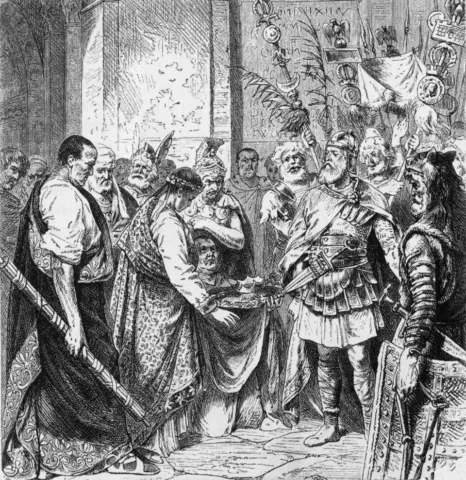
By the fifth century, western emperors were losing control of territories they could no longer defend effectively. The Visigoths expanded in Gaul and Hispania, while other groups established kingdoms within Roman borders. Some maintained agreements with imperial authorities, but their growing independence reduced the government’s ability to enforce its rule.
The loss of Carthage to the Vandals in 439 was especially damaging. North Africa supplied grain and substantial tax revenue. Without that income, the western government had fewer resources to pay its soldiers, defend remaining provinces, or finance campaigns to recover lost territory.
Political struggles compounded these difficulties. Emperor Valentinian III killed his powerful general Aetius in 454 and was assassinated the following year. Ricimer subsequently gained considerable influence over imperial appointments, leaving several emperors dependent on his military support.
By 476, the government in Italy controlled only a fraction of the former western provinces. Odoacer removed Romulus Augustulus, ending the rule of western emperors based in Italy. Yet Julius Nepos, recognized by Constantinople, retained his imperial claim from Dalmatia until his death in 480. The Eastern Roman Empire continued to govern from Constantinople.
The Historical Turning Point: The Failed Invasion of 468
In 468 CE, Eastern Emperor Leo I and Western Emperor Anthemius launched a joint campaign to recover North Africa from the Vandals. Ancient accounts describe a fleet of roughly 1,100 ships, although its exact size remains uncertain.
The campaign initially went well. Marcellinus recaptured Sardinia, while Heraclius seized Vandal-held territory in Tripolitania and advanced toward Carthage. Basiliscus, commanding the main Roman fleet, anchored near Cape Bon, within striking distance of the Vandal capital.
According to the sixth-century historian Procopius, the Vandal king Geiseric requested a five-day truce. Basiliscus agreed, giving his opponent time to prepare. When favorable winds arrived, the Vandals released burning boats toward the Roman fleet and followed with warships. Fire spread among the crowded vessels, throwing the Romans into confusion. Basiliscus withdrew after suffering heavy losses.
Procopius suggested that cowardice or treachery might explain Basiliscus’s hesitation and reported allegations of bribery. These accusations remain unproven.
The expedition ended without recovering Carthage. Marcellinus was murdered during the campaign’s final stages, and the remaining Roman forces withdrew. The defeat cost the empire an enormous investment in ships, soldiers, and money, while North Africa remained under Vandal control.
The Point of Divergence: What If the Roman Fleet Survived?
In Procopius’s account of the 468 campaign, Geiseric requests a five-day truce near Cape Bon. In this alternate timeline, Basiliscus refuses and keeps his fleet ready to maneuver instead of waiting at anchor.
Geiseric loses the opportunity to exploit the delay. Vandal fire ships remain a threat, but Roman crews can spread out, watch the approaches, and respond before their vessels become trapped together. The fleet avoids the disaster that destroyed the historical expedition.
Survival does not guarantee victory. Basiliscus must still land his troops, maintain supply lines, and coordinate with Roman forces advancing from Tripolitania. Geiseric controls Carthage, and Vandal resistance could turn the invasion into a prolonged campaign.
The Romans now have the naval strength to continue fighting for North Africa. Recovering its provinces could provide the Western Empire with badly needed resources, but only if the campaign succeeds and the two imperial courts agree on control of the recovered territory.
The Alternate Timeline: How the Western Roman Empire Might Survive
One possible counterfactual timeline beginning with the survival of the Roman fleet in 468 CE. The events below are hypothetical, not recorded history.
468 CE: The Roman Offensive Continues
With his fleet intact, Basiliscus advances toward Carthage. Roman forces approaching from Tripolitania threaten the Vandals from the east, while the recovery of Sardinia strengthens Rome’s position in the central Mediterranean. Geiseric must defend his kingdom against a coordinated invasion.
469–470 CE: Carthage Falls to Rome
In this scenario, Roman forces capture Carthage after a prolonged campaign. Restoring imperial administration takes longer. Tax collection, local loyalties, and military security must be addressed before the recovered provinces can provide reliable revenue.
471–472 CE: Anthemius Strengthens His Position
Victory improves Anthemius’s political standing, but his rivalry with Ricimer remains dangerous. To avoid civil war, they reach an uneasy compromise. Anthemius retains the throne while Ricimer preserves substantial military authority.
473–476 CE: The Western Empire Avoids Collapse
With African revenues gradually recovering, the western government concentrates on Italy, Sicily, and its remaining Mediterranean territories. Rather than immediately reconquering Gaul and Hispania, it negotiates with regional rulers and strengthens its defenses. The crisis that historically ended western imperial rule in Italy in 476 is avoided.
480–500 CE: A Smaller Roman Empire Takes Shape
The western government survives with limited territory. Visigothic, Burgundian, and Frankish rulers retain much of western Europe. Roman emperors increasingly depend on diplomacy, regional agreements, and a sustainable army rather than attempting to restore the empire’s former borders.
The Sixth Century: Survival Without Restoration
By the later sixth century, a western Roman state might still govern Italy and parts of the Mediterranean. Its institutions and relationship with Constantinople would have evolved, but succession disputes, external threats, and economic crises could still undermine its survival.
Historical distinction: The failed expedition of 468 and the political crises of 472 and 476 are documented events. The survival, reconquests, and political settlements described in this timeline are hypothetical.
Could Rome Reclaim North Africa?
Carthage was within reach of the Roman expedition in 468, but Geiseric still commanded an established kingdom. Even with the fleet intact, Roman forces would have needed to secure their supply lines, defeat Vandal resistance, and establish control beyond the capital. Geiseric might also have negotiated a settlement rather than risk losing his kingdom.
Rebuilding Roman authority would present another challenge. The Vandals had preserved elements of Roman administration and employed Romano-African officials, whose experience could help restore provincial government. Yet collecting taxes and maintaining security would require cooperation from local elites and reliable military garrisons.
The eastern and western courts would also have to settle control of the recovered provinces. Leo I had financed much of the expedition, and Constantinople might demand a share of African revenues or direct authority over some territories. A Roman victory would not automatically restore North Africa’s wealth to the western treasury.
The later reconquest under Justinian offers a useful comparison. Belisarius defeated the Vandals in 533–534, but Roman forces subsequently faced military mutinies and resistance from regional rulers. An earlier victory could likewise restore North Africa to Roman control without guaranteeing lasting stability or sufficient revenue to sustain the Western Empire.
Could the Western Empire Survive Beyond 476?
Recovering North Africa would not resolve the Western Empire’s political divisions. Anthemius still faced Ricimer, the powerful general who commanded much of the army in Italy. In actual history, their rivalry ended in civil war. Ricimer besieged Rome in 472, and Anthemius was killed.
Victory against the Vandals could strengthen Anthemius’s authority, particularly if the western treasury received revenues from the recovered provinces. He might use those resources to reward loyal commanders and reduce his dependence on Ricimer. Yet confronting the general militarily could trigger another civil war. The compromise imagined in this timeline would allow both men to retain power, at least temporarily.
Army loyalty remained another problem. In 476, troops serving Orestes demanded land in Italy. When he refused, they rallied behind Odoacer. A better-funded western government might have reduced the risk of such a revolt, but regular pay could not guarantee obedience or settle every dispute over land.
Long-term survival would depend on something Roman emperors had repeatedly struggled to secure: a stable succession and commanders willing to accept imperial authority. Without these, the empire might avoid the events of 476 only to collapse in a later civil war
What Would Happen to the Germanic Kingdoms?
The Germanic kingdoms would not disappear if the Western Roman Empire survived. By 468 CE, several already controlled substantial territories and maintained their own armies. A stronger imperial government would have to negotiate with some rulers while confronting others.
The Vandals would face the greatest threat. If Rome recaptured Carthage, Geiseric could lose his kingdom or be forced to accept a settlement. Surviving Vandal forces might nevertheless continue resisting Roman rule.
The Visigoths presented a more difficult challenge. Under King Euric, who took power in 466, they expanded across Gaul and Hispania. A surviving empire might resist some of these conquests or negotiate new territorial agreements. Recovering the entire Visigothic kingdom, however, would be far beyond the immediate capabilities of a weakened western army.
The Burgundians had closer ties to Roman imperial authority. Their rulers controlled territory along the Rhône valley and maintained political connections with Roman officials. Continued imperial government might preserve these arrangements, allowing Burgundian leaders considerable autonomy while keeping them within a Roman political framework.
The Franks were gaining influence in northern Gaul. In actual history, Clovis defeated Syagrius, a Roman ruler based around Soissons, around 486. If the Western Empire survived, it might support the remaining Roman forces in the region or negotiate with Frankish leaders. Neither arrangement would guarantee lasting peace.
The likely result would be a Western Empire sharing political power with regional kingdoms rather than ruling all its former provinces directly.
Read Also
- What If Rome Had Won at Teutoburg Forest?Could a Roman victory in Germania have changed the empire’s frontiers and its long-term survival?
- What If Julius Caesar Had Not Been Assassinated?Explore how Caesar’s survival might have changed Roman politics, succession, and the future of the Republic.
- What If Hannibal Had Captured Rome After Cannae?Examine whether capturing Rome in 216 BCE could have broken the Republic’s power.
- What If Spartacus Had Defeated Rome?Discover how a decisive rebel victory might have challenged Roman military and political authority.
Would the Eastern and Western Roman Empires Remain Separate?
Since 395 CE, eastern and western emperors had governed from separate courts, but the empire was not formally divided into two independent states. Both administrations remained part of a shared Roman imperial system. In 467, Eastern Emperor Leo I demonstrated Constantinople’s influence by placing Anthemius on the western throne.
If the Western Empire survived, the two courts could continue cooperating on military campaigns and diplomacy. A financially stronger western government might act more independently, although disputes over provincial revenues, military commands, and imperial appointments could strain their relationship.
Survival would also change the circumstances of Justinian’s sixth-century campaigns. If a western emperor still controlled Italy, there would be no Ostrogothic kingdom there for Constantinople to reconquer as it did beginning in 535. Nevertheless, succession disputes or military conflicts could still invite eastern intervention.
The empire might therefore continue under two cooperating emperors, occasionally unite under one ruler, or develop increasingly separate political interests without abandoning its shared Roman identity.
How Might Western Europe Develop Differently?
In Italy and a recovered North Africa, continued imperial taxation could help maintain ports, roads, and Mediterranean trade. Regular shipments between the two regions might preserve economic connections that weakened in parts of the post-Roman West. However, many cities were already changing before 476, and some would have continued to decline even under Roman rule.
Roman law might follow a different path. In actual history, Germanic rulers preserved and adapted Roman legislation. The Visigothic king Alaric II, for example, issued the Breviary of Alaric in 506. A surviving western government could instead continue developing imperial legislation through its own courts and officials in the territories it controlled.
Christianity would remain influential. Bishops had already acquired important responsibilities in late Roman cities, but their relationship with a surviving western emperor could differ from the arrangements that developed under Germanic kings. Imperial involvement in church affairs might remain more direct, without necessarily reducing episcopal authority.
Latin would also continue evolving. Regional differences existed centuries before the Western Empire fell and eventually contributed to the Romance languages. Continued imperial administration might strengthen the use of written Latin across surviving Roman territories, but it could not prevent spoken varieties from developing independently.
Could the Western Roman Empire Survive for Centuries?
Surviving beyond 476 would not guarantee the Western Empire a long future. Its rulers would need dependable tax revenues, an army they could afford, and a stable system of succession. Recovering North Africa might give them the resources to address these problems, but lasting survival would require political reforms.
Over time, a smaller empire centered on Italy and the central Mediterranean might become more manageable. It could preserve Roman law and imperial institutions while adapting its administration and military organization to changing circumstances. Such a state would remain Roman without resembling the empire at its greatest extent.
Some challenges would be beyond any emperor’s control. Major volcanic eruptions in 536 and 540 brought prolonged cooling, while plague appeared in the Mediterranean in 541. These events could threaten harvests, populations, and government revenues, although the scale of the plague’s wider demographic impact remains debated.
The Eastern Roman Empire demonstrated that survival through transformation was possible. Despite losing extensive territories in the seventh century, it adapted its institutions and continued for centuries. A western state might follow a similar path, fragment into smaller kingdoms, reunite with Constantinople, or collapse during a later crisis.
Saving the Roman fleet in 468 could have changed the fate of the Western Empire. Whether that opportunity would produce centuries of survival or merely postpone its fall would depend on decisions and challenges far beyond the original victory.
Academic Sources & Historical References
The historical background of this article is supported by ancient accounts and modern scholarship on the Western Roman Empire, the Vandal kingdom, and the political and economic changes of Late Antiquity. The alternate timeline is a historical counterfactual, not a reconstruction of events that actually occurred.
Primary Historical Source
- Procopius of Caesarea.
History of the Wars, Book III (The Vandalic War), Chapter 6.
English translation by H. B. Dewing. Loeb Classical Library, 1916.
Read the ancient account.
The principal surviving narrative of the Roman expedition against the Vandals in 468, including Basiliscus, Geiseric, the proposed truce, and the destruction of the fleet. Procopius wrote decades after the events, and his allegations of treachery require caution.
Modern Academic Scholarship
- Heather, Peter (2005).
The Fall of the Roman Empire: A New History of Rome and the Barbarians.
Oxford University Press.
University publication record.
Examines the military, political, and territorial pressures behind the collapse of the Western Roman Empire, including the loss of North Africa. - MacGeorge, Penny (2002).
Late Roman Warlords.
Oxford Classical Monographs. Oxford University Press.
View academic book.
A detailed study of late western military leaders, including Marcellinus, Ricimer, and Orestes, and their roles in the empire’s political instability. - Cameron, Averil.
“Vandal and Byzantine Africa.”
In The Cambridge Ancient History, Volume 14: Late Antiquity, Empire and Successors, AD 425–600, pp. 552–569.
Cambridge University Press.
View academic chapter.
Discusses Vandal rule in North Africa and the later Roman reconquest under Justinian, providing historical context for the possibility of an earlier recovery. -
Haldon, John (2021).
“Historicizing Resilience: The Paradox of the Medieval East Roman State, Collapse, Adaptation, and Survival.”
In Empires and Communities in the Post-Roman and Islamic World, c. 400–1000 CE, pp. 89–120.
Oxford University Press.
View academic chapter.
Explores how the Eastern Roman Empire adapted to major territorial and political losses, offering a historical comparison for long-term western survival. - Adams, J. N. (2007).
The Regional Diversification of Latin, 200 BC–AD 600.
Cambridge University Press.
View academic book.
Documents regional differences in Latin before and after the fifth century, providing context for the possible linguistic consequences of imperial survival. - Rapp, Claudia (2005).
Holy Bishops in Late Antiquity: The Nature of Christian Leadership in an Age of Transition.
University of California Press.
View academic book.
Examines the growing civic and political authority of bishops in the late Roman world. - Büntgen, Ulf, et al. (2016).
“Cooling and Societal Change during the Late Antique Little Ice Age from 536 to around 660 AD.”
Nature Geoscience, 9, pp. 231–236.
Read scientific study.
Provides evidence for the climatic cooling associated with sixth-century volcanic eruptions, an environmental challenge that a surviving Western Empire might also have faced.
Research note: Historical events and dates are distinguished from the hypothetical scenario. The survival of Basiliscus’s fleet, the recovery of Carthage, and the political compromise between Anthemius and Ricimer are proposed counterfactual developments, not documented events. Their consequences remain uncertain.
Copyright & Content Rights
© 2026 History & Myths. All rights reserved.
The original writing, organization, and alternate-history analysis in this article are protected by copyright. Unauthorized reproduction or republication of substantial portions of this content is prohibited without permission.
Historical events and ancient sources are not claimed as proprietary material. Modern scholarly publications and translations remain subject to their respective authors’ and publishers’ rights. The hypothetical scenario is an original editorial interpretation and should not be presented as documented history.