Why Did Babylon Become the Sacred Heart of Mesopotamian Religion?
Why did Babylon become the holiest city in Mesopotamian religion when older and equally important cities already existed? Why did kings from across Mesopotamia seek recognition there, and how did the city’s religious status become inseparable from the rise of Marduk?
Babylon did not become sacred simply because it was ancient or politically powerful. Its religious importance grew through a combination of mythology, royal ideology, and temple tradition that gradually transformed the city into the symbolic center of the Babylonian universe. As Marduk rose to supremacy, Babylon itself became the place where divine authority, kingship, and cosmic order were believed to meet.
This article explains how Babylon became the religious heart of Mesopotamia, why its sacred status replaced earlier religious centers such as Nippur, and what the city’s temples, festivals, and creation myths reveal about the relationship between religion and political power in Babylonian civilization.
Babylon Was Not Originally Mesopotamia’s Sacred City
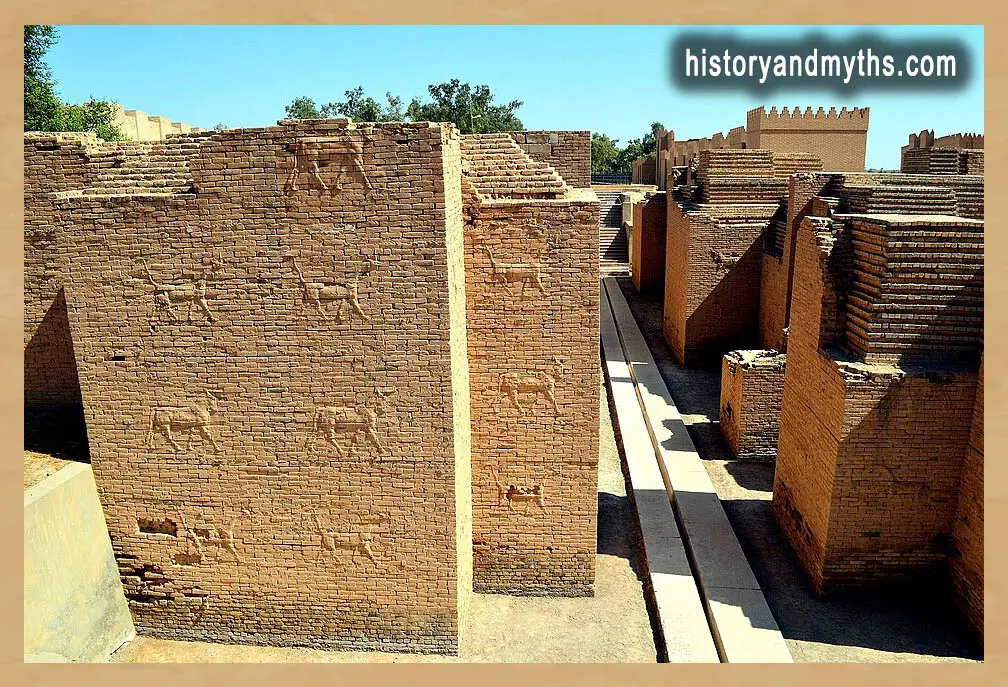
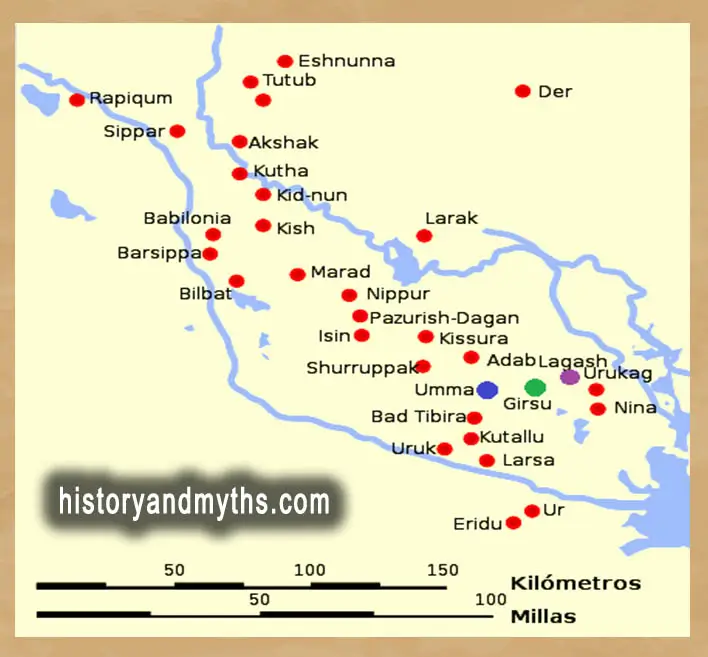
Babylon did not begin as the religious center of Mesopotamia. For much of early Mesopotamian history, older cities such as Nippur, Eridu, and Ur held far greater spiritual prestige. Nippur was regarded as the city of Enlil, the supreme god of the Sumerian pantheon, while Eridu was closely associated with Enki, the god of wisdom and fresh waters. Their temples attracted royal patronage centuries before Babylon emerged as a major political power.
Early Babylon was an important urban settlement, but it did not possess the same religious authority as these ancient centers. Kings seeking divine legitimacy traditionally honored established sanctuaries rather than Babylon itself. Sacred status was earned through long-standing religious traditions, influential temples, and the gods believed to dwell there, not simply through political importance.
The situation changed during the rise of Babylon under the Amorite kings, especially after Hammurabi united much of southern Mesopotamia. Political success alone, however, could not transform Babylon into the holiest city of the region. To achieve that position, Babylonian priests and scholars gradually reshaped the religious landscape itself, elevating Marduk above older deities and presenting Babylon as the place where divine authority, kingship, and cosmic order were centered. Understanding this transformation is the key to explaining why Babylon eventually replaced older sacred cities in the Mesopotamian imagination.
| Aspect | Babylon’s Sacred Status |
|---|---|
| Religious Role | Center of Marduk’s worship and Babylonian religious authority |
| Main Temple | Esagila Temple |
| Key Myth | Enuma Elish |
| Major Festival | Akitu (New Year Festival) |
| Why It Became Sacred | Theology, royal ideology, temples, and ritual traditions |
| Historical Importance | Religious center without replacing every older sacred city |
How Babylon Became Mesopotamia’s Religious Center
Babylon’s rise as a sacred city was not the result of military conquest alone. Its religious importance grew as political power, temple authority, and mythology reinforced one another. As Babylon became the dominant kingdom in southern Mesopotamia, its priests promoted Marduk as the supreme deity whose authority extended over the entire cosmos. The city’s growing influence was therefore presented as part of the divine order rather than a temporary political success.
Babylon was never declared a “holy city” through a formal religious decree. Its sacred status emerged gradually as myths, temples, festivals, and royal ideology reinforced one another across centuries.
This transformation reached its clearest expression in the Enuma Elish, where Marduk defeats the forces of chaos and is recognized by the other gods as their king. After his victory, Babylon is established as his chosen city, and the Esagila temple becomes the earthly center of his rule. In this narrative, Babylon is not simply where Marduk is worshipped, it becomes the place where cosmic authority is believed to reside.
From that point onward, Babylon’s religious status rested on more than its temples or its rulers. The city represented the connection between heaven and earth, divine order and human government. Pilgrimages, royal ceremonies, and major religious festivals all reinforced the belief that Babylon occupied a unique position within the Mesopotamian religious world, allowing its sacred identity to endure long after political circumstances changed.
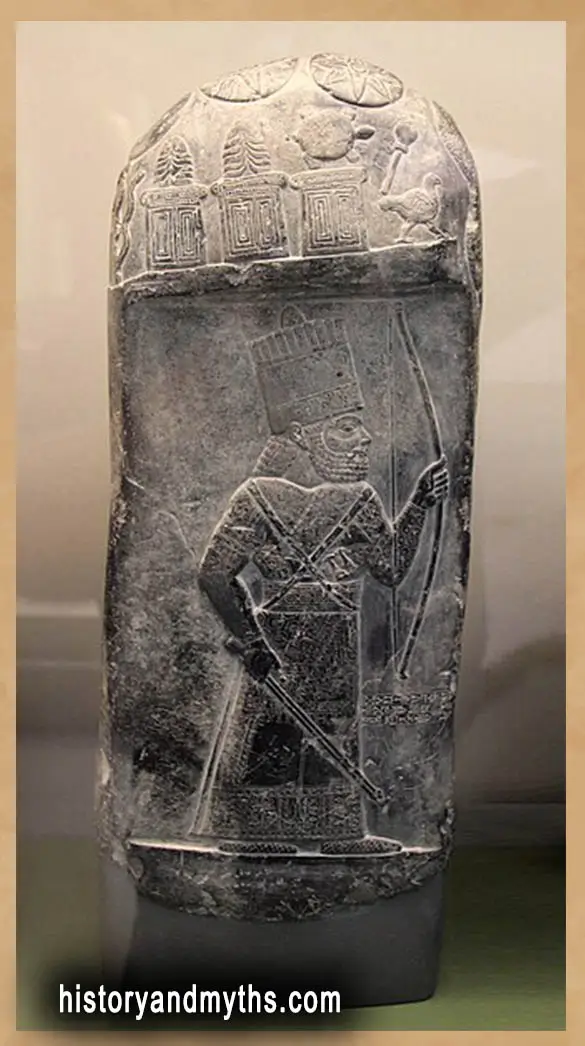
How Temples and Festivals Reinforced Babylon’s Sacred Status
Babylon’s sacred identity was maintained through religious institutions that connected mythology with everyday worship. At the center stood the Esagila, the principal temple of Marduk, where priests performed rituals believed to preserve harmony between the divine and human worlds. The temple was more than a place of worship, it symbolized Marduk’s presence within the city and confirmed Babylon’s position at the heart of the religious landscape.
The annual Akitu Festival strengthened this belief even further. During the celebration, religious ceremonies renewed Marduk’s authority and reaffirmed the king’s legitimacy before the gods. By linking political leadership with sacred ritual, the festival reminded both rulers and ordinary people that Babylon’s importance rested on divine approval as much as royal power.
Together, the Esagila and the Akitu Festival transformed Babylon’s sacred status into a living tradition. Pilgrims, priests, officials, and kings all participated in ceremonies that continually reinforced the idea that the city’s religious role was not a memory of the past but an essential part of Mesopotamian life.
Why Did Babylon Become Sacred?
- Marduk’s rise transformed Babylon into the center of Babylonian theology.
- The Esagila Temple represented Marduk’s earthly residence.
- The Enuma Elish linked Babylon directly to cosmic order.
- The Akitu Festival renewed both divine and royal authority every year.
- Royal patronage strengthened Babylon’s religious prestige across Mesopotamia.
- Sacred status developed gradually rather than through an official declaration.
© historyandmyths.com — Educational use
What Babylon’s Sacred Status Reveals About Mesopotamian Religion
Babylon’s rise as a sacred city shows that Mesopotamian religion was not static. Religious authority could shift as political power, theological ideas, and priestly traditions evolved. The elevation of Babylon did not erase older sacred cities, but it redefined how divine authority was understood by placing Marduk and his city at the center of the religious order.
This development also reveals that temples, myths, and royal ceremonies worked together to shape religious identity. The Enuma Elish, the Esagila temple, and the Akitu Festival all supported the same message: Babylon was where divine order was renewed and confirmed. Sacred geography therefore became part of a broader system that united belief, kingship, and public worship.
For this reason, Babylon became far more than the capital of an empire. It evolved into a religious symbol that represented cosmic order, legitimate kingship, and the relationship between the gods and the human world. Its sacred status reflected how the Babylonians understood religion itself, not simply where they chose to worship.
Continue Reading
Did Babylon Replace Older Sacred Cities?
Babylon did not erase the religious importance of older cities such as Nippur, Ur, or Eridu. These ancient centers continued to preserve their own temples, priesthoods, and local traditions. What changed was the religious hierarchy. As Marduk rose to supremacy, Babylon increasingly became the symbolic center of the Mesopotamian religious world without eliminating the sacred identities of other cities.
This balance helps explain why Mesopotamian religion remained remarkably diverse. Different cities continued to honor their traditional patron gods, while Babylon gradually became the place most closely associated with universal kingship, cosmic order, and the authority of Marduk.
Babylon’s sacred status was therefore the result of gradual religious transformation rather than sudden replacement. Through the rise of Marduk, the authority of the Esagila, the Akitu Festival, and centuries of royal support, Babylon became the city where political power and divine order were believed to converge. Its significance lay not in replacing every older sanctuary, but in becoming the symbolic center through which Babylonians understood the relationship between the gods, kingship, and the universe itself.
Key Takeaways
- Babylon was not Mesopotamia’s earliest sacred city.
- Its religious importance grew alongside the rise of Marduk.
- The Enuma Elish provided the theological foundation for Babylon’s sacred identity.
- The Esagila Temple and Akitu Festival reinforced Babylon’s religious authority for centuries.
- Older sacred cities remained important even after Babylon became the symbolic religious center.
- Babylon’s story shows how mythology, kingship, and religion shaped one another in Mesopotamian civilization.
© historyandmyths.com — Educational use
Frequently Asked Questions
Why was Babylon considered a sacred city?
Babylon became sacred because it was identified as the city of Marduk, whose rise to supremacy reshaped Babylonian religion. Its temples, myths, and religious festivals gradually established it as the symbolic center of divine authority.
Was Babylon always the religious center of Mesopotamia?
No. Earlier cities such as Nippur, Eridu, and Ur held greater religious prestige for centuries before Babylon rose to prominence.
How did Marduk influence Babylon’s sacred status?
The elevation of Marduk as the supreme god, particularly through the Enuma Elish, made Babylon the focal point of Babylonian theology and religious authority.
What was the Esagila Temple?
Esagila was the principal temple of Marduk in Babylon and served as the city’s most important religious center, where rituals reinforced Babylon’s sacred identity.
What was the Akitu Festival?
The Akitu Festival was Babylon’s New Year celebration. It renewed Marduk’s authority and reaffirmed the king’s legitimacy through religious ceremonies.
Did Babylon replace Nippur as a sacred city?
Babylon became the dominant religious center, but Nippur and other ancient sacred cities continued to preserve their own temples, traditions, and local importance.
Was Babylon’s sacred status based only on political power?
No. Political success helped Babylon grow, but its sacred status developed through mythology, temple traditions, priestly authority, and royal religious ideology.
What does Babylon’s sacred status reveal about Mesopotamian religion?
It shows that religion, mythology, and kingship were closely connected. Sacred authority could evolve over time as political leadership and religious beliefs reinforced one another.
Sources
- Beaulieu, Paul-Alain. The Pantheon of Uruk During the Neo-Babylonian Period. Brill, 2003.
- Black, Jeremy, and Anthony Green. Gods, Demons and Symbols of Ancient Mesopotamia. University of Texas Press, 1992.
- Bottéro, Jean. Religion in Ancient Mesopotamia. University of Chicago Press, 2001.
- Dalley, Stephanie, trans. Myths from Mesopotamia. Oxford University Press, 2008.
- Foster, Benjamin R. Before the Muses: An Anthology of Akkadian Literature. CDL Press, 2005.
- George, Andrew R. Babylonian Topographical Texts. Peeters Publishers, 1992.
- George, Andrew R. The Babylonian Gilgamesh Epic. Oxford University Press, 2003.
- Jacobsen, Thorkild. The Treasures of Darkness: A History of Mesopotamian Religion. Yale University Press, 1976.
- Kuhrt, Amélie. The Ancient Near East c.3000–330 BC. Routledge, 1995.
- Leick, Gwendolyn. Mesopotamia: The Invention of the City. Penguin Books, 2002.
- Oppenheim, A. Leo. Ancient Mesopotamia: Portrait of a Dead Civilization. University of Chicago Press, 1977.
- Van De Mieroop, Marc. A History of the Ancient Near East. Wiley-Blackwell, 2016.
- British Museum. Mesopotamia Collection.
- The Metropolitan Museum of Art. Mesopotamian Art.
- Yale Babylonian Collection.
Written by H. Moses — All rights reserved © History and Myths