Why Was Water Sacred in Babylonian Mythology?
Water was sacred in Babylonian mythology because it was believed to be the source of creation, the foundation of civilization, and a divine force that sustained both the cosmos and human life. It was far more than a natural resource. Water represented the beginning of existence, carried the wisdom of the gods, purified people and sacred spaces, and maintained the balance between order and chaos.
This belief developed in a land where life depended entirely on the waters of the Tigris and Euphrates. Seasonal floods could nourish fields or destroy entire communities, making water both life-giving and unpredictable. Babylonian mythology transformed this reality into a religious worldview, where rivers, springs, and the primordial waters became part of the divine structure of the universe.
This article explores why water became one of the most sacred elements in Babylonian mythology, how it shaped creation myths and religious beliefs, and what its symbolism reveals about Babylonian society, kingship, and the civilization that flourished between the great rivers.
Water Before Creation: The Primordial Waters of Babylonian Mythology
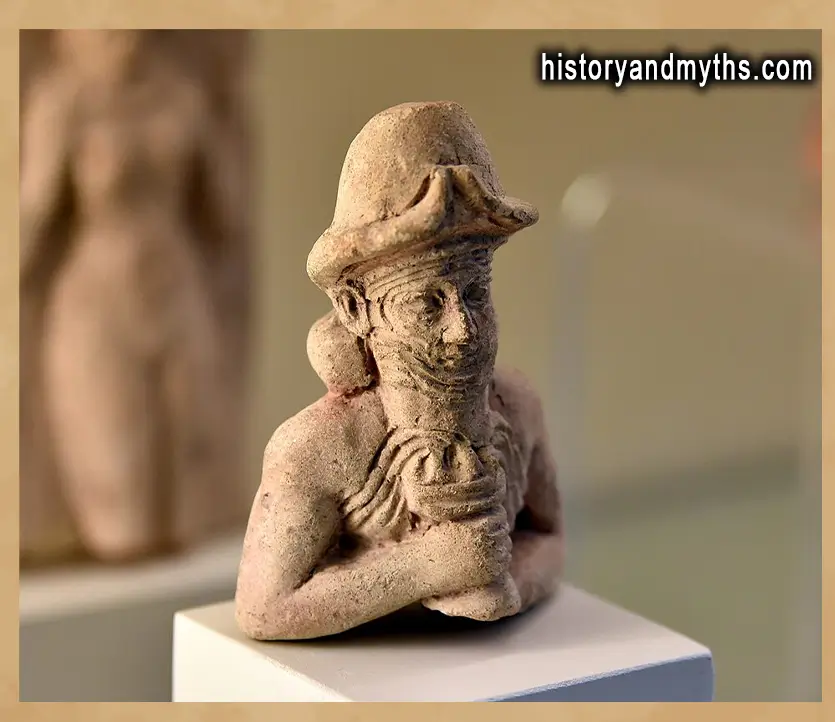
According to Babylonian mythology, water existed before the heavens, the earth, and even the gods who would later shape the universe. The cosmos did not begin with solid land or empty space but with vast primordial waters that contained the potential for all creation. This concept made water the oldest and most fundamental substance in existence, explaining why it occupied such a sacred place in Babylonian religious thought.
The Babylonian creation epic, the Enuma Elish, describes two primordial beings associated with these waters: Apsu, representing fresh groundwater, and Tiamat, representing the salt sea. Their union produced the first generation of gods, making water not simply the setting of creation but its original source. Before mountains, cities, or humanity could exist, all life emerged from these primeval waters.
For the Babylonians, this origin carried profound religious meaning. If every god, every human, and every living creature ultimately traced its existence back to the primordial waters, then water itself deserved reverence. It was viewed as the medium through which divine power first entered the universe, long before the world took its familiar form.
This belief also distinguished Babylonian mythology from traditions that described creation emerging from nothing. Instead, creation was understood as the transformation of an already existing sacred reality. Water was not created—it was the eternal foundation from which order, life, and the visible world gradually emerged.
By placing water at the beginning of existence, Babylonian mythology established a principle that shaped later religious beliefs: water was never merely a physical necessity. It represented the original state of the cosmos and remained a visible reminder of the divine forces that had brought the universe into being.
| Topic | Details |
|---|---|
| Primary Symbol | Water as the source of creation and life |
| Main Deities | Apsu, Tiamat, Ea (Enki), and Marduk |
| Religious Meaning | Creation, wisdom, purification, and cosmic order |
| Civilizational Role | Agriculture, irrigation, kingship, and urban development |
| Main Source | Enuma Elish |
| Core Idea | Water represented the foundation of existence and civilization. |
Why Water Represented Order Rather Than Chaos
One of the most common misconceptions about Babylonian mythology is that water symbolized chaos because Tiamat, the goddess of the salt sea, became the great enemy of the gods. In reality, Babylonian beliefs drew a clear distinction between water itself and the forces that could emerge from it.
Fresh water was closely associated with life, fertility, wisdom, and divine order. It sustained crops, supplied cities, and was linked to Ea, the god of wisdom and craftsmanship. Without fresh water, civilization simply could not exist in Mesopotamia.
The chaotic element was not water as a whole but the untamed, destructive forces that threatened the balance of the world. Tiamat represented those primordial powers before the universe was organized into a stable cosmic order. Her defeat by Marduk did not diminish the sacred nature of water. Instead, it symbolized the transformation of the original waters into an ordered universe where life could flourish.
This distinction reflects a broader Babylonian worldview. Nature itself was not considered evil or dangerous by default. The goal of the gods was to establish order over the forces that existed before creation. Water therefore remained sacred because, once brought into harmony, it became the foundation of life, agriculture, religion, and civilization rather than a symbol of chaos alone.
Ea, Wisdom, and the Sacred Power of Fresh Water
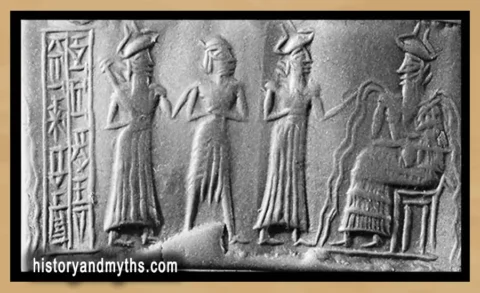
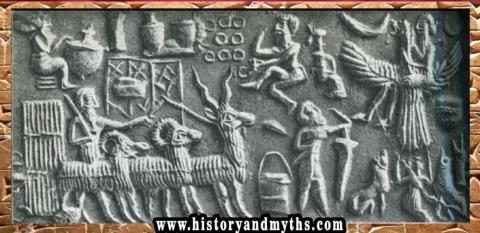
In Babylonian religion, fresh water was closely associated with Ea (known as Enki in Sumerian tradition), the god of wisdom, magic, craftsmanship, and creation. His home, the Apsu, was believed to lie beneath the earth as a vast reservoir of fresh water that nourished the world above. This connection elevated fresh water from a physical necessity to a symbol of divine intelligence and creative power.
Ea was revered not because he controlled rivers alone, but because he used wisdom to preserve order. In Babylonian myths, he repeatedly protects humanity, offers guidance to other gods, and resolves crises through knowledge rather than force. Linking such a deity to fresh water reinforced the belief that life, wisdom, and stability flowed from the same sacred source.
This symbolism also appeared in religious practice. Water drawn for temple rituals and purification ceremonies represented more than cleanliness. It served as a reminder of the divine order established at creation and of the wisdom that sustained both the gods’ world and human civilization.
For the Babylonians, fresh water was therefore not simply a gift from nature. It embodied the life-giving, protective, and creative qualities of one of their most respected deities, making it an enduring symbol of both physical survival and divine wisdom.
Unlike many modern interpretations, Babylonian mythology did not regard water simply as a natural resource or a symbol of chaos. It represented the origin of existence, divine wisdom, and the ordered world that allowed civilization to flourish.
Why Sacred Water Shaped Babylonian Civilization
For the Babylonians, the sacred status of water was reflected in everyday life as much as in mythology. Mesopotamia depended almost entirely on the Tigris and Euphrates for farming, transportation, and survival. Because these rivers made civilization possible, they were viewed as gifts that carried divine significance rather than as ordinary natural features.
This belief influenced the placement of cities, temples, and irrigation systems. Major settlements were built near reliable water sources, while canals were carefully maintained to distribute water across farmland. Managing water was therefore both a practical responsibility and a way of preserving the order that the gods had established.
Kings also reinforced this connection. Royal inscriptions frequently celebrated the construction of canals and the restoration of waterways, presenting these projects as acts of service to both the gods and the people. Providing water was not simply good governance—it demonstrated that the ruler was fulfilling a sacred duty to maintain prosperity and stability.
In this way, Babylonian mythology and daily life were closely connected. The same element that stood at the beginning of creation also sustained the kingdom, fed its population, and symbolized the continued harmony between the divine world and human civilization.
Continue Reading
What the Sacredness of Water Reveals About Babylonian Beliefs
The Babylonian view of water reflects a civilization that saw no separation between nature, religion, and political life. Water was sacred not because it was worshipped as an object, but because it connected every part of existence—from the creation of the universe to the survival of a single farming community.
This perspective also explains why Babylonian myths focus less on miracles and more on maintaining order. The greatest threat was not the absence of divine power but the return of disorder through drought, floods, or the collapse of the balance established at creation. Protecting water and managing it wisely therefore became both a practical necessity and a religious responsibility.
The same belief shaped Babylonian kingship. A successful ruler was expected to preserve irrigation systems, support agriculture, and ensure prosperity, reflecting the cosmic order established by the gods. In this sense, governing the land was viewed as an extension of the divine work that had transformed the primordial waters into a livable world.
Seen together, these ideas show that water was far more than a recurring symbol in Babylonian mythology. It represented the foundation of existence, the source of wisdom, the basis of civilization, and the principle through which order was continuously preserved. Understanding its sacred role offers a deeper understanding of how the Babylonians interpreted both their myths and the world around them.
Water was sacred in Babylonian mythology because it represented far more than a resource essential for survival. It was understood as the origin of creation, the source of divine wisdom, the force that sustained civilization, and a symbol of the cosmic order established by the gods.
This belief reflected the realities of life in Mesopotamia, where rivers determined the success or failure of entire communities. Rather than separating religion from everyday experience, the Babylonians transformed the element that sustained their world into one of the central symbols of their religious and philosophical thought.
Understanding the sacred role of water therefore provides more than an explanation of a single mythological theme. It offers insight into how the Babylonians interpreted the relationship between nature, the gods, political authority, and human existence, revealing why water remained one of the most enduring sacred symbols throughout Babylonian civilization.
Key Takeaways
- Water existed before creation in Babylonian cosmology.
- Fresh water became the symbol of wisdom through Ea (Enki).
- The defeat of Tiamat established order rather than rejecting water itself.
- Water connected mythology, religion, kingship, and everyday survival.
- The sacred role of water reflected both Babylonian beliefs and the realities of Mesopotamian life.
Frequently Asked Questions
Why was water sacred in Babylonian mythology?
Water represented creation, wisdom, purification, and the foundation of cosmic order.
Who was the Babylonian god of fresh water?
Ea (Enki) was the god most closely associated with fresh water, wisdom, and creation.
Did water symbolize chaos?
No. Primordial chaos was associated with Tiamat, while fresh water remained a sacred source of life and wisdom.
Why was water important to Babylonian civilization?
It sustained agriculture, irrigation, trade, cities, and the religious worldview of Mesopotamia.
Which text explains the sacred role of water?
The Babylonian creation epic Enuma Elish provides the primary account.
Sources
- Black, Jeremy, and Anthony Green. Gods, Demons and Symbols of Ancient Mesopotamia. University of Texas Press, 1992.
- Bottéro, Jean. Religion in Ancient Mesopotamia. University of Chicago Press, 2001.
- Dalley, Stephanie. Myths from Mesopotamia: Creation, the Flood, Gilgamesh, and Others. Oxford University Press, 2008.
- Jacobsen, Thorkild. The Treasures of Darkness: A History of Mesopotamian Religion. Yale University Press, 1976.
- Lambert, W. G. Babylonian Creation Myths. Eisenbrauns, 2013.
- Leick, Gwendolyn. A Dictionary of Ancient Near Eastern Mythology. Routledge, 1998.
- Oppenheim, A. Leo. Ancient Mesopotamia: Portrait of a Dead Civilization. University of Chicago Press, 1977.
- George, Andrew R. The Babylonian Gilgamesh Epic. Oxford University Press, 2003.
- Hallo, William W., and K. Lawson Younger Jr., eds. The Context of Scripture. Brill, 2003.
- Foster, Benjamin R. Before the Muses: An Anthology of Akkadian Literature. CDL Press, 2005.
- Livingstone, Alasdair. Mystical and Mythological Explanatory Works of Assyrian and Babylonian Scholars. Oxford University Press, 1986.
- Van De Mieroop, Marc. A History of the Ancient Near East. Wiley-Blackwell, 2016.
- Snell, Daniel C. Life in the Ancient Near East. Yale University Press, 1997.
- British Museum. Mesopotamia Collection.
- The Metropolitan Museum of Art. Ancient Near Eastern Art Collection.
- The Louvre Museum. Department of Near Eastern Antiquities.
- Encyclopaedia Britannica. Babylonian Religion.
- Encyclopaedia Britannica. Mesopotamian Religion.
- The Electronic Text Corpus of Sumerian Literature (ETCSL). University of Oxford.
- Cuneiform Digital Library Initiative (CDLI).
Written by H. Moses — All rights reserved © History & Myths