Why the Babylonians Feared Demons in Ancient Mesopotamia
For the Babylonians, demons were not distant monsters confined to myths. They were believed to be invisible forces capable of bringing disease, misfortune, nightmares, infertility, and sudden death into everyday life. Unlike the gods, who upheld cosmic order, demons represented the unpredictable dangers that threatened both individuals and society.
This fear shaped Babylonian religion in practical ways. People relied on protective amulets, incantations, and trained exorcists to defend themselves against supernatural harm. Understanding why the Babylonians feared demons reveals more than their beliefs about evil. It explains how they interpreted illness, uncertainty, and the fragile balance between order and chaos in the ancient world.
What Were Demons in Babylonian Belief?
In Babylonian belief, demons were supernatural beings that existed alongside gods and humans but belonged to neither group. They were not worshipped as deities, nor were they simply imaginary monsters created for stories. Instead, they were regarded as active forces capable of influencing everyday life, often in harmful and unpredictable ways.
Babylonians believed that many demons operated beyond the boundaries of human control. Some were linked to disease, others to restless spirits, dangerous places, or sudden misfortune. Unlike the gods, who could be approached through prayer and offerings, demons were rarely seen as beings that could be persuaded or honored. Their presence was something to resist rather than embrace.
Not every demon was viewed in exactly the same way. Mesopotamian religious texts describe many different supernatural beings with distinct roles and characteristics. However, they shared one important feature: they represented threats that disrupted the normal order of life. This belief explains why Babylonian religious practice devoted so much attention to protection, purification, and rituals designed to keep these unseen forces away.
Why the Babylonians Feared Demons at a Glance
| Topic | Summary |
|---|---|
| Role of Demons | Supernatural beings believed to threaten health, safety, and daily life. |
| Main Fear | Their ability to bring disease, misfortune, nightmares, and unseen harm. |
| Religious Meaning | Demons represented forces that disrupted the divine order established by the gods. |
| Protection | Incantations, purification rituals, protective amulets, and trained exorcists. |
| Historical Importance | Belief in demons shaped Babylonian religion, medicine, and everyday life. |
Why Did the Babylonians Fear Demons?
The Babylonians feared demons because they believed these supernatural beings could interfere with ordinary life without warning. Unlike natural dangers that people could often anticipate, demons were thought to act invisibly, bringing illness, accidents, infertility, nightmares, or unexplained suffering that seemed to have no obvious cause. Their unpredictability made them especially frightening.
This fear was also rooted in the Babylonian understanding of the universe. The gods were believed to maintain order, justice, and stability, while demons represented forces that disrupted that balance. When misfortune struck without explanation, many believed that a hostile supernatural power had crossed into the human world.
For this reason, fear of demons was not simply fear of monsters. It reflected a broader concern about losing the protection of divine order. Every ritual, protective amulet, or incantation was an attempt to restore that balance and prevent unseen forces from turning everyday life into chaos.
Demons as the Cause of Disease and Misfortune
Babylonians believed that not every illness or misfortune had a visible cause. When a healthy person suddenly became sick, suffered persistent pain, or experienced a series of unexplained hardships, many saw these events as signs of supernatural interference rather than ordinary chance.
Medical knowledge and religious belief worked side by side. Physicians treated physical symptoms with remedies, while priests and exorcists addressed the possibility that a hostile spirit was responsible for the suffering. Disease, recurring nightmares, infertility, and sudden misfortune could all be interpreted as evidence that a demon had disturbed the normal order of life.
This belief did not discourage practical treatment. Instead, it reflected the Babylonian view that physical and spiritual problems could exist together. Healing often required both medicine and ritual, showing that protection from demons was considered as important as caring for the body itself.
Where Were Demons Believed to Lurk?
Babylonian texts often associate demons with places that lay beyond the safety of ordinary human life. Deserts, abandoned ruins, dark streets after sunset, and remote wilderness were seen as spaces where order gave way to uncertainty. These locations symbolized the boundaries between the familiar world and the unknown, making them natural settings for hostile supernatural forces.
Demons were not believed to remain confined to these places, however. They could enter homes, threaten travelers, or accompany unexplained illness, which meant that no one was entirely beyond their reach. This belief made daily protection an important part of religious life rather than a response to rare or extraordinary events.
By linking demons to dangerous or isolated environments, the Babylonians gave spiritual meaning to real sources of fear. The unknown landscape, the darkness of night, and unexpected misfortune all became reminders that the world contained forces beyond human control.
Babylonian Demon Beliefs
Culture: Babylonian and Mesopotamian Religion
Primary Concern: Disease, misfortune, spiritual danger, and cosmic disorder.
Common Protection: Incantations, ritual purification, protective amulets, and exorcistic ceremonies.
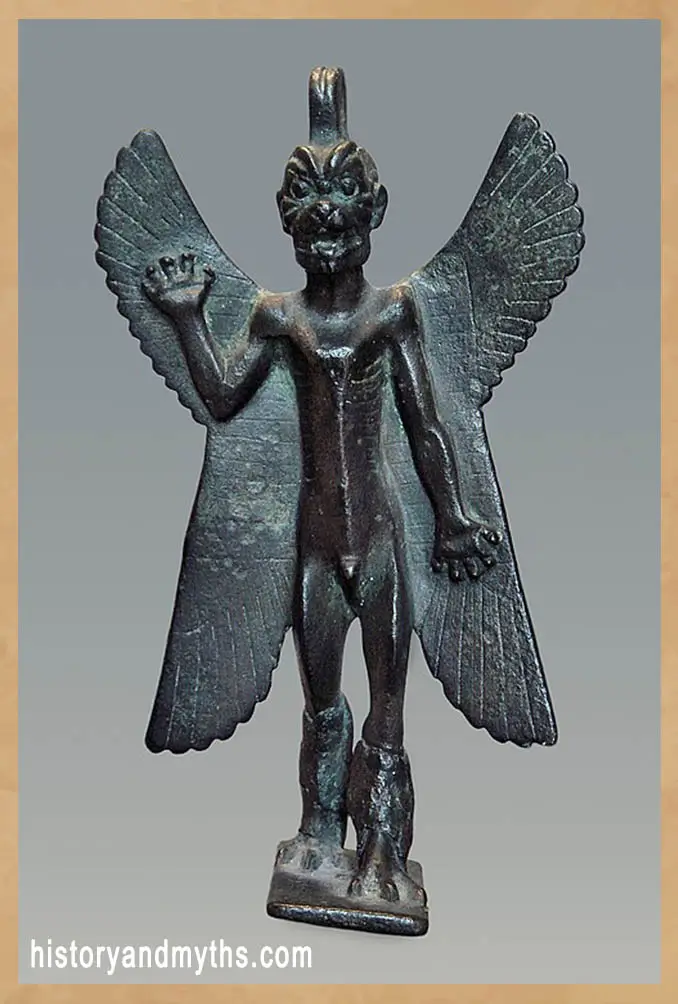
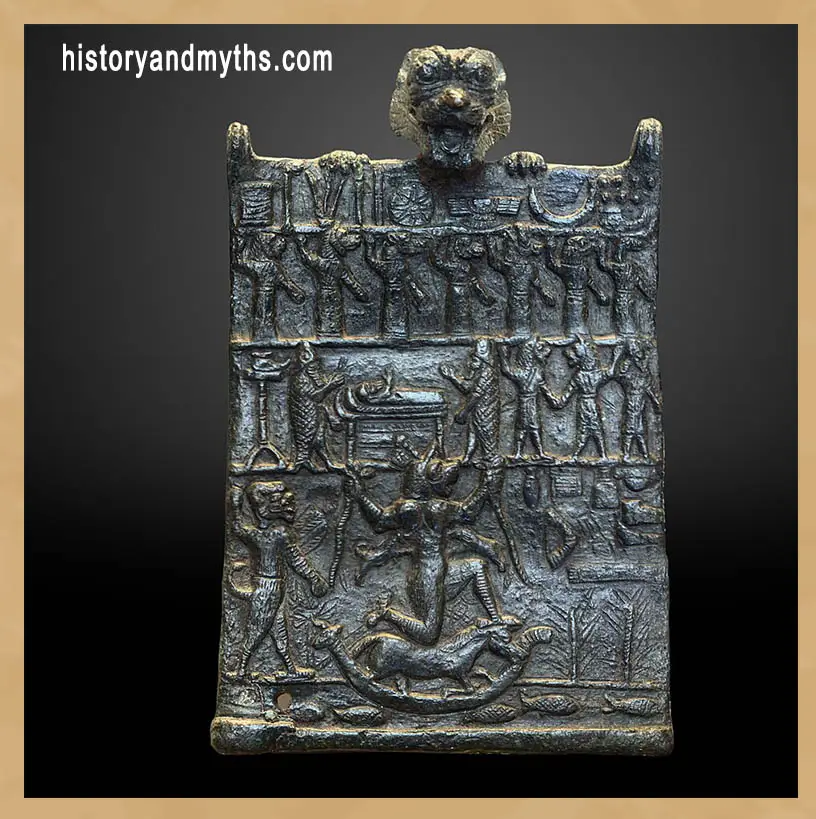
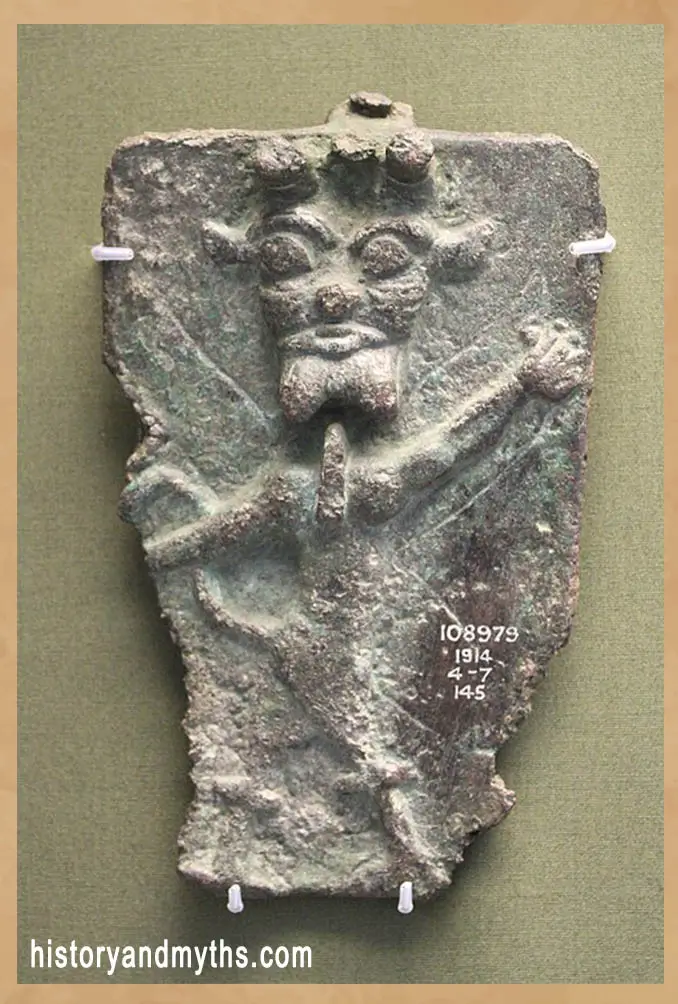
Famous Figure: Pazuzu, used as a protective force against more dangerous demons such as Lamashtu.
Core Belief: Fear of demons reflected the struggle to preserve divine order against the forces of chaos.
How Babylonians Protected Themselves from Demons
Protection against demons was an important part of everyday Babylonian life. People believed that harmful supernatural forces could be resisted through a combination of ritual knowledge, sacred words, and symbolic objects. Priests trained in purification and exorcistic practices recited incantations, while households kept protective amulets to guard against unseen dangers.
Some protective figures, such as Pazuzu, were invoked not because they were considered benevolent gods, but because they were believed to drive away even more dangerous demons. This reflects a broader Babylonian belief that supernatural threats could sometimes be countered by other supernatural powers acting under divine authority.
These practices were not viewed as acts of superstition alone. They formed part of an established religious tradition that sought to restore order whenever people believed hostile forces had disrupted the normal balance of life. Protecting the home, the family, and personal health was therefore both a practical concern and a religious responsibility.
Continue Reading
Seven Evil Spirits of Babylon: Chaos, Demons, and Divine Battles
Enki’s Mesopotamian Spells: Magic and Healing Against Demons
Abducted Gods in Babylonian Myth: Secrets of the Underworld
Were All Babylonian Demons Considered Evil?
Not all Babylonian demons were viewed in exactly the same way. While many were feared as sources of disease, misfortune, or spiritual danger, some could also serve protective roles within religious practice. The best-known example is Pazuzu, whose image was used on amulets to ward off the far more dangerous demon Lamashtu, especially during pregnancy and childbirth.
This did not mean that Pazuzu was worshipped as a benevolent god or regarded as harmless. Rather, Babylonians believed that certain supernatural forces could be used to oppose others under the proper rituals and divine authority. Their religious world was therefore more complex than a simple division between good and evil.
This distinction helps explain why Babylonian demonology focused less on the nature of individual demons and more on maintaining protection against any force capable of disturbing the balance of human life.
Fear of Demons and the Babylonian View of Order
For the Babylonians, fear of demons was ultimately a fear of disorder. Their religion taught that the gods had established a stable world governed by law, justice, and balance, while hostile supernatural forces threatened to disturb that order. Demons represented the uncertainty that could suddenly disrupt health, family life, or the prosperity of an entire community.
This belief explains why protection against demons was treated as a normal part of religious life rather than an occasional response to danger. Rituals, prayers, and purification ceremonies were intended to preserve the harmony that the gods had created, not simply to drive away individual spirits.
Seen in this context, Babylonian demonology was never just about frightening creatures. It reflected a broader worldview in which maintaining order against the forces of chaos was essential for both human survival and divine favor.
Conclusion
The Babylonians feared demons because they believed these unseen forces could disrupt the fragile order of everyday life through disease, misfortune, and supernatural harm. Their response was not based on fear alone, but on a well-developed religious tradition that combined ritual, medicine, and divine protection. Understanding this belief reveals that Babylonian demonology was less about terrifying creatures and more about preserving balance in a world where order and chaos were thought to exist side by side.
Key Takeaways
- Babylonian demons were believed to be supernatural forces that threatened everyday life.
- Disease, nightmares, infertility, and unexplained misfortune were often linked to demonic activity.
- Babylonians relied on rituals, incantations, and amulets to seek protection.
- Not every demon was viewed in the same way, some could serve protective functions within religious practice.
- Fear of demons reflected the Babylonian desire to preserve divine order and resist chaos.
Frequently Asked Questions
Why did the Babylonians fear demons?
Babylonians believed demons could cause disease, nightmares, infertility, accidents, and other forms of unexplained misfortune by disrupting the divine order established by the gods.
Were Babylonian demons considered gods?
No. Demons were viewed as supernatural beings distinct from the gods. They were feared rather than worshipped and were usually associated with harmful or disruptive forces.
Did Babylonians believe all diseases were caused by demons?
Not necessarily. Babylonian medicine combined practical treatments with religious rituals, allowing physical illness and supernatural influence to be understood together.
Where were demons believed to live?
Demons were commonly associated with deserts, ruins, darkness, and other dangerous places, but they were also believed capable of entering homes and affecting everyday life.
How did Babylonians protect themselves from demons?
They relied on protective amulets, purification rituals, sacred incantations, and trained exorcists who specialized in defending people against harmful supernatural forces.
Was Pazuzu considered an evil demon?
Pazuzu was a demon, but his image was widely used to protect people, especially pregnant women and infants, from the far more dangerous demon Lamashtu.
What role did priests play in fighting demons?
Specialist priests performed rituals, recited protective texts, and carried out exorcisms intended to restore balance and remove harmful spiritual influences.
What does Babylonian fear of demons reveal about their religion?
It shows that Babylonian religion emphasized maintaining cosmic order. Fear of demons reflected a belief that unseen forces could threaten both individuals and society unless countered through proper religious practice.
Sources & Rights
- Abusch, Tzvi. Mesopotamian Witchcraft: Toward a History and Understanding of Babylonian Witchcraft Beliefs and Literature. Brill, 2002.
- Black, Jeremy, and Anthony Green. Gods, Demons and Symbols of Ancient Mesopotamia: An Illustrated Dictionary. British Museum Press, 1992.
- Cunningham, Graham. Deliver Me from Evil: Mesopotamian Incantations 2500–1500 BC. Pontifical Biblical Institute, 1997.
- Finkel, Irving L. The Ark Before Noah. Hodder & Stoughton, 2014.
- George, Andrew. The Babylonian Gilgamesh Epic. Oxford University Press, 2003.
- Jacobsen, Thorkild. The Treasures of Darkness: A History of Mesopotamian Religion. Yale University Press, 1976.
- Lambert, W. G. Babylonian Creation Myths. Eisenbrauns, 2013.
- Reiner, Erica. Šurpu: A Collection of Sumerian and Akkadian Incantations. Archiv für Orientforschung, 1958.
- Scurlock, JoAnn, and Burton R. Andersen. Diagnoses in Assyrian and Babylonian Medicine. University of Illinois Press, 2005.
- Stol, Marten. Women in the Ancient Near East. De Gruyter, 2016.
- Van De Mieroop, Marc. A History of the Ancient Near East. Wiley-Blackwell, 2016.
- British Museum. Collection Online: Mesopotamian Magic, Demons, and Protective Amulets.
- The Metropolitan Museum of Art. Mesopotamian Art and Protective Spirits.
- CDLI, Cuneiform Digital Library Initiative. Mesopotamian Incantation and Ritual Texts.
- ETCSL, Electronic Text Corpus of Sumerian Literature. Sumerian Literary and Religious Texts.
Written by H. Moses — All rights reserved © Mythology and History