Titans vs Olympians: How Divine Power Changed in Greek Mythology
In Greek mythology, the conflict between the Titans and the Olympians was more than a struggle between two generations of gods. It represented a transformation in how divine power was imagined and organized. The victory of Zeus and the Olympian gods did not simply replace older deities with younger ones. It marked the emergence of a new cosmic order built on defined roles, shared authority, and a more stable vision of the universe.
This shift became one of the most important turning points in Greek myth. Through the stories of the Titans and Olympians, the Greeks explored questions about leadership, legitimacy, power, and the nature of order itself. Understanding the difference between these two divine generations reveals not only how Greek mythology evolved but also what the ancient Greeks believed was necessary for a well-ordered world.
The Titans and the First Cosmic Order
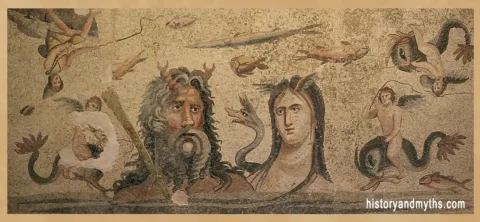
The Titans ruled the universe before the rise of the Olympian gods, but their world was not portrayed as a fully organized system. Their power was concentrated within a small ruling family, and authority depended largely on inheritance and dominance rather than clearly defined responsibilities. Cronus became ruler after overthrowing Uranus, yet his reign remained marked by fear, succession conflicts, and attempts to prevent future challenges to his power.
Greek myths describe the Titan age as a period in which enormous cosmic forces existed, but stable governance had not yet been achieved. The Titans were associated with fundamental elements of the universe—such as the sea, memory, light, and time—but these powers did not operate within the structured hierarchy later seen on Olympus. The recurring cycle of fathers fearing their children and children overthrowing their parents reflected a world where authority remained insecure.
For this reason, the Titans represent more than an older generation of gods. They symbolize an early stage in the development of cosmic rule, when power existed but lasting order had not yet been established.
Titans vs Olympians in Greek Mythology
| Aspect | Titans | Olympians |
|---|---|---|
| Generation | Earlier divine generation | Younger divine generation |
| Source of Authority | Inheritance and domination | Structured hierarchy and assigned roles |
| Political Stability | Frequent succession conflicts | Relatively stable cosmic order |
| Leadership Model | Concentrated power | Distributed responsibilities |
| Symbolic Meaning | Primordial rule | Ordered governance |
| Mythological Outcome | Defeated in the Titanomachy | Established the Olympian age |
Why the Olympians Challenged the Titans
The rise of the Olympians was driven by more than a struggle for power. In Greek mythology, the conflict began because the existing order could not escape the cycle of succession and fear that had already shaped earlier generations of gods. Uranus feared his children, Cronus feared his children, and both attempted to preserve their authority by suppressing potential rivals. The result was repeated instability at the highest level of the cosmos.
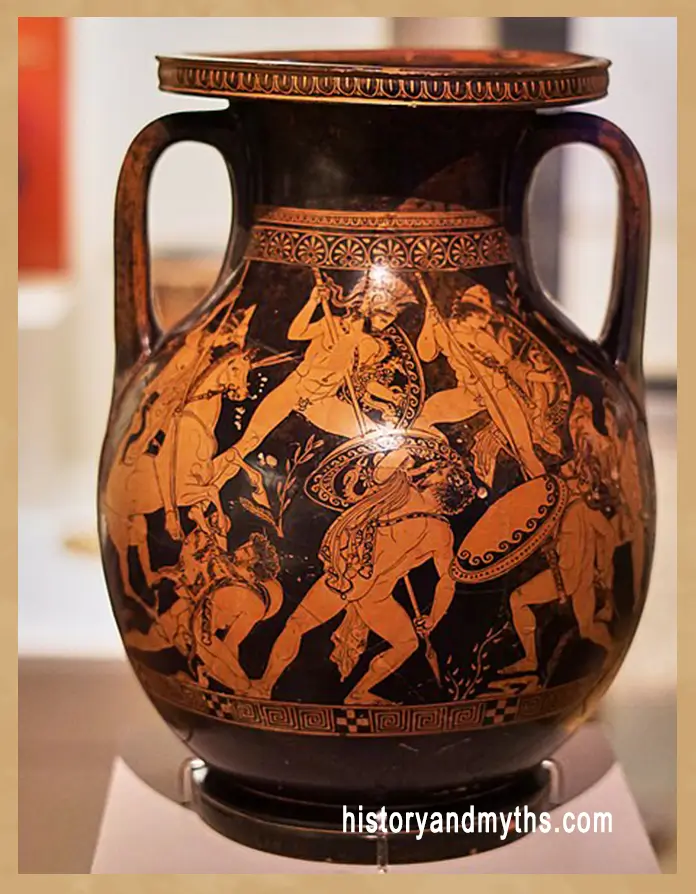
Zeus and the Olympians emerged as challengers to this pattern. Rather than simply seeking control, they represented the possibility of a different form of rule. Their rebellion against the Titans was presented as a response to a system that repeatedly produced conflict and insecurity. The Titanomachy therefore became a struggle over how the universe should be governed, not merely who would govern it.
By portraying the Olympians as the force that broke this cycle, Greek mythology framed their victory as a necessary transition toward a more durable cosmic order. The challenge to the Titans was not only political—it was structural, aimed at creating a world less vulnerable to the endless succession crises that defined the age before Olympus.
Two Different Models of Divine Power
The Titans and the Olympians represented two different ways of understanding authority. Titan power was concentrated in a small ruling line and depended heavily on personal strength and control. Leadership was maintained through domination, and each generation feared being replaced by the next. As a result, power remained unstable even when a ruler appeared secure.
The Olympian system operated differently. After the Titanomachy, authority was distributed among multiple gods with distinct responsibilities. Zeus ruled as king, but Poseidon governed the sea, Hades ruled the underworld, Athena oversaw wisdom and strategy, and other Olympians controlled their own spheres. Power was still hierarchical, yet it became organized rather than concentrated in a single figure.
This distinction helps explain why the Olympians were portrayed as the founders of a lasting cosmic order. Their world did not eliminate conflict, but it created a structure in which different powers could coexist under a shared system of rule. In Greek mythology, the transition from Titans to Olympians was therefore not simply a change of rulers. It was a shift from one model of authority to another.
Why the Titans and Olympians Matter
The conflict between the Titans and Olympians was not merely a struggle between older and younger gods. Greek mythology presents it as a transition from an unstable cosmic order based on inherited power to a more organized system governed through defined roles and shared authority. The Titanomachy explains how divine rule evolved and why the Olympians became the rulers of the mythological universe.
Why the Titanomachy Was More Than a War
The Titanomachy is often described as a battle between the Titans and the Olympians, but its significance goes beyond military victory. In mythological terms, the conflict marked the transition from one cosmic system to another. The war served as the mechanism through which the old order was dismantled and a new one established.
This pattern appears throughout Greek mythology. Major conflicts rarely concern power alone; they determine how the world itself will function afterward. The Titanomachy follows the same logic. The defeat of the Titans cleared the way for a universe governed by defined roles, recognized authority, and a stable hierarchy centered on Olympus.
For this reason, the war occupies such an important place in Greek mythic tradition. It explains not only why the Olympians rule but also why the cosmos operates according to the structure familiar from later myths. The battle was remembered as a turning point because it transformed the nature of divine rule itself.
What the Olympian Victory Revealed About Greek Beliefs
The victory of the Olympians reflects a broader theme that appears throughout Greek mythology: lasting authority depends on order rather than strength alone. The Titans possessed immense power, yet their rule was defined by instability and recurring succession conflicts. The Olympians succeeded not simply because they were stronger, but because they established a system capable of maintaining balance across the cosmos.
This idea mirrors important Greek values. Political communities, households, and even the divine world were expected to function through recognized roles, laws, and responsibilities. The Olympian order reflected these principles by assigning different gods distinct spheres of influence while preserving an overall hierarchy under Zeus.
As a result, the triumph of Olympus came to symbolize more than a change in leadership. It represented the belief that stability emerges when power is organized, shared, and governed by an accepted structure. In mythological terms, the transition from Titans to Olympians explained how the universe moved from a state of uncertainty to one of enduring order.
The Titans and the Olympians were not simply two generations of gods. They represented different visions of how divine authority should operate. The Titans embodied an earlier age marked by concentrated power and recurring struggles for control, while the Olympians established a more structured cosmic order built on defined responsibilities and stable rule. Through the transition from one generation to the next, Greek mythology explored fundamental questions about authority, legitimacy, and the conditions necessary for lasting order in both the divine and human worlds.
Key Takeaways
- The Titans and Olympians represented different models of divine authority.
- Titan rule was associated with succession struggles and concentrated power.
- The Olympians established a more structured cosmic hierarchy.
- The Titanomachy symbolized a transformation of divine governance.
- Greek myths used the conflict to explain the origins of cosmic order.
- Zeus’s victory represented stability rather than simple military success.
- The transition reflected Greek ideas about leadership, legitimacy, and order.
Frequently Asked Questions
Who were the Titans in Greek mythology?
The Titans were an earlier generation of divine beings who ruled the cosmos before the rise of the Olympian gods.
Who were the Olympians?
The Olympians were the gods led by Zeus who gained control of the universe after defeating the Titans.
What was the Titanomachy?
The Titanomachy was the great war between the Titans and the Olympians that determined who would rule the cosmos.
How did the Titans differ from the Olympians?
The Titans represented an older form of divine rule based on inherited authority, while the Olympians governed through a more organized hierarchy.
Why did Zeus challenge Cronus?
Zeus challenged Cronus to end the cycle of succession conflicts and establish a new cosmic order.
Did the Olympians completely replace the Titans?
No. Some Titans continued to appear in Greek mythology, although political authority passed to the Olympians.
What did the Olympian victory symbolize?
It symbolized the triumph of order, stability, and structured authority over an older and less secure system of rule.
Why is the conflict important in Greek mythology?
It explains how the mythological universe moved from primordial rule to the organized world governed by the Olympian gods.
SOURCES
- Hesiod. Theogony. Translated by Glenn W. Most. Harvard University Press, 2006.
- Homer. Iliad. Loeb Classical Library. Harvard University Press.
- Apollodorus. The Library of Greek Mythology. Oxford University Press, 1997.
- Pausanias. Description of Greece. Loeb Classical Library.
- Burkert, Walter. Greek Religion. Harvard University Press, 1985.
- Graf, Fritz. Greek Mythology: An Introduction. Johns Hopkins University Press, 1993.
- Gantz, Timothy. Early Greek Myth. Johns Hopkins University Press, 1993.
- Buxton, Richard. The Complete World of Greek Mythology. Thames & Hudson, 2004.
- West, M. L. The East Face of Helicon. Oxford University Press, 1997.
- Vernant, Jean-Pierre. Myth and Thought Among the Greeks. Routledge, 1983.
- Kirk, G. S. The Nature of Greek Myths. Penguin Books, 1974.
- Dodds, E. R. The Greeks and the Irrational. University of California Press, 1951.
- Dowden, Ken. The Uses of Greek Mythology. Routledge, 1992.
- Larson, Jennifer. Ancient Greek Cults. Routledge, 2007.
- Mikalson, Jon D. Ancient Greek Religion. Wiley-Blackwell, 2010.
- Hard, Robin. The Routledge Handbook of Greek Mythology. Routledge, 2004.
- Morford, Mark, and Robert Lenardon. Classical Mythology. Oxford University Press.
- Powell, Barry B. Classical Myth. Pearson Education.
- The Oxford Classical Dictionary. 4th ed. Oxford University Press, 2012.
- Lincoln, Bruce. Theorizing Myth. University of Chicago Press, 1999.
Written by H. Moses — All rights reserved © Mythology and History