Wepwawet — The Jackal God Who Opened the Way Before Anubis
Long before the Egyptians envisioned elaborate afterlife journeys or composed the great funerary texts, they imagined a divine scout walking ahead of both kings and spirits. That god was Wepwawet, the “Opener of the Ways,” a jackal-headed deity whose presence marked the beginning of every transition—whether a royal procession, a military campaign, or the passage of the dead into the next world.
Originating in Abydos, one of Egypt’s oldest religious centers, Wepwawet embodied the ability to clear obstacles and reveal hidden paths. His role was not symbolic alone; inscriptions describe him as the god who opened the roads for the pharaoh’s armies and secured victory by moving ahead of the soldiers. In ritual life, he opened the way for the king during coronations and festivals, ensuring that divine authority guided every step.
Over time, his functions expanded from war and kingship into the spiritual realm. While he is often compared to Anubis because of their similar jackal forms, Wepwawet represents something more fundamental: the moment of opening, the beginning of the journey, the guide who steps into the unknown first so others may follow. His identity reveals how the ancient Egyptians understood transition—not as a leap into darkness, but as a structured passage led by a powerful, watchful protector.
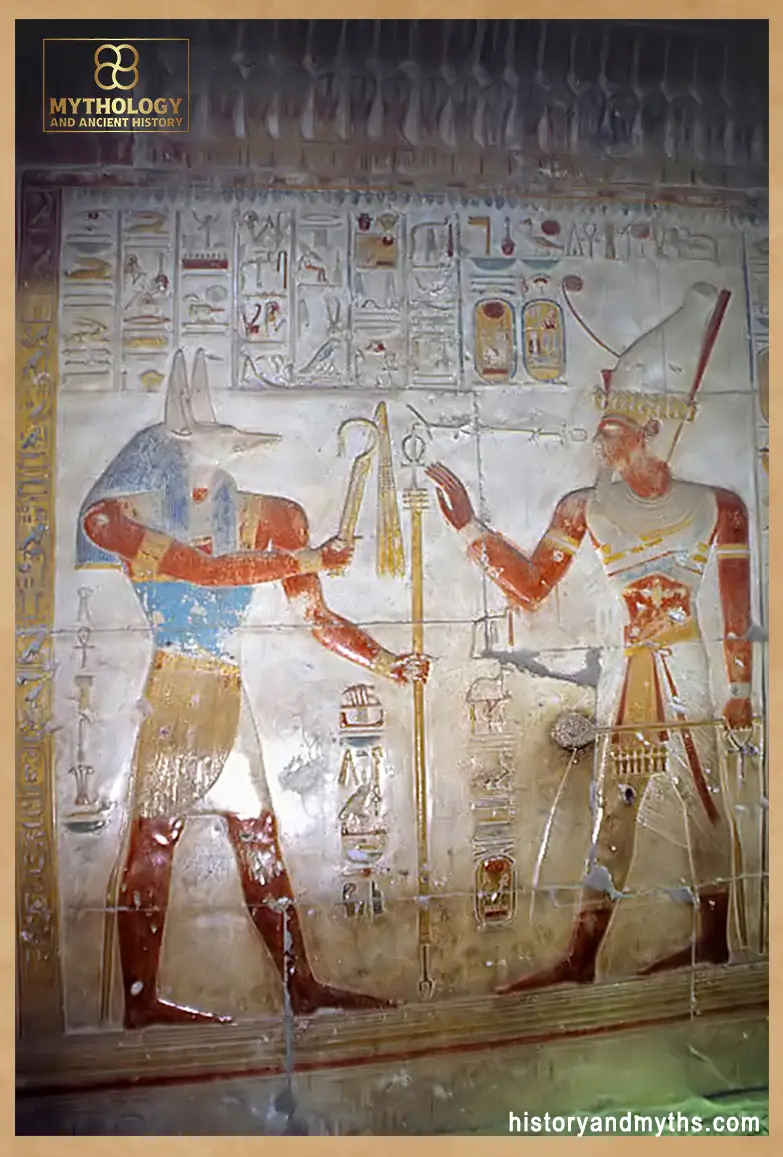
Author: Roland Unger — Source: Wikimedia Commons (GFDL 1.2 license)
The Meaning Behind “Opener of the Ways”
The title Wepwawet translates directly to “Opener of the Ways,” but its meaning extends far beyond the literal image of a path being cleared. In Egyptian thought, a way was never just a road—it symbolized transition, authority, and the movement between worlds. To open a way meant to create order where there was uncertainty, to make the unknown navigable.
In royal ceremonies, Wepwawet opened the way for the king to enter sacred spaces, legitimizing his connection to the gods. In warfare, he opened the way for armies, guiding them through dangerous terrain and symbolically ensuring victory before the first weapon was raised. In funerary belief, he opened the way for the dead, allowing the soul to reach judgment and transformation.
His ability to move ahead—swift, silent, and vigilant like the desert jackal—made him the divine force that turned transition into safe passage. For the Egyptians, every important journey required an opener, and Wepwawet was the god who led the way from life to death, from earth to the divine, and from disorder to rightful kingship.
| Aspect | Details |
|---|---|
| Primary Role | Opener of the Ways — guiding kings, armies, and spirits |
| Appearance | Jackal- or wolf-headed deity, often shown leading a divine procession |
| Major Cult Centers | Abydos (origin), Asyut/Lycopolis |
| Domains | War, kingship, procession rituals, afterlife guidance, boundary protection |
| Relation to Anubis | Older desert deity; not identical to Anubis — Wepwawet opens the path while Anubis guards and judges |
| Symbolic Meaning | Beginnings, transitions, spiritual direction, success through preparation |
| Notable Titles | “Opener of the Ways”, “He Who Clears the Road” |
Origins in Abydos and the Early Desert Cults
Wepwawet’s earliest roots lie in Abydos, one of Egypt’s most ancient and sacred cities. Long before the rise of national gods like Amun or even the full development of the Osiris cult, Abydos served as a spiritual focal point where desert, kingship, and the afterlife converged. It is in this environment—half desert shrine, half royal necropolis—that Wepwawet first emerged.
The desert was not seen as empty or barren. To the Egyptians, it was a threshold space where life met death, where hunters tracked their prey, and where spirits traveled unseen. The jackal, a creature that roamed these edges, became a natural emblem of beings who operated between realms. Wepwawet personified this liminal power: a god who knew every dune, every hidden path, and every channel between the world of humans and the world of the dead.
In early royal ideology, Abydos acted as the symbolic place of the king’s rebirth. Because Wepwawet was the god who opened the way, he naturally became associated with the king’s earliest journeys, guiding not only physical processions but also the metaphysical path of royal transformation. This close connection to the earliest layers of kingship explains why he retained authority even as other gods rose in prominence.
Over time, his worship expanded beyond Abydos into regions like Asyut, but his essential character remained constant: a desert-born guide whose presence marked the beginning of all sacred movement.
Wepwawet as a God of War and Victory
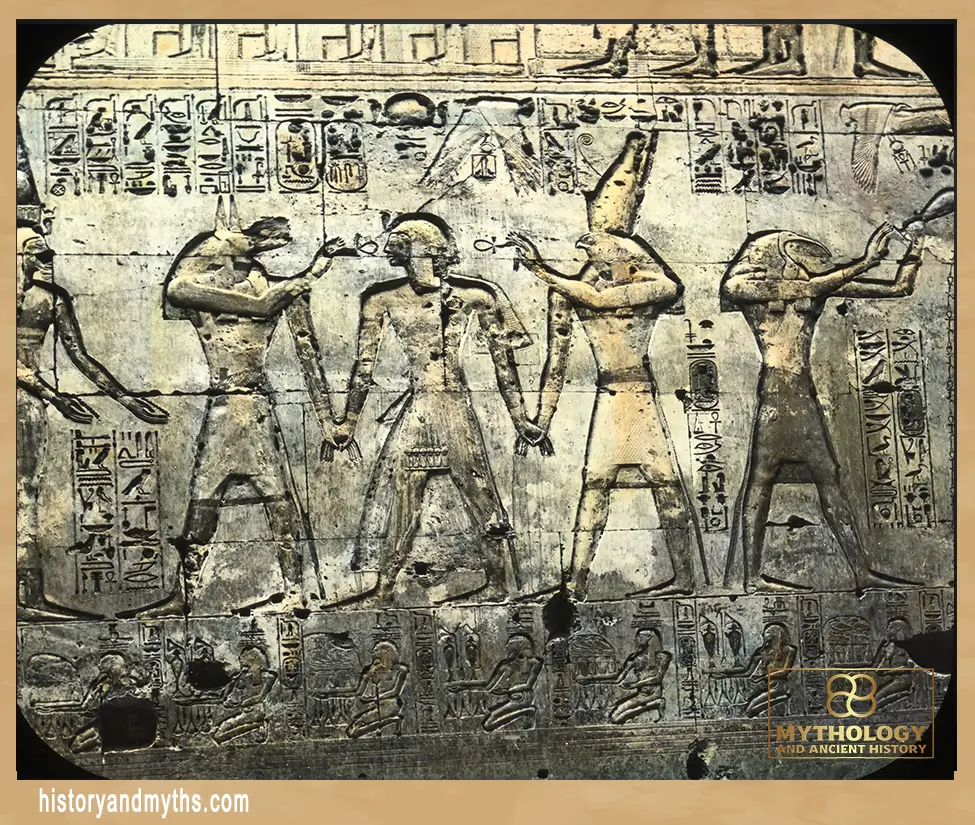
Before he became a guide of souls in funerary rituals, Wepwawet was first and foremost a god of war. His epithet “Opener of the Ways” applied not only to spiritual paths but to military ones. Ancient inscriptions describe how he walked ahead of the pharaoh’s forces, clearing the road, scouting danger, and symbolically defeating the enemy before the battle even began.
This idea transformed Wepwawet into the divine embodiment of strategic advantage. His presence meant that obstacles—physical or supernatural—were already removed. Armies marched with the assurance that the battlefield had been spiritually prepared, and the king entered combat under the protection of a god who knew the terrain better than any human scout.
His jackal form reflected this role perfectly. The jackal moves swiftly, identifies weak points, and anticipates threats long before they arrive. To the Egyptians, these traits translated directly into divine military intelligence: a god who could open a path through enemy lines, reveal hidden ambushes, and guide soldiers to victory.
It is no coincidence that Wepwawet’s standards were carried in royal processions and military campaigns. His banner was not merely a religious symbol—it was a declaration that the king moved forward with divine precision, supported by a god who opened the way before him.
Wepwawet and Anubis: Similar Forms, Different Roles
Because both gods appear with jackal heads, Wepwawet is often confused with Anubis, but the two deities hold distinct origins and functions within Egyptian religion. Their shared animal form reflects the symbolic power of the jackal—an animal that moves between desert and necropolis—not an overlap in identity.
Wepwawet: The Opener
Wepwawet’s earliest and primary function was to open the way—for kings, armies، and spirits.
- He works at the beginning of transitions.
- He clears paths, scouts danger, and initiates movement.
- His sphere includes warfare, royal coronation, and sacred processions.
He is, essentially, the divine guide who goes ahead.
Anubis: The Guardian
Anubis, by contrast, is a god of:
- embalming,
- protection of the body,
- weighing of the heart,
- judgment and burial rites.
Anubis belongs mainly to the middle stages of death—preservation, judgment, and protection.
Different Stages in the Journey
If the afterlife journey were a ritual procession, then:
- Wepwawet opens the way and leads the soul forward.
- Anubis receives the soul, protects it, and ensures proper passage through judgment.
Historical Context
Archaeology indicates that Wepwawet is older, appearing earlier in Abydos before the rise of Osirian theology.
Anubis later becomes more prominent as funerary customs evolved, especially in the Middle and New Kingdoms.
Why They Look Alike
The jackal form connects them to:
- the desert,
- necropolis boundaries,
- night travel,
- guardianship of liminal spaces.
But their roles remain complementary—not identical.
A Guide of Kingship and Royal Legitimacy
Wepwawet was not only a guardian of the dead or a scout of armies; he was also deeply woven into the ideology of kingship. In the most important royal ceremonies—especially coronations and the great festivals of Abydos—Wepwawet held a position at the front of the procession, symbolizing the king’s lawful passage into divine authority.
Opening the Way for the Pharaoh
Egyptian kings were expected to rule under the guidance of the gods, and no transition of power was complete without a ritual journey. Wepwawet, as the opener of the way, walked ahead of the king in these ceremonies, clearing the path both physically and symbolically. This act confirmed that:
- the king’s ascent was divinely sanctioned,
- his rule followed a “cleared path,”
- obstacles—political or spiritual—were removed.
The Abydos Procession
During the famous Osiris Festival at Abydos, a grand procession reenacted the mythic journey of Osiris. Wepwawet led the march, marking the transition from death to rebirth. His role in this festival reinforced his identity as a god who not only opened the road for the dead, but also ensured continuity and renewal of rulership.
Symbol of Royal Scouting
Some texts describe Wepwawet as the king’s “scout,” an attribute that aligns with the duties of ancient military vanguards. Just as a scout checks the terrain before the army advances, Wepwawet ensures the king’s path is safe—spiritually, politically, and physically.
Legitimacy Through Movement
Egyptian kingship was always enacted through ritual movement—crossing thresholds, entering temples, processing through holy cities. Wepwawet made these movements possible. To “open the way” for the king meant granting him unhindered access to divine spaces, and therefore the approval of the gods.
Centers of Worship: Abydos and Asyut
Wepwawet’s identity becomes clearer when we look at the places where he was actively worshipped. Unlike the major gods who had temples across Egypt, Wepwawet remained strongly tied to two ancient cities whose histories shaped his evolving roles.
Abydos: The Oldest Sanctuary
Abydos—one of Egypt’s earliest religious capitals—was the birthplace of Wepwawet’s cult.
Here, he served as:
- the guide of the king during sacred festivals,
- the opener of the way for the Osiris procession,
- a protective deity who walked ahead of royal and spiritual journeys.
Because Abydos became the symbolic tomb of Osiris, Wepwawet maintained a privileged role in funerary transitions, reinforcing his image as a guide through the liminal spaces between life and death.
Asyut (Lycopolis): A Northern Stronghold
Further north, Wepwawet developed a second major center in Asyut, known to the Greeks as Lycopolis, the “City of the Wolves.”
Here, he became:
- a regional guardian,
- a protective deity of the necropolis,
- a symbol of political authority during the Middle Kingdom.
In Asyut, his martial and protective aspects grew stronger, elevating him to the role of a local patron whose power supported both rulers and the dead.
A God Who Moves With the Journey
The geography of Wepwawet’s worship reflects his essence as a deity of movement.
He does not dominate one temple or one mythological cycle.
Instead, he appears where transitions take place—processions, borders, deserts, necropolises, and roads leading into sacred spaces.
This mobility is exactly what makes him unique among Egyptian gods.
Wepwawet in a Nutshell
- One of Egypt’s oldest jackal-headed deities, originating in Abydos.
- His title “Opener of the Ways” reflects roles in war, kingship, and the afterlife.
- Served as the king’s divine scout during coronations and military campaigns.
- Distinct from Anubis — Wepwawet opens the path, while Anubis protects and judges.
- Strong cult presence in Asyut (Lycopolis), the ancient “City of the Wolves.”
- Symbol of beginnings, transitions, direction, and ritual movement.
© historyandmyths.com — Educational use
Symbolism and Legacy in Egyptian Thought
Wepwawet’s legacy survives not through grand mythological stories, but through the symbolic force of his role. He represents the moment when a journey begins, when uncertainty becomes direction, and when a path opens where none existed before. This makes him one of the most conceptually important deities in the Egyptian worldview.
The Jackal as a Liminal Creature
The Egyptians saw the jackal as an animal that understood boundaries—between desert and cultivation, day and night, the living and the dead. Because Wepwawet embodied this creature, he became a guardian of thresholds, a protector who could see danger before it appeared, and a guide who could move confidently across realms where humans felt vulnerable.
A God of Beginnings
Unlike gods of resurrection or judgment, Wepwawet controls the starting point.
He opens the way so:
- kings may ascend to power,
- armies may advance toward victory,
- spirits may enter the afterlife without fear.
His presence marks that crucial first step—transforming uncertainty into movement.
Influence Across Dynasties
While some deities faded or were absorbed by larger cults, Wepwawet maintained a consistent identity from the early dynastic period through the New Kingdom. His roles adapted, but the core idea—opening the way—remained unchanged.
Modern Interpretation
Today, scholars see Wepwawet as a conceptual figure who helps us understand the Egyptian approach to:
- transition,
- movement,
- spiritual guidance,
- kingship ritual,
- boundary protection.
He is not merely a funerary god or a war deity, but a powerful metaphor for direction and purpose—an ancient reminder that every journey begins with the act of opening the way.
Key Takeaways
- Wepwawet is one of Egypt’s earliest jackal-headed gods, rooted in Abydos.
- His core function is “opening the way” for kings, armies, and the dead.
- He played a central role in coronation rituals and major Abydos processions.
- Distinct from Anubis: Wepwawet initiates the journey; Anubis protects it.
- His worship expanded to Asyut (Lycopolis), strengthening his martial aspect.
- Symbolizes beginnings, transitions, direction, and the clearing of obstacles.
Frequently Asked Questions
Wepwawet is a jackal-headed god known as the “Opener of the Ways,” guiding kings, armies, and souls through important transitions.
Wepwawet opens the path at the start of a journey, while Anubis protects the dead, oversees embalming, and guides the soul through judgment.
He acted as the pharaoh’s divine scout, clearing obstacles and ensuring victory by leading the army’s spiritual vanguard.
Mainly in Abydos—his earliest cult center—and in Asyut (Lycopolis), where his protective and martial roles grew stronger.
The title reflects his role in starting sacred journeys, opening ritual pathways, and guiding the living and the dead through transitions.
Yes. Archaeological evidence suggests Wepwawet appeared earlier in Abydos before Anubis became dominant in funerary practice.
It represents movement across boundaries—desert, necropolis, and spiritual thresholds—making Wepwawet a natural guide of transitions.
Sources & Rights
- Faulkner, R. O. The Ancient Egyptian Pyramid Texts. Oxford University Press.
- Hornung, Erik. The Ancient Egyptian Books of the Afterlife. Cornell University Press.
- Wilkinson, Richard H. The Complete Gods and Goddesses of Ancient Egypt. Thames & Hudson.
- Teeter, Emily. Religion and Ritual in Ancient Egypt. Cambridge University Press.
- Assmann, Jan. Death and Salvation in Ancient Egypt. Cornell University Press.
Written by H. Moses — All rights reserved © Mythology and History