The Ankh Symbol Explained — The Meaning of Life in Ancient Egypt
Few symbols from ancient Egypt are as instantly recognizable as the Ankh. Often described as the “key of life,” the Ankh was far more than a decorative sign or religious motif. In the Egyptian worldview, it represented life itself—not just the act of living, but the ongoing force that sustained the world, connected humans to the gods, and continued beyond death.
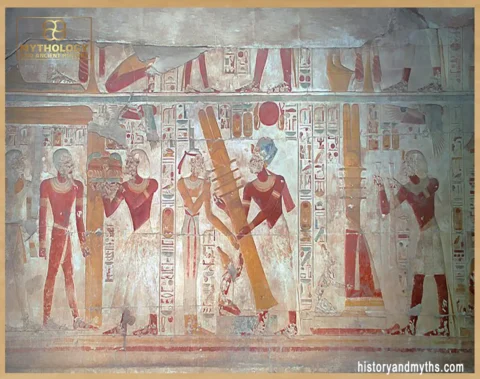
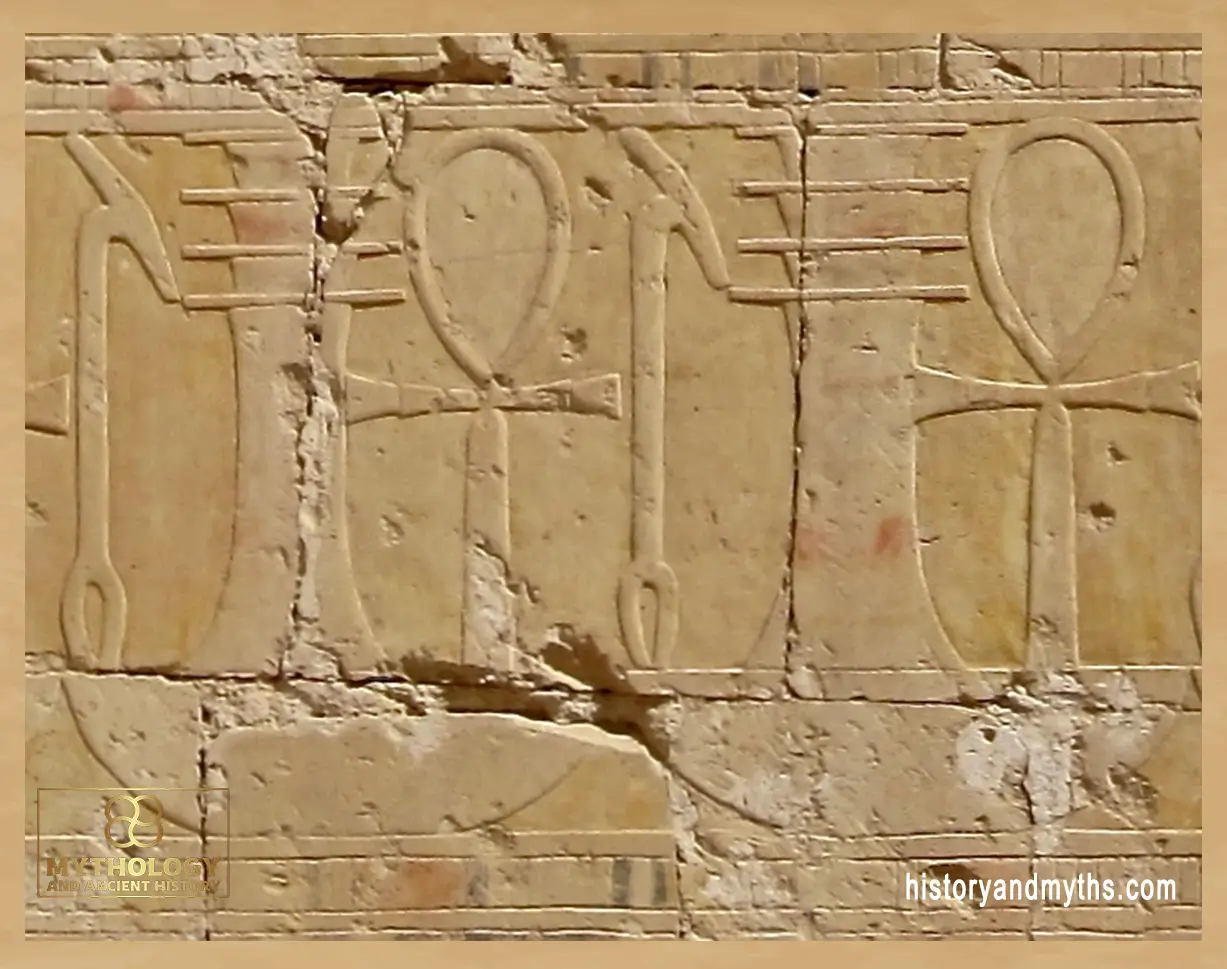
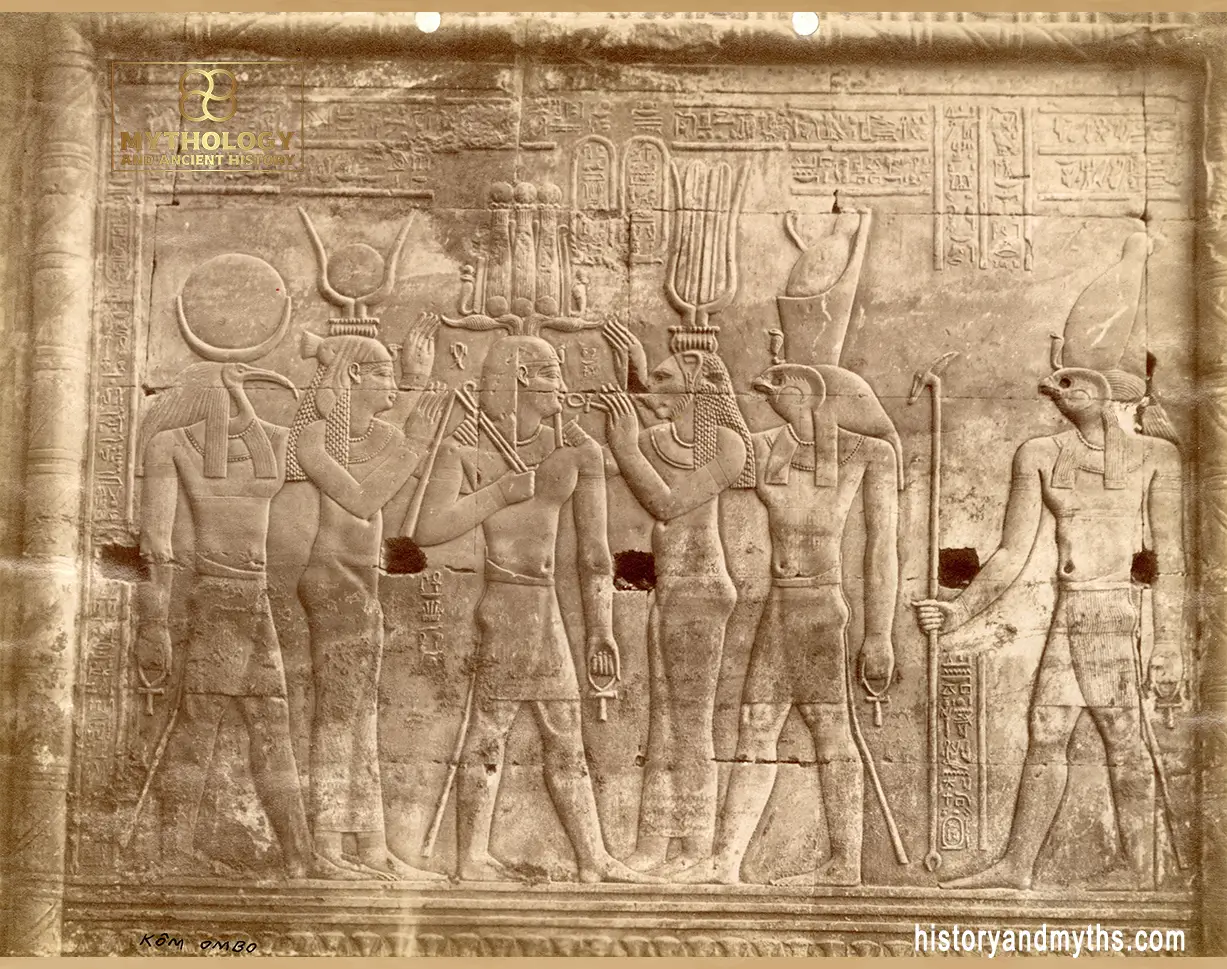
The Ankh appears constantly in temple reliefs, tomb paintings, and ritual objects, almost always in the hands of gods. Deities are shown holding it, offering it, or pressing it gently to the nose of a king, a visual language that expressed a clear idea: life is a divine gift, granted, renewed, and maintained by the gods. To the ancient Egyptians, breath, vitality, and existence were inseparable from divine order, and the Ankh was the symbol that captured this relationship in a single form.
Rather than symbolizing life in a general or abstract sense, the Ankh stood for ordered, sacred life—life that flows in harmony with the cosmos, survives death, and continues in the afterlife. This is why it appears so prominently in funerary art and amulets, and why it remained one of the most powerful and enduring symbols in Egyptian religion for thousands of years.
What Is the Ankh in Ancient Egyptian Belief?
In ancient Egyptian thought, the Ankh was not a symbol of life in the biological sense alone. It represented life as a sacred condition, something that existed only when the universe was in balance and when divine order—Ma’at—was upheld. To live, in this understanding, was to participate in a cosmic system maintained by the gods.
This explains why the Ankh is rarely shown lying idle or separated from divine figures. It is almost always active—held, offered, or transferred. When a god holds the Ankh, it signals possession of life’s source. When it is extended toward a human, especially a king, it marks a moment of authorization: life is being granted, renewed, or confirmed by divine power.
Importantly, the Ankh did not belong exclusively to the realm of the living. It bridged worlds. The same symbol appears in temples celebrating divine creation and in tombs preparing the dead for eternity. To the Egyptians, this continuity made sense. Life did not end at death; it changed state. The Ankh represented that unbroken thread—existence moving from one form to another without losing its sacred essence.
Unlike later religious symbols that emphasize salvation or moral judgment, the Ankh focused on sustained existence. It stood for breath, vitality, renewal, and permanence. In this way, it expressed a uniquely Egyptian vision of life: not fragile or temporary, but something designed to endure, provided it remained aligned with the cosmic order established at creation.
| Aspect | Explanation |
|---|---|
| Meaning | Symbol of sacred life, continuity, and existence sustained by divine order. |
| Core Concept | Life understood as harmony with cosmic balance (Ma’at), not mere biological survival. |
| Primary Associations | Breath, vitality, renewal, and eternal continuation beyond death. |
| Divine Use | Held and offered by gods as a sign of granting and renewing life. |
| Human Role | Life is received, not owned; sustained through divine authorization. |
| Ritual Function | Used in rituals and amulets to protect health and restore cosmic balance. |
| Funerary Meaning | Represents continued existence in the afterlife under divine order. |
| Common Misinterpretation | Often mistaken for a cross, despite having a distinct and much older meaning. |
The True Meaning of the Ankh — Life, Breath, and Cosmic Order
To understand the Ankh properly, it helps to move away from modern ideas of life as something purely biological. For the ancient Egyptians, life was not simply the opposite of death. It was a state of harmony, sustained only when the forces of the universe remained in balance. The Ankh symbolized this condition—life as alignment, continuity, and stability rather than mere survival.
One of the most revealing aspects of the Ankh is its close association with breath. In reliefs and wall scenes, gods are often shown holding the Ankh directly to the nose of a king or a deceased individual. This gesture was not decorative. Breath was understood as the visible sign of life entering the body, and breath itself was believed to come from divine origin. The Ankh, in this context, became a visual shorthand for the moment life is renewed.
The symbol also carried strong associations with water, especially the life-giving waters of the Nile. Just as the annual flood restored the land and made renewal possible, the Ankh represented the principle that life must be continually refreshed. Life was not static; it flowed, returned, and regenerated. The Ankh captured this idea without showing movement—it stood as a permanent reminder of an ongoing process.
Above all, the Ankh was inseparable from cosmic order. Life could not exist in chaos. It depended on Ma’at—truth, balance, and rightful order. This is why the Ankh appears so consistently in the hands of gods rather than humans. The gods were the guardians of order, and therefore the guardians of life itself. Humans did not possess life independently; they participated in it through divine permission.
In this sense, the Ankh was not a promise of immortality without condition. It was a symbol of sustained existence, granted and preserved only when harmony was maintained between the human world, the natural world, and the divine realm. That deeper meaning is what gave the Ankh its enduring power—and explains why it remained central to Egyptian religious thought for millennia.
Gods Who Hold the Ankh — Who Gives Life?
In Egyptian art, the Ankh is almost never separated from the gods. This is not a coincidence, nor is it a stylistic habit. It reflects a core belief: life does not originate in the human world. It flows downward from the divine realm. The gods hold the Ankh because they are the custodians of existence itself.
Different deities appear with the Ankh for different reasons, but the message remains consistent. Creator gods are shown holding it as a sign that life begins with them. Solar deities carry it as proof that light, time, and renewal are inseparable from living existence. Even gods associated with death or the afterlife hold the Ankh—not to contradict their roles, but to show that death is not the end of life’s authority.
One of the most meaningful scenes shows a god pressing the Ankh gently to the nose of a king. This gesture is not symbolic generosity; it is authorization. The king breathes because the gods allow him to breathe. His rule, vitality, and legitimacy are sustained by divine life-force, not personal power. In this way, the Ankh becomes both a spiritual and political symbol.
The same logic extends into funerary imagery. The deceased is often shown receiving the Ankh in the afterlife, reinforcing the idea that survival beyond death depends on divine acceptance. Life continues, but only under new conditions, governed by the same cosmic order that governed life on earth.
What matters most is not which god holds the Ankh, but the act itself. Holding the Ankh signals control over life’s continuity. Offering it signifies renewal. Touching it to the nose marks transition—from non-being to being, from weakness to vitality, from mortality to eternal participation in the divine order. Through these repeated visual scenes, Egyptian art communicated a simple but profound truth: life is sacred because it is granted, sustained, and reclaimed by the gods alone.
Is the Ankh a Cross? A Historical Clarification
The visual similarity between the Ankh and later cross-shaped symbols has led to centuries of confusion. From a historical perspective, however, the Ankh was never conceived as a cross, nor did it carry meanings related to sacrifice, suffering, or redemption. Those interpretations belong to entirely different religious frameworks that developed much later.
In ancient Egypt, the Ankh existed within a symbolic system focused on continuity, balance, and life-force. Its looped top was not an abstract ornament, but an essential part of its meaning. The loop emphasized life as something unbroken—without a clear beginning or end. The vertical and horizontal elements that form the lower part of the Ankh did not represent intersection or opposition; they expressed stability and support, the structure upon which life rests.
The confusion largely emerged in late antiquity, when Christian communities in Egypt encountered older religious imagery still visible on temples and monuments. Some visual overlap was inevitable, but resemblance does not equal origin. The Ankh already carried a complete symbolic identity long before Christianity reached Egypt, rooted in a worldview that saw life as a cosmic condition rather than a moral reward.
What makes the Ankh fundamentally different is its direction of meaning. It does not point toward suffering transformed into salvation. Instead, it points toward life continually renewed by divine order. There is no narrative of death overcoming life or life overcoming death. The two coexist as phases within a single, regulated system.
Understanding this distinction is essential. When the Ankh is treated as an early form of the cross, its original context is lost. The symbol becomes flattened, stripped of the philosophical depth that made it central to Egyptian religion. Seen on its own terms, the Ankh stands as a declaration that life—physical, spiritual, and cosmic—exists only when harmony is maintained between the divine and the world.
The Ankh — At a Glance
- Not just “life”: The Ankh represents ordered, sacred existence sustained by cosmic balance.
- Life as a divine gift: It is always granted or renewed by the gods, never owned by humans.
- Breath and vitality: Often shown touching the nose to symbolize life entering the body.
- Continuity beyond death: Used in funerary contexts to express survival under divine regulation.
- Active, not decorative: A functional symbol in rituals, amulets, and temple imagery.
- Distinct identity: Unrelated to later cross symbols and rooted entirely in Egyptian belief.
The Ankh in Rituals, Amulets, and the Afterlife
Beyond temple walls and monumental art, the Ankh played an active role in everyday religious practice. It was worn, carried, and placed deliberately, not as decoration, but as a functional symbol believed to participate in the preservation of life. Amulets shaped like the Ankh were meant to protect health, ensure vitality, and guard the fragile boundary between life and disorder.
In ritual contexts, the Ankh functioned as a conduit rather than an object of worship. Priests did not venerate the symbol itself; they used it to express the transmission of divine power. When represented in ritual scenes, the Ankh marks moments of renewal—rites intended to restore balance, strengthen the body, or reaffirm the connection between the human and divine realms.
Its role became even more pronounced in funerary belief. For the deceased, survival after death was never automatic. Existence in the afterlife required transformation, acceptance, and continued alignment with cosmic order. The Ankh symbolized the condition under which this continuation was possible. Placed in tombs, carved into coffins, or depicted in burial texts, it served as a reminder that life could resume—but only under divine regulation.
What distinguishes the Ankh from simple protective charms is its forward-looking purpose. It was not meant to preserve the past, but to enable continuity. Whether in the hands of a god, worn by the living, or placed beside the dead, the Ankh always pointed toward what comes next: renewed breath, renewed order, renewed existence.
Through these uses, the Ankh maintained a consistent meaning across different settings. It did not change from temple to tomb, or from ritual to afterlife. Instead, it reinforced a single idea at every stage of existence: life is sustained, not owned; granted, not assumed; and continued only through harmony with the divine structure of the universe.
Key Takeaways
- The Ankh symbolizes sacred, ordered life rather than simple biological existence.
- In Egyptian belief, life is granted and renewed by the gods, not possessed by humans.
- The Ankh is closely linked to breath, vitality, and the divine source of life.
- It bridges the worlds of the living and the dead, expressing continuity beyond death.
- The symbol plays an active role in rituals, amulets, and funerary belief.
- The Ankh is historically distinct from later cross symbols and has its own philosophical meaning.
Frequently Asked Questions About the Ankh
What does the Ankh symbolize in ancient Egypt?
The Ankh symbolizes sacred, ordered life sustained by divine power. It represents vitality, breath, renewal, and continued existence beyond death rather than simple biological survival.
Why do Egyptian gods hold the Ankh?
Gods hold the Ankh because life was believed to originate from the divine realm. Offering the Ankh signifies granting or renewing life under cosmic order.
Is the Ankh related to the Christian cross?
No. Despite visual similarity, the Ankh predates Christianity by thousands of years and belongs to a completely different religious and symbolic system.
Why is the Ankh shown near the nose in Egyptian art?
The Ankh is placed near the nose to represent breath. Breath was understood as the visible sign of life entering the body, granted by the gods.
Was the Ankh used only by royalty?
No. While kings appear frequently with the Ankh, it was also worn by ordinary people as an amulet for protection, health, and vitality.
Did the Ankh represent immortality?
The Ankh did not promise immortality without condition. It symbolized continued existence under divine order and harmony with cosmic balance.
Where was the Ankh commonly used?
The Ankh appeared in temples, tombs, rituals, amulets, and funerary art, expressing life’s continuity across all stages of existence.
Sources & Rights
- Assmann, Jan. Death and Salvation in Ancient Egypt. Cornell University Press, 2005.
- Pinch, Geraldine. Egyptian Mythology: A Guide to the Gods, Goddesses, and Traditions of Ancient Egypt. Oxford University Press, 2004.
- Wilkinson, Richard H. The Complete Gods and Goddesses of Ancient Egypt. Thames & Hudson, 2003.
- Hornung, Erik. Conceptions of God in Ancient Egypt: The One and the Many. Cornell University Press, 1982.
- Shafer, Byron E., ed. Religion in Ancient Egypt: Gods, Myths, and Personal Practice. Cornell University Press, 1991.
Written by H. Moses — All rights reserved © Mythology and History