Banebdjed — The Four-Headed Ram God of Mendes in Ancient Egypt
In the Delta city of Mendes, the Egyptians worshipped a deity whose identity was rooted not in dramatic myths but in the deeper spiritual fabric of creation: Banebdjed, the “Ba of the Lord of Djedet.” Far from being a minor local god, he embodied the living force that animated existence—the ba, or spiritual power, of a great creator or of Osiris himself. To the people of Mendes, Banebdjed was not simply a ram-headed figure; he was the presence that made life fertile, communities stable, and the world spiritually connected.
Understanding Banebdjed opens a window into how the Egyptians imagined divine energy. His temple complex, centered on a sacred ram and the great lake of Mendes, reflected a belief that all beings, even the gods, possessed a living essence that could move, act, and intervene. This essence was not abstract—it had a face, a form, and a home in the Delta. Through Banebdjed, the Egyptians linked fertility, kingship, and cosmic vitality in a way that reveals a sophisticated spiritual worldview far beyond a simple animal cult.
The Meaning Behind the Name “Banebdjed”
The name Banebdjed is a key to understanding the god’s identity. It translates to “the Ba of the Lord of Djedet”, referring to the spiritual force (ba) of a major deity whose presence shaped the city of Mendes. In Egyptian thought, the ba was not a soul in the modern sense but a living, mobile power—an aspect of a god that could move between realms, influence the world, and embody divine vitality.
By calling Banebdjed the “Ba of the Lord,” the people of Mendes viewed him as the active, energetic expression of a greater cosmic authority. In some traditions, this “lord” was Osiris, whose regenerative power dominated funerary religion. In others, it was a creator god whose essence sustained order and fertility. Either way, Banebdjed represented the living spark of divinity—a force that animated creation and connected the spiritual and earthly worlds.
This understanding makes Banebdjed far more than a local ram god. His name reveals a concept at the heart of Egyptian theology: even deities possessed living aspects that carried their power into the world. Banebdjed was one of those aspects, given form, worship, and a sacred home.
| Aspect | Details |
|---|---|
| Name Meaning | “Ba of the Lord of Djedet” — the living spiritual force of a major deity. |
| Primary Identity | Ram-headed god representing divine vitality, fertility, and cosmic energy. |
| Cult Center | Mendes (Djedet) in the Nile Delta — home of the sacred Mendes ram. |
| Iconography | Ram with twisted horns; living sacred ram kept in the temple precinct. |
| Association with Osiris | Viewed as the ba of Osiris or of a creator god, forming the Mendes Triad with Hatmehit. |
| Role in Fertility | Embodied creation’s life-force, renewal, and productivity of the Delta region. |
| Greek Interpretation | Identified with Pan due to shared themes of vitality and generative power. |
Origins and the Sacred City of Mendes
Banebdjed cannot be understood without Mendes, the northern Delta city where his worship was rooted. Known to the Egyptians as Djedet, Mendes was more than a provincial settlement—it was a spiritual landscape shaped by water, fertility, and the presence of a sacred ram believed to embody the god’s living essence. The great lake at the heart of the temple complex symbolized renewal, and its calm surface reflected the deep relationship between the natural environment and divine energy.
In this city, Banebdjed was seen as the force that animated creation and guaranteed the land’s productivity. His association with water, the Delta marshes, and the annual cycles of growth made him a guardian of life’s continuity. Mendes became famous for housing a living sacred ram, treated as the earthly manifestation of Banebdjed. When one ram died, another took its place, ensuring that the god’s presence never left the community.
The prominence of Mendes in the religious landscape shows that Banebdjed was not an obscure deity but one whose significance grew from the theological core of the region. Here, he was both a local patron and a cosmic power, linking the fertility of the Delta to the deeper currents of divine vitality.
Symbols and Iconography: The Ram as a Living Force
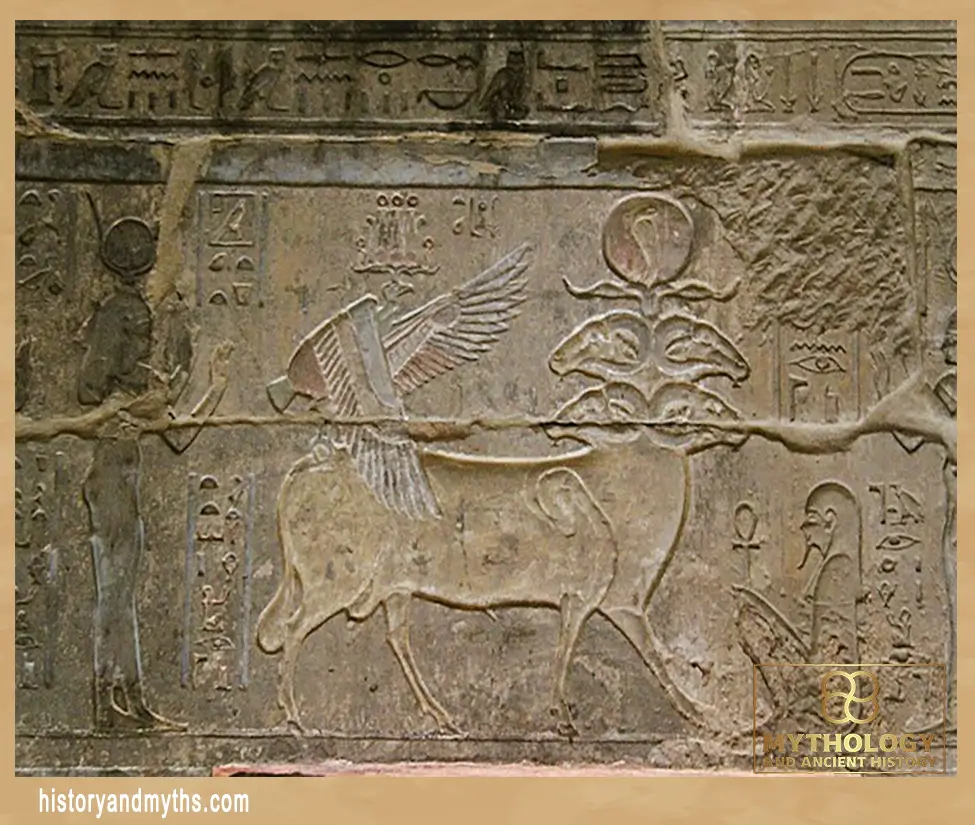
The ram associated with Banebdjed was not chosen for its appearance alone. In Egyptian thought, the ram embodied strength, virility, and the surge of life that drives creation forward—qualities that perfectly matched the role of a ba, the active spiritual force of a god. The twisted horns, a defining feature of the Mendes ram, expressed power contained within a controlled curve: energy that spirals outward yet remains centered, much like the divine vitality Banebdjed represented.
Unlike the falcon of Horus or the ibis of Thoth, the ram of Mendes was not just an emblem. It was a living manifestation of the god himself. A sacred ram resided within the temple precinct, receiving offerings and ritual care. Its presence made Banebdjed tangible; the people of Mendes could see, honor, and interact with an embodiment of divine energy. When the animal died, rituals ensured the continuity of the god’s presence through another chosen ram, reaffirming the idea that the god’s essence was constant even as its vessel changed.
This iconography also reflects a broader theological idea: that life itself is a divine force moving through forms. For the Egyptians, the ram of Banebdjed was a reminder that vitality is not a symbol but a reality—renewing, circulating, and sustaining the world.
Relationship with Osiris and the Mendes Triad
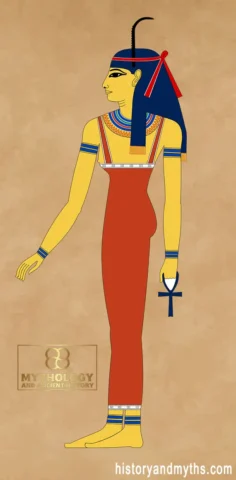
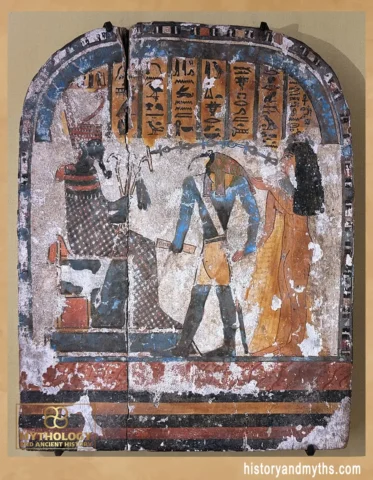
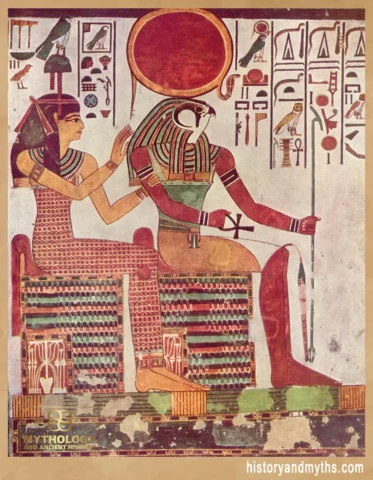
Banebdjed’s role becomes clearer when placed within the religious system of Mendes, where he formed a triad alongside Osiris and the local fish-goddess Hatmehit. In this structure, Banebdjed represented the ba, or spiritual vitality, of Osiris—a living extension of the god’s regenerative power. While Osiris symbolized resurrection and the promise of renewed life, Banebdjed embodied the force that made this renewal possible.
The pairing with Hatmehit, a goddess tied to the waters of the Delta, strengthened this connection. Water, fertility, and the spiritual spark of life converged in a unified theological vision. Banebdjed was not merely a companion to Osiris but an essential aspect of his cosmic function. Through him, Osiris’s influence was present in the world—not as a distant myth but as a continuous, sustaining breath that flowed through Mendes and the surrounding land.
This triad reveals how Egyptians understood divinity in layers: a god could have forms, essences, and living presences that interacted with each other. Banebdjed, as the ba of a greater deity, was the active part of Osiris’s power—mobilizing life, shaping fertility, and ensuring that the world remained connected to the divine.
Banebdjed at a Glance
Banebdjed, the “Ba of the Lord of Djedet,” was the living spiritual force of a greater deity—often linked to Osiris or a primordial creator. Worshipped at Mendes in the Nile Delta, he embodied the power that animated the cosmos and sustained the fertility of the land.
His ram form was not symbolic alone; a living sacred ram was kept within the temple as a direct manifestation of his divine presence. Through this living icon, the people of Mendes understood the god as a continuous source of vitality, renewal, and spiritual energy.
Central to his identity was the Egyptian concept of the ba, a mobile, active essence capable of moving between realms. Banebdjed expressed this essence on a cosmic scale, making him a key figure in understanding how ancient Egyptians viewed life, divinity, and the forces that bind both together.
Greek Interpretations and the Association with Pan
When the Greeks encountered Banebdjed during the Ptolemaic period, they interpreted him through their own religious framework, identifying him with Pan, the rustic god of shepherds, wilderness, and fertility. This association was not random. Both deities were linked to powerful male vitality, the natural rhythms of life, and the animal forms that expressed those forces. For the Greeks, the ram was a familiar symbol of untamed energy and generative strength—qualities they immediately recognized in the Mendes deity.
But the comparison reveals more about Greek understanding than Egyptian belief. Banebdjed was not a rustic god or a guardian of herds; he was the living essence of divine creation, a force that permeated the cosmos rather than the countryside. By equating him with Pan, the Greeks simplified his identity into a form they could grasp. Yet their interpretation also helped preserve his memory, ensuring that the god of Mendes continued to be recognized in a world increasingly shaped by cultural blending.
This moment of cross-cultural interpretation shows how ancient observers tried to bridge unfamiliar theologies. In the case of Banebdjed, the Greeks found a convenient parallel, but the Egyptian meaning remained far deeper—rooted in cosmic vitality, ritual continuity, and the belief that every god had a living power that sustained the world.
The Spiritual Meaning of the Ba in Banebdjed
To understand Banebdjed fully, it is essential to grasp what the Egyptians meant by the ba—the core of his identity. Unlike the modern idea of a “soul,” the ba was a living, mobile force that carried a being’s character, presence, and agency. It could move between worlds, influence events, and express the divine will in ways that were both personal and cosmic. When Egyptians spoke of the ba of a god, they were referring to the aspect that interacted most directly with creation.
Banebdjed embodied this idea in its purest form. As the ba of a greater deity—often identified with Osiris or a creator god—he represented the divine spark that animated life and maintained order. His presence was not tied to a myth but to a principle: that existence itself depended on a continuous flow of spiritual energy. Worshipping Banebdjed meant acknowledging the force that made the land fertile, the waters renew, and the cosmos stay connected to its source.
Through him, the Egyptians expressed a sophisticated understanding of divinity as layered and dynamic. A god was not a single form but a constellation of powers, each with its own role. Banebdjed was the breath within the body of creation, the part of divinity that moved, acted, and sustained. In this sense, he stands as one of the clearest examples of how Egyptian theology blended nature, spirit, and cosmology into a unified vision of life.
Key Takeaways
- Banebdjed means “Ba of the Lord of Djedet,” highlighting his role as a divine spiritual force.
- He was worshipped in Mendes, where a sacred living ram represented his presence.
- His ram form symbolized strength, vitality, and the generative power that sustained creation.
- He formed the Mendes Triad with Osiris and the fish-goddess Hatmehit.
- The Greeks identified him with Pan due to shared themes of fertility and life-force.
- His identity reflects the Egyptian concept of the ba as a dynamic, living essence that connects the spiritual and earthly worlds.
Frequently Asked Questions
Who is Banebdjed in ancient Egyptian religion?
Banebdjed is the “Ba of the Lord of Djedet,” a ram-headed deity representing the living spiritual force of a greater god, often associated with Osiris.
What does the name Banebdjed mean?
The name means “Ba of the Lord of Djedet,” highlighting his role as the active, vital essence of a major deity worshipped in Mendes.
Why is Banebdjed depicted as a ram?
The ram symbolized strength, vitality, and generative power. A living sacred ram in Mendes served as the god’s earthly manifestation.
Where was Banebdjed primarily worshipped?
He was worshipped in Mendes (Djedet) in the Nile Delta, where a temple complex centered around a sacred lake honored his presence.
How is Banebdjed connected to Osiris?
He was viewed as the ba of Osiris, forming the Mendes Triad alongside Osiris and the fish-goddess Hatmehit.
Why did the Greeks identify Banebdjed with Pan?
Because both deities embodied vitality, fertility, and natural generative energy, leading Greeks to associate Banebdjed with the god Pan.
What is the spiritual significance of the “ba” in Banebdjed?
The ba represents a living, mobile force capable of acting in the world; Banebdjed personifies this essence on a cosmic scale.
Sources & Rights
- Allen, James P. Middle Egyptian: An Introduction to the Language and Culture of Hieroglyphs. Cambridge University Press.
- Hart, George. A Dictionary of Egyptian Gods and Goddesses. Routledge.
- Wilkinson, Richard H. The Complete Gods and Goddesses of Ancient Egypt. Thames & Hudson.
- Hornung, Erik. Conceptions of God in Ancient Egypt: The One and the Many. Cornell University Press.
- Lesko, Leonard H. The Great Goddesses of Egypt. University of Oklahoma Press.
- Pinch, Geraldine. Handbook of Egyptian Mythology. ABC-CLIO.
- Ancient Egypt Online — “Banebdjed.” (Used for etymology, Mendes triad, and iconography.)
- World History Encyclopedia — “Mendes and the Ram Cult.” (Used for cultural and regional context.)
- Encyclopaedia Britannica — “Osiris” and related entries on Mendes and fertility symbolism.
Written by H. Moses — All rights reserved © Mythology and History