Meretseger — The Cobra Goddess of Deir el-Medina in Ancient Egypt
Meretseger is one of the few Egyptian goddesses whose power comes not from grand myths or temple rituals, but from the landscape itself. She lived in the minds of the people as the spirit of the mountain that watches over the royal tombs at Thebes, a presence folded into the silence of the cliffs overlooking the Valley of the Kings. Her name, “She Who Loves Silence,” reflects this deep connection. She was not a goddess of festivals or hymns—she was the quiet force that protected a sacred place.
For the workers of Deir el-Medina, who carved the burial chambers of pharaohs deep into the desert hills, Meretseger was more than a divine figure. She was a companion in their daily life, a guardian who saw their labor, their fears, and even their mistakes. They turned to her in moments of guilt or uncertainty and believed she had the power to punish wrongdoing but also to forgive it. Their prayers and stelae paint a picture of a goddess who balanced justice with compassion.
Meretseger endures today not because of royal inscriptions, but because she represents something timeless: the idea that sacred places need protectors, and that ordinary people seek a force greater than themselves to help them navigate the weight of responsibility and moral choices. Her story is small in scale but rich in humanity.
Origins: A Goddess Born from the Mountain Itself
Unlike most deities of Ancient Egypt, Meretseger does not emerge from a lineage of gods or from the cosmic cycles found in traditional mythology. Her origin is inseparable from a place: the Theban mountain that shelters the royal necropolis. The Egyptians of western Thebes saw the cliffs not simply as rock formations but as a living presence—one that watched over the pharaohs’ eternal journey and enforced the sanctity of their resting place.
Her name, Meret-seger—“She Who Loves Silence”—captures the atmosphere of that landscape. The hills around the Valley of the Kings were vast, still, and untouched by the noise of daily life. This silence was not emptiness; it was reverence. The workers who carved tombs into the rock felt that the mountain was aware of their actions, and Meretseger personified that awareness.
Because she was tied directly to the land, Meretseger did not require a temple or cult center to legitimize her presence. She existed wherever the mountain cast its shadow. Even when official religion shifted or new gods rose in popularity, her identity remained anchored in the very earth of Thebes. For the people who lived and worked there, she was not an abstraction but a constant companion in the demanding environment of the desert hills.
Her origin as a local, landscape-born goddess makes her one of the most unique deities in Egyptian belief. She embodied the idea that the natural world itself could be divine, protective, and morally attentive.
| Aspect | Details |
|---|---|
| Name | Meretseger — “She Who Loves Silence” |
| Primary Role | Local guardian goddess of the Theban necropolis |
| Symbol | Cobra; woman with a cobra head; mountain-serpent fusion |
| Domains | Protection, justice, moral accountability, healing |
| Cult Center | Deir el-Medina and the Theban mountain overlooking the Valley of the Kings |
| Worshippers | Tomb-builders and artisans of Deir el-Medina |
| Notable Traits | Punishes wrongdoing but grants forgiveness when repentance is sincere |
| Legacy | A personal, moral protector whose cult reflects lived spiritual experiences |
The Protector of Deir el-Medina: A Goddess of Workers, Not Kings
While many Egyptian gods were tied to temples, priesthoods, or royal authority, Meretseger belonged to a different world—the world of the artisans of Deir el-Medina, the community responsible for carving and decorating the tombs of the pharaohs. Their relationship with Meretseger was intimate and personal in a way rarely seen with other deities.
The workers lived on the edge of the desert, directly under the gaze of the mountain associated with her. Their labor demanded precision, secrecy, and moral discipline. They handled treasures intended for the king’s afterlife, walked through passages no outsider was allowed to enter, and spent years inside the stillness of cliffside chambers. In that remote environment, Meretseger became a presence they felt rather than saw.
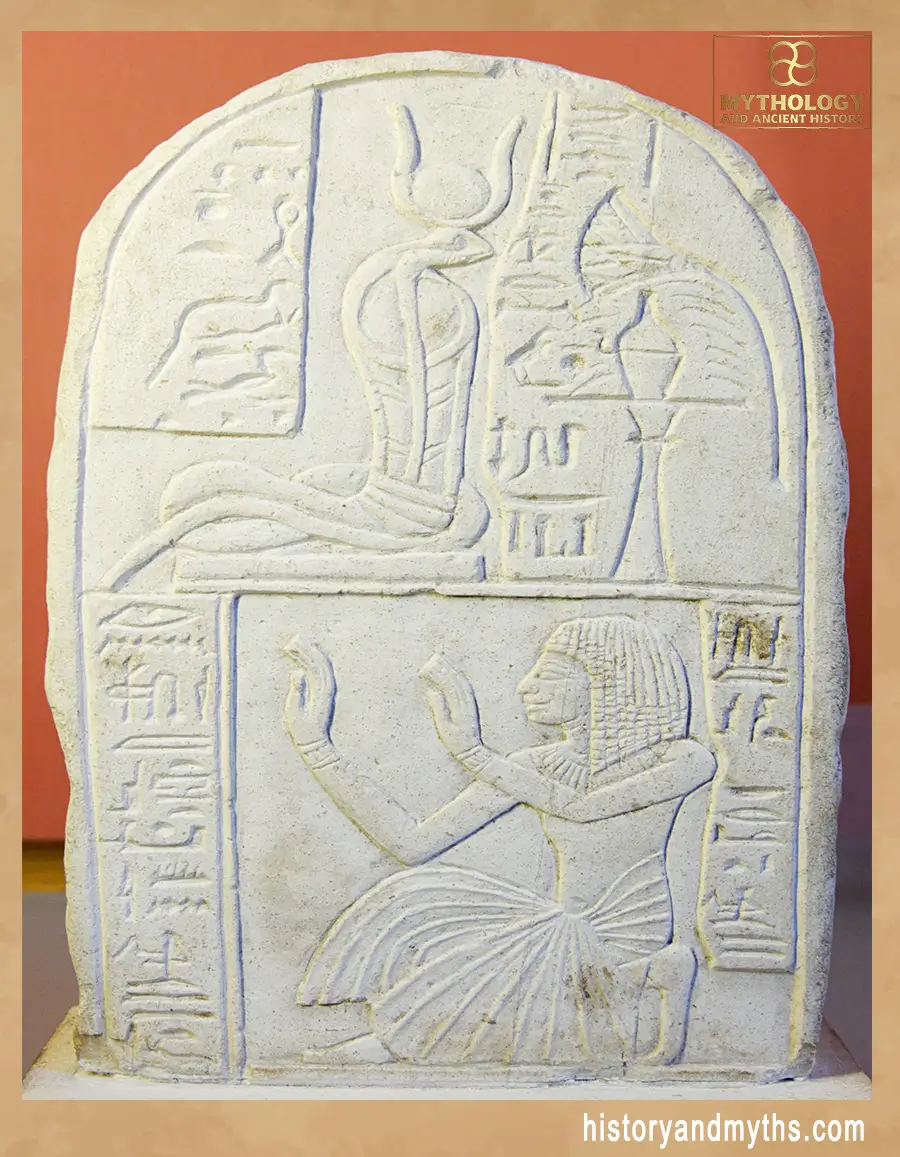
For them, she was a guardian who protected not only the royal tombs but the ethical integrity of the workers themselves. Stelae discovered in the village show individuals confessing mistakes—stealing tools, breaking work rules, or lying—and begging Meretseger for forgiveness. These confessions reveal a rare dimension of ancient Egyptian religion: a sense of personal accountability before a local goddess who cared about their conduct.
What made Meretseger exceptional is that she was not invoked for monumental events or national crises. Instead, she guided the daily moral lives of ordinary people. Her role bridged the physical and psychological landscapes of Deir el-Medina, offering protection during their work and comfort during their moments of fear or guilt.
Punisher and Healer: Meretseger’s Dual Nature
What sets Meretseger apart from many Egyptian goddesses is the striking balance between her ability to punish and her willingness to forgive. The workers of Deir el-Medina believed that she watched over not only the tombs but also their behavior. When someone acted dishonestly—stealing materials, breaking an oath, hiding a mistake—Meretseger could respond swiftly. Illnesses, snakebites, or sudden misfortune were sometimes interpreted as her intervention.
But her punishment was never understood as blind rage. It was corrective, aimed at restoring moral order in a community where trust and secrecy were essential. And just as she could harm, she could also heal. Several stelae record personal testimonies of workers who admitted wrongdoing, suffered, prayed to Meretseger, and eventually recovered. They credited their healing to her mercy.
This duality reveals a more complex spiritual relationship than simple fear. Meretseger was a goddess who demanded integrity, but she was also capable of compassion when remorse was sincere. In this way, she became a mirror for the emotional world of the community: their anxieties, confessions, and hopes for redemption.
Her ability to both wound and restore made her a powerful moral presence—proof that divinity, even in its fiercest form, could hold space for human weakness and forgiveness.
Iconography: The Cobra Goddess of the Theban Mountain
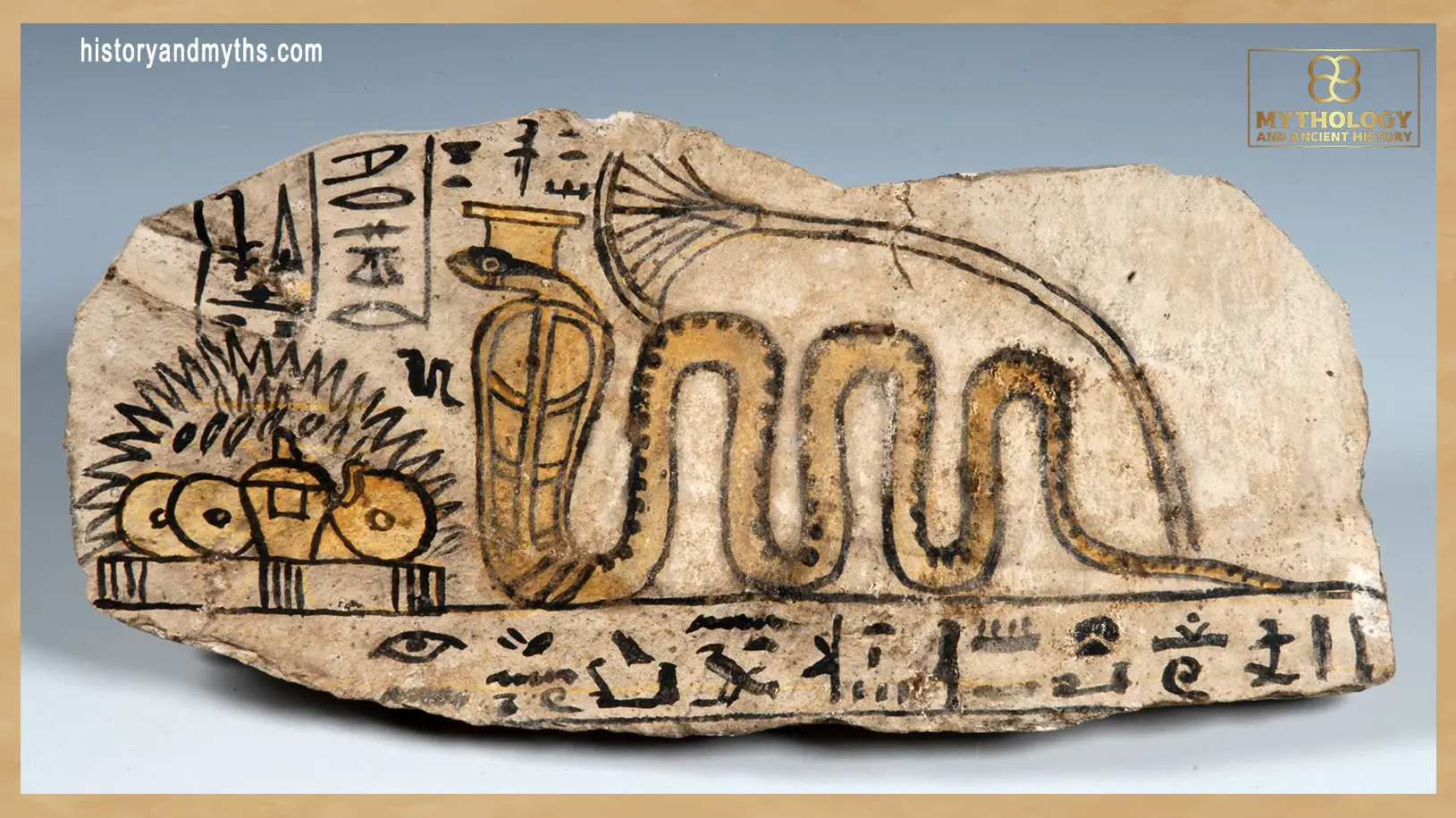
Meretseger’s imagery is among the most distinctive of Egypt’s local deities. She was commonly shown as a cobra, a form that carried deep protective symbolism. The raised hood of the cobra was understood as a divine warning: a guardian ready to strike against anyone who violated sacred ground. In a landscape filled with tombs and hidden passageways, this association was both practical and symbolic.
Sometimes she appears as a woman with a cobra’s head, blending human awareness with the serpent’s alert power. In rare instances, her form merges with the shape of the mountain itself, emphasizing that she was not just a goddess who protected the necropolis—she was the necropolis, its cliffs, and its silent presence.
The cobra form also linked her to royal protection. Just as the uraeus serpent guarded the king, Meretseger guarded the eternal world of the kings. Her iconography made her instantly recognizable to the artisans who lived beneath the cliffs, reminding them that the land they walked upon had a living spirit.
Although her depictions are not numerous, they are consistent in meaning. Each representation highlights the qualities that defined her: vigilance, restraint, and sacred authority. Through the cobra, Meretseger communicated a message that words could not express—the mountain sees, the mountain protects, and the mountain answers when disturbed.
Meretseger — The Silent Guardian of Thebes
Meretseger is the cobra goddess who watched over the Theban necropolis and the workers of Deir el-Medina.
Born from the very mountain that rises above the Valley of the Kings, she embodied vigilance, moral judgment,
and the power of silence. Her presence was not tied to grand temples but to the lived experience of the people
who carved the royal tombs and sought her protection — and sometimes her forgiveness.
- Goddess of the Theban mountain and royal necropolis.
- Worshipped mainly by the workers of Deir el-Medina.
- Depicted as a cobra or a woman with a cobra head.
- Known for both punishing wrongdoing and granting mercy.
- Symbolizes silence, vigilance, and moral accountability.
© historyandmyths.com — Educational use
Legacy: A Quiet but Lasting Presence in Theban Religion
Meretseger’s legacy is not measured by temples or priestly hierarchies—she left none. Instead, her influence survives through the voices of ordinary people who carved their fears and hopes into stone. The stelae of Deir el-Medina remain some of the most personal religious documents from ancient Egypt, and many of them speak directly to her. They show a goddess who listened, judged, punished, and forgave with a sense of moral clarity rarely seen in the Egyptian pantheon.
As Theban religious life evolved, her prominence gradually faded. Larger state deities absorbed many of the protective roles she once held, and later periods emphasized other guardian figures. Yet she never disappeared completely. Her name continued to echo in the necropolis she protected, preserved in the landscape and in the stories of those who lived closest to her.
Today, Meretseger stands as a reminder that Egyptian religion was not only the domain of kings and high priests. It was also shaped by the fears, ethics, and daily experiences of workers and families. Her story illustrates how a local goddess, tied to a single mountain, could become a powerful moral force for an entire community.
In her silence, Meretseger embodied a kind of spirituality grounded in place—an understanding that sacredness lives not only in grand monuments, but in the quiet spaces where people confront themselves and seek forgiveness.
Key Takeaways — Meretseger
- Meretseger is a local cobra goddess linked to the Theban mountain and royal necropolis.
- Her name, “She Who Loves Silence,” reflects the sacred stillness of the cliffs above the Valley of the Kings.
- She was especially revered by the workers of Deir el-Medina, who saw her as their moral guardian.
- Meretseger could punish wrongdoing but was also known for forgiving sincere repentance.
- Her iconography as a cobra or cobra-headed woman emphasizes vigilance and protective power.
- Her cult shows how ordinary Egyptians found personal, ethical meaning in local deities tied to place.
© historyandmyths.com — Educational use
Frequently Asked Questions about Meretseger
1. Who is Meretseger in Ancient Egyptian religion?
Meretseger is the cobra goddess who protected the Theban necropolis and the workers of Deir el-Medina.
2. What does the name Meretseger mean?
Her name translates to “She Who Loves Silence,” reflecting the sacred stillness of the Theban mountains.
3. Why was Meretseger important to Deir el-Medina?
The tomb-builders believed she punished wrongdoing and forgave sincere repentance, making her a personal moral guardian.
4. How is Meretseger depicted in Egyptian art?
She appears as a cobra, a cobra-headed woman, or a serpent form merging with the mountain.
5. Did Meretseger have a major temple?
No. Her cult was tied to the Theban hills rather than formal temple structures.
6. What was Meretseger’s role in the afterlife?
She protected royal tombs and ensured the sanctity of the necropolis surrounding the Valley of the Kings.
7. Is Meretseger connected to other protective goddesses?
Yes. She shares symbolic traits with cobra and lioness deities, though her role is uniquely tied to place and moral oversight.
Sources & Rights
- Assmann, Jan. Death and Salvation in Ancient Egypt. Cornell University Press.
- Hornung, Erik. The Ancient Egyptian Books of the Afterlife. Cornell University Press.
- Wilkinson, Richard H. The Complete Gods and Goddesses of Ancient Egypt. Thames & Hudson.
- Pinch, Geraldine. Egyptian Mythology: A Guide to the Gods, Goddesses, and Traditions of Ancient Egypt. Oxford University Press.
- Teeter, Emily. Religion and Ritual in Ancient Egypt. Cambridge University Press.
Written by H. Moses — All rights reserved © Mythology and History