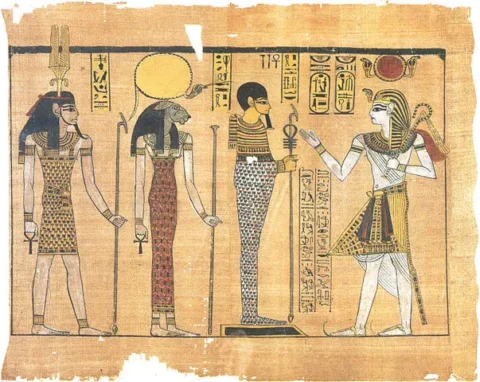
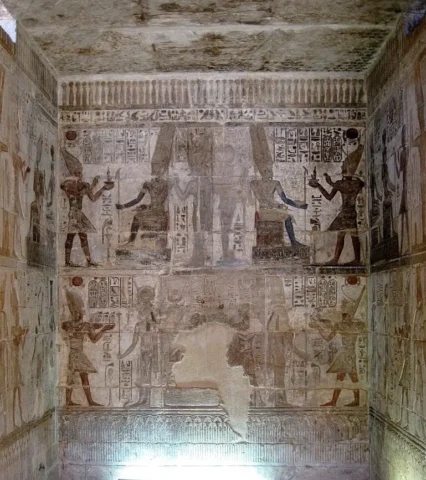
Horus the Elder — Egypt’s Ancient Sky-God of Power and Kingship
Long before the famous myth of Osiris and Isis shaped the image of Horus as the avenging son, the Egyptians worshipped an older and more expansive sky-god: Horus the Elder. Known as Heru-ur or Haroeris, he embodied the vastness of the heavens—the sun, the moon, and the protective sweep of the falcon that watched over both gods and kings. His role was not defined by vengeance or royal succession but by the cosmic order that existed before the later family dramas of the Osirian cycle.
For early Egyptians, Horus the Elder represented a universe still in its formative stage, where the sky itself was a living presence and divine power was measured by its ability to encompass all creation. He was honored in Letopolis, one of the earliest religious centers, where priests viewed him as a guardian of the natural balance that allowed life to function. Understanding this ancient form of Horus reveals how Egyptian religion evolved: from broad cosmic forces to more personal myths, and from the open sky to the throne room of the pharaoh.
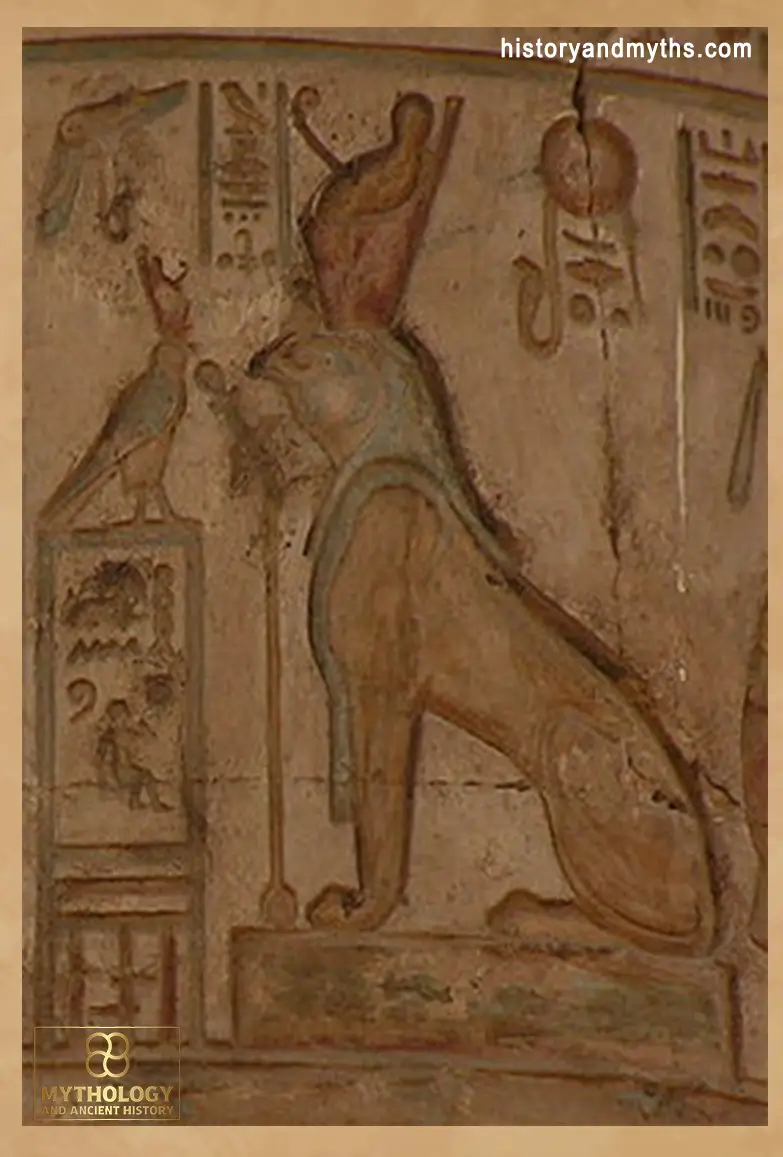
The Ancient Identity of Horus the Elder
Before Egyptian mythology crystallized around the Osirian family, Horus the Elder stood as a primordial sky-god whose authority predated the later narratives of divine kingship and cosmic conflict. Known in the earliest texts as Heru-ur—“Horus the Great”—he represented the sky in its totality: the sun as his right eye, the moon as his left, and the vast falcon wings stretched eternally above the earth.
This early form of Horus was not tied to a single myth or dramatic storyline. Instead, he functioned as a foundational deity whose presence shaped the way Egyptians understood heaven, order, and protection. His worship belonged to a time when gods were more cosmic than personal, and when the sky itself was the most powerful symbol of continuity. Recognizing this older identity helps distinguish Horus the Elder from the younger Horus who would later dominate mythology as the son of Isis and Osiris.
| Aspect | Details |
|---|---|
| Primary Identity | An early sky-god known as Heru-ur or Haroeris, predating the Osirian myth. |
| Cult Center | Letopolis, one of the oldest centers dedicated to sky worship in Egypt. |
| Iconography | Falcon deity; associated with the sun and moon as the two divine eyes. |
| Distinction from Horus the Younger | Not the son of Isis; represents the complete sky rather than royal succession or vengeance. |
| Role in Kingship | Embodied early concepts of divine rulership before the rise of Osirian theology. |
| Theological Symbolism | Represents cosmic stability, balance, and the enduring structure of the heavens. |
Origins and Cult Center: Horus the Elder of Letopolis
Horus the Elder was not simply an early form of a familiar god; he belonged to a distinct religious landscape centered in Letopolis, a city whose identity was shaped by sky-worship long before the rise of the Osirian tradition. In this ancient settlement, priests regarded Heru-ur as a cosmic guardian who upheld the order of the heavens and maintained balance across the natural world. His role here was not symbolic but structural: the stability of the sky reflected the stability of life itself, and Horus the Elder embodied that principle.
Letopolis never held the political power of Memphis or Thebes, yet it preserved one of Egypt’s oldest theological traditions. The god honored there was not a royal heir or a divine avenger but a sky that existed before stories—vast, protective, and constant. Understanding his roots in Letopolis reveals how deeply the Egyptians valued the sky as a living force, and how Horus the Elder represented that force in its earliest and purest form.
Symbols and Iconography: The Eyes, the Falcon, and the Sky
The iconography of Horus the Elder reflects his cosmic scope. As a falcon soaring above the world, he represented the unbroken sky that protected creation. This image was not merely decorative—Egyptians viewed the falcon’s height, clarity of vision, and dominance over the horizon as expressions of divine authority. Horus the Elder was the sky looking back at the earth, watchful and encompassing.
His most defining symbols were his two eyes: the sun and the moon. In this early theological model, the right eye illuminated the day while the left oversaw the night, allowing the god to maintain order across both realms. This duality carried a philosophical meaning: Horus the Elder embodied wholeness, a balance between brightness and shadow that predated later mythological conflicts.
Unlike Horus the Child, whose iconography emphasized vulnerability and growth, Horus the Elder appeared mature and complete. He was the sky in its full strength, and his symbols expressed a world that was already structured, stable, and guarded by a power older than the myths that would follow.
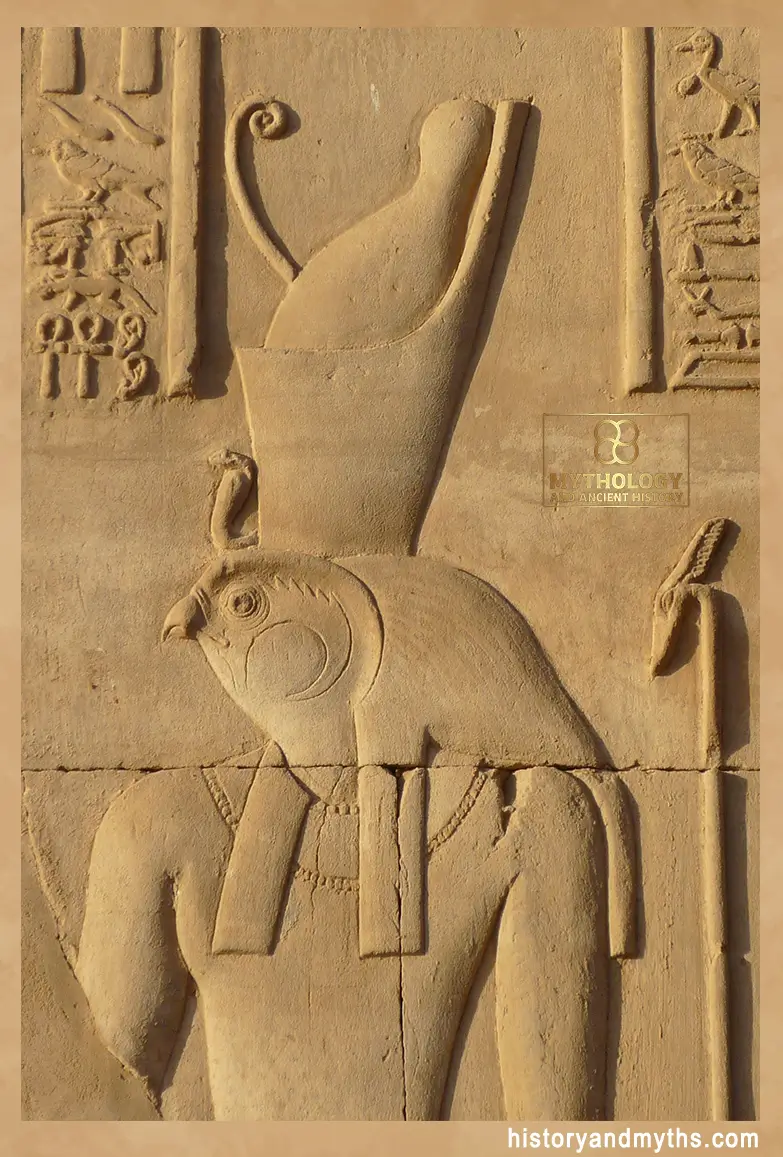
How Horus the Elder Differs from Horus the Younger
One of the most persistent challenges in understanding Egyptian mythology is the tendency to merge all forms of Horus into a single figure. Yet Horus the Elder and Horus the Younger were never meant to represent the same deity, and separating them reveals how Egyptian religion evolved over time. Horus the Elder belongs to an earlier theological horizon where gods personified vast natural forces—the sky, the sun, and the moon—without the narrative biographies that later defined divine families.
In contrast, Horus the Younger emerged from the Osirian myth cycle as the son who avenges his father and legitimizes the king. His identity centers on conflict, succession, and moral justice. Horus the Elder, however, did not inherit a throne; he embodied the sky itself. He was not shaped by dramatic storytelling but by cosmic function. While the younger Horus represents a personal god tied to royal ideology, the elder Horus represents an impersonal, timeless presence whose authority came from the structure of the universe rather than from myth.
Recognizing this distinction allows modern readers to understand why early Egyptians viewed Horus the Elder as a complete and independent deity rather than a “proto-form” of later myths. He was a god of breadth, not biography—an expression of order rather than a character within a story.
Horus the Elder and the Early Concept of Kingship
Long before the Osirian myth recast Horus as the avenging heir of a murdered father, Horus the Elder embodied a more ancient and universal form of kingship. Early Egyptian rulers saw themselves not as descendants of a divine narrative but as earthly reflections of the sky-god who watched over creation. In this early model, the king did not inherit his authority—he absorbed it from the heavens, aligning himself with the god whose eyes governed day and night.
Horus the Elder represented stability, clarity, and the ability to oversee the world from above. These qualities shaped the earliest royal ideology: a king ruled effectively when he mirrored the god’s perspective—seeing far, acting decisively, and maintaining cosmic order. This is why early texts describe the “Followers of Horus,” a lineage of rulers who preceded the dynasties and reflected a time when spiritual and political authority flowed directly from the sky-god rather than from a mythological family structure.
In this sense, the elder Horus was not only a deity but a template for sovereignty. His power lay not in personal stories but in the idea that a ruler must embody the sky’s constancy. This early connection helps explain why Horus, in all his forms, remained a central symbol of Egyptian kingship for thousands of years, even after new myths reshaped the god’s identity.
Horus the Elder at a Glance
Horus the Elder—known in ancient texts as Heru-ur or Haroeris—was one of Egypt’s earliest sky-gods, representing a vast and ordered universe long before the rise of the Osirian myth cycle. His two divine eyes, the sun and the moon, embodied his power to oversee both realms of day and night, reflecting a balanced cosmos under his protection.
Unlike Horus the Younger, who emerged as the avenging son of Osiris, Horus the Elder was a cosmic presence rather than a narrative figure. He was worshipped in Letopolis, where priests viewed him not as a royal child or heir, but as the sky itself—eternal, stable, and essential to the world’s structure.
Understanding Horus the Elder reveals how Egyptian religion evolved from elemental forces to family-centered myths, and how early kingship drew its legitimacy from the vast authority of a god who ruled the heavens with clarity and completeness.
Why Horus the Elder Still Matters in Understanding Egyptian Religion
Horus the Elder remains essential to understanding how Egyptian religion developed from vast cosmic principles into the more personal myths that dominated later eras. He represents a time when gods were defined not by stories but by elemental forces—light and darkness, day and night, the sky and its unbroken order. Through him, we glimpse an early Egypt that viewed the heavens as the source of authority, balance, and continuity.
By studying Horus the Elder separately from the younger Horus, the modern reader can trace how Egyptian theology shifted from universal powers to familial narratives. The sky-god who once embodied the totality of creation gradually gave way to a divine son who fought for a throne. Yet the older form never disappeared; its influence endured in the symbolism of kingship, the duality of the divine eyes, and the belief that order must be upheld from above.
Horus the Elder matters because he shows us what Egyptian belief looked like before myth took center stage. He is a reminder that the roots of the religion were shaped by observation of the natural world—the movement of the sun, the phases of the moon, the calm persistence of the sky. Through him, we understand that Egyptian theology was built not only from stories but from a worldview that saw divinity woven into the structure of the universe itself.
Key Takeaways
- Horus the Elder is one of Egypt’s earliest sky-gods, predating the Osirian tradition.
- He was worshipped mainly in Letopolis, where he embodied the full structure of the sky.
- His two divine eyes—sun and moon—symbolize cosmic balance and constant oversight.
- He differs sharply from Horus the Younger, who represents royal succession and mythic conflict.
- Early concepts of kingship were shaped by Horus the Elder as a model of divine order and clarity.
- His legacy shows how Egyptian belief evolved from cosmic forces to narrative-based theology.
Frequently Asked Questions
Who is Horus the Elder in ancient Egyptian religion?
Horus the Elder, known as Heru-ur or Haroeris, is an early sky-god who predates the Osirian myth and represents the full structure of the heavens.
How is Horus the Elder different from Horus the Younger?
Horus the Elder is a primordial sky-god, while Horus the Younger is the son of Isis and Osiris, associated with royal succession and mythic conflict.
Where was Horus the Elder primarily worshipped?
He was worshipped in Letopolis, an early religious center focused on sky worship and cosmic order.
What symbols are associated with Horus the Elder?
His main symbols are the falcon and the two divine eyes—sun and moon—which represent cosmic oversight and balance.
Why is Horus the Elder important for understanding Egyptian kingship?
He embodied early concepts of divine rule, where kings mirrored the sky-god’s stability, clarity, and authority.
What does Horus the Elder reveal about early Egyptian religion?
He shows that early theology was shaped by cosmic forces rather than narrative myths, emphasizing order and the natural structure of the universe.
Sources & Rights
- Allen, James P. Middle Egyptian: An Introduction to the Language and Culture of Hieroglyphs. Cambridge University Press.
- Hart, George. A Dictionary of Egyptian Gods and Goddesses. Routledge.
- Wilkinson, Richard H. The Complete Gods and Goddesses of Ancient Egypt. Thames & Hudson.
- Hornung, Erik. Conceptions of God in Ancient Egypt: The One and the Many. Cornell University Press.
- Ancient Egypt Online. “Heru-ur (Horus the Elder).” (Used for cult center, iconography, and theological distinctions.)
- World History Encyclopedia. “Horus.” (Consulted for early forms of Horus and cosmological roles.)
- Encyclopaedia Britannica. “Horus.” (Used for distinctions between Horus forms and royal ideology.)
Written by H. Moses — All rights reserved © Mythology and History