Was Scepter in Ancient Egypt: Meaning, Power, and Authority
What did the Was scepter mean in ancient Egypt? Why is it shown in the hands of gods and pharaohs, and what made it one of the most recognizable symbols of Egyptian civilization?
The Was scepter symbolized authority, legitimate power, and the ability to maintain order. Unlike a weapon, it represented control rather than force. Egyptian gods carried it to show their authority over the cosmos, while kings held it to demonstrate that their right to rule came from the divine order they were expected to protect. Wherever the Was appeared, it signaled that chaos had been restrained and authority remained active.
This article explores the meaning of the Was scepter in ancient Egypt, how it became associated with kingship, religion, and ritual, why it frequently appears alongside the Ankh and the Djed, and what it reveals about the Egyptian understanding of power as a responsibility to preserve ma’at, the cosmic order that sustained both the world and the state.
What Is the Was Scepter in Ancient Egyptian Belief?
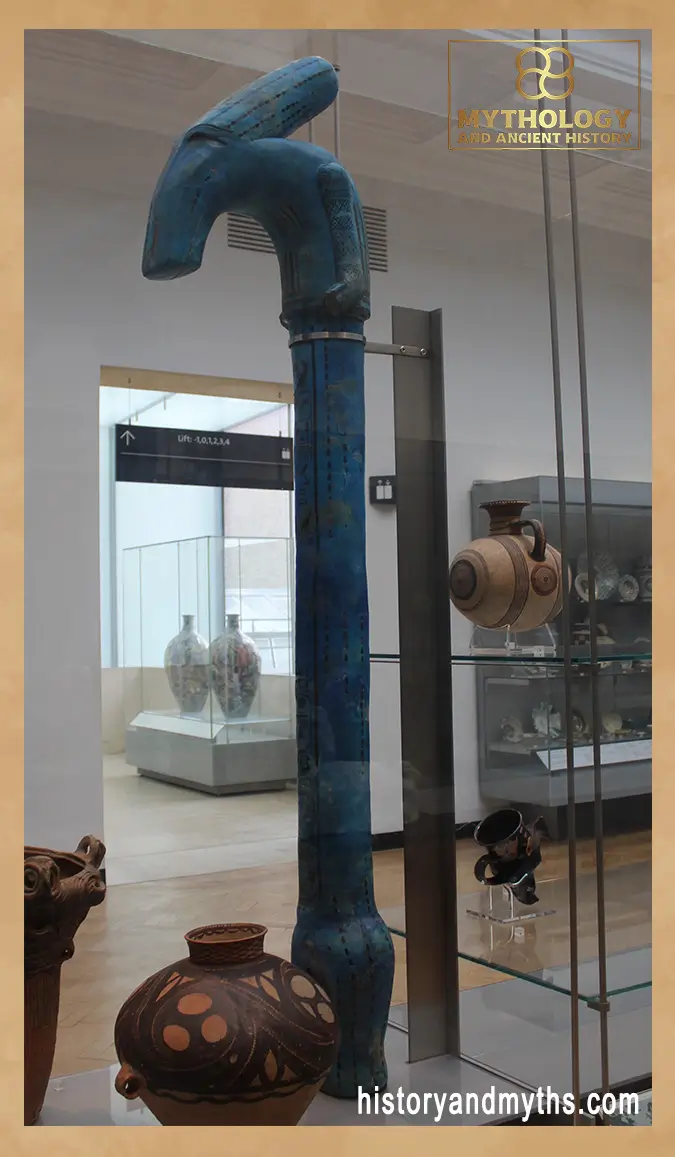
In ancient Egyptian belief, the Was scepter represented authority that could be exercised and maintained. It was not a passive badge of rank or a ceremonial ornament. The Was symbolized the power to control forces that threatened order and to keep the world within its proper boundaries.
Unlike symbols concerned with life or endurance, the Was focused on command and governance. Its tall vertical form suggested reach and dominance, while its forked base implied control over space what belonged within order and what had to be kept outside it. The distinctive head, often interpreted as an abstract or mythical animal form, reinforced the idea that authority extended even over forces considered dangerous or untamed.
The Was was inseparable from the concept of legitimate rule. To hold it was not simply to be strong, but to act with recognized authority sanctioned by the gods. This explains why the Was appears so consistently in the hands of deities and kings. In Egyptian thought, power was never automatic or self-owned; it had to be granted, displayed, and continually enforced.
Seen this way, the Was scepter functioned as a visual statement of control. Wherever it appears, it signals that chaos has been restrained and hierarchy reaffirmed. It does not promise peace or balance by itself, but it marks the presence of a figure capable of imposing and maintaining order.
| Aspect | Explanation |
|---|---|
| Core Meaning | Symbol of authority, control, and the power to enforce order. |
| Primary Function | Represents active governance over chaos and boundaries. |
| Divine Use | Held by gods to signify control over cosmic forces. |
| Royal Meaning | Marks legitimate kingship and delegated divine authority. |
| Ritual Role | Used to define sacred space and manage ritual power. |
| Conceptual Focus | Authority as continuous action, not symbolic status. |
| Symbolic Pairing | Complements the Ankh (life) and Djed (stability). |
| Common Misreading | Often mistaken for a weapon rather than a symbol of control. |
What Did the Was Scepter Mean?
The Was scepter meant power, authority, and control in ancient Egyptian symbolism. It showed that a god, king, or sacred figure had the ability to maintain order and restrain chaos. Unlike the Ankh, which symbolized life, or the Djed, which symbolized stability, the Was represented the active force needed to protect both.
This is why the Was appears so often in the hands of gods and pharaohs. It did not simply mark high status. It showed that authority had been granted, recognized, and made visible. A figure holding the War was not only powerful; that figure was responsible for keeping the world within its proper order.
The symbol also expressed control over dangerous or unstable forces. Its unusual animal-headed form may reflect the idea that authority must master what is wild, unpredictable, or chaotic. The Was therefore was not a weapon, but a sign that disorder had been contained.
In simple terms, the Was scepter symbolized legitimate power in action. It was the visual language of command, cosmic control, and the duty to preserve balance in ancient Egyptian belief.
Power, Control, and the Right to Rule
In ancient Egypt, power was not understood as raw force. It was defined by control exercised within order. The Was scepter embodied this distinction. It did not symbolize domination for its own sake, but the authority to act on behalf of cosmic balance and to restrain what threatened it.
Rulers and gods alike were expected to maintain boundaries between order and chaos, inside and outside, stability and disruption. The Was made this responsibility visible. When a king or deity is shown holding the scepter, the image communicates that authority is active, not assumed. Power exists only as long as it is exercised correctly.
This explains why the Was appears so often in scenes of kingship and ritual. A ruler’s legitimacy depended on more than lineage or conquest. He ruled because he was capable of enforcing Ma’at, the proper order of the world. The Was signaled that capability. Without it, kingship was incomplete, vulnerable to disorder and collapse.
Unlike weapons, which destroy threats, the Was represents containment. Chaos is not eliminated; it is controlled and kept at bay. This reflects a broader Egyptian understanding of the universe as something that must be continuously managed rather than permanently secured. Power, therefore, was not a momentary achievement but an ongoing duty.
Through the Was scepter, Egyptian art expressed a clear message: authority is justified only when it preserves order. To rule was not merely to command, but to hold the world steady against the forces that sought to unravel it.
Gods Who Hold the Was — Authority Made Visible
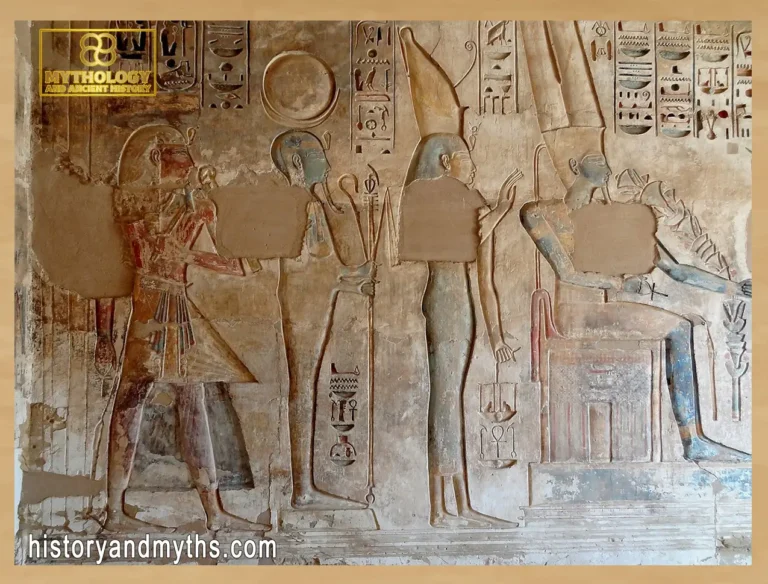
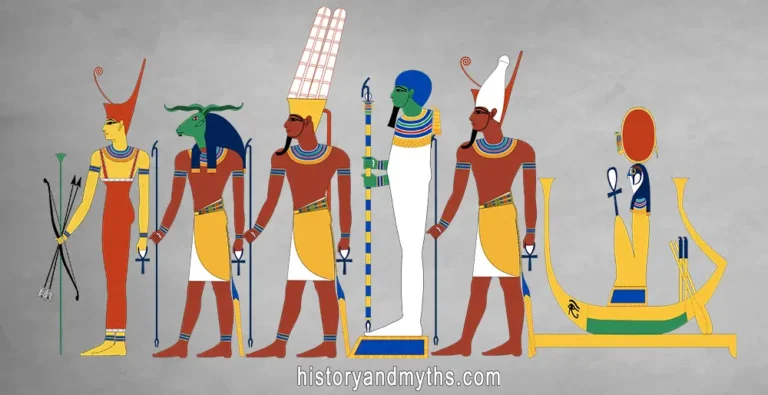
The Was scepter appears most frequently in the hands of gods, and this placement is deliberate. In Egyptian belief, ultimate authority did not originate in the human realm. It belonged first to the divine. When gods are shown holding the Was, the image communicates control over cosmic forces, not simply rank or prestige.
Creator gods, solar deities, and gods associated with kingship are often depicted with the Was because they govern different aspects of order. Each use of the scepter reinforces the same idea: authority is real only when it is exercised. The Was does not identify who a god is; it shows what that god actively does maintain boundaries, restrain chaos, and uphold balance.
When the Was appears alongside the Ankh or the Djed, the symbolism becomes even clearer. Life may exist, and stability may endure, but without authority, neither can be protected. The Was completes the system. It represents the force that keeps life organized and stability enforced. In this triad, the Was is the instrument of command.
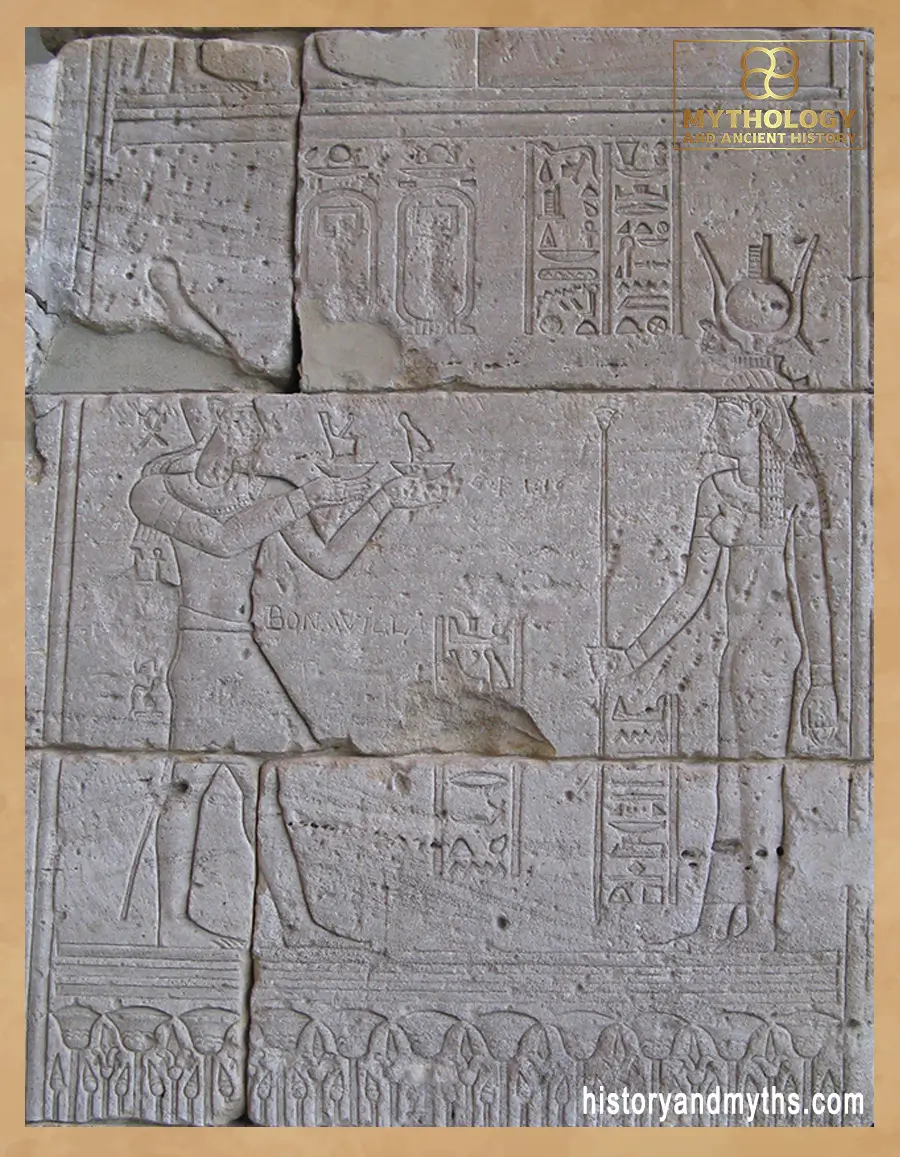
The same logic applies when kings are shown holding the Was in the presence of gods. The scepter does not suggest equality with the divine. Instead, it marks delegated authority. The king governs because the gods permit him to govern. His power is visible, but it is never independent.
Through these images, Egyptian art makes authority unmistakably concrete. Power is not hidden or symbolic alone; it is displayed, held, and recognized. The Was scepter turns abstract rule into something the viewer can see and understand a reminder that order survives only when authority is visibly and actively maintained.
The Was Scepter — At a Glance
- Authority in action: The Was represents power that is exercised, not merely claimed.
- Control over chaos: Marks the ability to restrain disorder and enforce boundaries.
- Divine sanction: Commonly held by gods as visible proof of cosmic authority.
- Delegated kingship: In royal hands, it signifies authority granted by the gods.
- Ritual management: Used to define sacred space and channel ritual power.
- Symbolic triad: Completes the system with Ankh (life) and Djed (stability).
The Was in Rituals, Kingship, and Sacred Space
Beyond its appearance in divine imagery, the Was scepter played a clear role in ritual and royal contexts. It was not an abstract idea confined to myth. The Was functioned as a marker of authority in action, used to define sacred space, legitimize rule, and reinforce control where order mattered most.
In rituals, the presence of the Was signaled that divine power was being directed rather than merely invoked. Ceremonies were not moments of uncontrolled spiritual energy; they were carefully managed acts. The Was represented the authority required to channel sacred forces safely and effectively. Without control, ritual power could become destabilizing rather than beneficial.
Kingship relied on the same principle. A ruler was not simply crowned; he was entrusted with authority. When kings are shown holding the Was, it confirms that their power extended beyond governance into the cosmic realm. They were responsible for maintaining order not only among people, but within the structure of the world itself. The Was made that responsibility visible.
Sacred space also depended on the logic of control. Temples were zones where order was intensified and protected. The appearance of the Was in temple reliefs marked these spaces as secure from chaos, governed by divine authority. The scepter symbolized the boundary between the ordered interior and the unpredictable outside world.
Through these uses, the Was emerges as more than a symbol of power. It represents authority as a continuous act something that must be asserted, displayed, and maintained. In Egyptian thought, order did not persist by chance. It survived because authority stood guard over it, embodied in the form of the Was scepter.
Key Takeaways
- The Was scepter symbolizes authority and control rather than physical force.
- It represents the power to enforce order and restrain chaos.
- The Was appears mainly in the hands of gods and kings as a sign of legitimate rule.
- Authority in Egyptian belief had to be visible, active, and divinely sanctioned.
- The Was plays a central role in rituals and the definition of sacred space.
- Together with the Ankh and Djed, it forms a complete system of life, stability, and power.
Frequently Asked Questions About the Was Scepter
What does the Was scepter symbolize in ancient Egypt?
The Was scepter symbolizes authority, control, and the power to enforce order within the cosmic and social world.
Who is usually shown holding the Was scepter?
The Was is most commonly held by gods and kings, indicating divine authority and legitimate rule.
Is the Was scepter a weapon?
No. Although it may resemble a staff, the Was represents control and governance rather than physical violence.
What role did the Was play in kingship?
In royal imagery, the Was signified authority granted by the gods and the king’s duty to maintain cosmic order.
How does the Was differ from the Ankh and the Djed?
The Ankh represents life, the Djed represents stability, and the Was represents authority that protects and enforces both.
Was the Was used in rituals?
Yes. The Was appeared in ritual contexts to define sacred space and regulate divine power.
Why is the Was important in Egyptian symbolism?
The Was makes authority visible, showing that order survives only when power is actively maintained.
Sources & Rights
- Assmann, Jan. The Search for God in Ancient Egypt. Ithaca: Cornell University Press, 2001.
- Hornung, Erik. Conceptions of God in Ancient Egypt: The One and the Many. Ithaca: Cornell University Press, 1982.
- Pinch, Geraldine. Egyptian Mythology: A Guide to the Gods, Goddesses, and Traditions of Ancient Egypt. Oxford: Oxford University Press, 2004.
- Shafer, Byron E., ed. Religion in Ancient Egypt: Gods, Myths, and Personal Practice. Ithaca: Cornell University Press, 1991.
- Teeter, Emily. Religion and Ritual in Ancient Egypt. Cambridge: Cambridge University Press, 2011.
- Wilkinson, Richard H. Symbol and Magic in Egyptian Art. London: Thames & Hudson, 1994.
- Wilkinson, Richard H. The Complete Gods and Goddesses of Ancient Egypt. London: Thames & Hudson, 2003.
- British Museum. Collection Online: Egyptian Symbols, Kingship, and Ritual Objects.
- Victoria and Albert Museum. Monumental Was Sceptre, Egypt.
- Metropolitan Museum of Art. Egyptian Art and Divine Kingship.
Written by H. Moses — All rights reserved © Mythology and History