The Djed Pillar Symbol — Stability and Power in Ancient Egypt
The Djed pillar was one of the most fundamental symbols in ancient Egyptian belief, yet its meaning is often misunderstood. While commonly translated as a symbol of “stability,” the Djed represented something far deeper: the condition that allows the world to remain standing after chaos, death, or collapse.
In Egyptian thought, stability was never passive. It was not stillness or immobility. It was endurance—the ability of order to survive disruption and re-establish itself. The Djed embodied this principle. It stood for continuity across time, the persistence of structure, and the assurance that life, kingship, and the cosmos would not fall apart.
This is why the Djed appears so frequently in religious, funerary, and architectural contexts. It was a symbol invoked when permanence was threatened and when renewal depended on something strong enough to carry the weight of existence itself. To understand the Djed is to understand how the ancient Egyptians imagined a world that could die, yet always rise again.
What Is the Djed Pillar in Ancient Egyptian Belief?
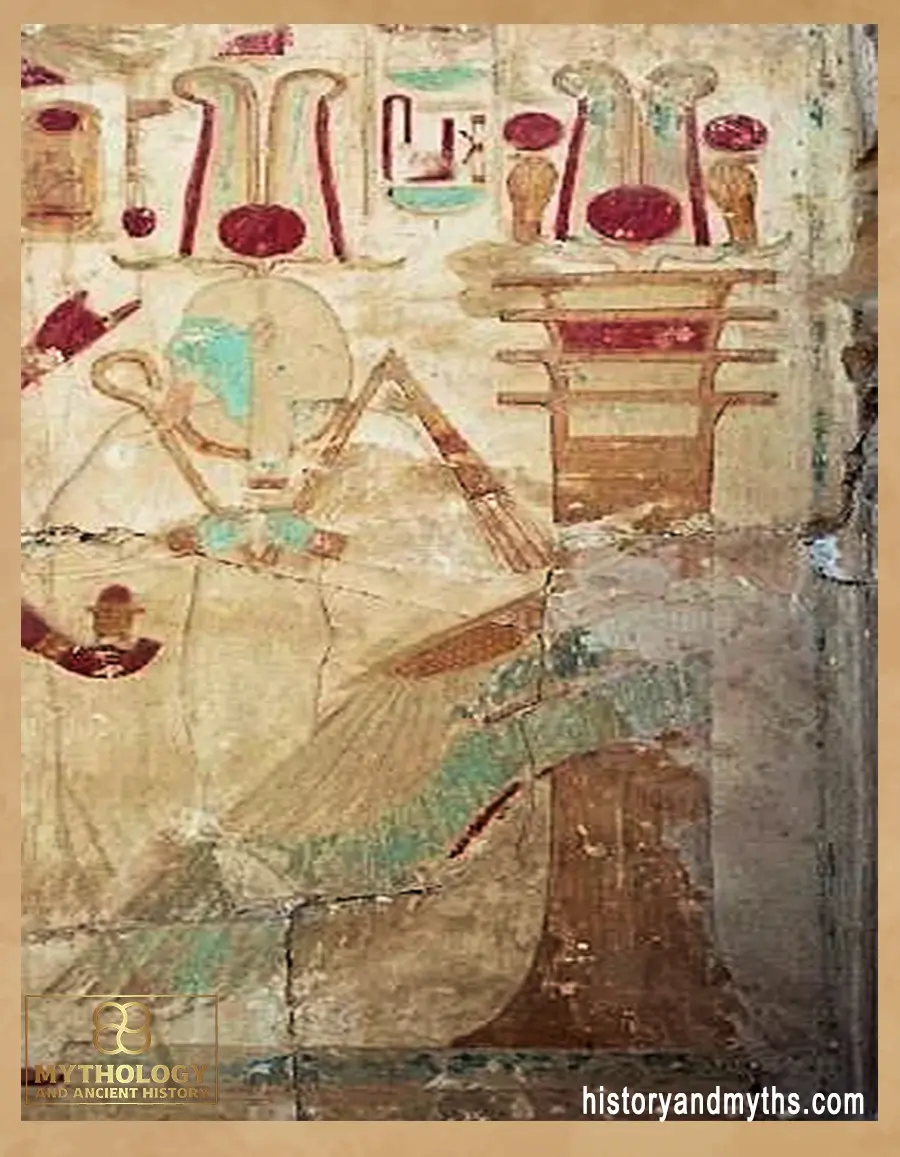
In ancient Egyptian belief, the Djed pillar was not a decorative column or a symbolic shorthand for architecture. It represented the principle that keeps existence upright—the inner structure that prevents the world from collapsing into chaos. To the Egyptians, stability was an active force, something that had to be upheld continuously against disorder.
The Djed expressed durability over time. While life could falter and death could intervene, the underlying structure of the cosmos was expected to endure. This is why the Djed is often described as a backbone or central support. It stood for the idea that even when visible forms decay, an essential framework remains intact, capable of supporting renewal.
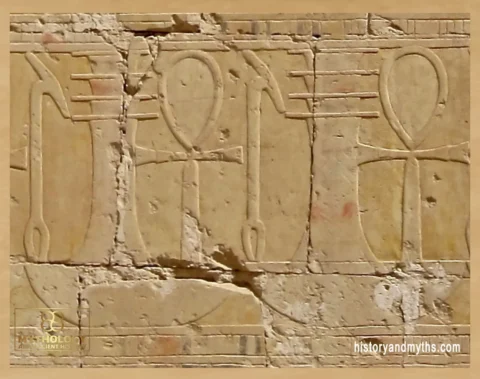
Unlike the Ankh, which focuses on life and vitality, the Djed addressed a different concern: what allows life to continue without breaking apart. Life without stability was meaningless. Kingship, ritual, and the afterlife all depended on the assurance that order would persist. The Djed symbolized that assurance.
This understanding explains why the Djed appears in funerary contexts as well as temple reliefs. For the dead, it promised that existence would not dissolve after death. For the living, it affirmed that the world they inhabited was structurally sound, anchored by divine order. The Djed was not about motion or growth—it was about remaining whole when everything else changes.
In this sense, the Djed pillar functioned as a visual philosophy. It told a simple but powerful story: life may rise and fall, but the world must stay standing.
| Aspect | Explanation |
|---|---|
| Core Meaning | Symbol of stability, endurance, and the structure that keeps the world from collapsing. |
| Cosmic Role | Represents the backbone of cosmic order that survives chaos and disruption. |
| Mythological Association | Closely linked to Osiris as a symbol of endurance after death. |
| Ritual Use | Raised in ceremonies to restore cosmic balance and reaffirm stability. |
| Funerary Function | Ensures integrity and continuity of the deceased in the afterlife. |
| Architectural Meaning | Echoed in pillars and columns as symbols of permanence and support. |
| Conceptual Contrast | Complements life (Ankh) and power (Was) by providing stability. |
| Common Misreading | Often reduced to a funerary emblem, ignoring its broader cosmic role. |
Stability, Continuity, and the World That Must Not Collapse
To the ancient Egyptians, stability was not a passive state. It was something that had to be maintained, defended, and restored. The Djed pillar captured this idea perfectly. It symbolized a world that is always at risk of collapse, yet continually held together by an underlying order stronger than chaos.
This concern was deeply rooted in Egyptian experience. Floods could fail, kings could die, temples could fall into ruin. Nothing in the visible world was guaranteed. What mattered was whether the structure beneath appearances could endure. The Djed represented that structure—the unseen support that allows society, kingship, and cosmic balance to survive disruption.
Continuity, in this context, did not mean stagnation. It meant that change could occur without destroying the whole. Death did not end existence; it tested whether existence was stable enough to continue in another form. The Djed assured that transition was possible without collapse. It stood for resilience, not immobility.
This is why the Djed appears alongside symbols of renewal and power. Stability alone was not enough, but without stability, renewal was impossible. The Djed answered a fundamental question in Egyptian thought: what keeps the world from falling apart when everything else fails? The answer was not force or dominance, but endurance grounded in cosmic order.
By invoking the Djed, Egyptians expressed confidence that the universe had a backbone—that beneath uncertainty lay a framework capable of sustaining life, kingship, and meaning across generations.
The Djed and Osiris — Death, Renewal, and Endurance
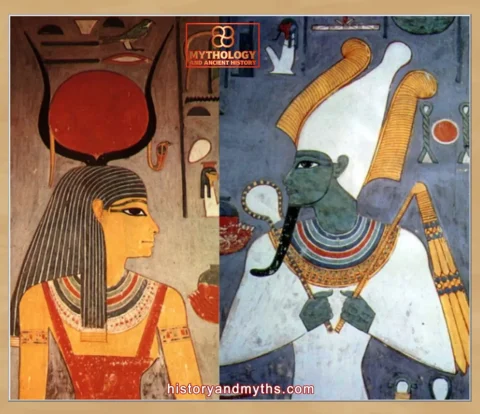
The strongest association of the Djed pillar is with Osiris, but this connection is often simplified to the point of distortion. The Djed was not merely a symbol of Osiris; it expressed what Osiris represents within Egyptian belief: endurance after death and stability restored after destruction.
Osiris’s myth centers on collapse. He is killed, dismembered, and reduced to fragments. Yet the story does not end there. What matters is not the violence of death, but the fact that order is reassembled and upheld. The Djed embodies this moment of recovery. It stands for the principle that allows Osiris to exist again—not as a living king on earth, but as a stable ruler of the afterlife.
In this sense, the Djed does not symbolize resurrection as sudden revival. It symbolizes persistence. Osiris does not return to his former state; he becomes something enduring. His authority is no longer fragile or temporary. It is fixed, stabilized, and permanent. The Djed expresses that transformation visually.
This explains why the Djed appears so often in funerary contexts linked to Osiris. The deceased did not hope to escape death; they hoped to remain intact through it. To become Osiris was not to come back to life, but to achieve a condition of stable existence beyond decay. The Djed promised that such endurance was possible.
Through Osiris, the Djed gained its deepest meaning. It became a symbol not of life regained, but of existence secured—the assurance that after destruction, something essential remains standing, capable of supporting a new and lasting order.
Raising the Djed — Ritual Meaning and Cosmic Restoration
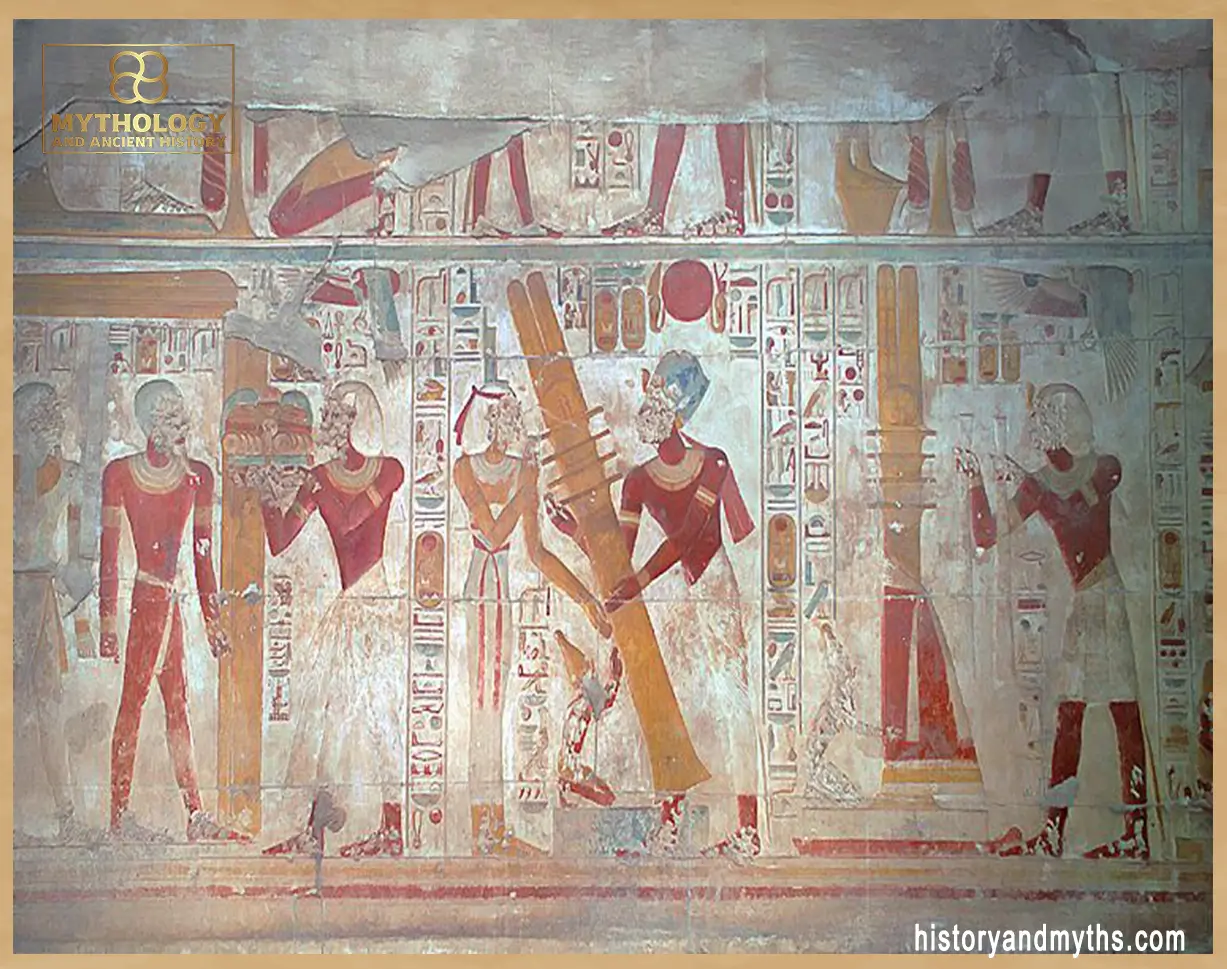
The ritual known as “Raising the Djed” was one of the most powerful ceremonial acts in ancient Egyptian religion. It was not symbolic theater, nor a reenactment for tradition’s sake. It represented a necessary intervention—a moment when order had to be physically and ritually restored.
In Egyptian thought, stability was never assumed. The cosmos could weaken. Kingship could falter. The forces of chaos were always present, waiting for imbalance. The act of raising the Djed addressed this fear directly. By lifting the pillar upright, the ritual declared that the world had been set back into alignment.
This ceremony was closely connected to Osiris and the renewal of kingship. When the Djed was raised, it marked the restoration of endurance after breakdown—whether that breakdown was death, political instability, or cosmic disorder. The king’s participation was essential. By performing or overseeing the ritual, he demonstrated that he was capable of upholding the structure of the universe, not merely ruling its surface.
The physicality of the ritual mattered. Stability was not an abstract idea; it had to be enacted. The upright Djed signified that the backbone of the cosmos was once again secure. Life could proceed. Authority could continue. Renewal could occur without fear of collapse.
What made the ritual so powerful was its forward-looking purpose. It did not mourn what had been lost. It confirmed that endurance had returned. In raising the Djed, the Egyptians affirmed a core belief: no matter how severe the disruption, the world could always be set upright again—provided divine order was actively restored.
The Djed Pillar — At a Glance
- Symbol of endurance: Represents stability that survives chaos, death, and disruption.
- Cosmic backbone: Expresses the unseen structure that keeps the world upright.
- Osirian meaning: Linked to Osiris as a sign of existence secured after death.
- Ritual power: Raised ceremonially to restore balance and reaffirm order.
- Funerary support: Ensures integrity and continuity in the afterlife.
- Architectural echo: Reflected in pillars and columns symbolizing permanence.
The Djed in Temples, Coffins, and Sacred Architecture
The presence of the Djed pillar across temples, coffins, and sacred architecture reflects how deeply the idea of stability shaped Egyptian religious space. The symbol was not placed randomly. Wherever endurance was required—whether for a building, a king, or the dead—the Djed appeared as a structural guarantee.
In temples, the Djed reinforced the idea that sacred spaces were not temporary constructions. Temples were meant to stand as eternal points of contact between gods and humans. By incorporating the Djed into reliefs and decorative programs, the Egyptians expressed confidence that these spaces were anchored in cosmic order and protected against collapse, decay, or divine withdrawal.
On coffins and funerary equipment, the Djed took on a more intimate role. It was often positioned along the spine of the coffin or associated with the back of the deceased. This placement was deliberate. Just as the backbone supports the living body, the Djed was believed to support the integrity of the deceased in the afterlife. It ensured that the individual would not disintegrate after death, physically or spiritually.
The same logic extended into sacred architecture. Columns, pillars, and vertical elements echoed the symbolic function of the Djed, even when the symbol itself was not explicitly carved. Egyptian architecture was not only about enclosing space; it was about holding the world upright. Every stable structure mirrored the cosmic stability that the Djed represented.
Through these uses, the Djed moved beyond abstraction. It became part of the lived environment—visible in stone, wood, and ritual space. Wherever the Egyptians sought permanence, resilience, and continuity, the Djed stood as a silent assurance that order would endure.
Key Takeaways
- The Djed pillar symbolizes stability and endurance rather than immobility.
- It represents the structural backbone that prevents the cosmos from collapsing.
- The Djed is closely linked to Osiris and existence secured after death.
- Raising the Djed was a ritual act of restoring cosmic order.
- The symbol appears in temples, coffins, and architecture as a guarantee of permanence.
- The Djed complements life (Ankh) and power (Was) within Egyptian symbolism.
Frequently Asked Questions About the Djed Pillar
What does the Djed pillar symbolize in ancient Egypt?
The Djed pillar symbolizes stability, endurance, and the structure that allows the world to remain intact despite chaos and change.
Is the Djed pillar connected to Osiris?
Yes. The Djed is closely linked to Osiris and represents existence secured after death rather than physical resurrection.
What does “Raising the Djed” mean?
Raising the Djed was a ritual that symbolized the restoration of cosmic order, stability, and continuity after disruption.
Was the Djed only a funerary symbol?
No. While common in funerary contexts, the Djed also appeared in temples, rituals, and architecture as a broader symbol of permanence.
Why is the Djed associated with the backbone?
The Djed was understood as a cosmic backbone, expressing the idea that existence requires a strong internal structure to endure.
How does the Djed differ from the Ankh?
The Ankh represents life and vitality, while the Djed represents the stability that allows life to continue without collapse.
Where was the Djed commonly depicted?
The Djed appeared on temple reliefs, coffins, amulets, and sacred architecture throughout ancient Egypt.
Sources & Rights
- Assmann, Jan. Death and Salvation in Ancient Egypt. Cornell University Press, 2005.
- Pinch, Geraldine. Egyptian Mythology: A Guide to the Gods, Goddesses, and Traditions of Ancient Egypt. Oxford University Press, 2004.
- Wilkinson, Richard H. The Complete Gods and Goddesses of Ancient Egypt. Thames & Hudson, 2003.
- Hornung, Erik. Conceptions of God in Ancient Egypt: The One and the Many. Cornell University Press, 1982.
- Shafer, Byron E., ed. Religion in Ancient Egypt: Gods, Myths, and Personal Practice. Cornell University Press, 1991.
Written by H. Moses — All rights reserved © Mythology and History