How Athenian Juries Were Selected: The Kleroterion System Explained
Athenian juries were selected through a structured random process designed to prevent control or bias. Eligible citizens enrolled for service, and each day jurors were chosen using a device called the kleroterion—a stone machine that sorted names and used a system of slots and colored balls to determine who would serve. Selection was not fixed or predictable; it changed daily and produced large juries drawn from a broad pool of citizens. This system answered a practical problem: how to assign decision-making power in court without relying on permanent judges or influence.
Who Was Eligible for Jury Service
Eligibility was defined narrowly and enforced through a formal registration system. Only male citizens could serve, and they had to be at least thirty years old. This age threshold mattered: jurors were expected to have enough experience to judge disputes without relying on instruction during the trial.
Enrollment was annual. Citizens who wanted to serve presented themselves for registration and were entered into a pool from which juries would be drawn throughout the year. This step separated availability from selection: being eligible did not guarantee service on any given day.
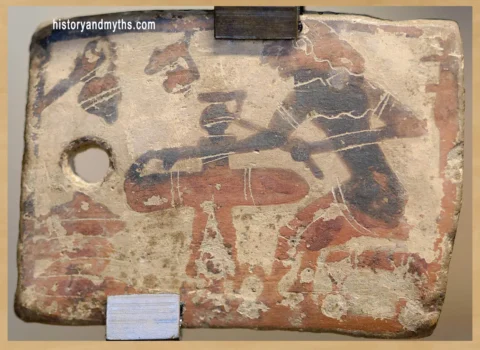
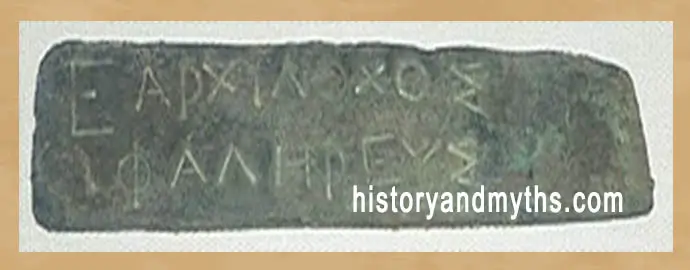
Identification was handled through personal tokens known as pinakia. Each registered citizen received a small inscribed tablet that carried his name and deme (local unit). These tokens were not symbolic; they were the operational key used in the selection process. Without a pinakion, a citizen could not be placed into the system.
Not everyone who qualified necessarily participated every day. Service depended on the daily draw, so the pool remained larger than any single jury. The effect was a rotating body of jurors drawn from a defined group—citizens who had opted in, met the age requirement, and could be identified and processed through the selection mechanism.
| Stage | Action | Tool/System | Outcome |
|---|---|---|---|
| Eligibility | Citizens register for service | Pinakia (ID tokens) | Defined juror pool |
| Preparation | Tokens grouped and inserted | Kleroterion slots | System ready for draw |
| Selection | Random row acceptance | Ball-drop mechanism | Jurors chosen |
| Extraction | Selected tokens removed | Manual handling | Final juror list |
| Assignment | Jurors distributed | Court allocation system | Courts fully staffed |
How the Selection System Worked
Selection was organized around a simple principle: separate the pool from the draw. A large, registered pool of eligible citizens existed at the start of the year; each court day, only a fraction of that pool was activated through a controlled random process.
Jurors did not receive appointments in advance. They presented themselves on the morning of service with their identification tokens, which were then grouped according to the requirements of the day—different courts, different case loads, different jury sizes. This ensured the system could scale up or down without rewriting the rules.
The process avoided fixed rosters. Instead of naming a panel ahead of time, it relied on same-day selection, which reduced predictability. No one could know in advance which citizens would sit together, which limited the ability to coordinate outcomes.
Assignment followed selection. Once a set of names was drawn, those jurors were allocated to specific courts according to need. The system therefore handled two problems in sequence: first, choosing who would serve; second, distributing those individuals across active courts.
What makes the system work is its structure: a stable pool, a daily draw, and immediate assignment. Each step is simple on its own, but together they produce a repeatable, low-control method for staffing large juries without prior scheduling.
The Kleroterion System Explained
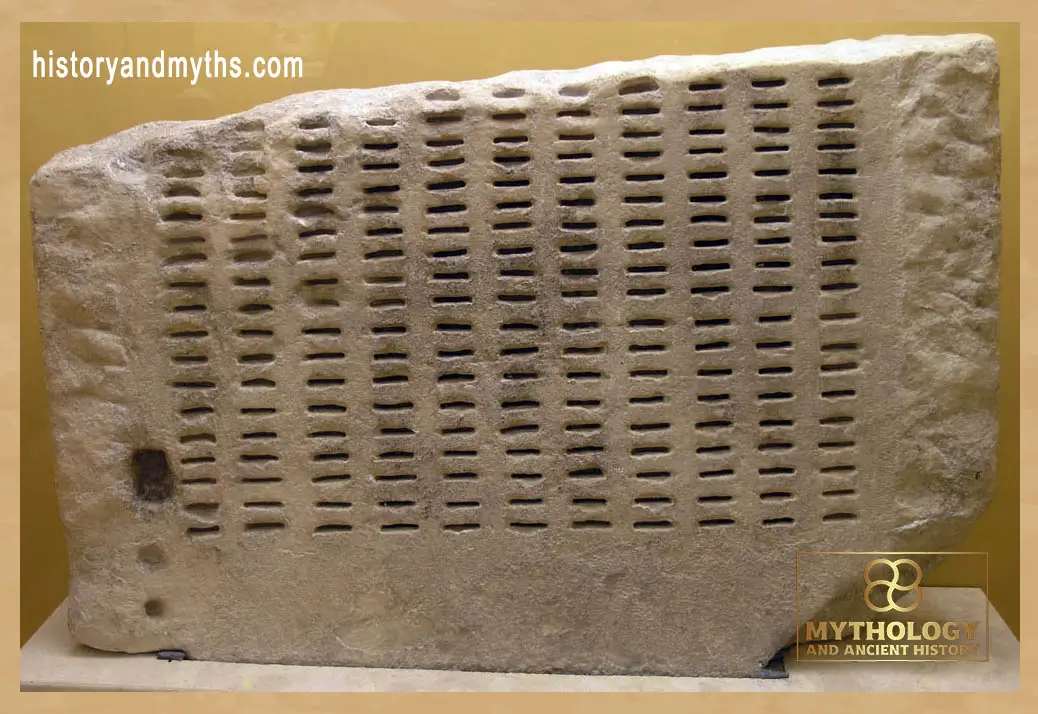
The kleroterion was a stone selection device that turned a list of eligible citizens into a chosen jury without manual picking. Its surface was cut with vertical slots arranged in columns. Each column represented a civic division, and each slot held a single pinakion—the small identification token of a registered citizen.
Once the tokens were inserted, the device handled selection through a controlled drop of balls from a side tube. These balls—distinguished by color—were released one at a time. Each ball corresponded to a horizontal row of tokens. When a “select” ball appeared, the entire row aligned with it was accepted; when a “reject” ball appeared, that row was skipped. The sequence continued until enough rows had been accepted to fill the required jury size.
This setup produced two effects at once. First, it distributed selection across different columns, preventing any single group from dominating the outcome. Second, it removed the need for human choice at the critical moment: once the tokens were placed and the balls released, the result followed the device’s sequence.
Operation was visible. Citizens could see their tokens being placed and watch the draw proceed, which made the process transparent in practice. There were no hidden steps between registration and assignment—only the mechanical selection that determined who would serve that day.
Step-by-Step Jury Selection Process
1- Morning registration
Eligible citizens arrived with their pinakia and checked in for potential service. This confirmed presence and made them available for that day’s draw.
2- Grouping by civic divisions
Tokens were organized according to their assigned divisions to match the layout of the kleroterion. This ensured balanced representation when rows were selected.
3- Loading the kleroterion
Each pinakion was inserted into a slot on the stone device. At this point, the pool was fully visible and ready for selection.
4- Initiating the draw
Balls were released from the side tube. Each ball corresponded to a horizontal row on the device, determining whether that entire row would be included or excluded.
5- Row selection sequence
As balls were drawn, rows were either accepted or skipped in order. This continued until the number of selected rows produced enough jurors for the day’s courts.
6- Extraction of selected tokens
Tokens from accepted rows were removed and set aside as the chosen jurors. Those not selected returned to the general pool for future days.
7- Assignment to courts
The selected jurors were then distributed to specific courts based on the needs of that day’s cases, completing the transition from pool to active jury.
Each step followed a fixed order, allowing the system to produce a final jury quickly and without discretionary choice.
Athenian juries were selected through a daily random process using the kleroterion. Citizens registered in advance, inserted their identification tokens into the device, and were chosen through a controlled draw of colored balls. The system removed human control from selection and produced large juries quickly and consistently.
© historyandmyths.com — Educational use
Why Random Selection Was Important
Random selection solved a structural problem: how to assign judicial power without letting anyone control who exercises it. By removing preselection and fixed panels, the system reduced the value of influence—there was no stable group to target in advance.
It also broke coordination. Because the draw happened the same day and changed every time, participants could not reliably assemble favorable juries. Any attempt to organize outcomes faced a moving target: who would sit was unknown until selection finished.
The method distributed responsibility. Large juries drawn from a broad pool meant decisions reflected collective judgment rather than individual authority. That limited the impact of outliers and made single-person pressure ineffective.
Finally, it kept the process operational. The rules were simple, repeatable, and quick to run each morning, so courts could be staffed without delays. Random selection was not an abstract ideal—it was a practical mechanism that kept cases moving while constraining control over outcomes.
How Large Juries Were Formed from the System
Jury size was set before the draw, based on the court’s workload and the type of case. Some panels required a few hundred citizens; others needed more. The selection process did not determine size—it filled a predefined quota.
The kleroterion then translated that quota into rows. As rows were accepted, each contributed a fixed number of jurors across the device’s columns. Selection continued until the accumulated rows produced the target number. This kept composition balanced while scaling up to large panels.
After selection, the group was partitioned across courts. A central allotment step assigned portions of the chosen jurors to different rooms or case tracks, ensuring that no single case monopolized the pool and that each court received a complete panel.
If a panel needed supplementation—due to absence or last-minute adjustments—additional rows could be drawn to reach the required count. The system therefore handled both initial assembly and on-the-spot correction without changing its rules.
What results is a consistent outcome: large juries formed quickly from a broad base, with size controlled in advance and composition produced by the same repeatable selection mechanism.
Was the System Truly Random?
The selection process was designed to remove human choice at the decisive moment, but it was not randomness in a modern statistical sense. It was controlled by the setup of the device and the sequence of the draw.
Randomness operated at the level of row selection. Once tokens were placed, the order of accepted and rejected rows depended on the sequence of balls released. No individual could influence which specific citizens would be chosen within that structure.
At the same time, the system was structured randomness, not pure chance. Citizens had to be present to participate, tokens were arranged by division, and the number of rows needed was fixed in advance. These constraints shaped the pool before the draw even began.
What mattered in practice was not mathematical randomness but unpredictability combined with fairness. The outcome could not be directed, and over repeated days the process distributed service across the eligible population. That was enough to prevent control and keep the system functioning as intended.
Why the System Worked in Practice
The system worked because it fit the scale and constraints of Athenian courts. Large juries could be assembled quickly each morning without advance scheduling, which kept cases moving and avoided bottlenecks.
It minimized points of interference. Once tokens were loaded and the draw began, there was no discretionary step where an individual could alter the outcome. That limited manipulation without requiring complex oversight.
It was easy to repeat. The same sequence—check-in, loading, draw, assignment—ran every court day with predictable timing. Courts could plan around it, and citizens understood exactly when and how service would be determined.
It balanced inclusion with control. A wide pool of eligible citizens meant broad participation over time, while the daily draw kept panels temporary and unpredictable. That combination reduced the influence of fixed groups without expanding administrative burden.
Finally, it aligned with available tools. The kleroterion used simple materials and visible steps, so the process remained transparent and verifiable without specialized personnel. In practice, that transparency sustained acceptance and allowed the system to operate continuously.
Conclusion
Athenian jury selection worked because it reduced a complex problem to a repeatable sequence: define an eligible pool, apply a visible random draw, and assign the result immediately. The kleroterion handled the critical step—selection—without human discretion, while the surrounding procedures ensured that enough citizens were available and that courts were staffed on time.
The system did not aim for perfect randomness. It aimed for unpredictable, balanced outcomes that could not be directed in advance and could be reproduced every day. By separating eligibility from selection and using a simple device to execute the draw, Athens maintained large juries without fixed panels or centralized control.
What remains is a clear mechanism: daily, transparent selection from a broad pool. That mechanism, rather than any single rule, is what made the system workable in practice.
- Only male citizens aged 30+ could serve as jurors.
- Jury selection was done daily, not fixed in advance.
- The kleroterion ensured random and visible selection.
- Pinakia were used to identify and process jurors.
- Selection operated by accepting or rejecting rows.
- Large juries were formed quickly without judges.
- The system reduced manipulation and centralized control.
Frequently Asked Questions
How were Athenian juries selected?
Through a daily random process using the kleroterion system.
What is the kleroterion?
A stone device used to randomly select jurors by organizing tokens and drawing lots.
Who could serve on a jury in Athens?
Male citizens over the age of 30 who had registered for service.
Was the jury selection truly random?
It was structured randomness designed to prevent manipulation.
How large were Athenian juries?
They could include hundreds of citizens depending on the case.
Why did Athens use random selection?
To reduce corruption and distribute power among citizens.
Sources & Rights
- Hansen, Mogens Herman. The Athenian Democracy in the Age of Demosthenes. Blackwell.
- MacDowell, Douglas M. The Law in Classical Athens. Cornell University Press.
- Rhodes, P.J. Athenian Democracy. Oxford University Press.
- Ober, Josiah. Mass and Elite in Democratic Athens. Princeton University Press.
- Cartledge, Paul. Ancient Greece: A Very Short Introduction. Oxford University Press.
- Aristotle. Athenaion Politeia (Constitution of the Athenians).
- Demosthenes. Speeches.
- Lanni, Adriaan. Law and Justice in the Courts of Classical Athens. Cambridge University Press.
- Gagarin, Michael. Early Greek Law. University of California Press.
- Carey, Christopher. Trials from Classical Athens. Routledge.
- Harris, Edward M. Democracy and the Rule of Law in Classical Athens. Cambridge University Press.
- Allen, Danielle. The World of Prometheus. Princeton University Press.
- Sealey, Raphael. The Justice of the Greeks. University of Michigan Press.
- Wallace, Robert W. The Areopagos Council. Johns Hopkins University Press.
- Cohen, David. Law, Violence, and Community in Classical Athens. Cambridge University Press.
- Christ, Matthew R. The Litigious Athenian. Johns Hopkins University Press.
- Thompson, Dorothy. Polis and People. Cambridge University Press.
- Ober, Josiah. Democracy and Knowledge. Princeton University Press.
- Booth, Alan. Athenian Legal Procedure. Oxford University Press.
- Sinclair, R.K. Democracy and Participation in Athens. Cambridge University Press.
Written by H. Moses — All rights reserved © Mythology and History