Before Sumer: Migration, Gods, and Mesopotamian Civilization
Mesopotamian civilization did not begin suddenly with Sumerian cities or the invention of writing. It emerged gradually through waves of migration, environmental change, and profound shifts in religious belief that reshaped how early societies understood land, fertility, and divine power.
Long before Sumer, northern communities moved toward the fertile valleys of the Tigris and Euphrates as climate conditions stabilized and agriculture became possible. These migrations were not merely demographic movements; they carried with them competing cosmologies—matriarchal and patriarchal, lunar and solar—that would define the spiritual and social foundations of Mesopotamia. Rivers became sacred symbols, gods mirrored social structures, and fertility myths evolved from earth-centered worship into complex celestial systems.
This article explores Mesopotamia before recorded history: how early migrations shaped settlement patterns, how religion developed before writing preserved it, and how the balance of divine power shifted from the Great Mother to the Sky God. By tracing these transformations, we can understand how the world’s first civilization was formed long before it could be written down.
Early Migration to Mesopotamia and the Origins of Civilization
The migration of northern Mesopotamian civilizations to the fertile valley between the Tigris and Euphrates rivers began when the land became habitable and suitable for agriculture. This transformation occurred as surface waters receded, leaving deep river channels to accommodate the flow of these great rivers from the Anatolian mountains to their confluence in the Arabian Gulf. This migration is believed to have taken place around the sixth millennium BCE.
| Region | Main Route | Key Beliefs | Social Structure | Major Centers |
|---|---|---|---|---|
| Northern Mesopotamia | Tigris River | Lunar symbolism, Mother Goddess | Matriarchal traditions | Samarra, Hassuna |
| Upper Mesopotamia | Euphrates River | Solar worship, Father God | Patriarchal order | Sippar, Subartu region |
| Southern Plain | Tigris–Euphrates Basin | Venus cult (Inanna) | Mixed / transitional | Eridu, Uruk |
From Villages to Communities: Early Settlements in Mesopotamia
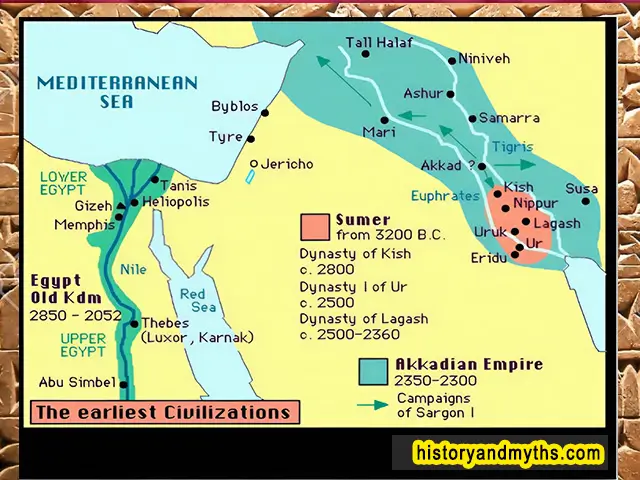
The early migrants initially settled in scattered villages such as Samarra and Hassuna. However, fluctuating rainfall in the southern regions forced these settlements to expand, leading to three major migration routes from northern to southern Mesopotamia:
1.Migration Along the Tigris River and Early Matriarchal Beliefs
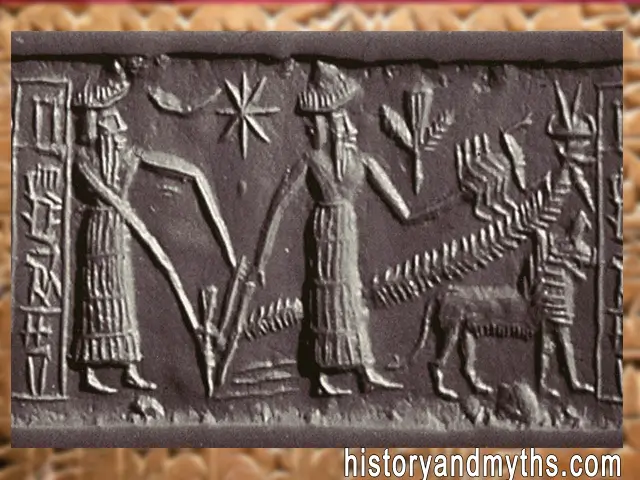
The Tigris River, known as “Idiglat” in ancient times, was associated with the ancient mother goddess and symbolized the moon. The migrating societies were matrilineal, tracing their heritage through the mother. The Samarra culture, known as “Soomartu,” reflected this maternal lineage. The moon deity was called “En-Zu,” meaning “Lord of Light” or “Eye of Light,” symbolizing fertility, wisdom, and illumination.
These settlers expanded along the Tigris, transforming small villages into thriving cities. The most notable civilizations that emerged from this migration were the Amorites (Martu) and the Sumerians (Soomar). The Amorites established the Ubaid civilization (4500–3500 BCE), while the Sumerians founded the Sumerian civilization (3500–2000 BCE), with prominent cities such as Uruk, Nippur, and Ur.
2.Migration Along the Euphrates River and the Rise of Patriarchal Religion
The Euphrates River, known as “Purattu” or “Burat,” symbolized the father god, who gained prominence during the patriarchal revolution in the Chalcolithic period (c. 6000 BCE). The sun, represented by “Bar” or “Par,” became the symbol of life and masculine power. The sun deity was referred to as “En-Bar,” meaning “Eye of the Sun” or “Eye of Life.”
Migrants along the Euphrates originated from the sunlit plains and deserts of northern Mesopotamia, particularly from the region now known as Al-Jazira, west of Mosul. These people, called the “Subartu,” were among the first to establish a patriarchal social structure, centering the family around the father and son.
One of their settlements was “Sipartu” (modern Sippar), located near the present-day Syrian Iraqi border, bearing the name of its people.
3.The Mesopotamian Plain and the Cult of Inanna
The fertile plain between the Tigris and Euphrates, known as “Sonartu,” attracted many northern migrants due to its rich soil and habitable environment. The ancient name “Shinar” refers to this very region, especially in its southernmost areas.
The land was associated with the virgin goddess, symbolized by the planet Venus and known as “En-Ana,” meaning “Lady of the Heavens.” She later became widely known as Inanna, the Sumerian goddess of love and beauty.
Two major peoples emerged from this region: the “Sonar” and the “Nasur.” The Nasur migrated early to Eridu, the first city in history, where they built a temple dedicated to Inanna and revered the waters of the Euphrates, which they named “Eridu.”
Eridu and the Rise of Religion Before Writing
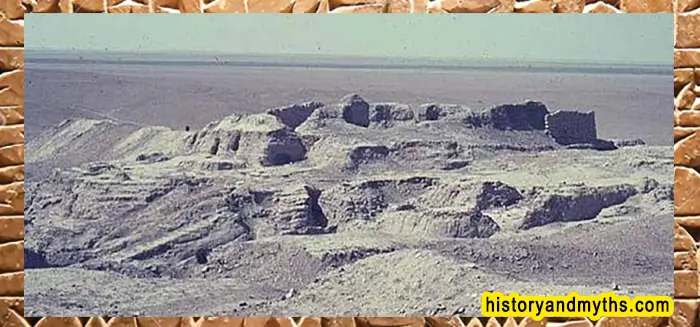
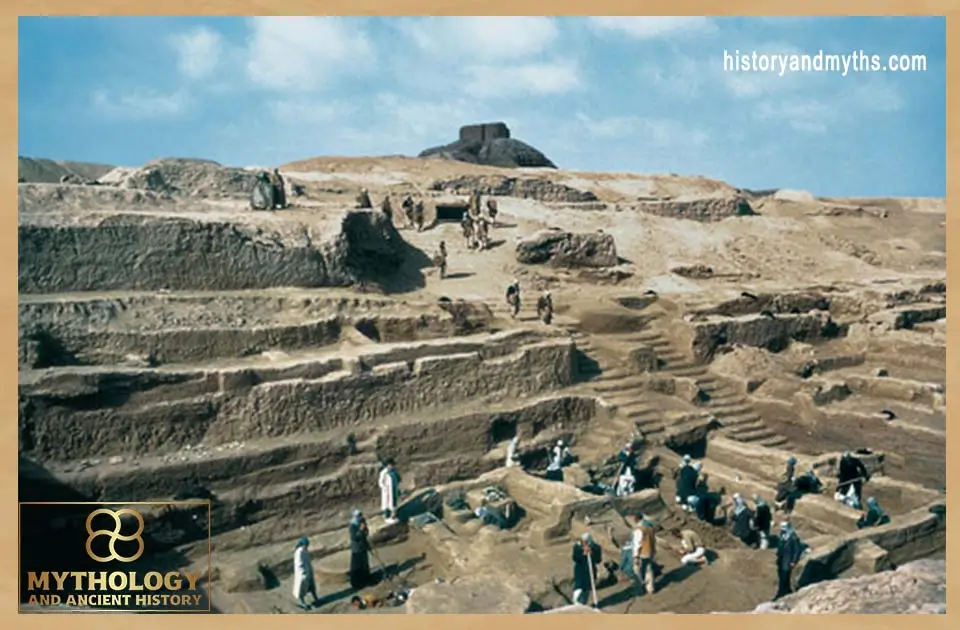
Eridu marked the beginning of the Chalcolithic period in southern Mesopotamia, ushering in urbanization, temple construction, priestly authority, and specialized crafts. The Nasuraians, the early settlers, developed some of the world’s oldest religious beliefs and myths.
However, a major challenge for them was their lack of a writing system. The Eridu civilization (5000–4500 BCE) influenced the later Ubaid civilization (4000–3500 BCE), which absorbed many of its traditions. The Sumerian civilization (3500–2000 BCE) ultimately introduced writing around 3200 BCE, preserving Mesopotamian heritage and becoming the first recorded civilization in history.
Key Insight
Mesopotamian civilization was shaped long before writing by migration and religious transformation.
Early communities did not simply settle fertile land; they redefined fertility, divinity, and social order.
The shift from earth-based goddesses to sky-dominated male deities reflects deeper political and ecological change,
not a sudden cultural revolution.
From Matriarchy to Patriarchy in Early Mesopotamian Belief
The migration patterns reveal that early Mesopotamian spirituality was deeply influenced by the northern matriarchal culture. Despite the patriarchal shift of the Chalcolithic period, the Tigris River and the Mesopotamian plain remained linked to the mother goddess and the virgin deity, symbolizing fertility and cosmic wisdom. Meanwhile, the Euphrates became the center of patriarchal beliefs, with the father god and his son taking precedence in religious thought.
The fertile land continued to reflect the sacred role of the mother goddess, yet celestial worship began to dominate religious ideology. The moon represented the mother goddess due to its gentle light and cyclical nature, symbolizing pregnancy and fertility. The sun, by contrast, represented the masculine force—unchanging and powerful, with its rising and setting seen as a daily cycle of awakening and rest. Venus (Inanna) embodied the youthful, energetic daughter, appearing as the morning star at dawn and the evening star at dusk.
The Celestial Shift in Fertility Myths
The Chalcolithic revolution elevated fertility symbols from the earth to the heavens, marking the birth of planetary deities. This transition remained influential even into the third millennium BCE during the Sumerian era. The moon goddess “Ningal” was still regarded as the great mother, giving birth to the radiant Inanna (Venus) and the ambitious Utu (the sun). However, the growing influence of patriarchal beliefs led to the masculinization of the moon deity as “Sin” or “Nannar,” making him the consort of Ningal.
This celestial shift redefined fertility myths, emphasizing that life-giving forces no longer originated solely from the earth. Instead, rain from the sky became the primary source of fertility, controlled by planetary movements. The Euphrates was seen as the divine seed that impregnated the land, bringing it to life through heavenly water.
Continue Reading
The Divine Seed Concept in Mesopotamian Creation Myths
The belief in celestial fertility led the Nasuraians to develop the concept of “Mana,” which combined maternal (M) and paternal (N) elements. The “N” referred to “An,” the male sky deity in early Mesopotamian civilizations. This shift marked the realization that male semen, rather than mere earth-bound fertility, was essential for reproduction, positioning men at the center of procreation and agricultural success.
The floodwaters of the Tigris and Euphrates were thus interpreted as the celestial seed, enriching the land and breathing life into it. Later, the Sumerians envisioned the god Enki filling these rivers with his divine semen, reinforcing the idea of heavenly fertilization:
“After Enki turned his gaze Upon all these lands, and when Enki, the provider, fixed his sight on the Euphrates, He raised his stature like a mighty bull, erected his phallus and released his semen, Filling the river with shimmering water…”
However, as patriarchal ideologies solidified, Enki was replaced by Enlil, the supreme god of the Sumerians. This shift reflected the political and cultural transition from Eridu to Sumer, as Enlil became the central deity of the new civilization.
The Rise of the Sky God and the Decline of the Mother Goddess
With the rise of Enlil, the god of wind and storms, Mesopotamian religion took a decisive turn toward patriarchal dominance. The goddess who once ruled over the heavens and earth was now overshadowed by the celestial father figure. Despite this transformation, traces of the Great Mother’s legacy remained embedded in Mesopotamian religious thought, reminding future generations of the civilization’s ancient matriarchal roots.
Key Takeaways
- Mesopotamian civilization developed gradually through migration, not sudden urban invention.
- Early religious systems were closely tied to rivers, fertility, and celestial bodies.
- The Tigris retained strong matriarchal symbolism, while the Euphrates favored patriarchal theology.
- Eridu represents a pre-literate religious center that shaped later Sumerian belief.
- The rise of sky gods reflects political centralization as much as theological change.
Frequently Asked Questions
Was Sumer the first civilization in Mesopotamia?
No. Sumer was the first recorded civilization, but earlier cultures such as Samarra, Hassuna, and Eridu laid its foundations.
Why did early people migrate to Mesopotamia?
Climate stabilization, fertile river valleys, and agricultural potential attracted northern populations.
What role did religion play before writing?
Religion organized society, legitimized authority, and explained fertility and natural cycles before written records existed.
Was early Mesopotamian religion matriarchal?
Early belief systems show strong maternal symbolism, later replaced by patriarchal sky gods.
Why is Eridu historically important?
Eridu represents the earliest known religious and urban center in southern Mesopotamia.
How did fertility myths change over time?
They shifted from earth-centered worship to celestial control involving planets, rain, and sky gods.
Sources & Rights
- Algaze, Guillermo. The Uruk World System. University of Chicago Press.
- Black, Jeremy, and Anthony Green. Gods, Demons and Symbols of Ancient Mesopotamia. British Museum Press.
- Bottéro, Jean. Religion in Ancient Mesopotamia. University of Chicago Press.
- Crawford, Harriet. Sumer and the Sumerians. Cambridge University Press.
- Frangipane, Marcella. Different Types of Egalitarian Societies. Cambridge Archaeological Journal.
- Jacobsen, Thorkild. The Treasures of Darkness. Yale University Press.
- Kuhrt, Amélie. The Ancient Near East. Routledge.
- Liverani, Mario. The Ancient Near East: History, Society and Economy. Routledge.
- Oates, Joan. Babylon. Thames & Hudson.
- Postgate, J. Nicholas. Early Mesopotamia: Society and Economy. Routledge.
- Pollock, Susan. Ancient Mesopotamia. Cambridge University Press.
- Van De Mieroop, Marc. A History of the Ancient Near East. Wiley-Blackwell.
Written by H. Moses — All rights reserved © Mythology and History