How Public Decisions Were Recorded in Ancient Greece
Ancient Greek public decisions did not become official simply because people voted for them. A debate in an assembly could end with an agreement, but that agreement still had to pass through a recording process before it became a recognized public act. Officials and scribes transformed spoken decisions into written texts that citizens could identify, verify, and follow.
This system was more than administrative paperwork. Recording a decision gave it legal weight and public visibility. A decision that existed only in memory could be disputed, changed, or denied. A decision that entered the official record became part of the political system itself. Understanding how this process worked reveals how Greek governments turned discussion into authority.
Where a Public Decision Actually Began
A public decision in Ancient Greece did not begin as a written order. It began as a proposal placed before a political body, often an assembly or council responsible for discussing civic matters. Citizens or officials could introduce issues ranging from military action and public spending to alliances and legal measures. At this stage, nothing was fixed. Arguments could alter the proposal, remove parts of it, or reject it entirely.
The important transition came after discussion ended and a formal choice was made. Debate itself had no permanent authority. People could remember speeches differently, disagree about what had been said, or later claim that an agreement never existed. A decision gained political force only after the community recognized a final outcome.
This distinction mattered because Greek governments did not treat conversation and law as the same thing. A gathering could produce ideas, objections, and promises, but the state required a clear moment where discussion stopped and an official decision emerged. That moment created something that could move beyond the meeting itself.
Only after that point did the process of recording begin. The government was no longer dealing with opinions or arguments. It was dealing with a public act that needed to be defined, preserved, and recognized by others.
How Public Decisions Moved Through the Greek System
| Stage | Main Function |
|---|---|
| Proposal and Debate | Discussion and evaluation of an issue |
| Formal Approval | Transforms discussion into an accepted decision |
| Official Recording | Creates a stable written version |
| Public Display (when necessary) | Makes decisions visible and harder to dispute |
| Administrative Use | Turns decisions into practical action |
Who Turned Debate Into an Official Record
Once a decision had been approved, someone had to convert the result into an official text. Governments could not rely on memory or on people repeating what they believed had been decided. The responsibility moved to officials and scribes whose role was to create a stable version of the decision.
Their task involved more than writing down words. They had to produce a text that represented the final outcome rather than the discussion that led to it. Long arguments, objections, and competing opinions were reduced into a formal statement that identified what had been approved and what action would follow.
This step gave governments control over consistency. Hundreds of people could attend an assembly, but only one official version of the decision could exist. Without that process, the same vote might later appear in several different forms depending on who described it.
The authority of a decision therefore depended not only on the vote itself, but also on the ability to transform that vote into a recognized public record. Political systems needed agreement, but they also needed a fixed text that others could reference later.
How Decisions Were Written and Standardized
Official decisions were not written as loose summaries. They followed a recognizable structure that allowed people to identify what the government had approved and under what authority. The text had to be precise enough to prevent confusion once the decision moved into public use.
A recorded decision often identified the political body involved, the officials connected to the action, and the content of the measure itself. The wording defined what had been authorized, who would carry it out, and in some cases who would be affected by it. Specific language reduced the risk of later interpretation changing the original meaning.
Standardization also created continuity inside the government. Different decisions could concern taxes, diplomacy, military actions, or public projects, yet they still entered the system in a form people could recognize. Citizens and officials did not need to reinterpret the document every time they encountered it. The structure itself signaled that the text carried official status.
By turning decisions into consistent records, Greek governments created a process that could survive beyond the day the vote took place.
How Greek Political Authority Actually Worked
Ancient Greek governments did not rely on memory alone. Political authority required a visible process: debate produced a decision, officials transformed it into a formal record, and that record allowed the decision to continue operating beyond the assembly itself. The system turned temporary discussion into recognized public action.
© historyandmyths.com — Educational use
Why Some Decisions Were Carved Into Stone
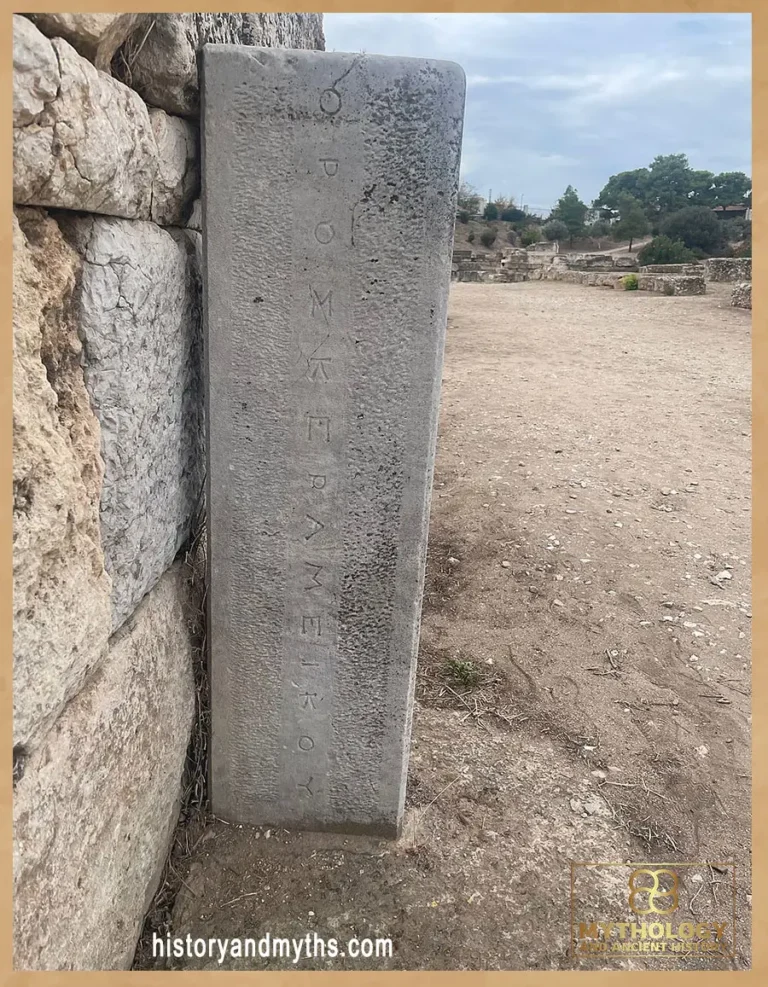
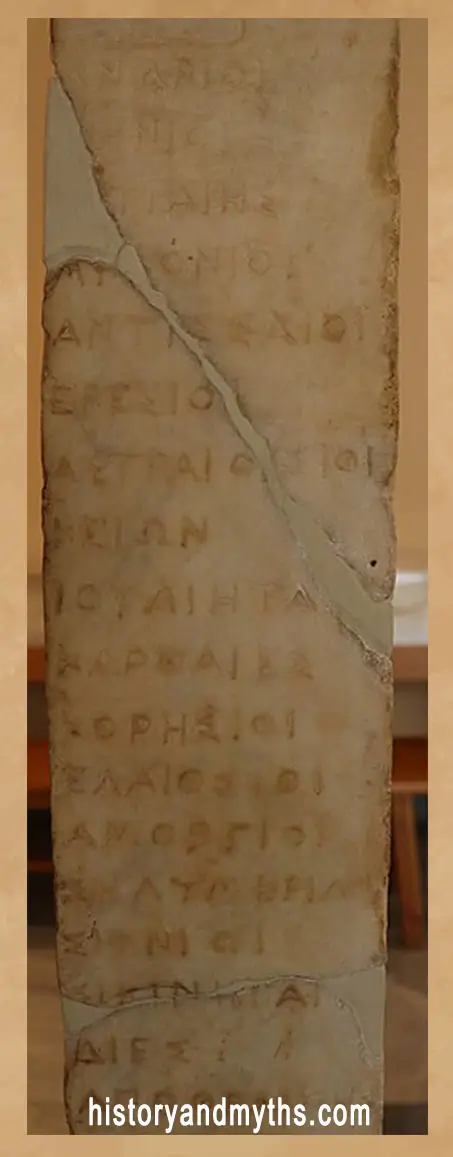
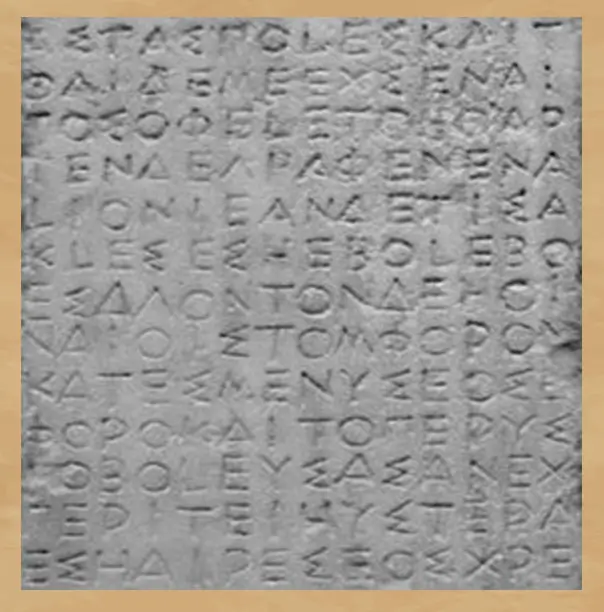
Not every decision remained on temporary writing materials or internal records. Certain measures were placed on stone and displayed in public spaces where people could see them. This usually happened when governments wanted a decision to remain visible over long periods or to carry broader public significance.
Durability was part of the reason, but visibility mattered just as much. A decision hidden inside an office depended on officials to communicate it. A decision placed in a public area became accessible to the wider community. Citizens, visitors, and political rivals could see that the measure existed and that it carried official approval.
Public display also reduced opportunities for alteration. Rewriting or denying a decision became more difficult when its text stood in open view. The inscription itself acted as a public reference point rather than a private claim made by an individual or a political group.
Stone therefore served a political function as much as an administrative one. It transformed a decision from a recorded document into a visible statement of authority.
What Happened After a Decision Was Recorded
Recording a decision did not end the process. An approved measure still had to move from written form into practical action. Officials responsible for administration, finance, diplomacy, or military affairs used the recorded text as the basis for carrying out the government’s instructions.
At this stage, the decision stopped being a political outcome and became an operational task. Funds could be assigned, agreements could be enforced, public projects could begin, or instructions could be passed to other authorities. The written record created a common reference that different parts of government could follow without relying on personal interpretation.
The recorded text therefore acted as a point of transition. It connected political agreement with administrative action and allowed decisions to continue functioning after the assembly itself had ended.
Continue Reading
- How Government Information Was Stored in Ancient Greece
- How Greek Citizens Received Political Information
- How Heralds Worked in Ancient Greece
- How Public Announcements Worked in Ancient Greece
Why Recording Decisions Was More Than Administration
Recording public decisions gave governments a way to establish authority beyond the moment of voting. A spoken agreement existed only among those who had heard it. A recorded decision could continue to exist after the meeting ended and after the participants had dispersed.
This mattered because governments regularly faced disagreements, changing political conditions, and competing interests. A fixed record created a reference that officials and citizens could return to when questions emerged about what had actually been approved. It limited the ability to reshape past decisions for immediate political advantage.
The process therefore did more than preserve information. It helped create continuity inside the political system by turning temporary events into recognized public actions that could be acknowledged and enforced over time.
Key Takeaways
- Debate and official decisions were treated as separate stages.
- Scribes and officials converted political outcomes into stable texts.
- Recorded decisions followed recognizable structures.
- Some measures were publicly displayed through inscriptions.
- Written records connected voting with practical government action.
- Recording decisions strengthened authority and continuity.
Frequently Asked Questions
How were public decisions recorded in Ancient Greece?
Public decisions were recorded by officials and scribes who transformed approved measures into formal written texts recognized by the government.
Did Greeks write every political decision on stone?
No. Stone inscriptions were usually reserved for measures that required public visibility or long-term significance.
Why did Greek governments record decisions?
Recording decisions created legal clarity and reduced disputes over what had actually been approved.
Who wrote official decisions in Ancient Greece?
Officials and scribes were responsible for creating the recognized version of a public decision.
Did spoken votes automatically become law?
No. Votes still had to move through an official recording process before becoming recognized public acts.
Why were public inscriptions important?
Public inscriptions made decisions visible and reduced the possibility of later alteration or denial.
What happened after a decision was recorded?
Recorded decisions moved into practical administration where officials could carry out actions connected to the measure.
Sources & Rights
- Rhodes, P. J. The Athenian Boule. Oxford University Press, 1972.
- Rhodes, P. J. A History of the Classical Greek World: 478–323 BC. Wiley-Blackwell, 2010.
- Hansen, Mogens Herman. The Athenian Democracy in the Age of Demosthenes. University of Oklahoma Press, 1999.
- Hansen, Mogens Herman. Polis: An Introduction to the Ancient Greek City-State. Oxford University Press, 2006.
- Thomas, Rosalind. Literacy and Orality in Ancient Greece. Cambridge University Press, 1992.
- Osborne, Robin. Greece in the Making: 1200–479 BC. Routledge, 2009.
- Hornblower, Simon. The Greek World: 479–323 BC. Routledge, 2011.
- Ober, Josiah. Mass and Elite in Democratic Athens. Princeton University Press, 1989.
- Sinclair, R. K. Democracy and Participation in Athens. Cambridge University Press, 1988.
- Meiggs, Russell and Lewis, David. A Selection of Greek Historical Inscriptions. Oxford University Press, 1988.
- Finley, Moses I. Politics in the Ancient World. Cambridge University Press, 1983.
- Davies, John K. Democracy and Classical Greece. Harvard University Press, 1993.
- Cartledge, Paul. Ancient Greece: A History in Eleven Cities. Oxford University Press, 2011.
- Lewis, David M. Selected Papers in Greek and Near Eastern History. Cambridge University Press, 1997.
- Rhodes, P. J., and Lewis, D. M. The Decrees of the Greek States. Oxford University Press.
- MacDowell, Douglas M. The Law in Classical Athens. Cornell University Press, 1978.
- Sealey, Raphael. The Athenian Republic. Pennsylvania State University Press, 1987.
- Murray, Oswyn. Early Greece. Harvard University Press, 1993.
Written by H. Moses — All rights reserved © Mythology and History